Embedded software, electrical, and systems engineer with 8+ years shipping firmware and hardware across defense, industrial, and consumer applications. Custom mixed-signal and power PCB design in Altium, bare-metal and RTOS firmware, motion and motor control, hardware security analysis, and the Proxmox/Ceph platforms behind it all.
Some of my professional work is not publicly shareable; the projects below are the subset I can show. Selected work spans embedded firmware, mixed-signal hardware, motion control, and large-scale compute infrastructure.
Product Prototyping and Engineering
[+]
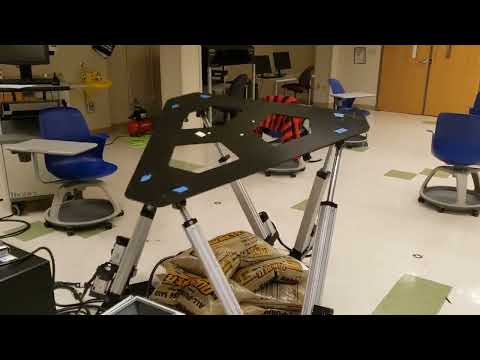
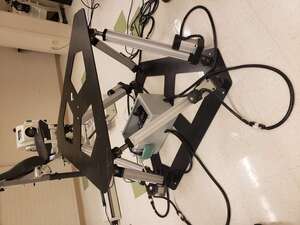
Stewart Platform - Firmware and Hardware for Flight Simulator
| Github |
Hardware/Software Solo | Research by Co-workers
|
2020 - Now
|
|
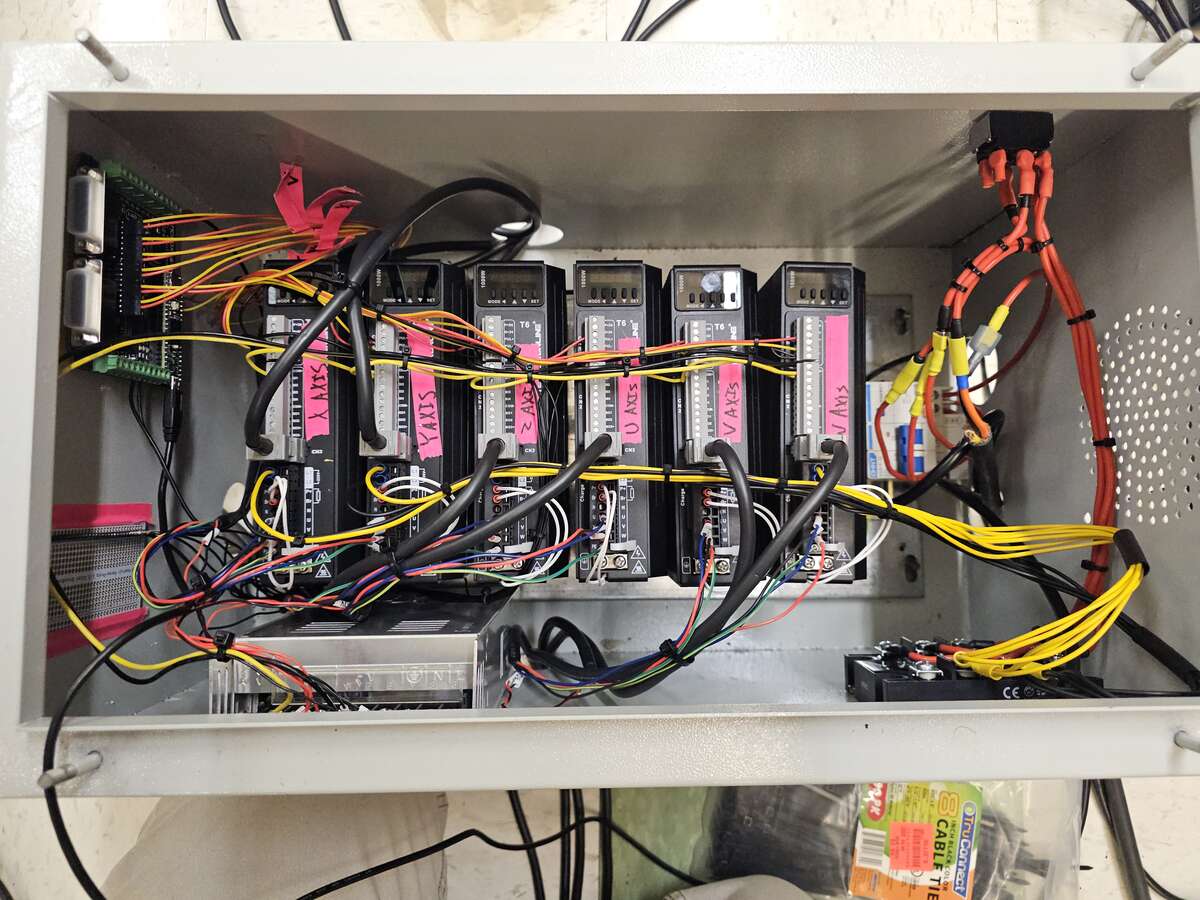
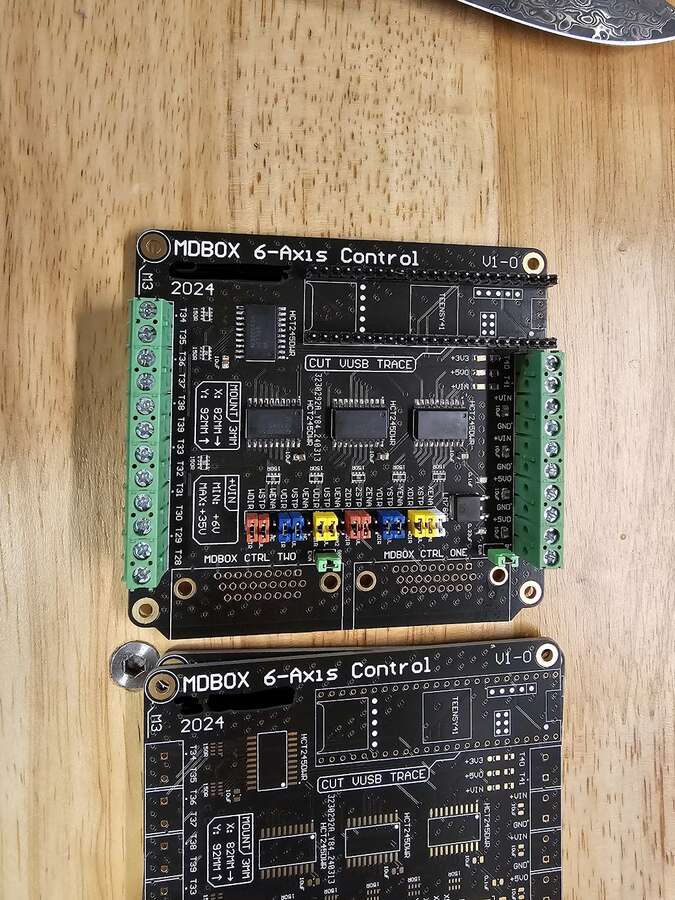
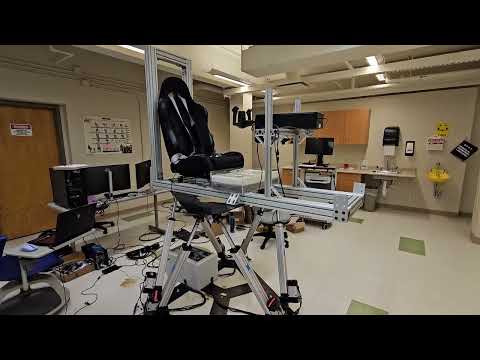
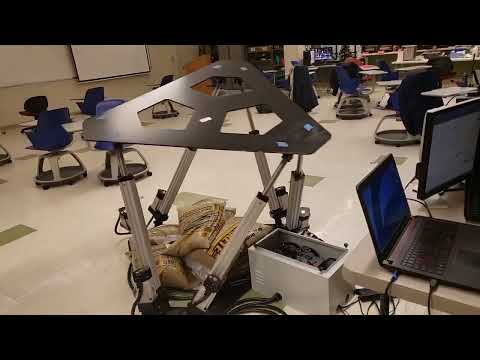
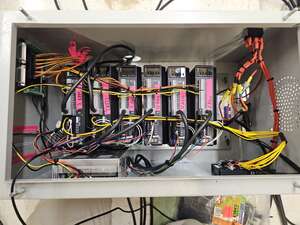
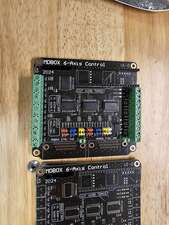
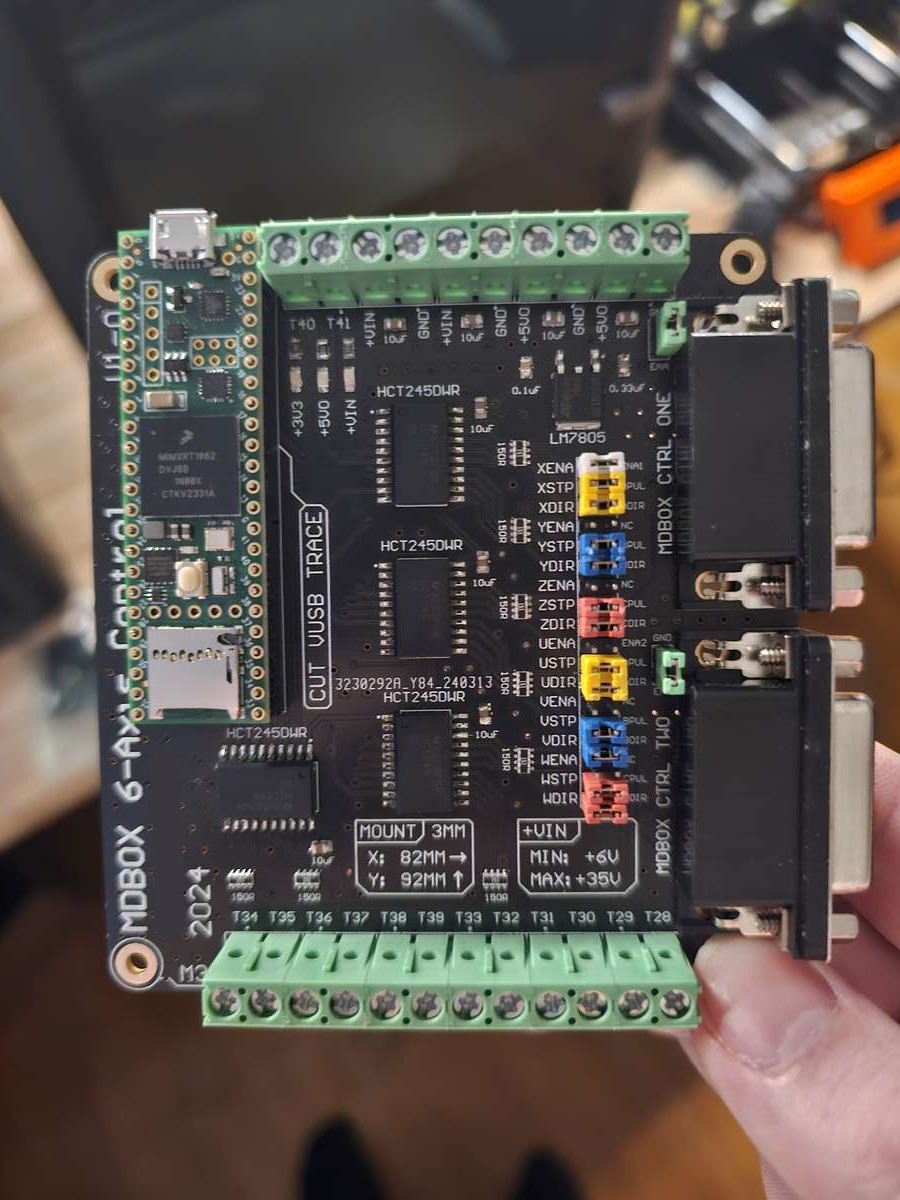
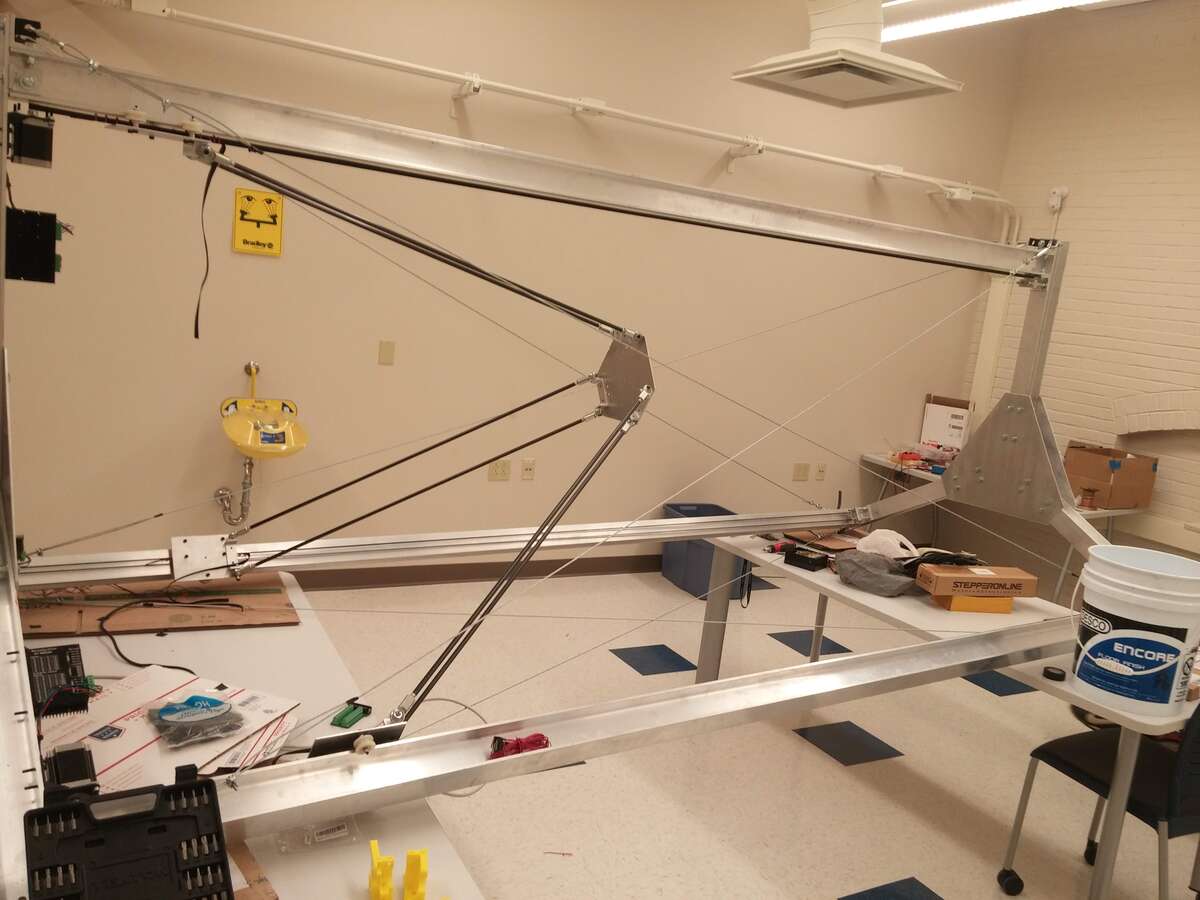
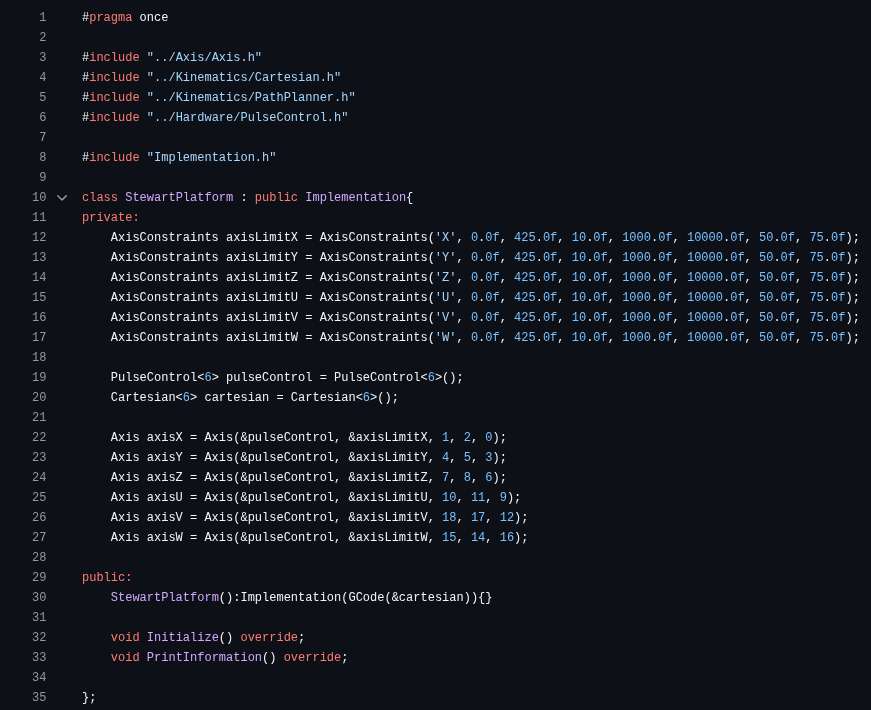
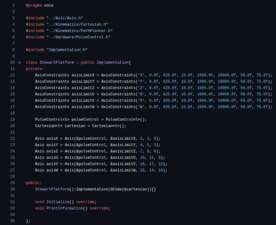
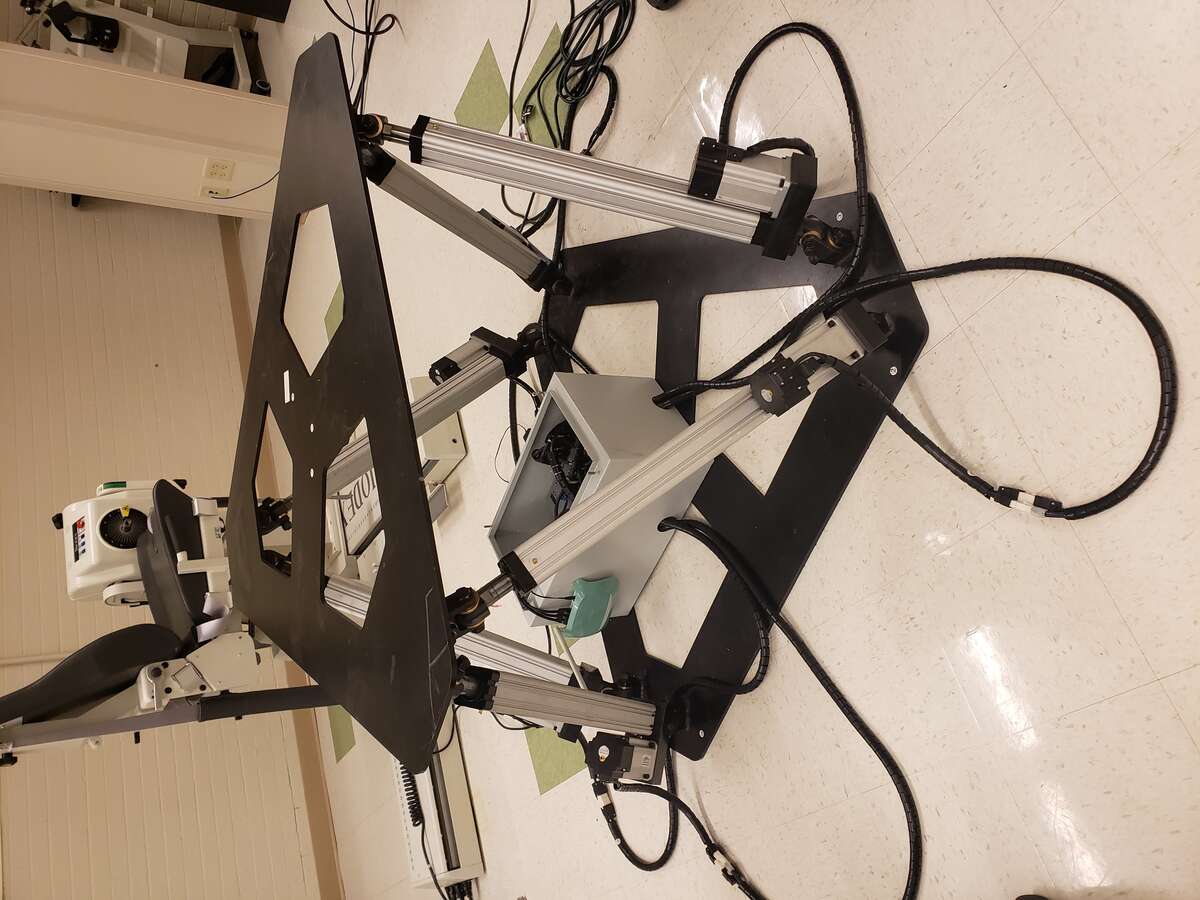
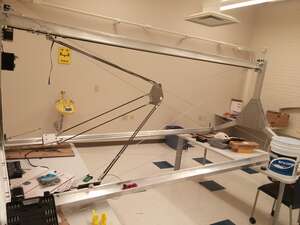
The Stewart Platform project is an adaptation of a commercial system. The machine originally shipped with MDBox motion controllers, controlled via ethernet. Because of high latency it was adapted with a custom controller, upgraded 1000W AC servos for the linear actuators, and custom firmware and software. This was the start of the AetherControl project detailed above. The attached repository contains the interface code that takes target XYZ Cartesian coordinates and Euler rotations, then computes the six actuator lengths for AetherControl. The goal of the project was to adapt the system to handle high-frequency vibration and high-speed motion for research on flight dynamics.
Hardware specifications and rebuild details:
- 1,000 lb payload capacity, 0.45 m/s peak linear velocity, 1G upward acceleration
- Six 1000W AC servos driven directly by a single custom controller, replacing two networked controllers with ~100 ms update latency
- Motor selection done as a trade study across stepper, BLDC, and AC servo options sized for the target torque/inertia and dynamic response
- Custom power electronics, real-time C++ firmware, and an inverse-kinematics simulator validated end-to-end before integration
- Now the experimental backbone for ongoing university aerospace dynamics research, supporting 10+ peer-reviewed publications across ASEE, ASME, and aerospace-engineering venues, plus external industry collaborations
The inverse kinematics repository allows for custom user-defined configuration parameters, taking in:
- Base Plate Radius
- Base Plate Mounting Angle
- Platform Plate Radius
- Platform Mounting Angle
- Base Height
- Maximum Actuator Length
Users can input an XYZ cartesian coordinate and Yaw-Pitch-Roll to get a returned value of each of the 6 actuator lengths.
|
[+]
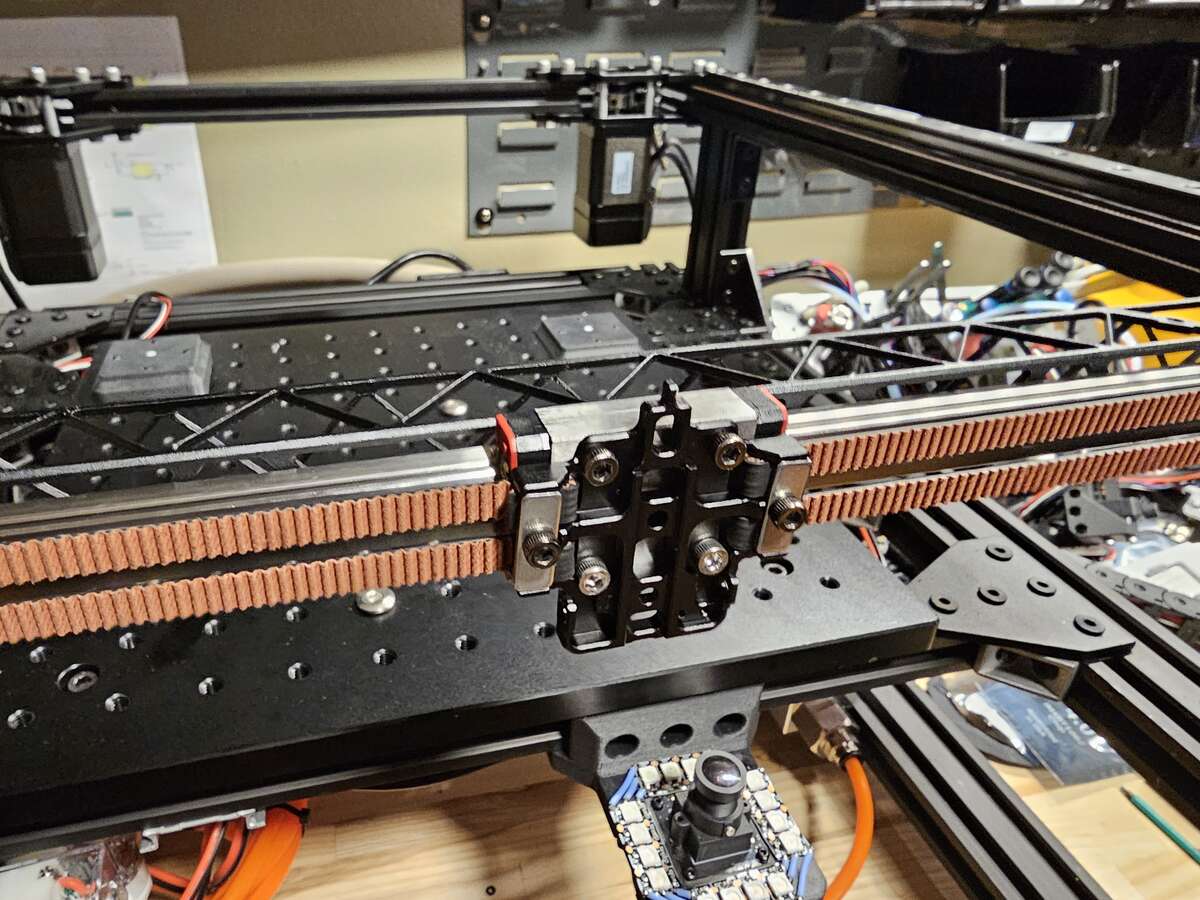
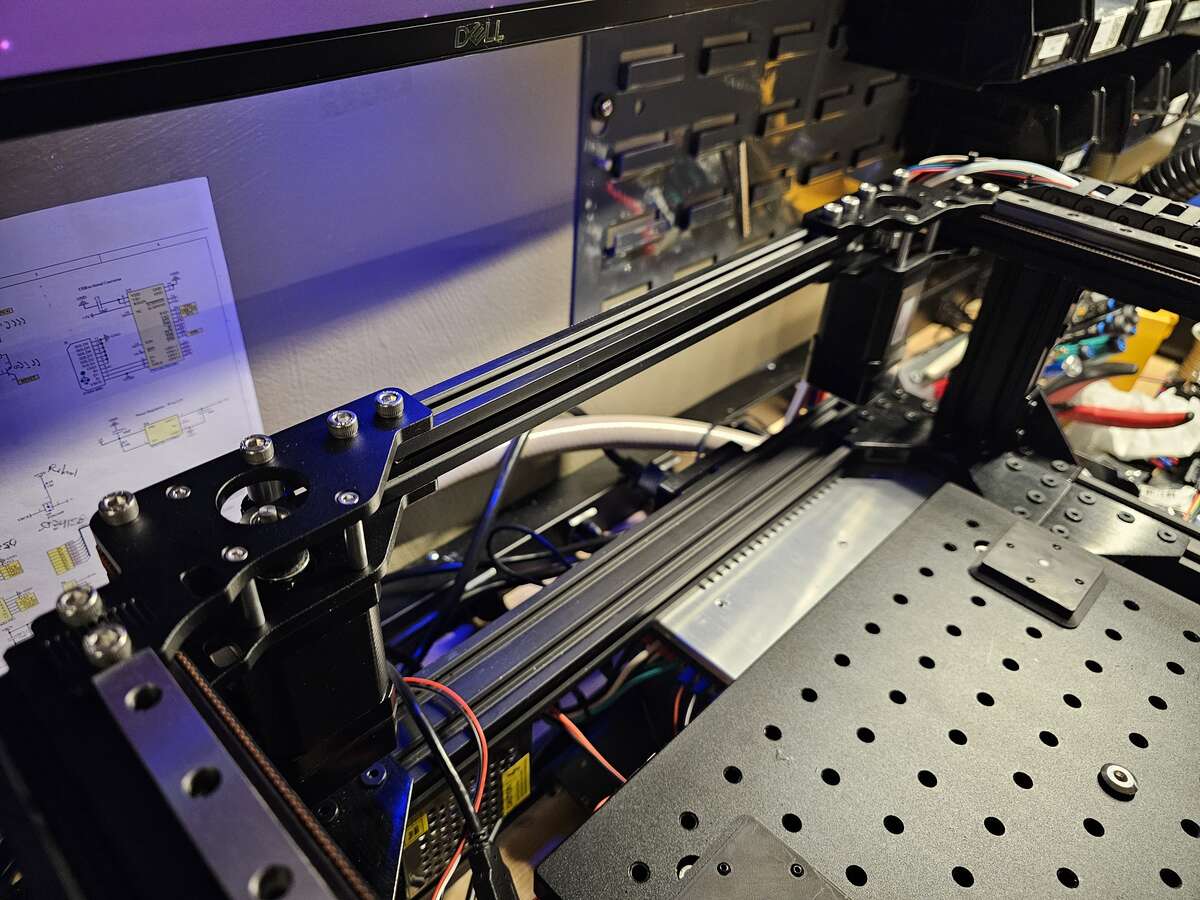
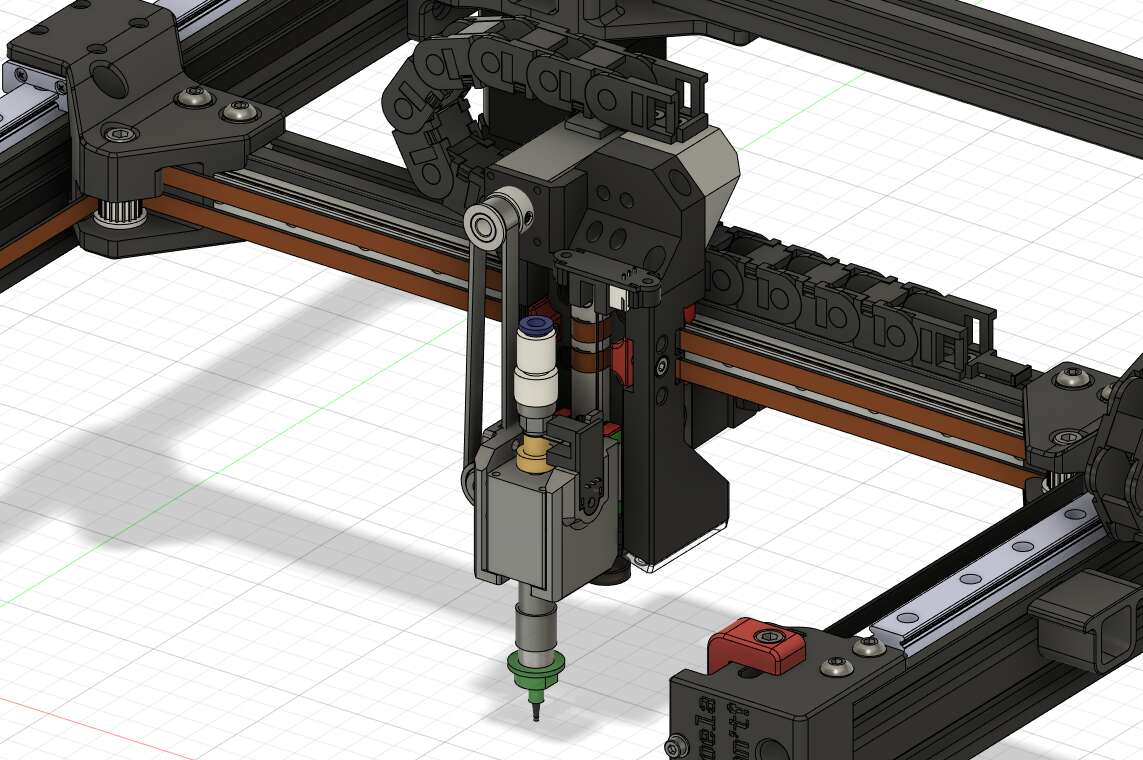
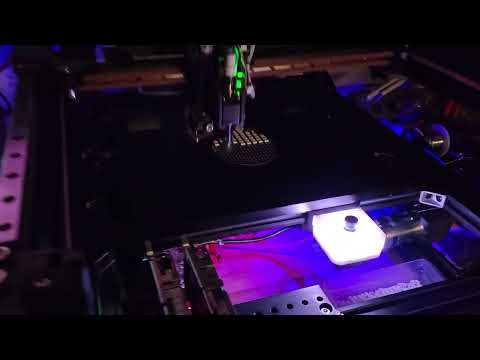
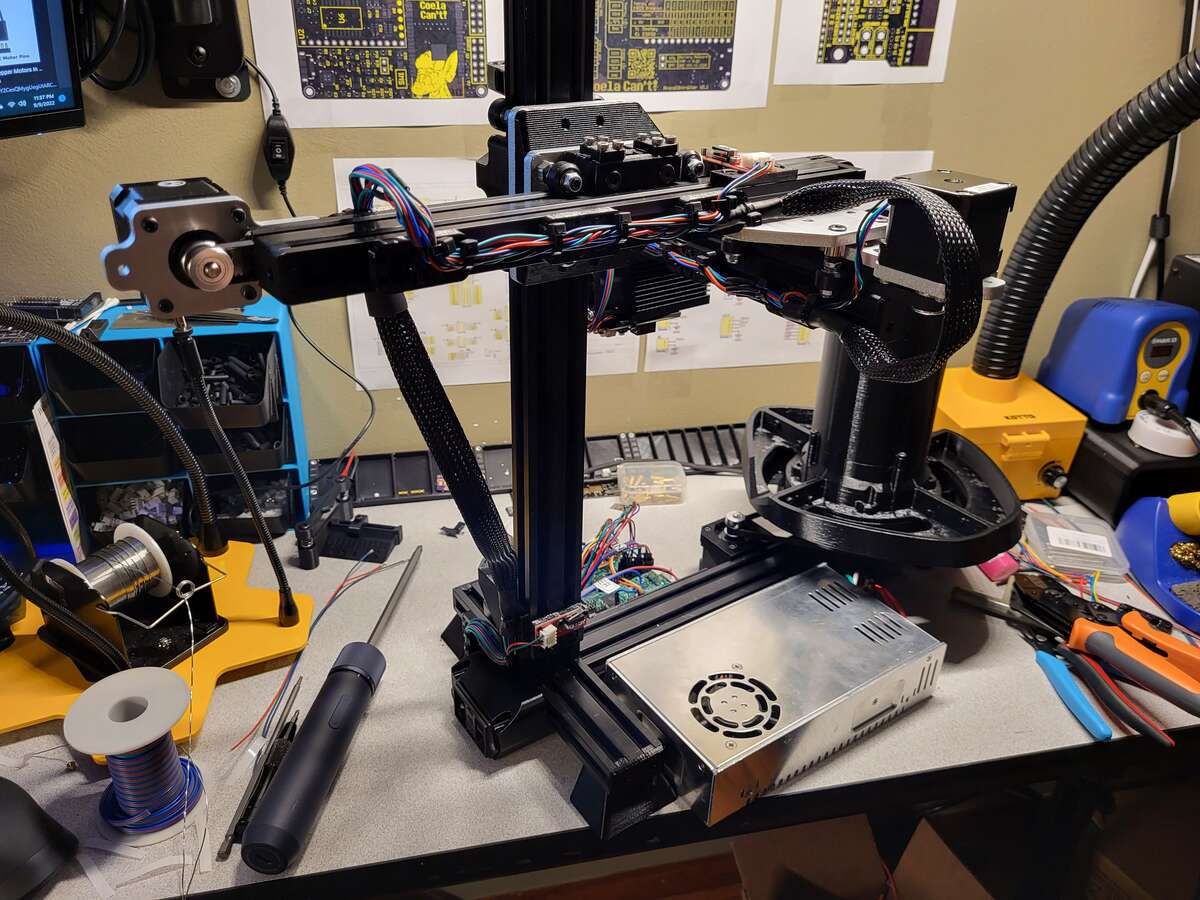
Custom High-Speed CoreXY Pick-and-Place
| Github |
Solo Project
|
2021 - current
|
|
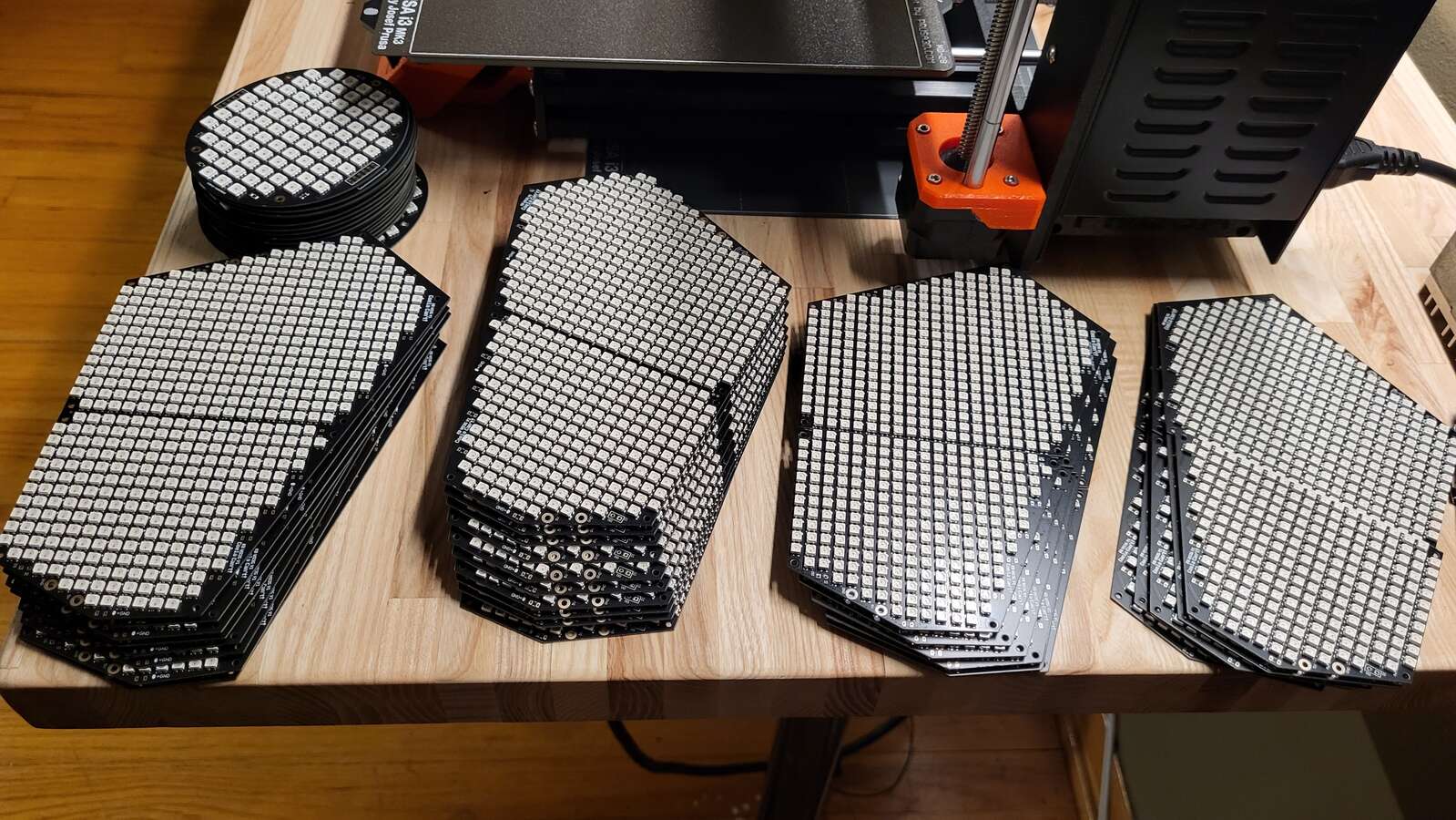
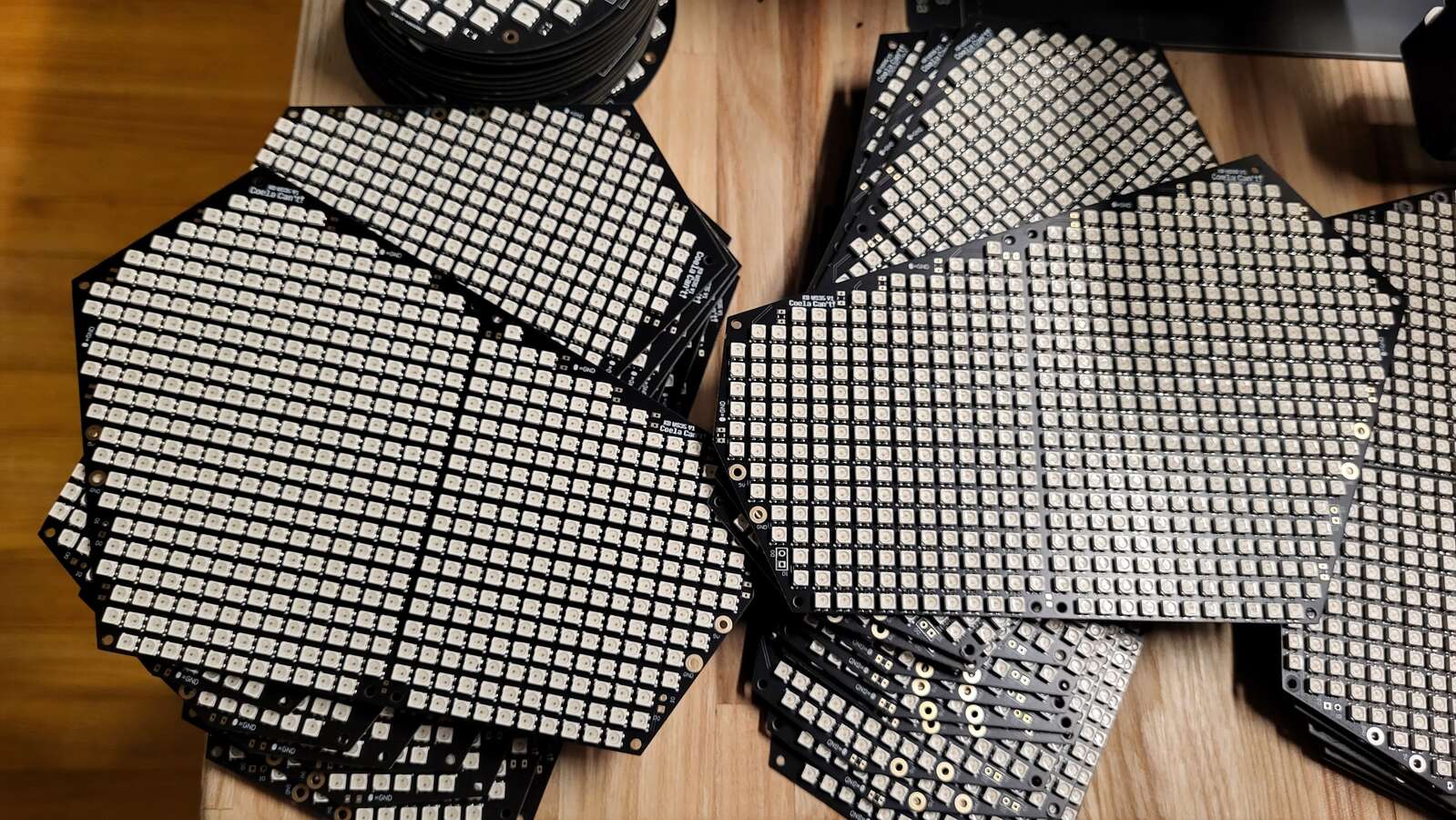
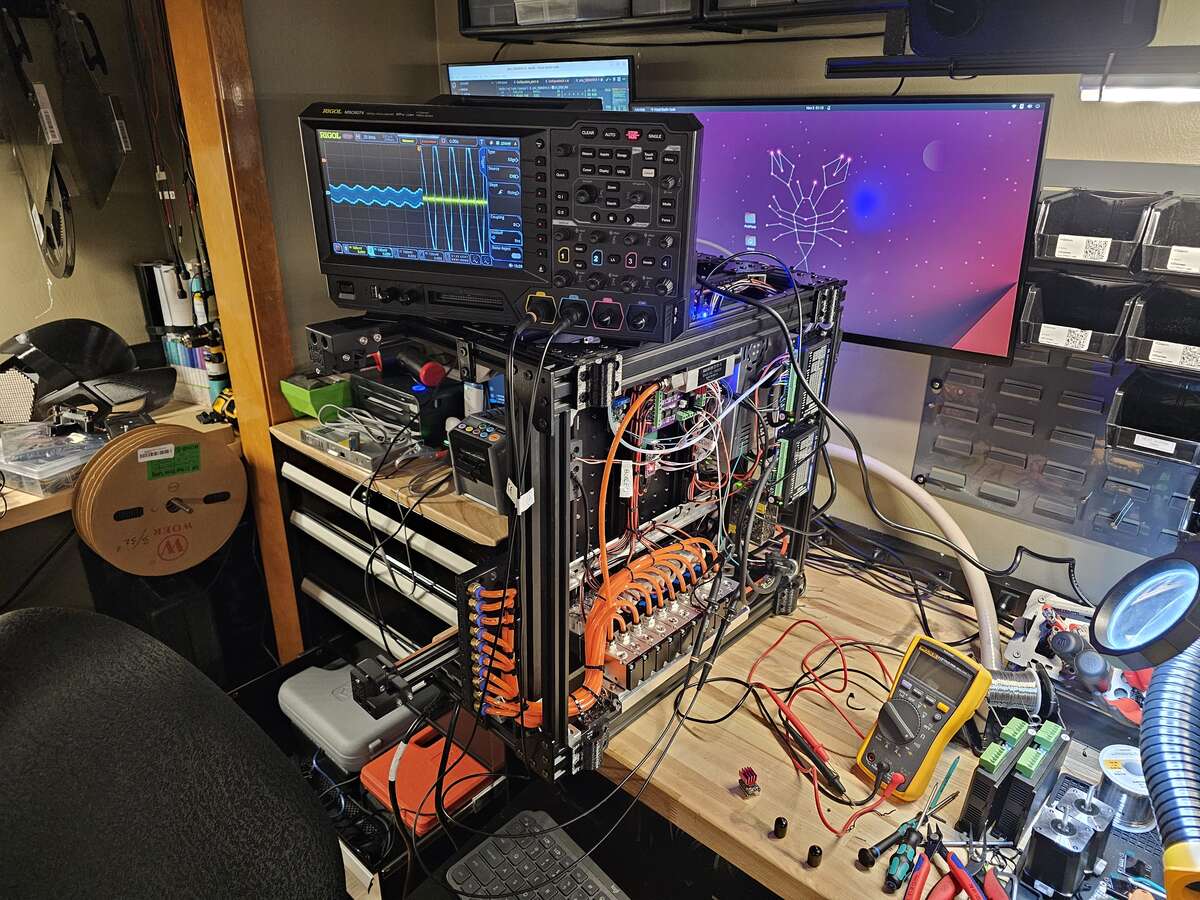
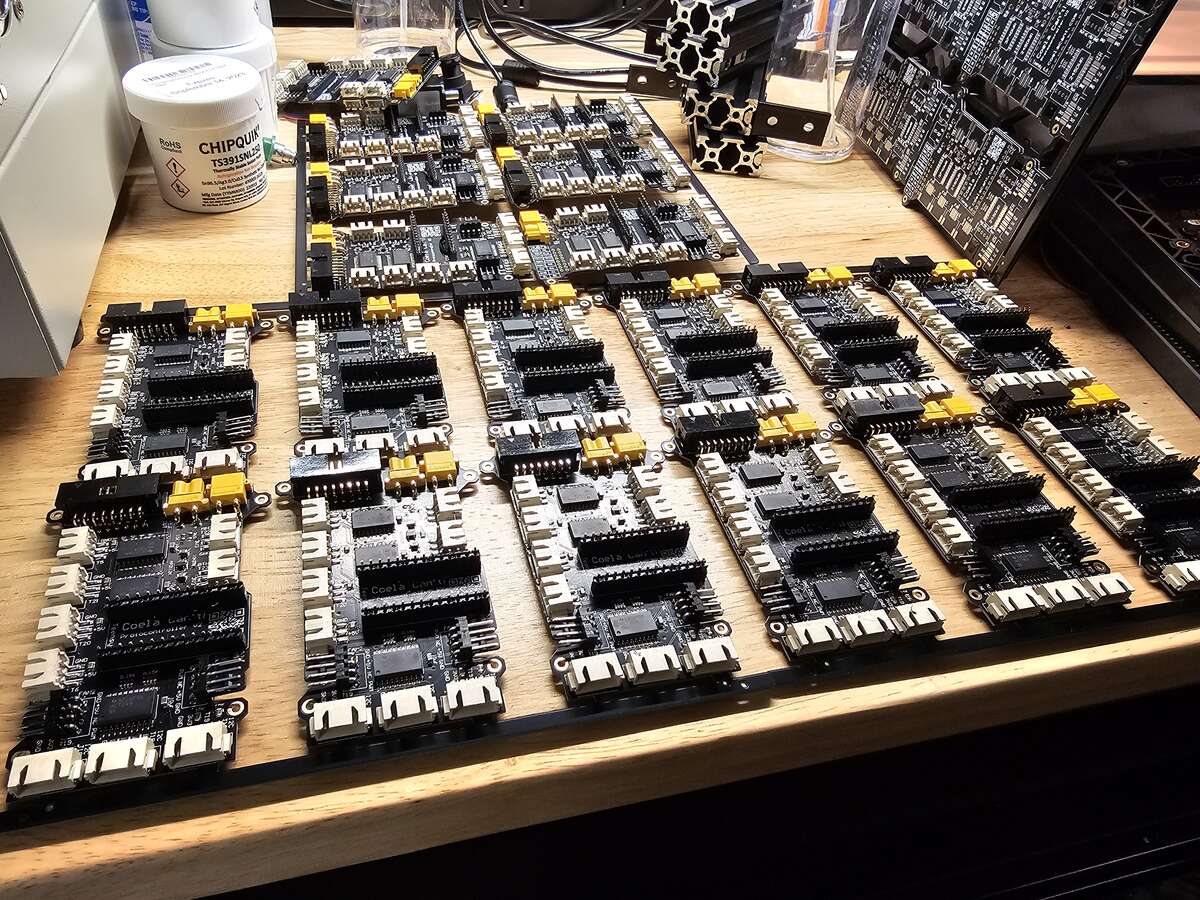
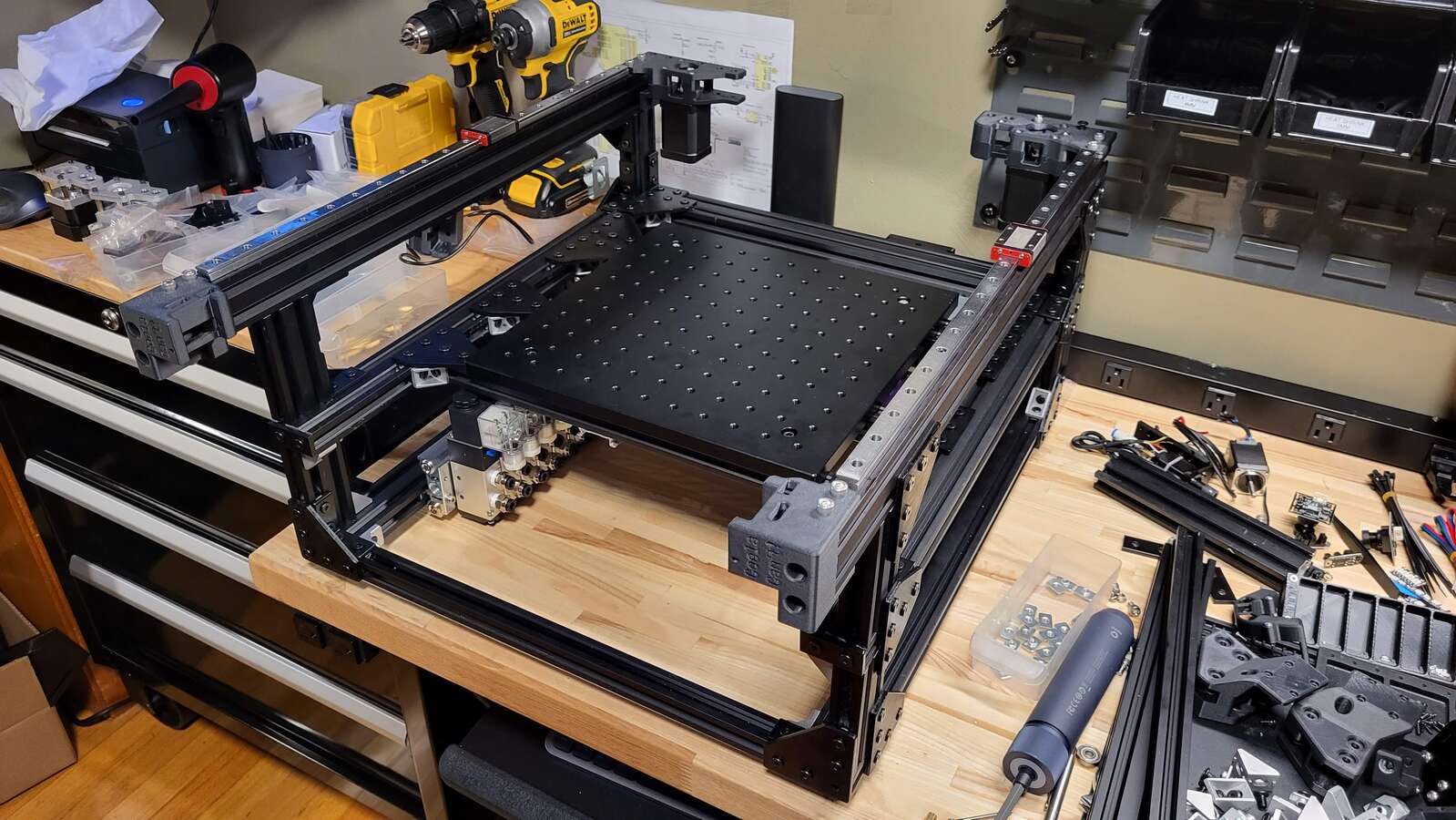
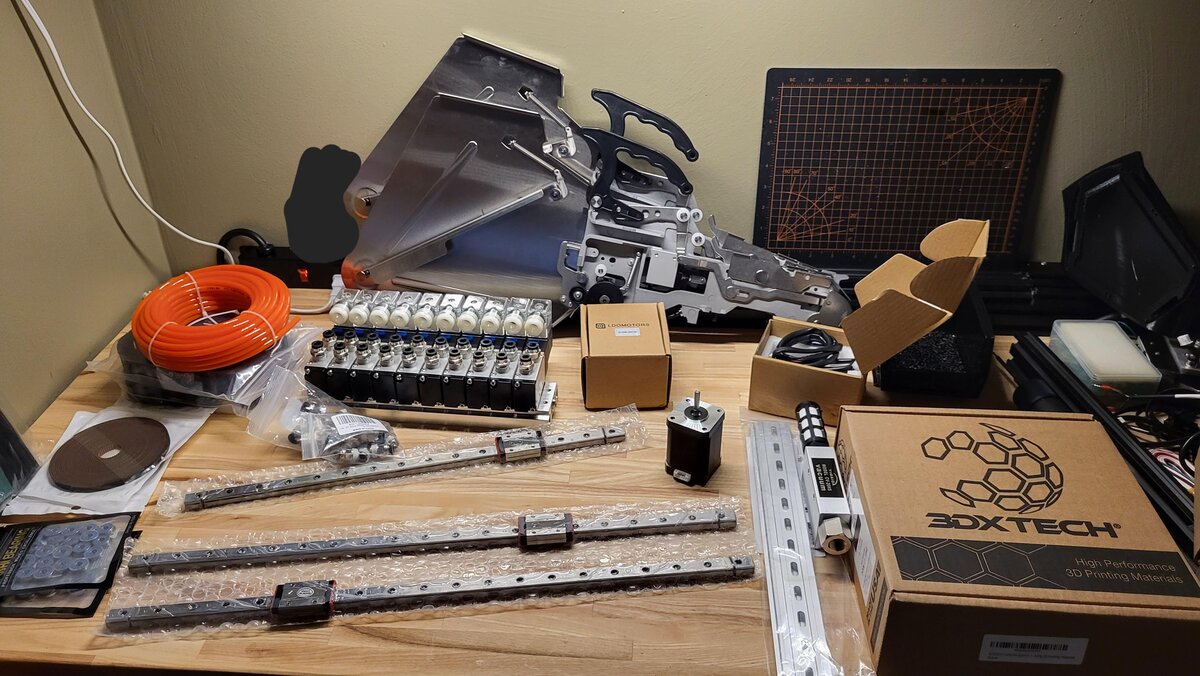
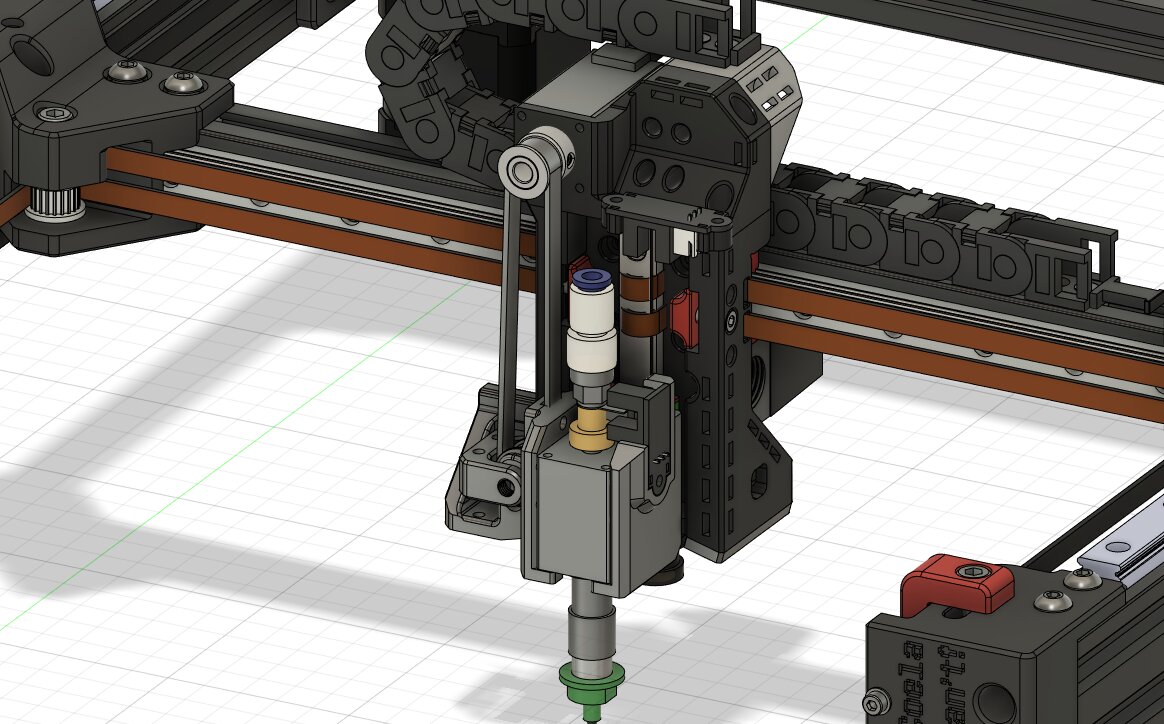
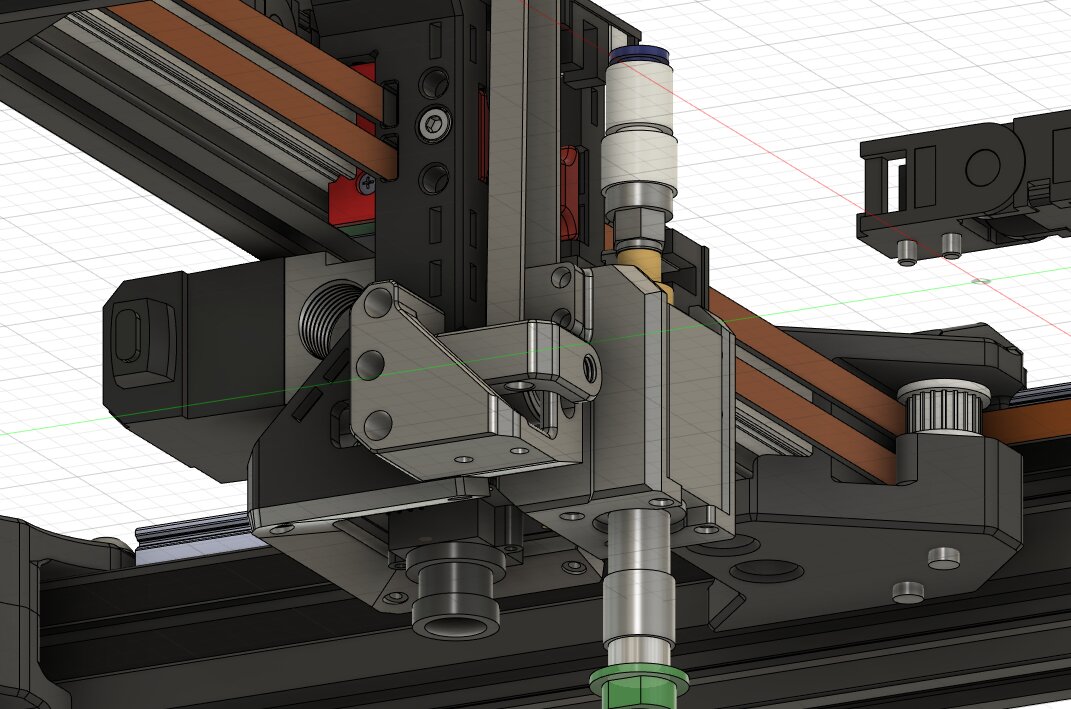
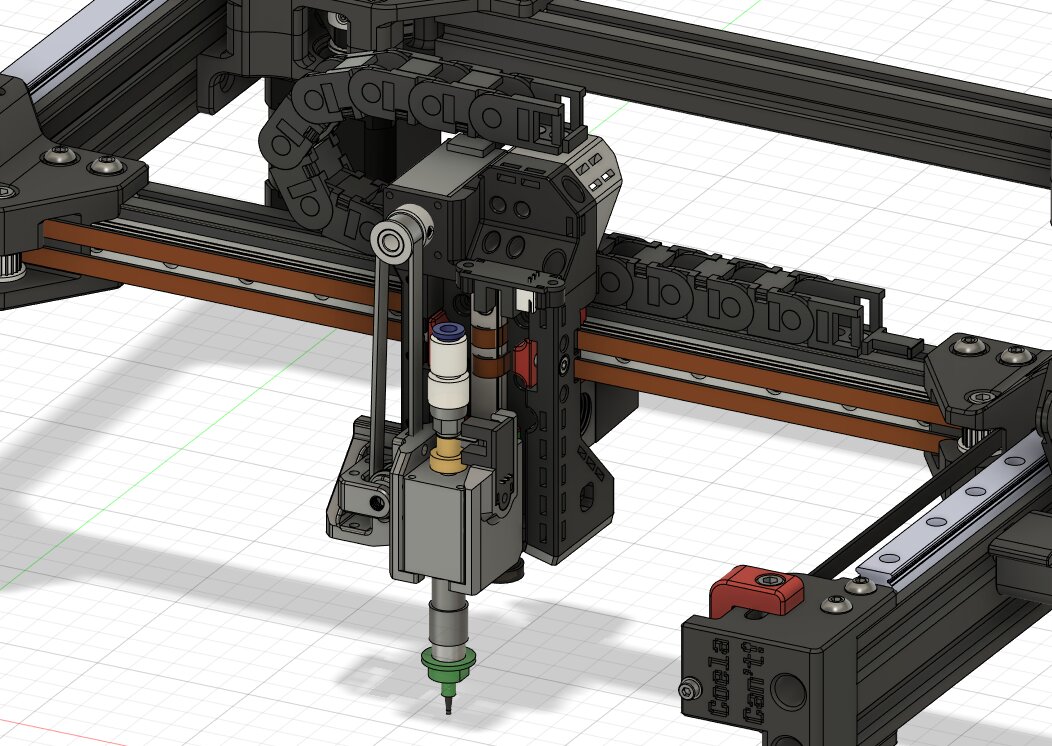
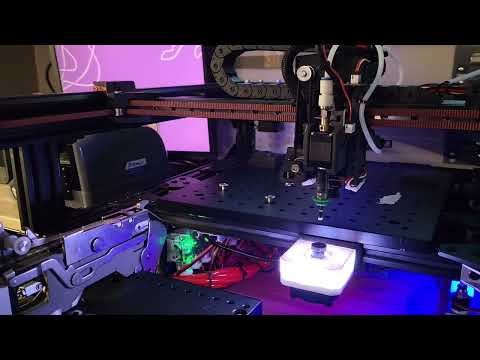
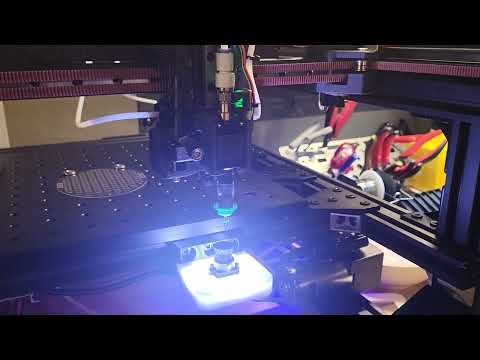
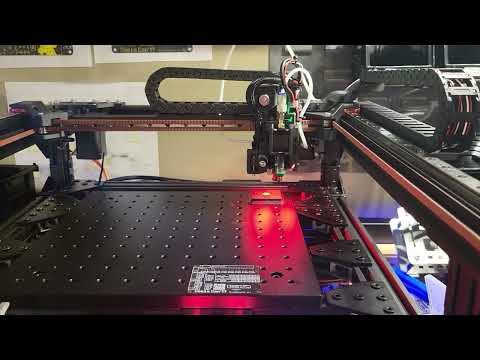
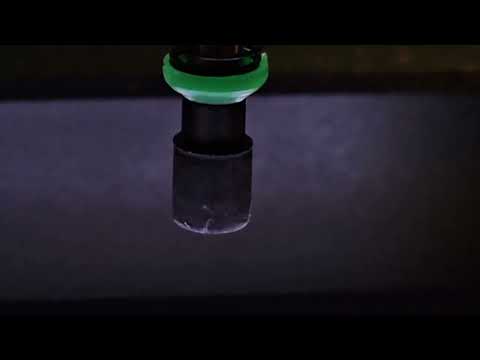
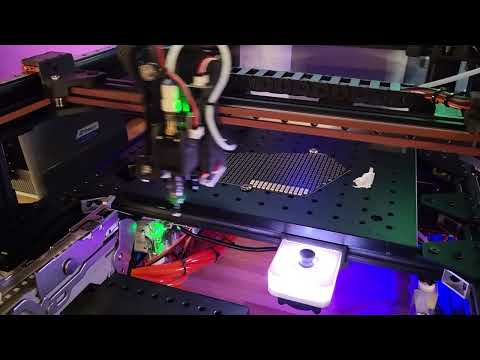
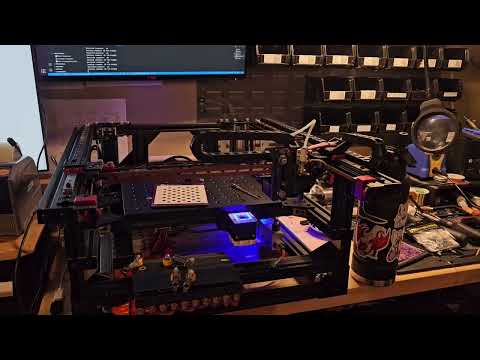
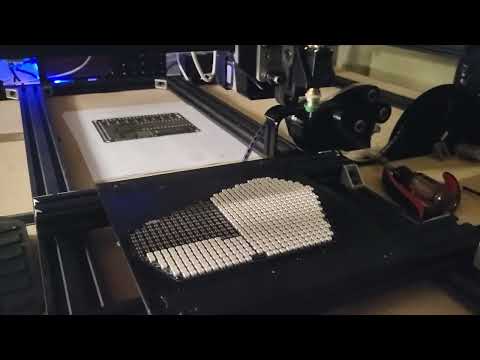
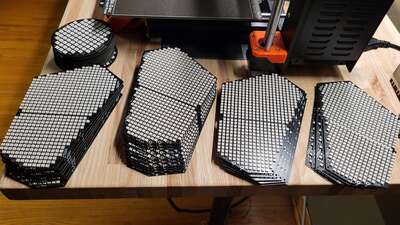
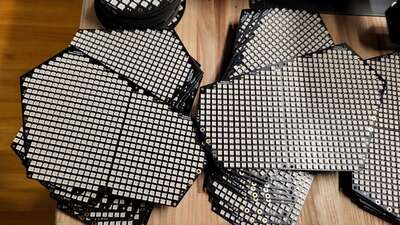
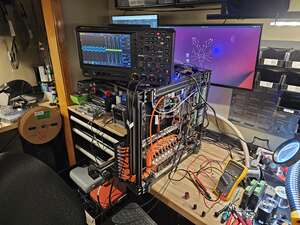
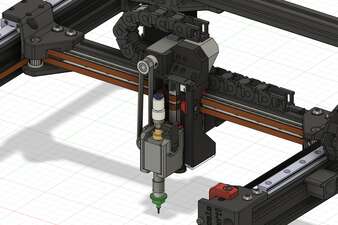
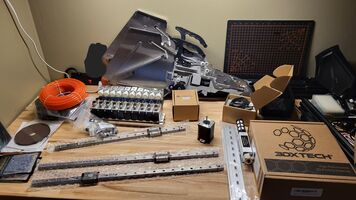
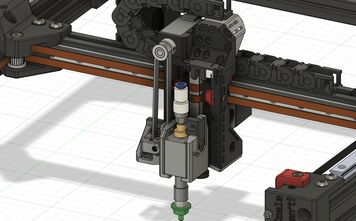
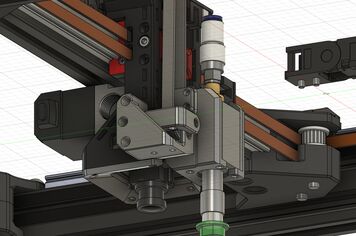
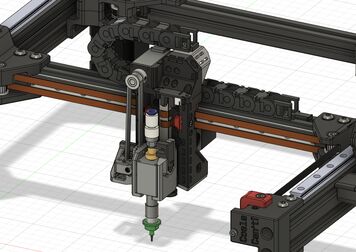
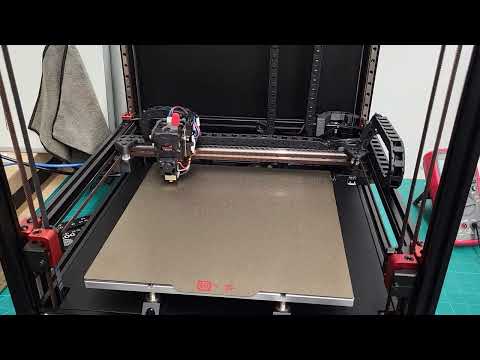
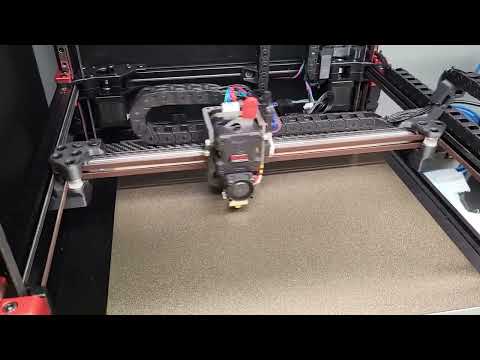
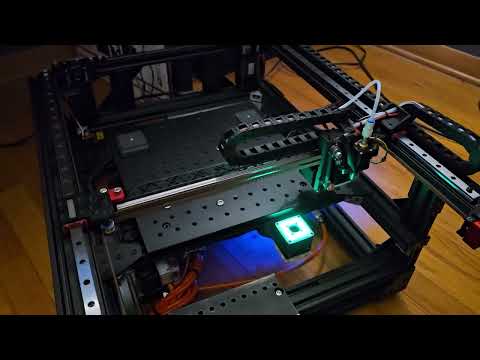
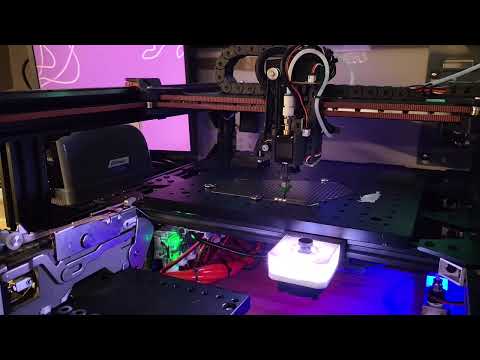
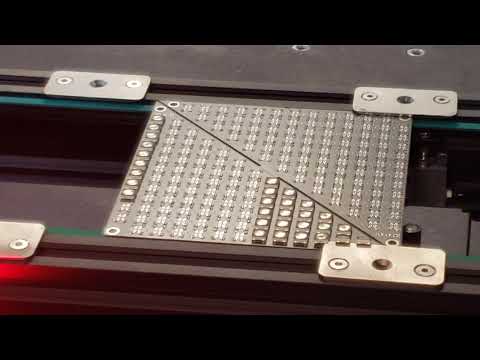
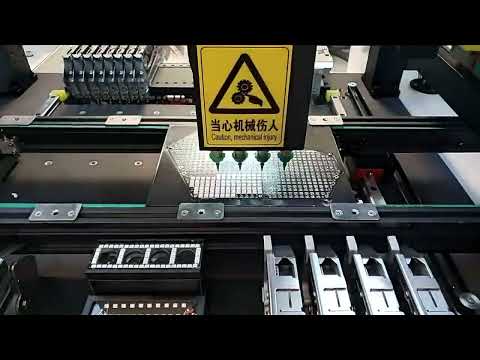
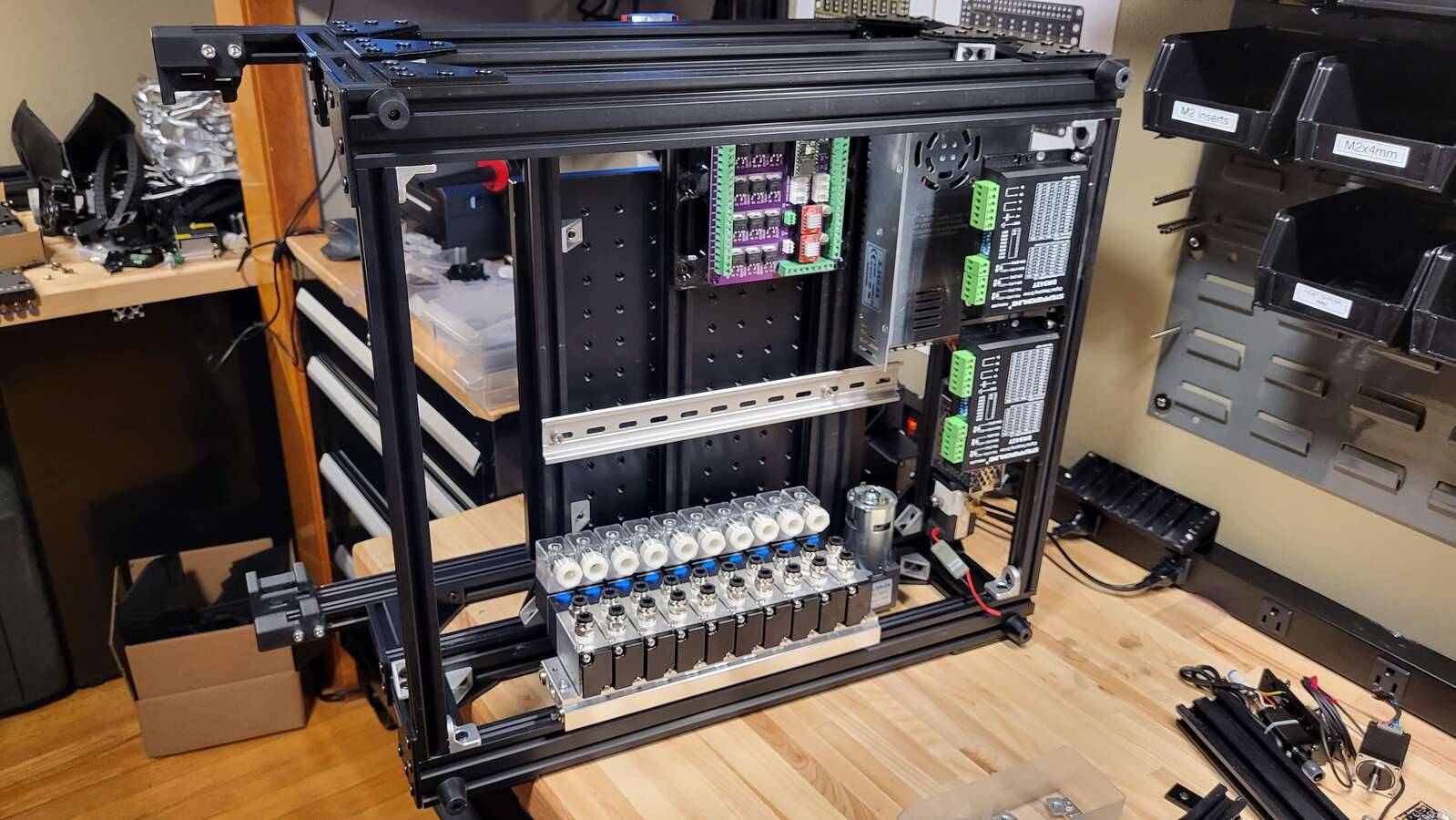
Designed and built a custom CoreXY pick-and-place machine for in-house SMT assembly of RGB LED displays (500+ LEDs each), power-distribution boards, and custom LED control electronics.
Features:
- OpenPNP for software control
- This system supports most of the hardware calibration features provided by OpenPNP
- CoreXY design based on the Voron project’s motion system
- Closed-loop AB motors for X and Y axes
- Feedrates up to 800mm/s
- Accelerations up to 40m/s^2
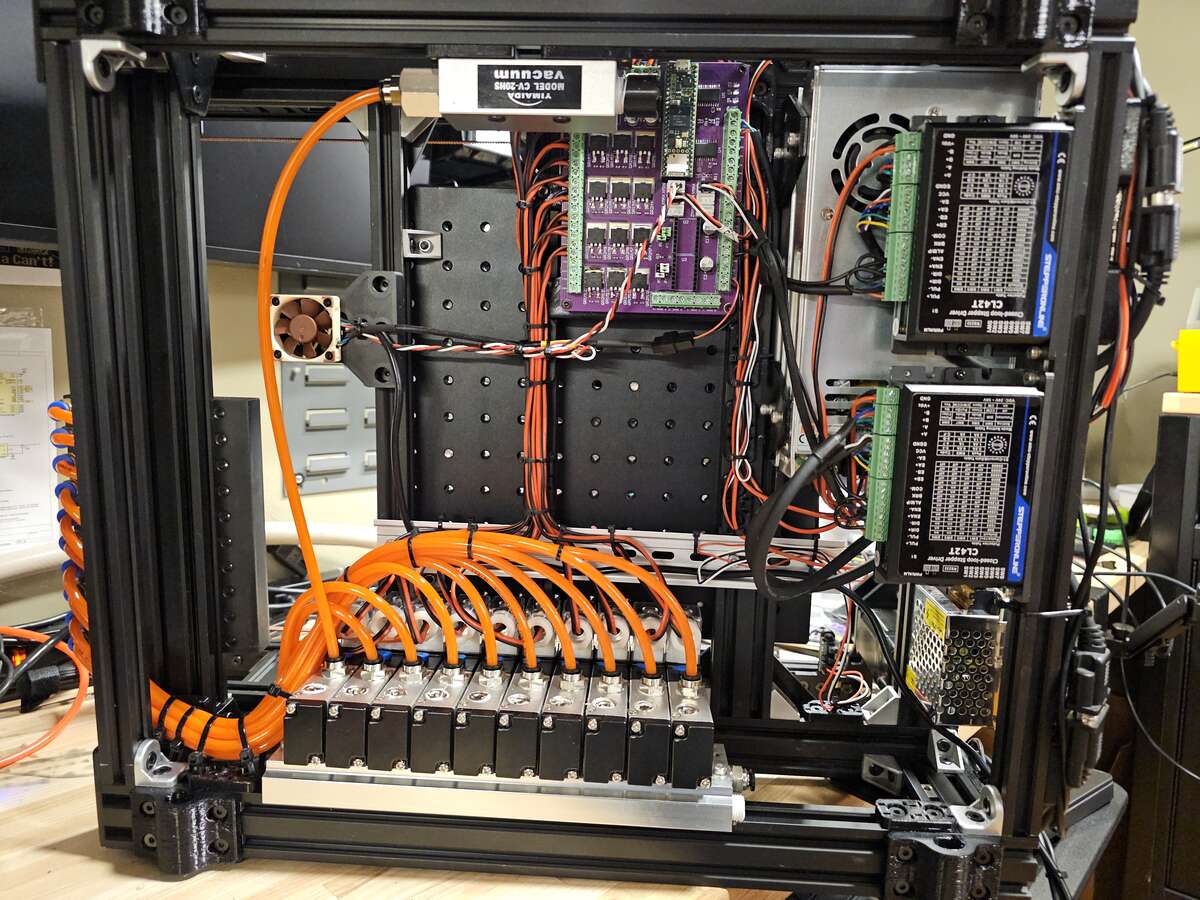
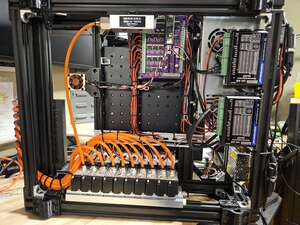
- 12 Pneumatic feeders
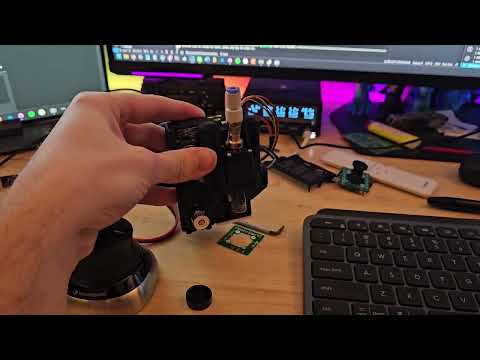
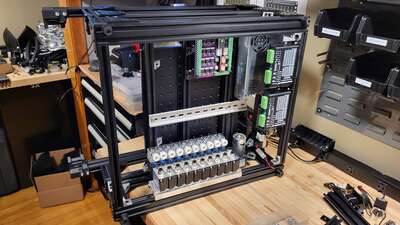
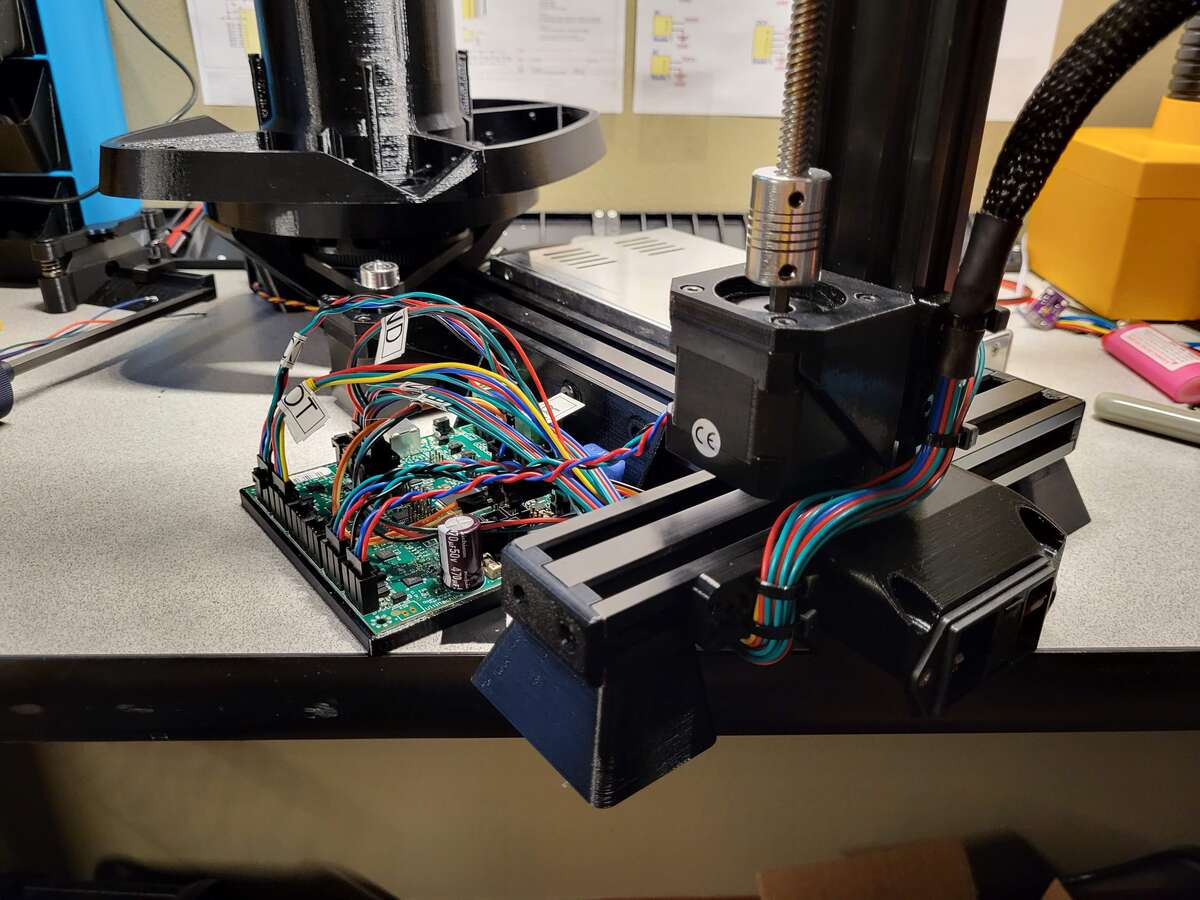
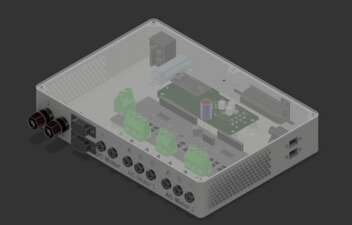
- Dual controller design
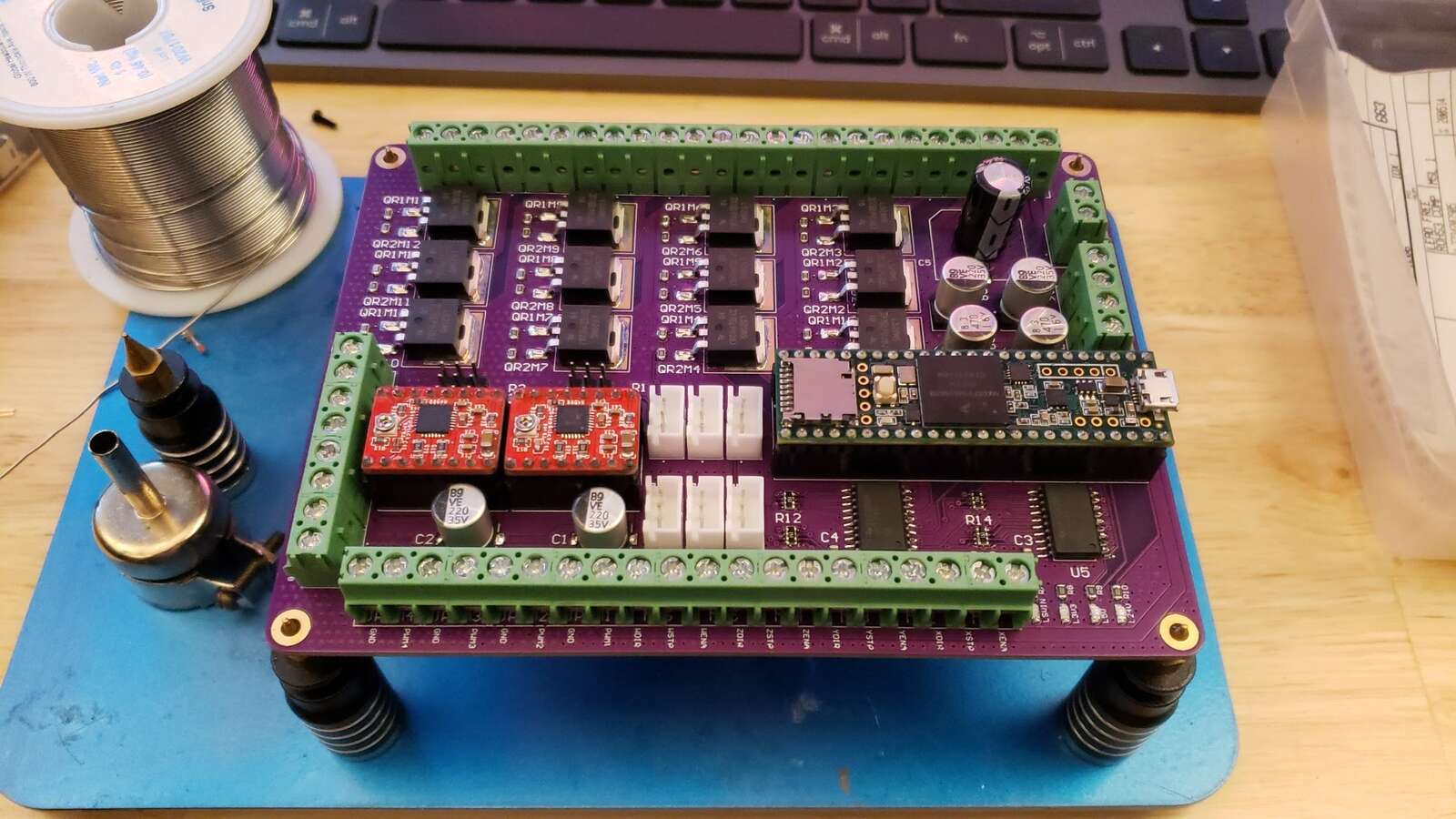
- Primary controller for controlling closed-loop AB motors for the CoreXY motion system
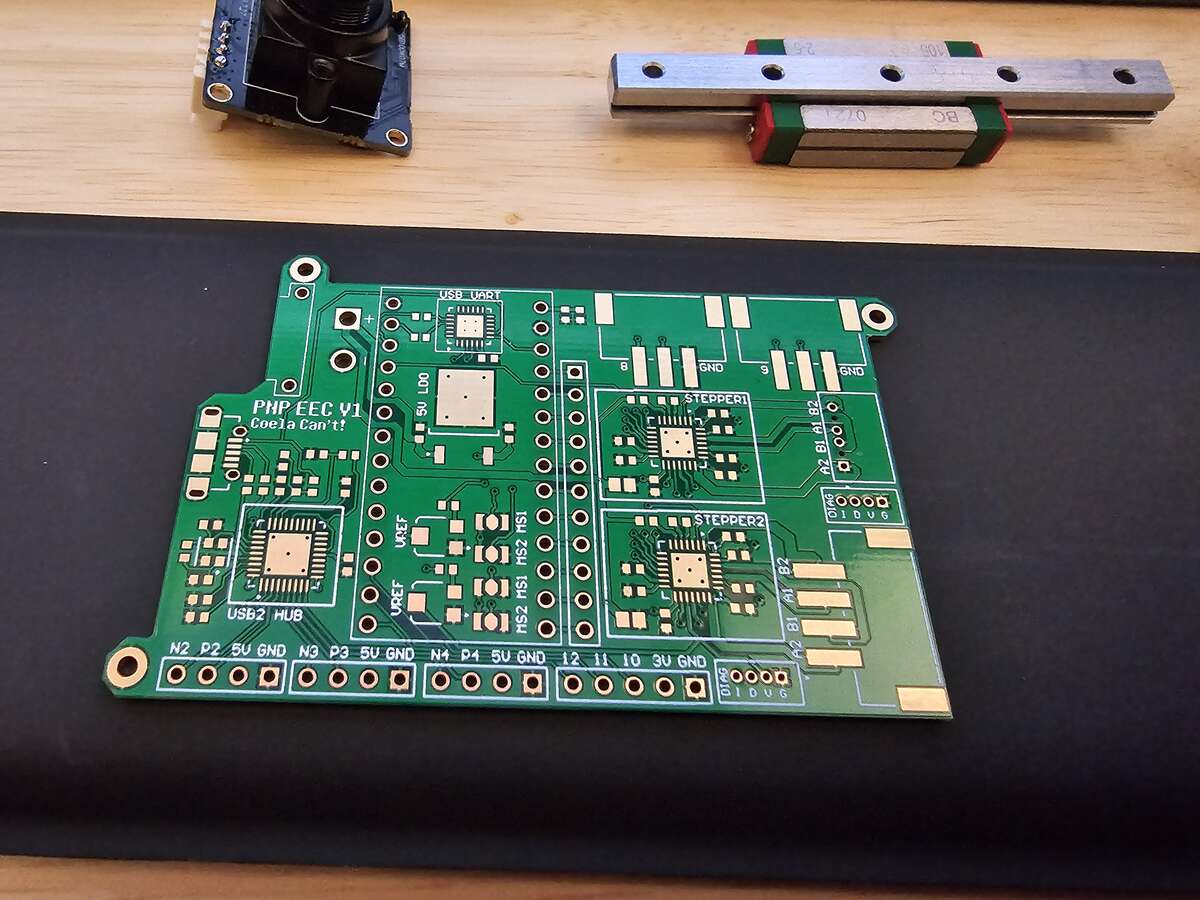
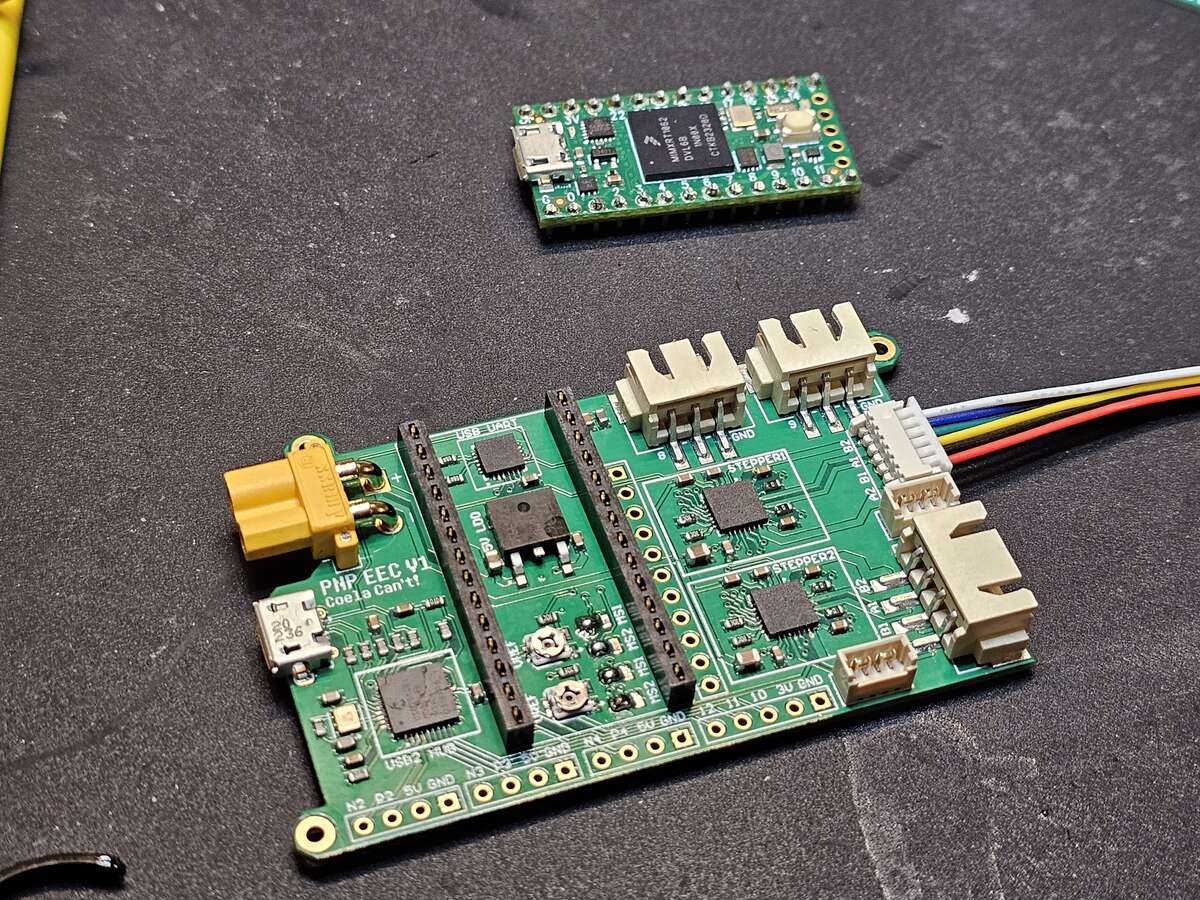
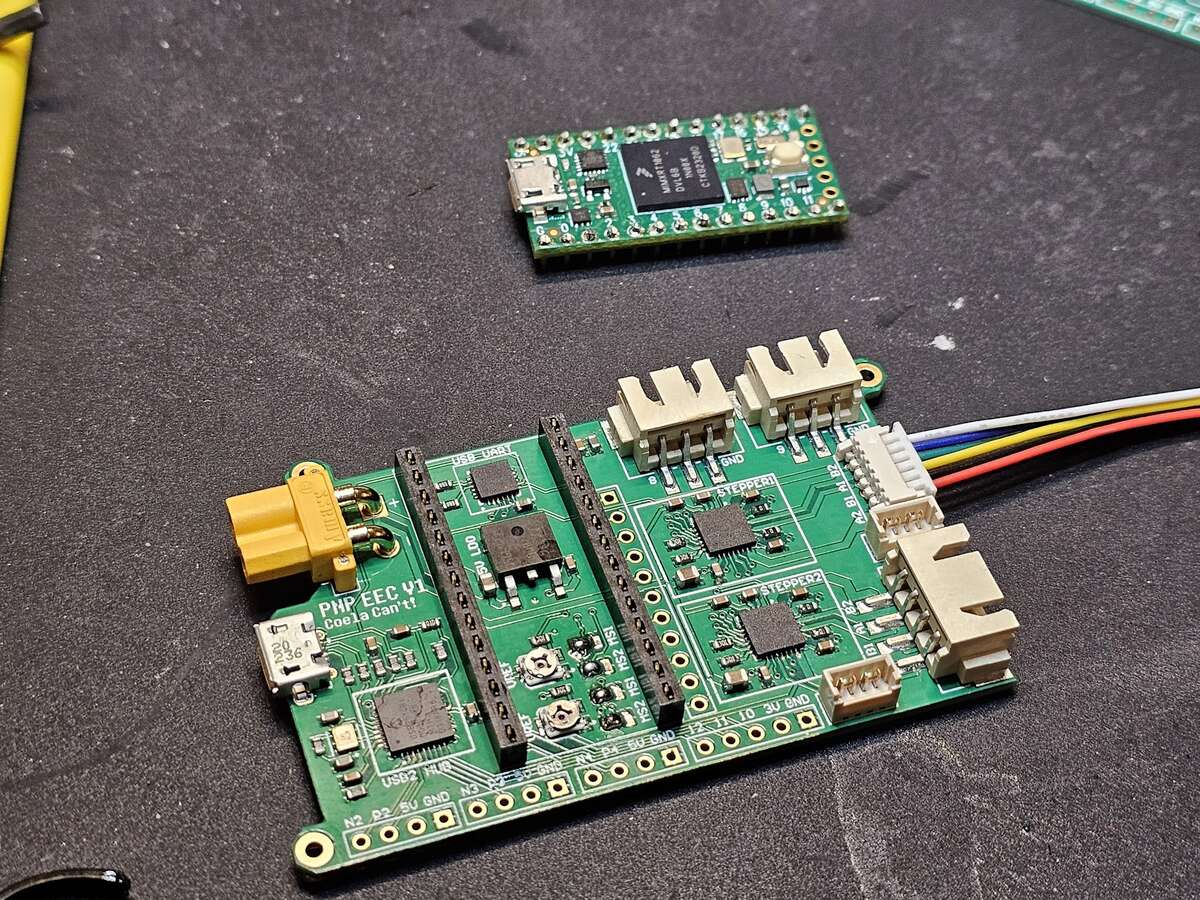
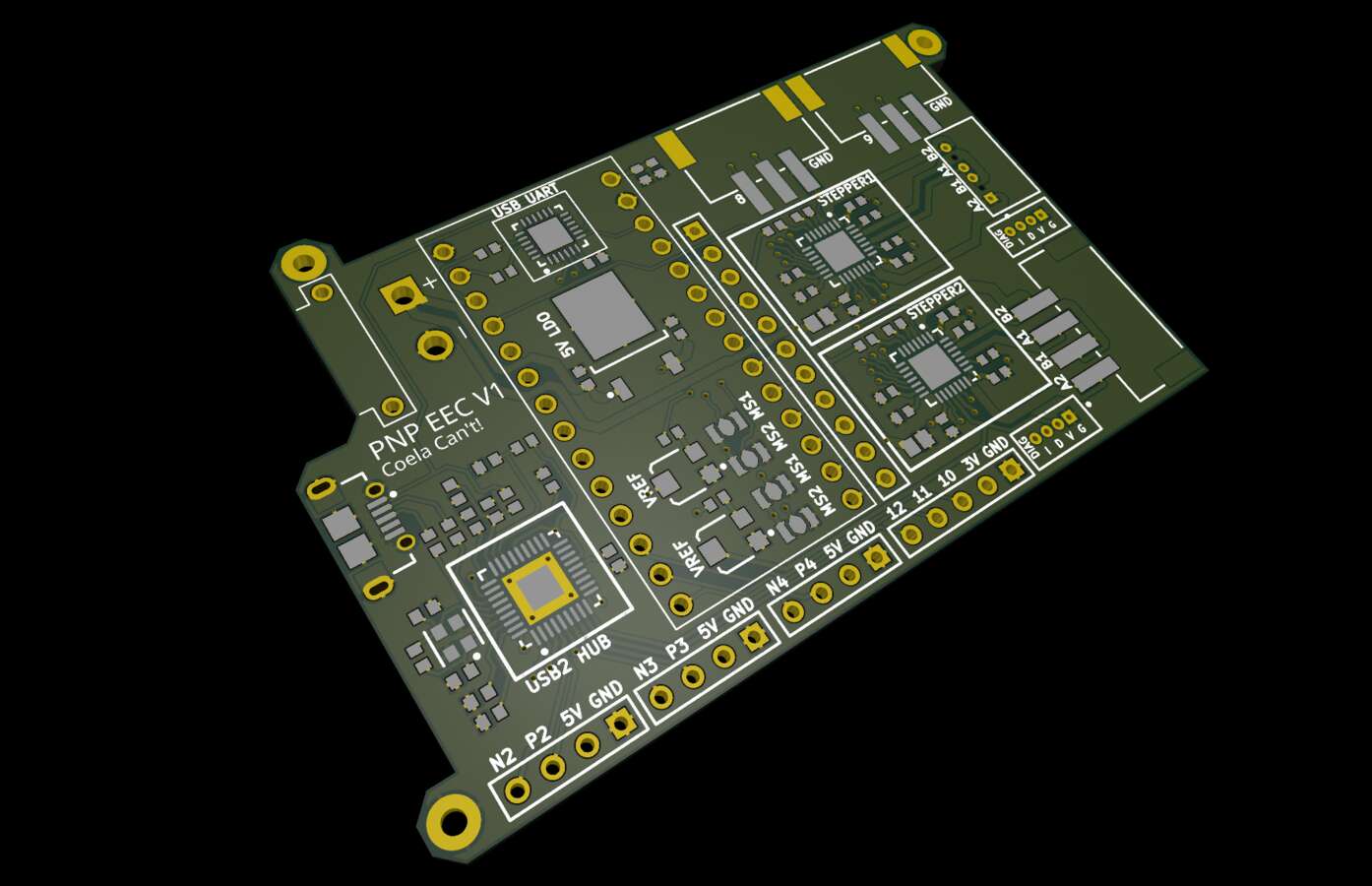
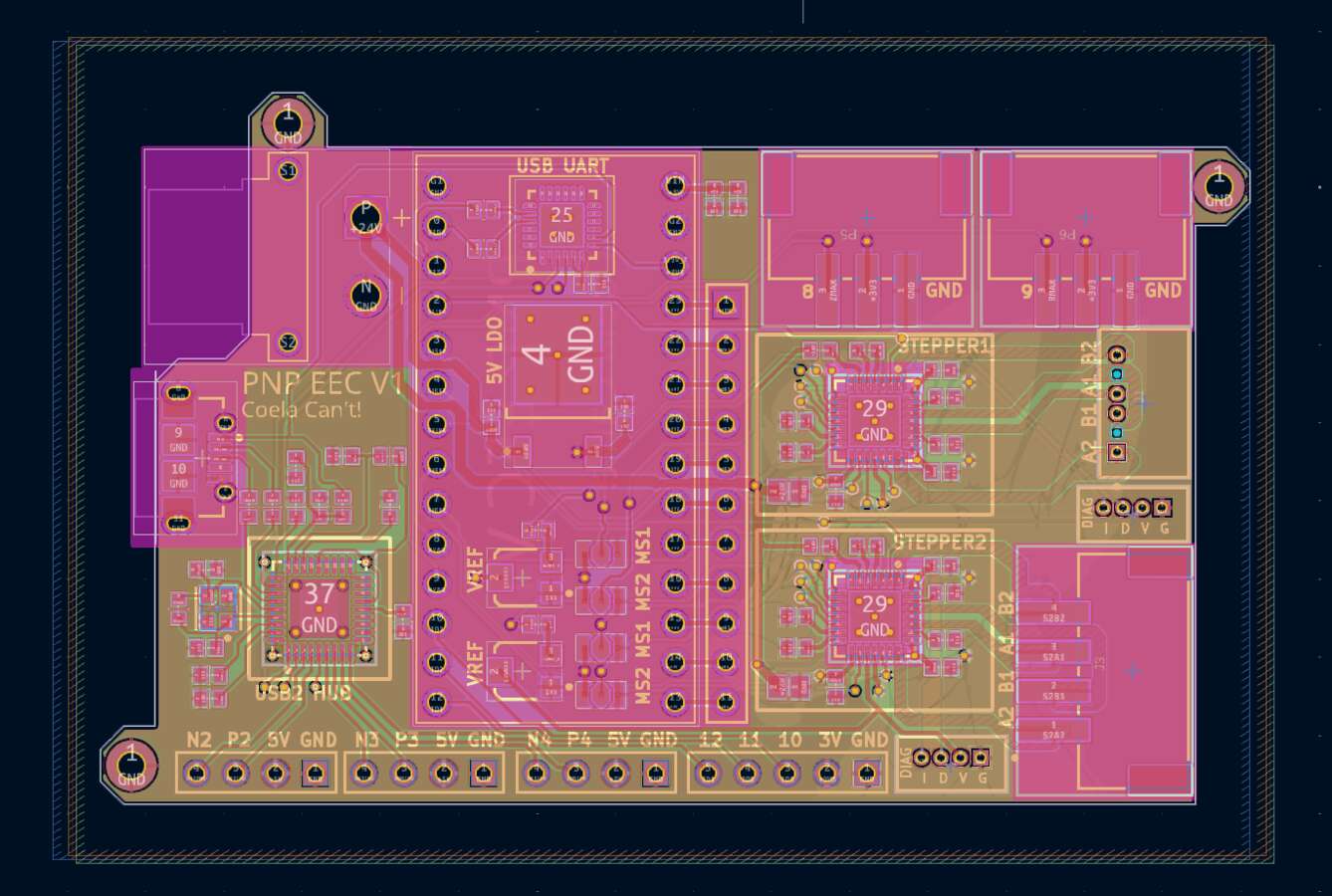
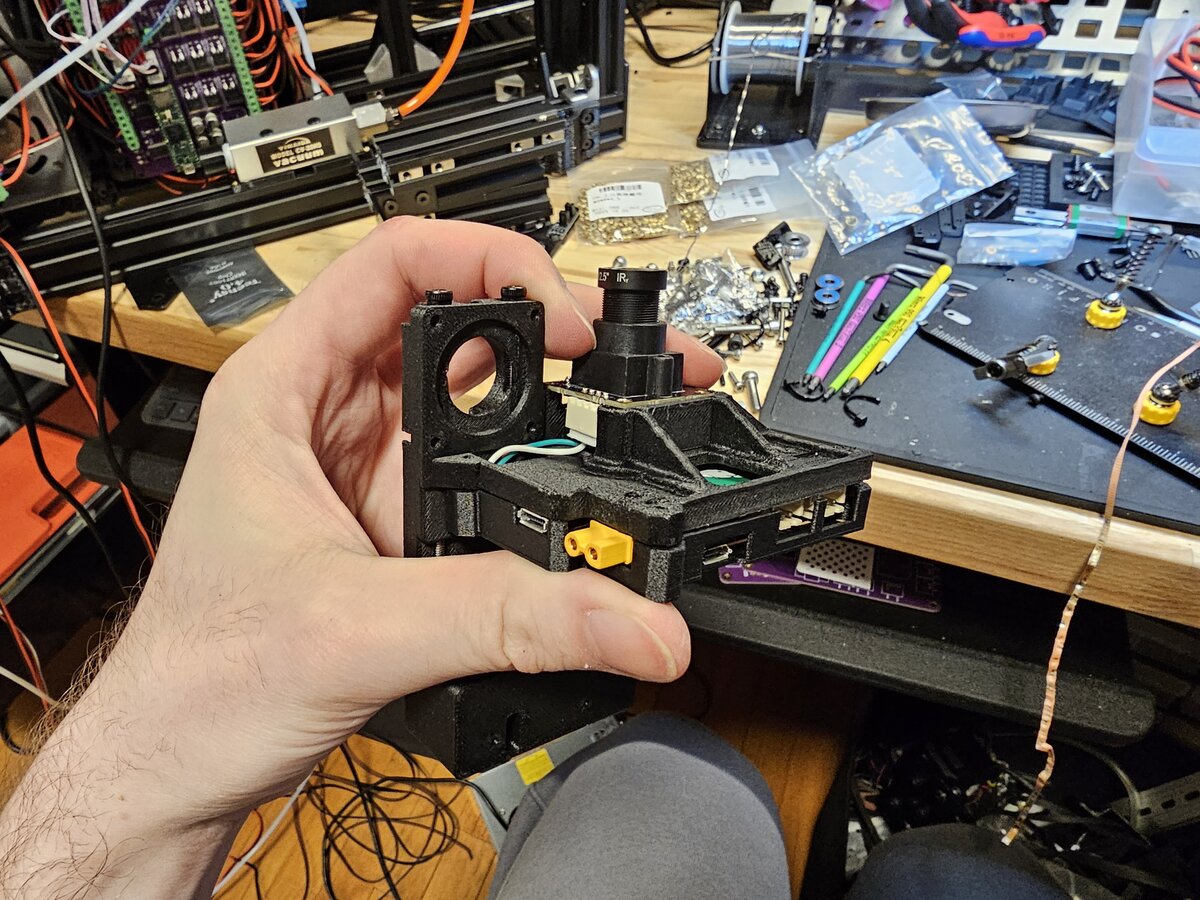
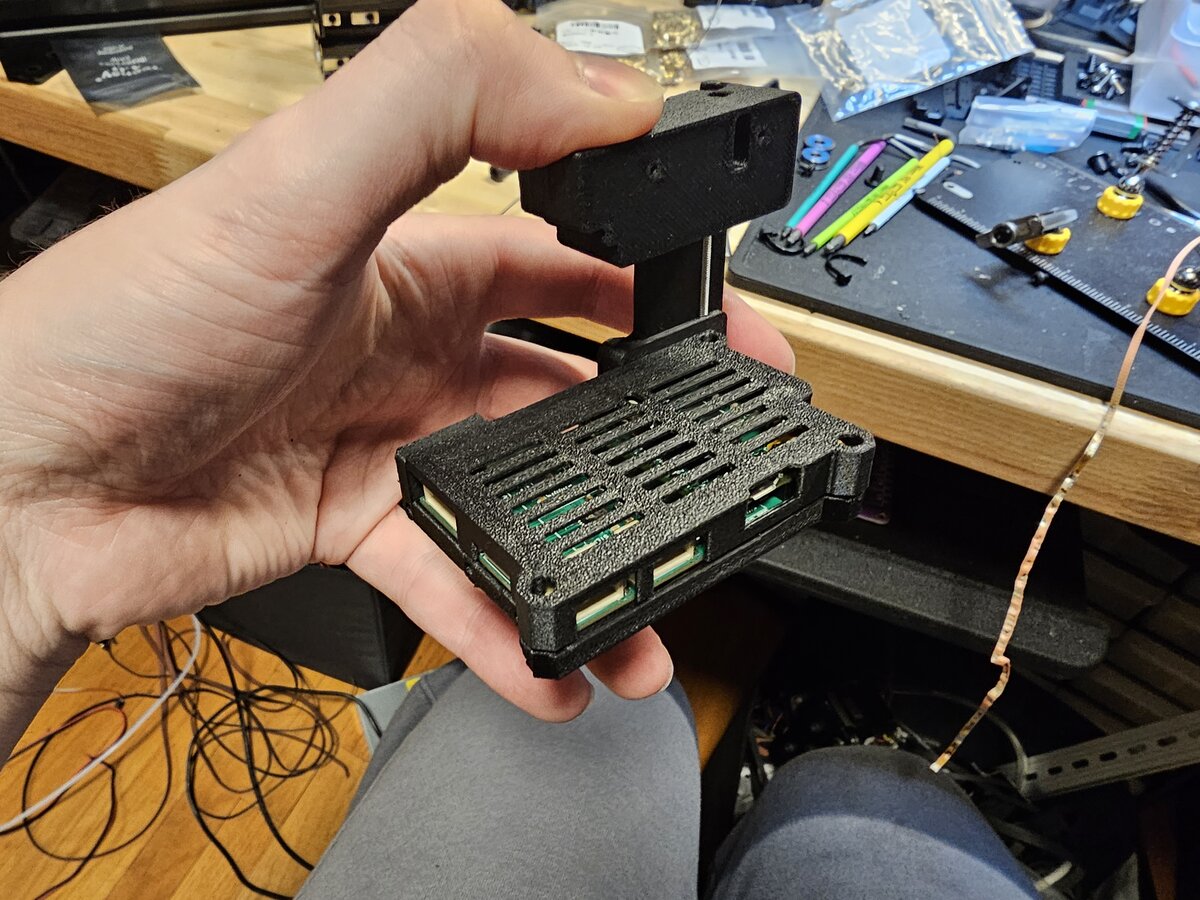
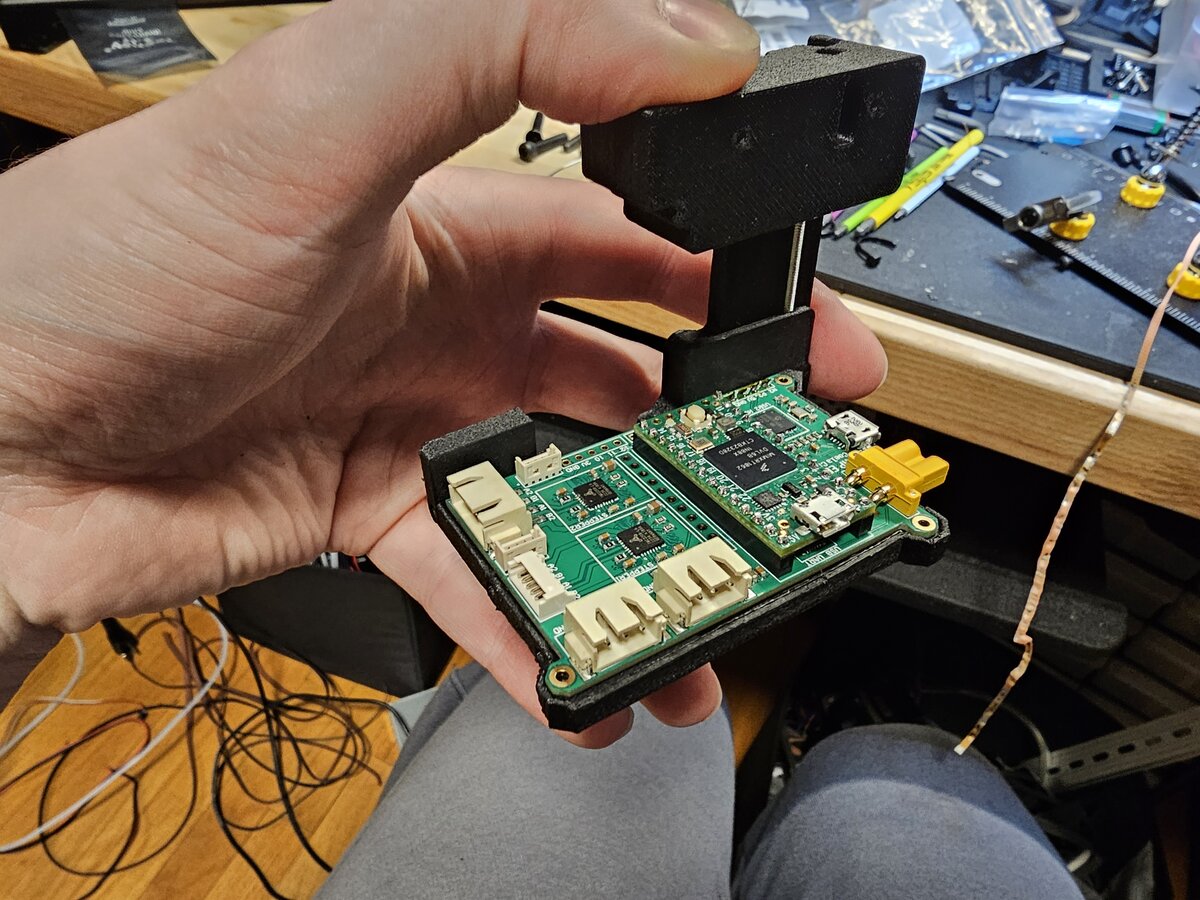
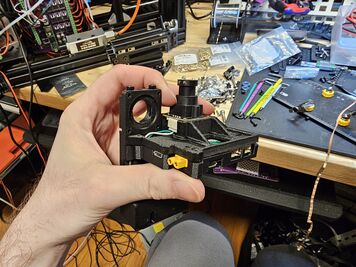
- Secondary controller for integrated USB hub to connect cameras/controller, Z and rotation axis stepper motor control with TMC2209 stepper drivers
- 120 fps cameras with fixed exposure and white-balance settings
- Fiducial camera for alignment of X and Y positions as well as fine-tuning the motion system backlash and pick-up locations
- Part camera for alignment of parts/components
|
[+]
Power Electronics and Control Systems
|
Solo Projects
|
2014 - Now
|
|
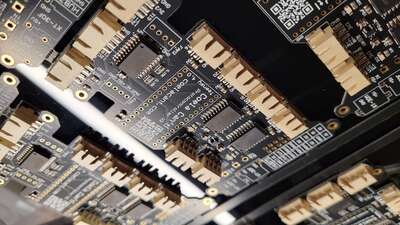
Designed and brought up mixed-signal, power-conversion, LED-control, sensor, and motion-control PCBs for production hardware, lab equipment, and custom automation systems:
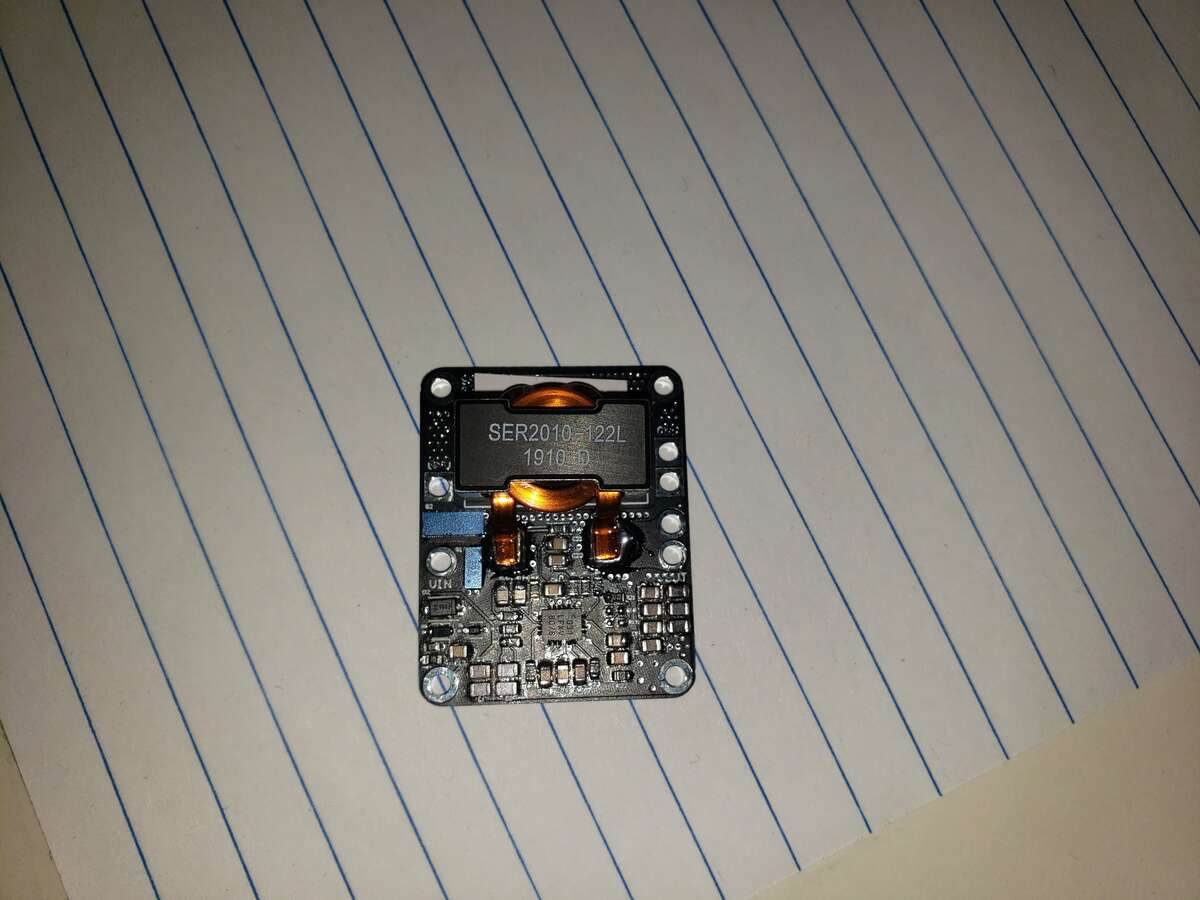
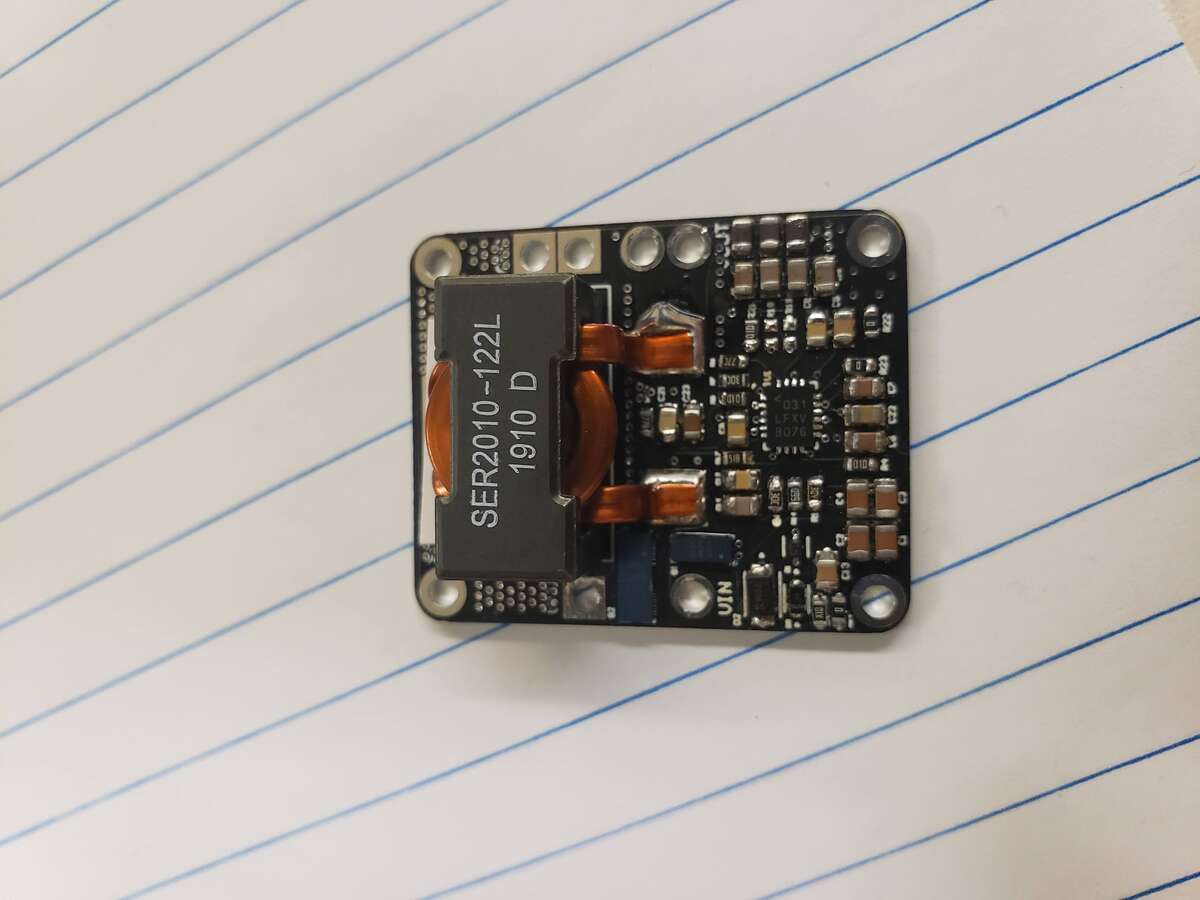
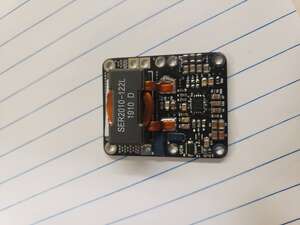
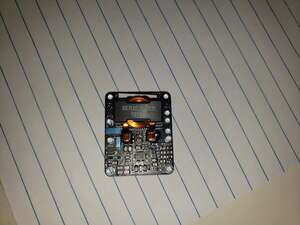
- Custom Buck Power Regulators: Gallium nitride-based buck converters stepping 60 V down to 5 V at up to 20 A
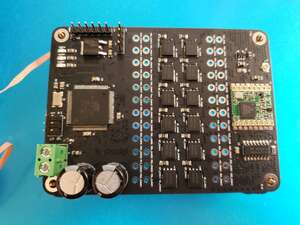
- LoRa Remote Firework Igniter: 12-channel, 2 A LoRa-based firework-igniter controller prototype
- Haptics Research Motor Driver: DC motor driver with sensor feedback for inverted-pendulum and force-feedback experiments
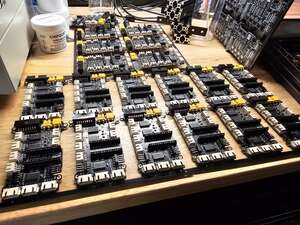
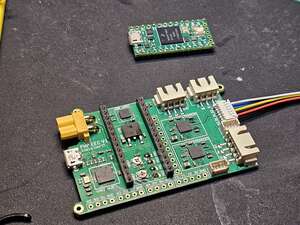
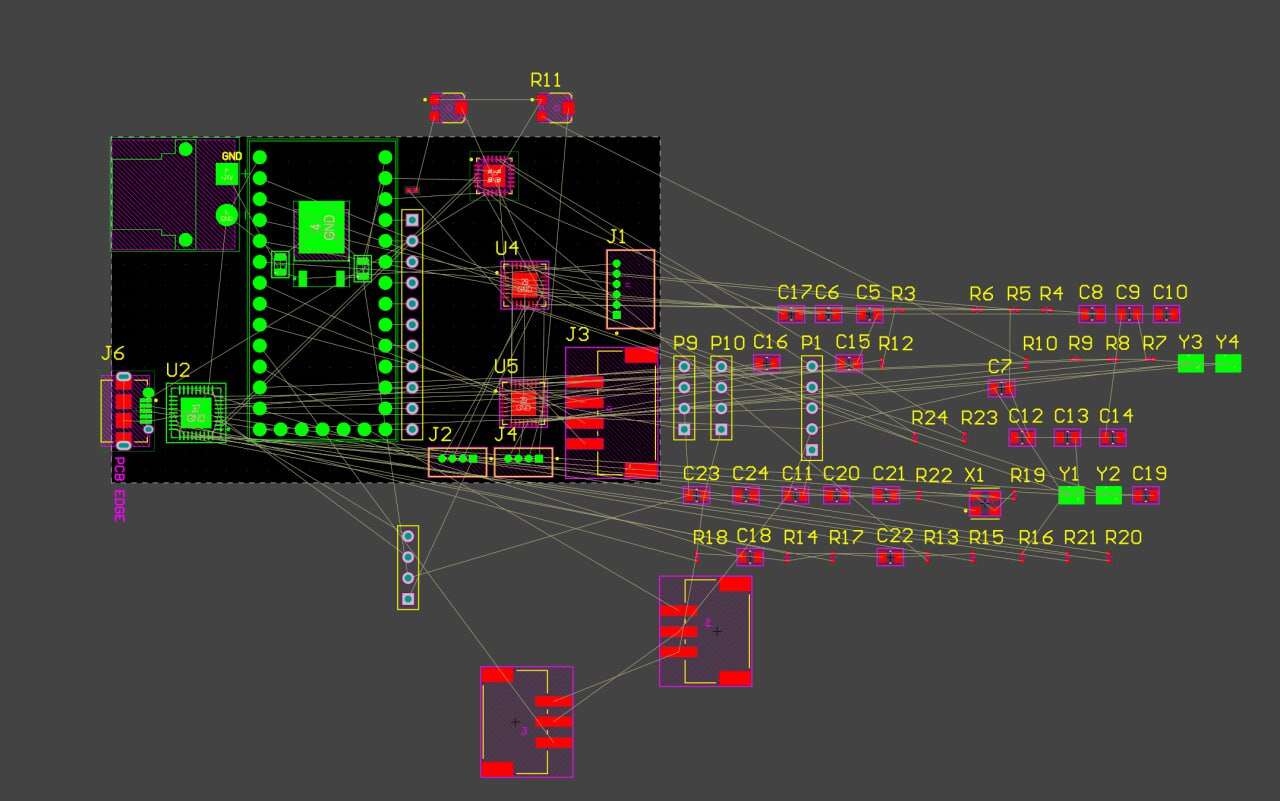
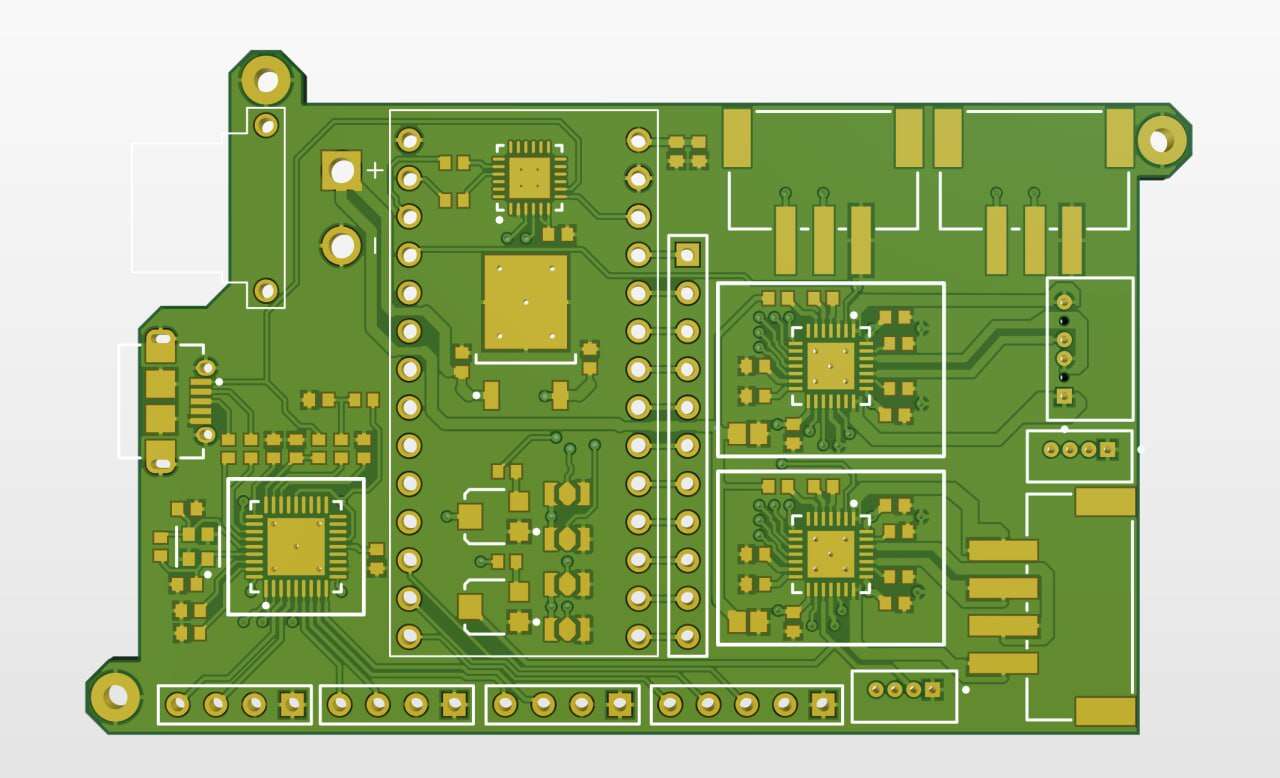
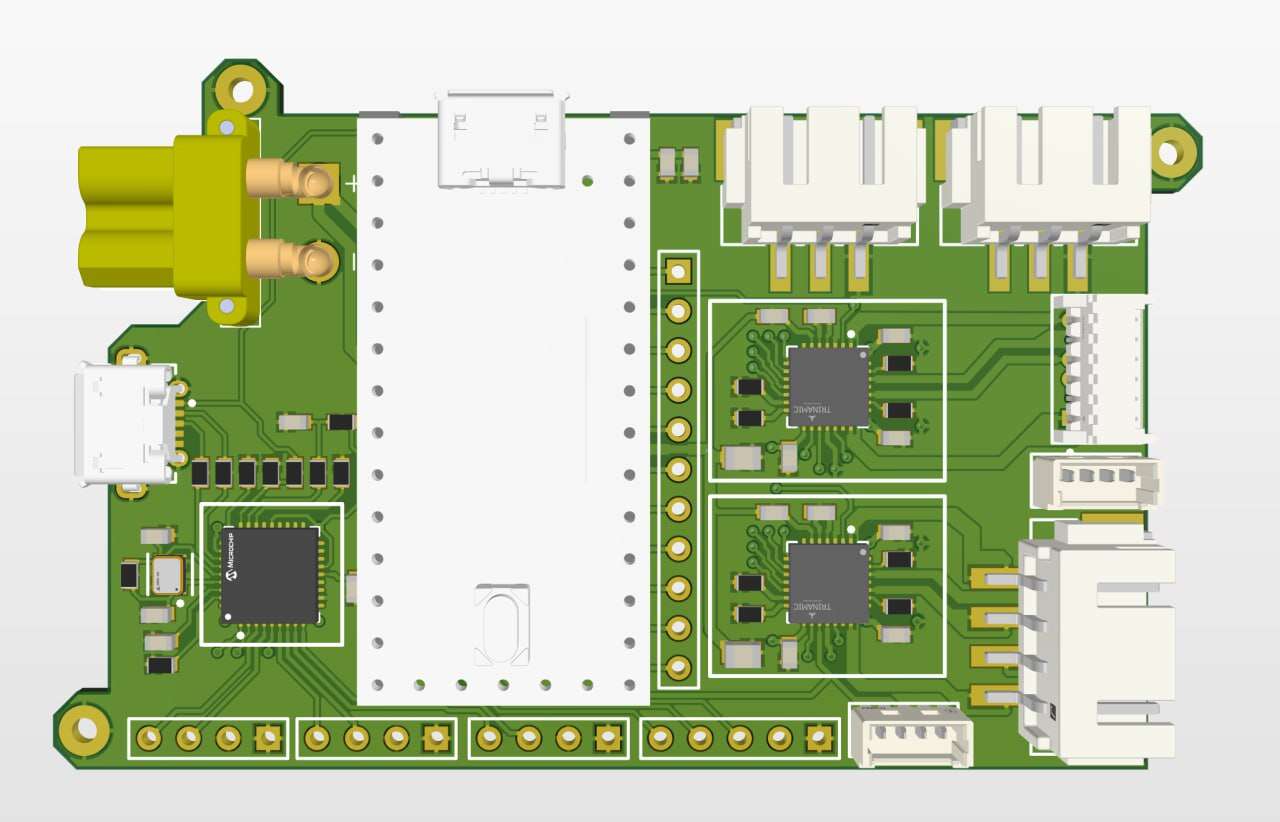
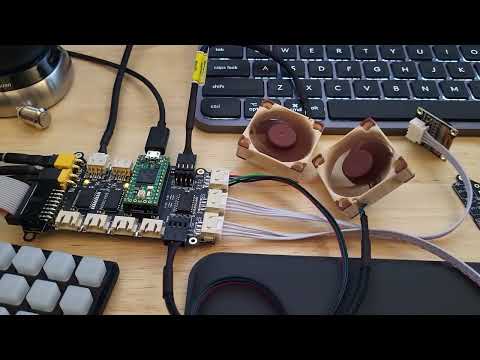
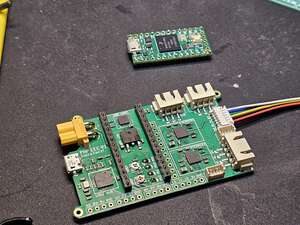
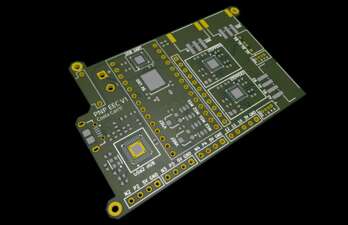
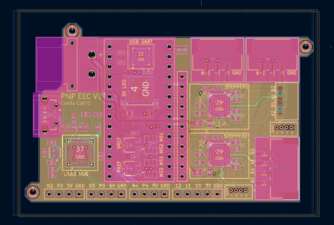
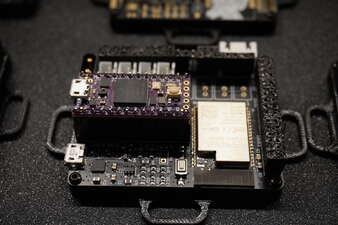
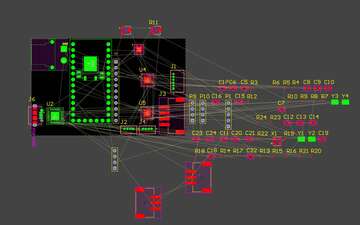
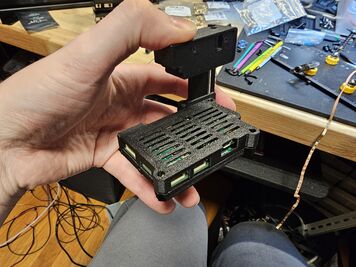
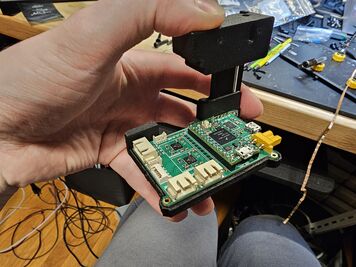
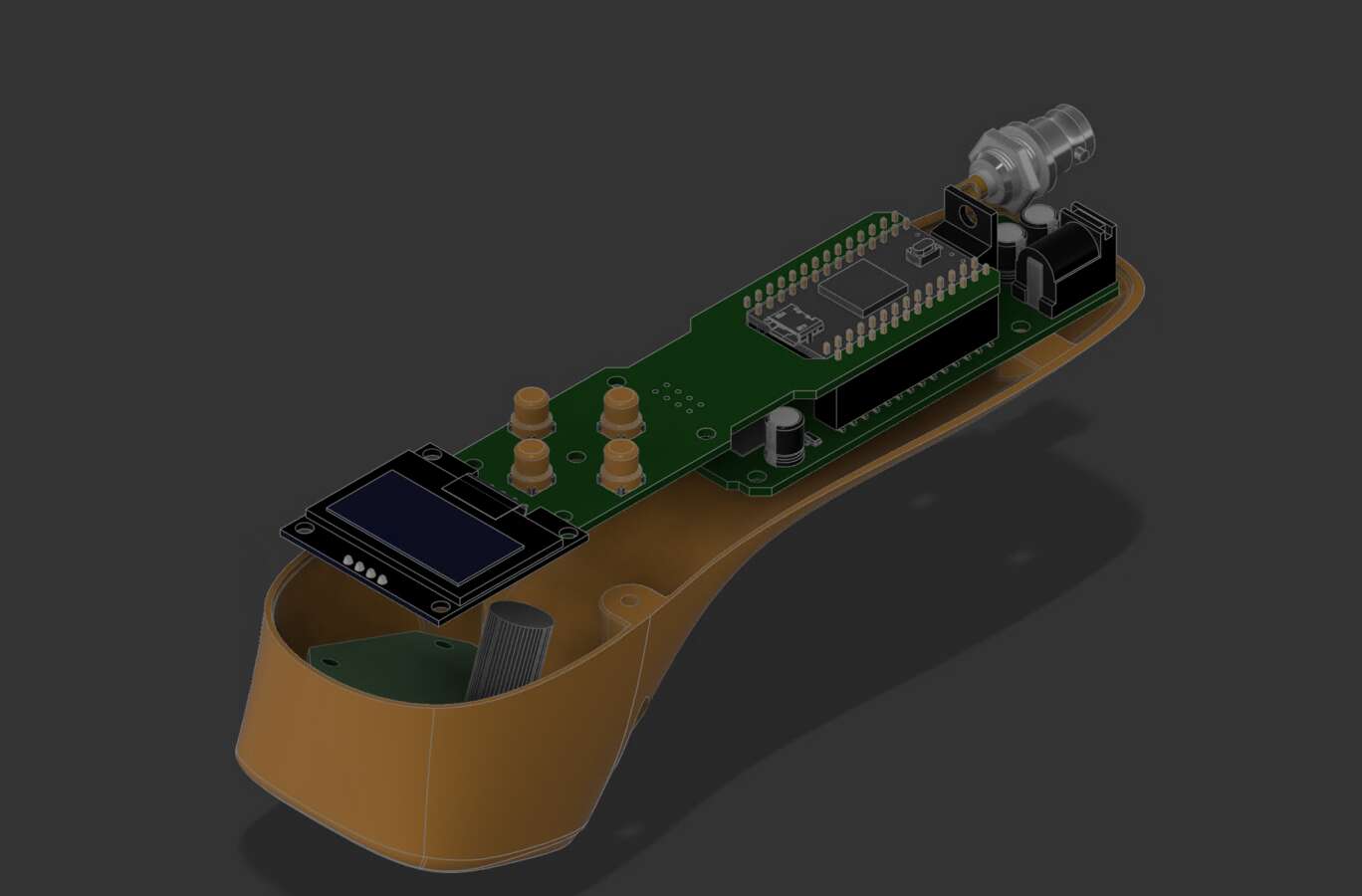
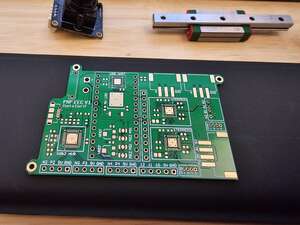
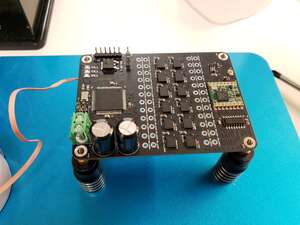
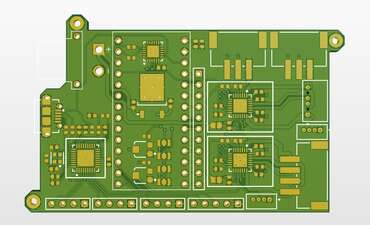
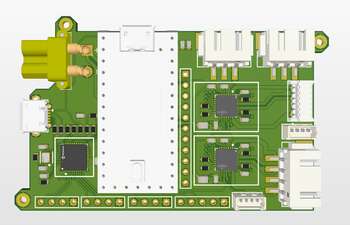
- High‑Speed Pick‑and‑Place End-Effector Controller: High-speed pick-and-place end-effector controller: board with onboard power regulation, a 4-port USB hub for cameras and motion control, and two TMC2209 stepper drivers
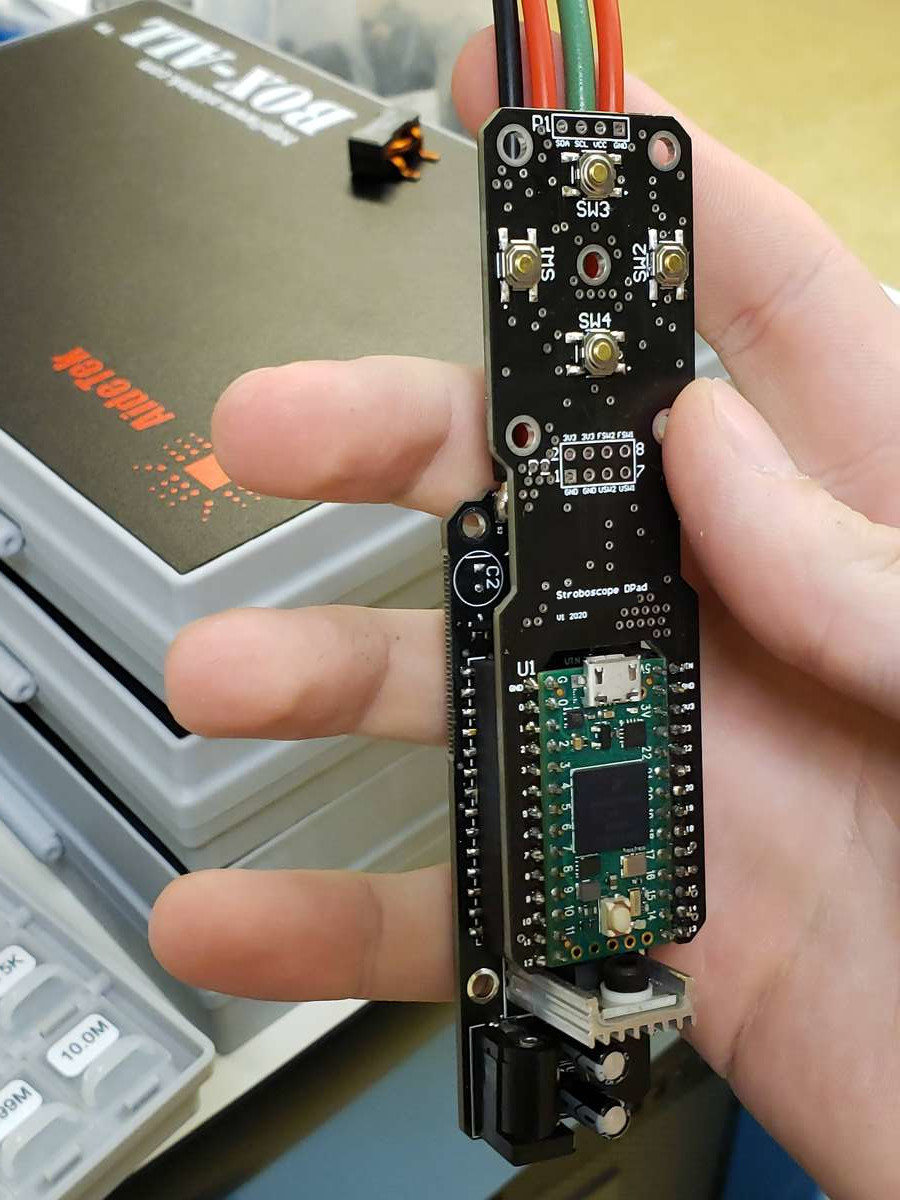
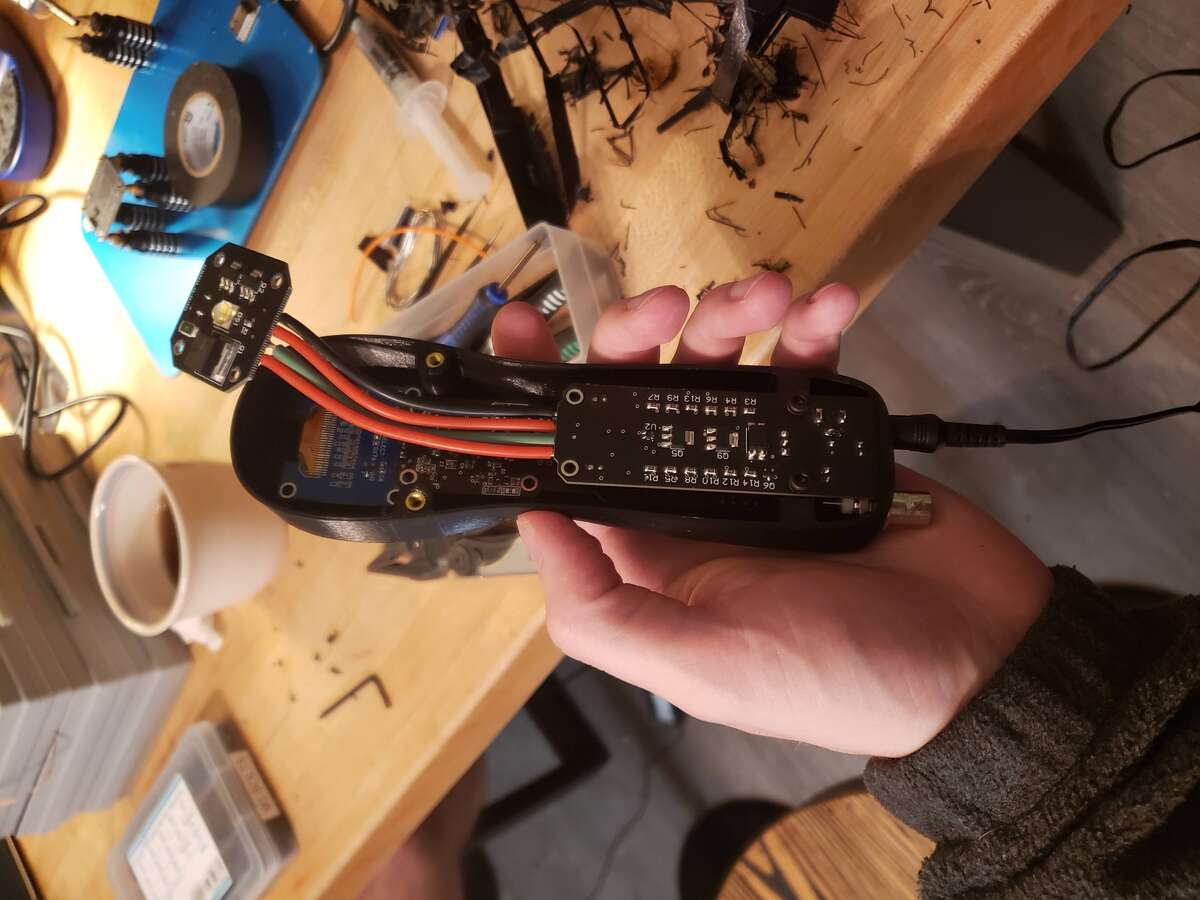
- Stroboscope: High‑frequency LED stroboscope for motion analysis and AC/DC motor testing.
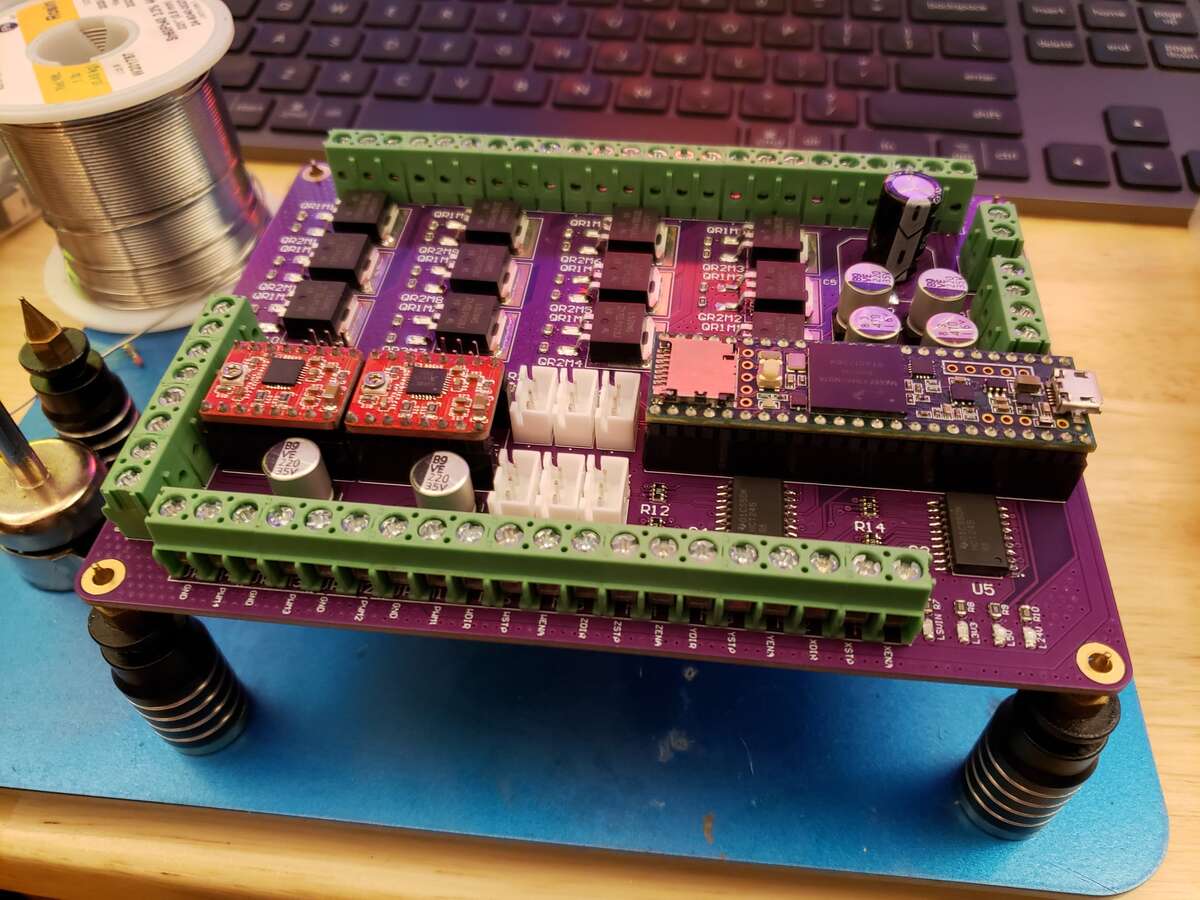
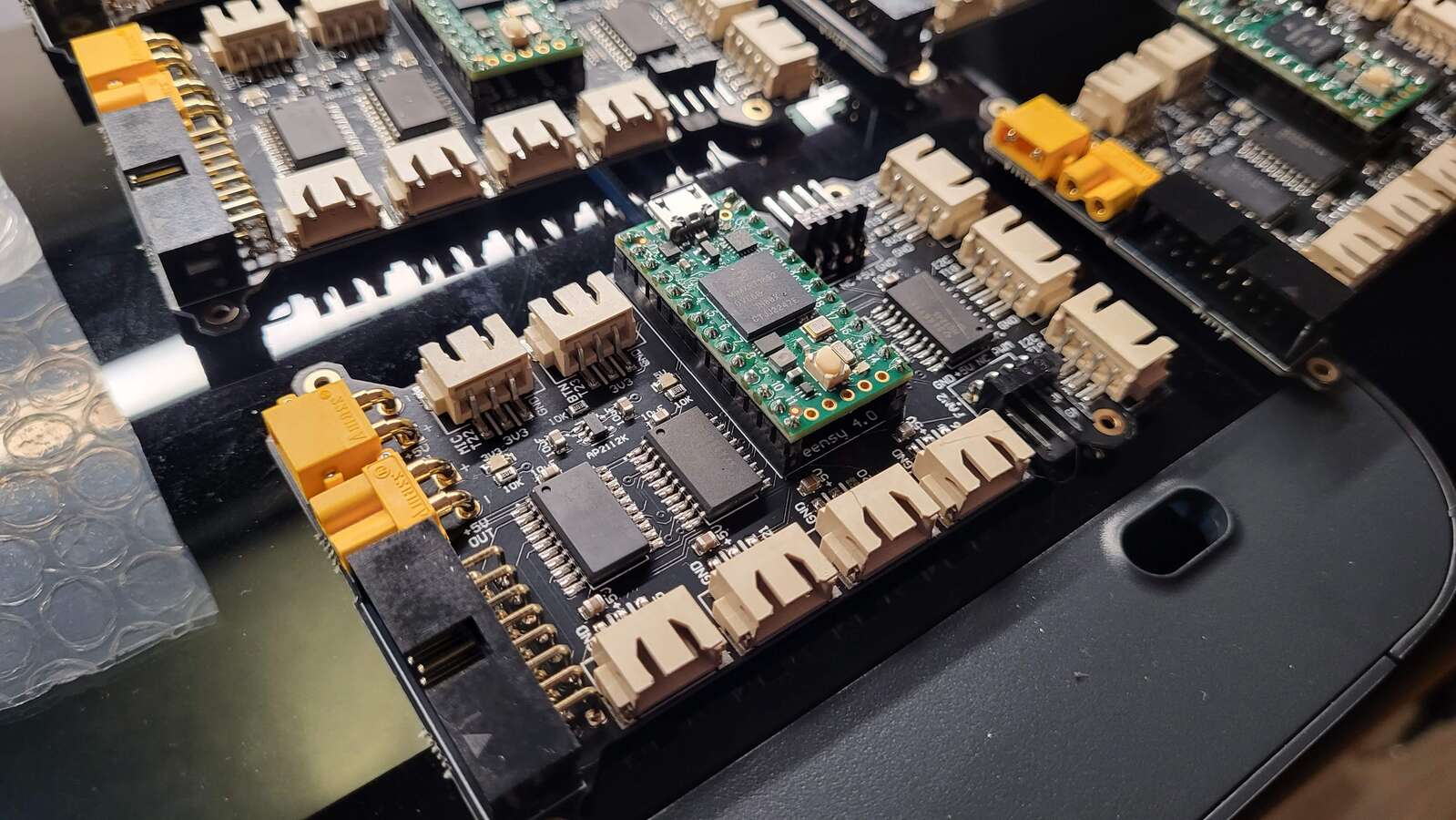
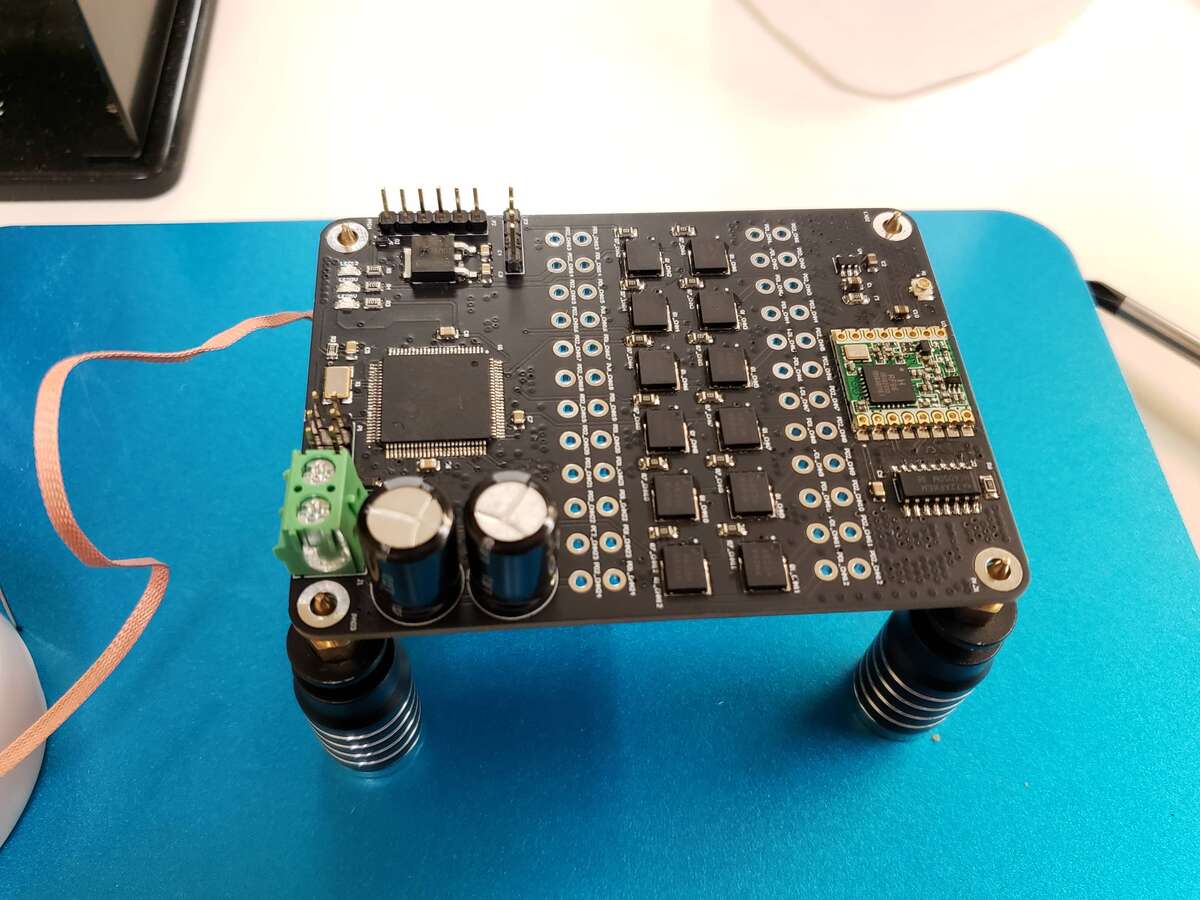
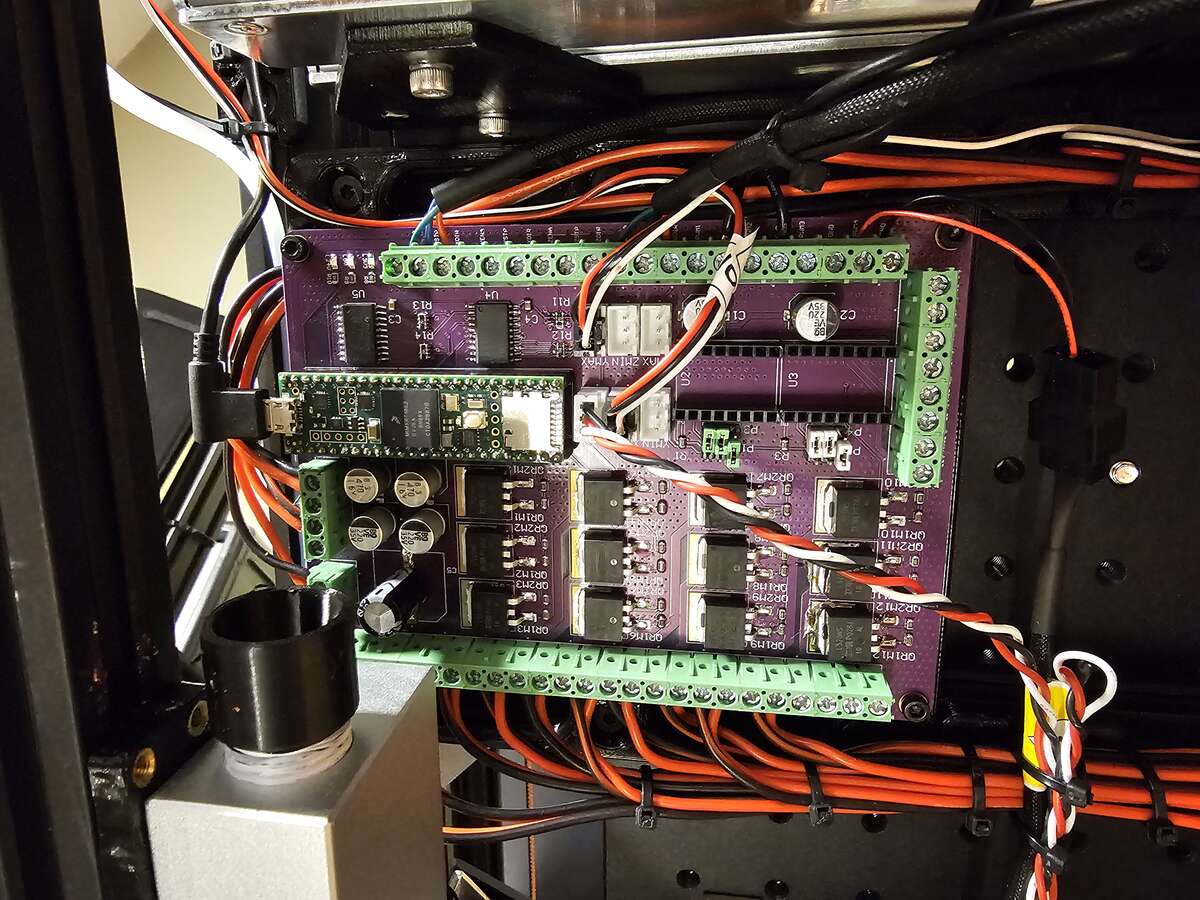
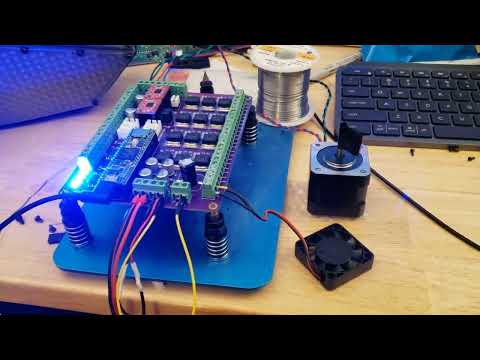
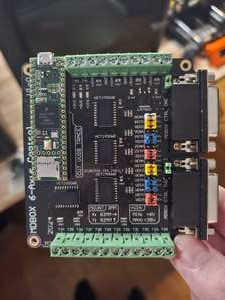
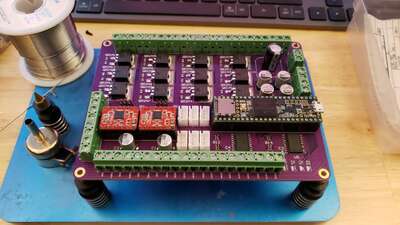
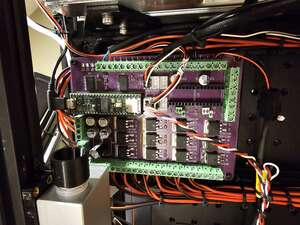
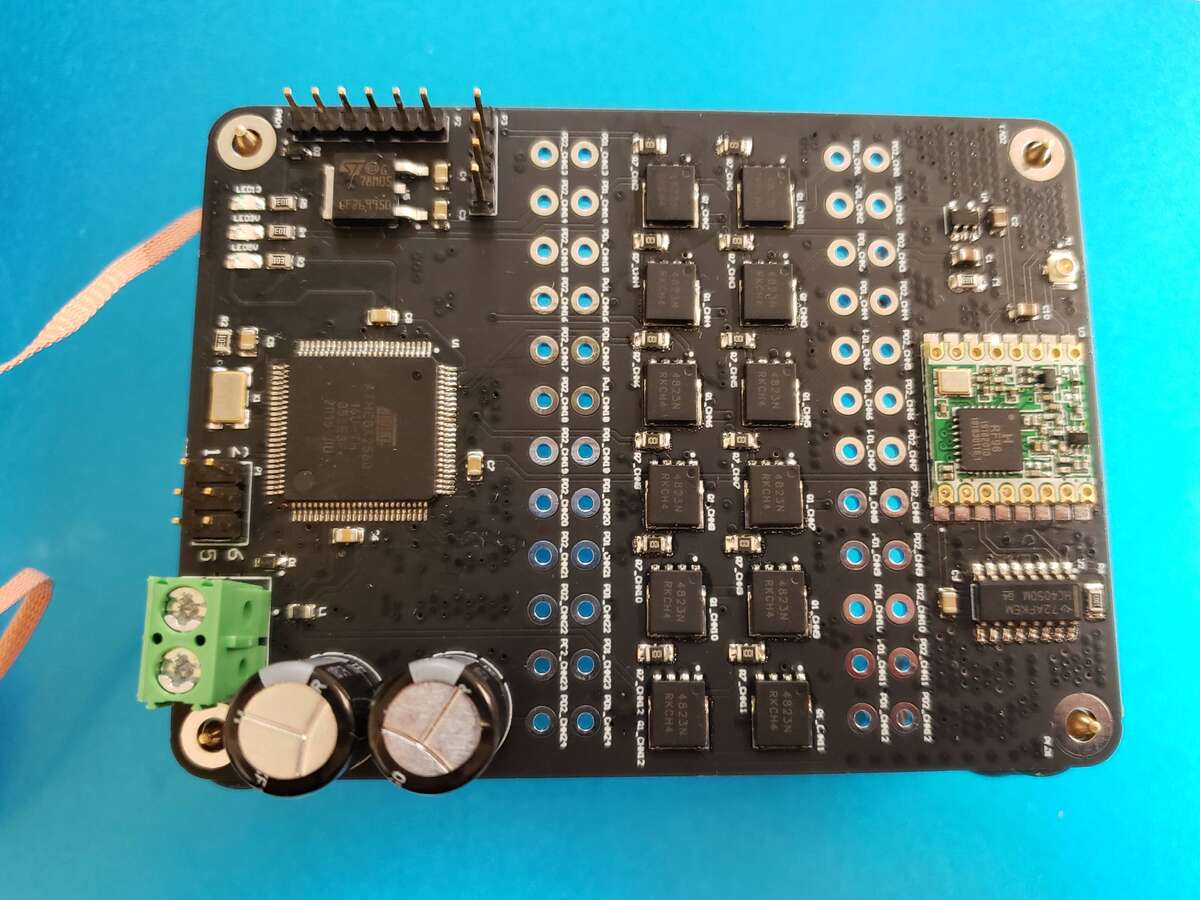
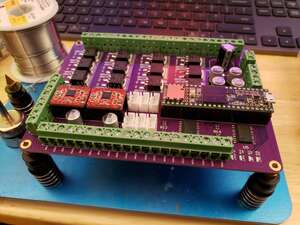
- Controller for High-Speed Pick‑and‑Place: CNC control board handling six stepper motors, twelve MOSFET channels for pneumatics, and integrated power regulation
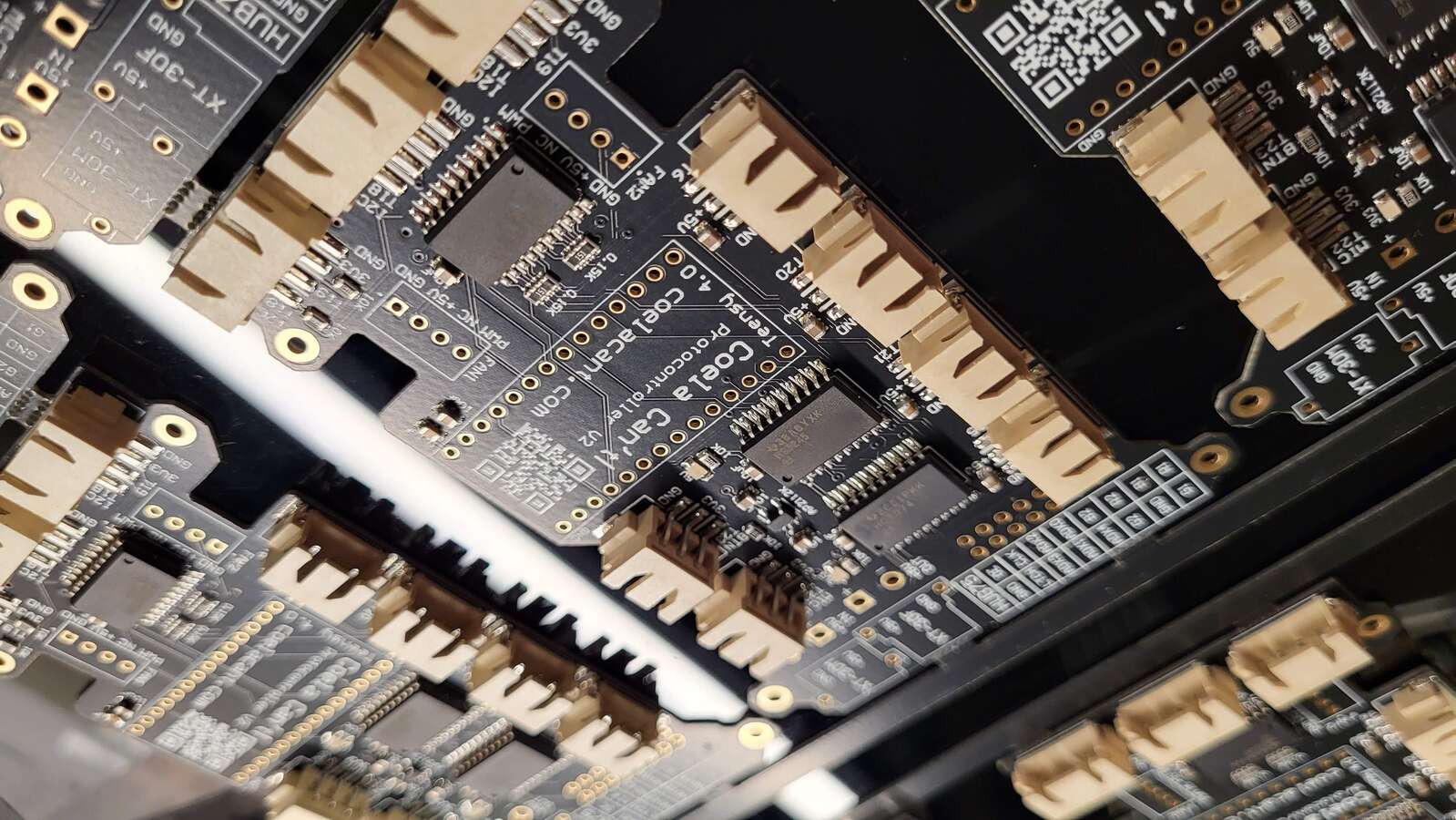
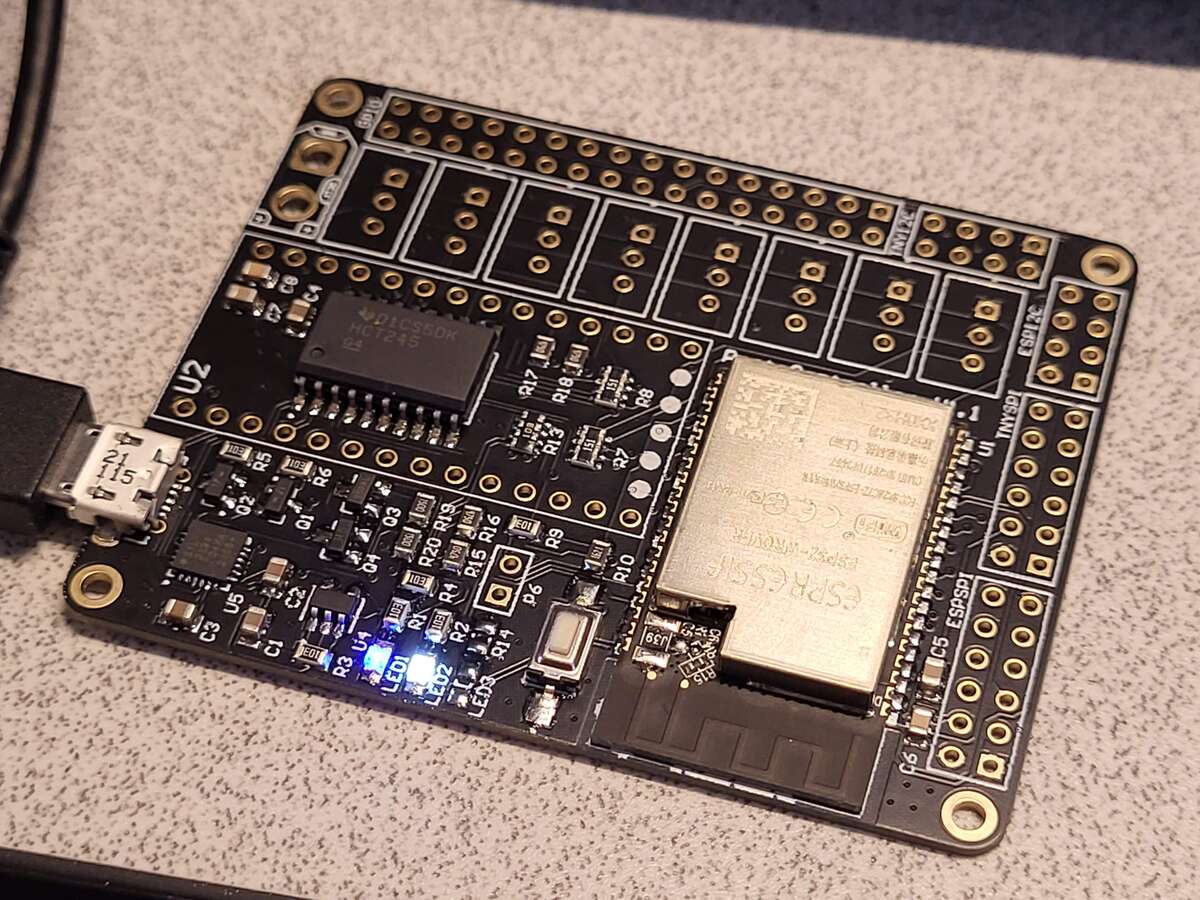
- 8‑Channel HUB75 + WS2812 LED Matrix Driver: LED controller integrating HUB75 logic (row/column multiplexing) and 8-channel 500 count addressable strips
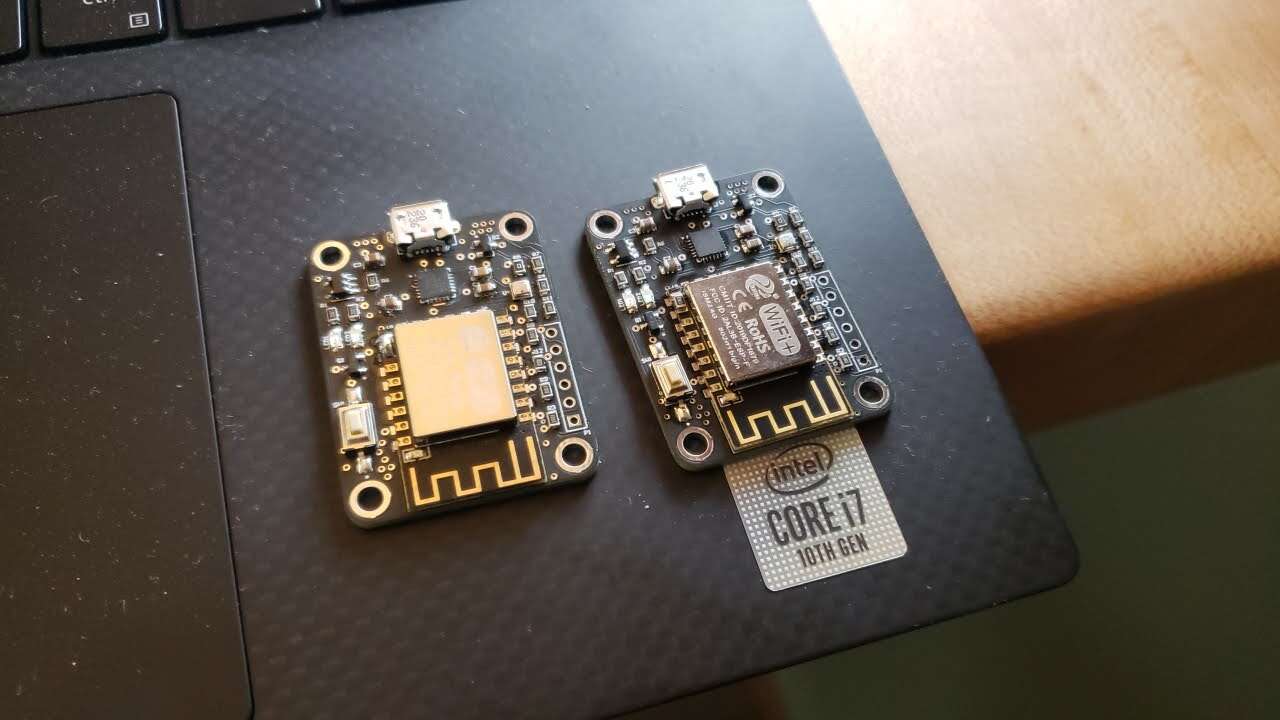
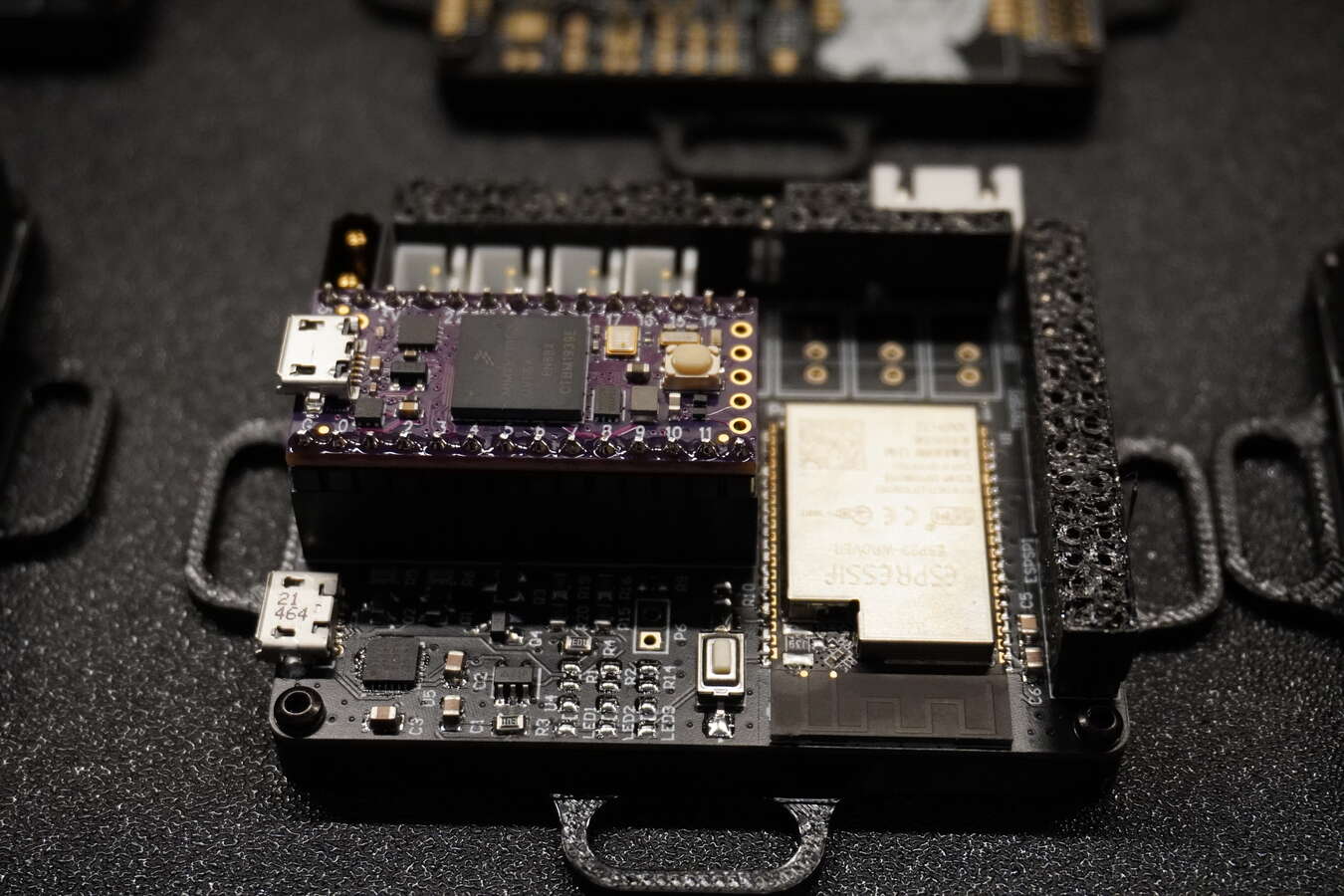
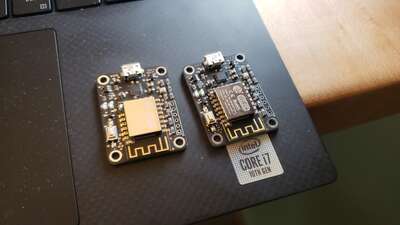
- Wireless WS2812 LED Strip Controller: ESP32 and Teensy 4.0‑based 8-Channel LED Strip controller - able to drive up to 4,000 LEDs
- ESP8266 + BME280 Environment Monitor: ESP8266 + BME280 environmental monitor: wireless temperature and humidity logger with web dashboard
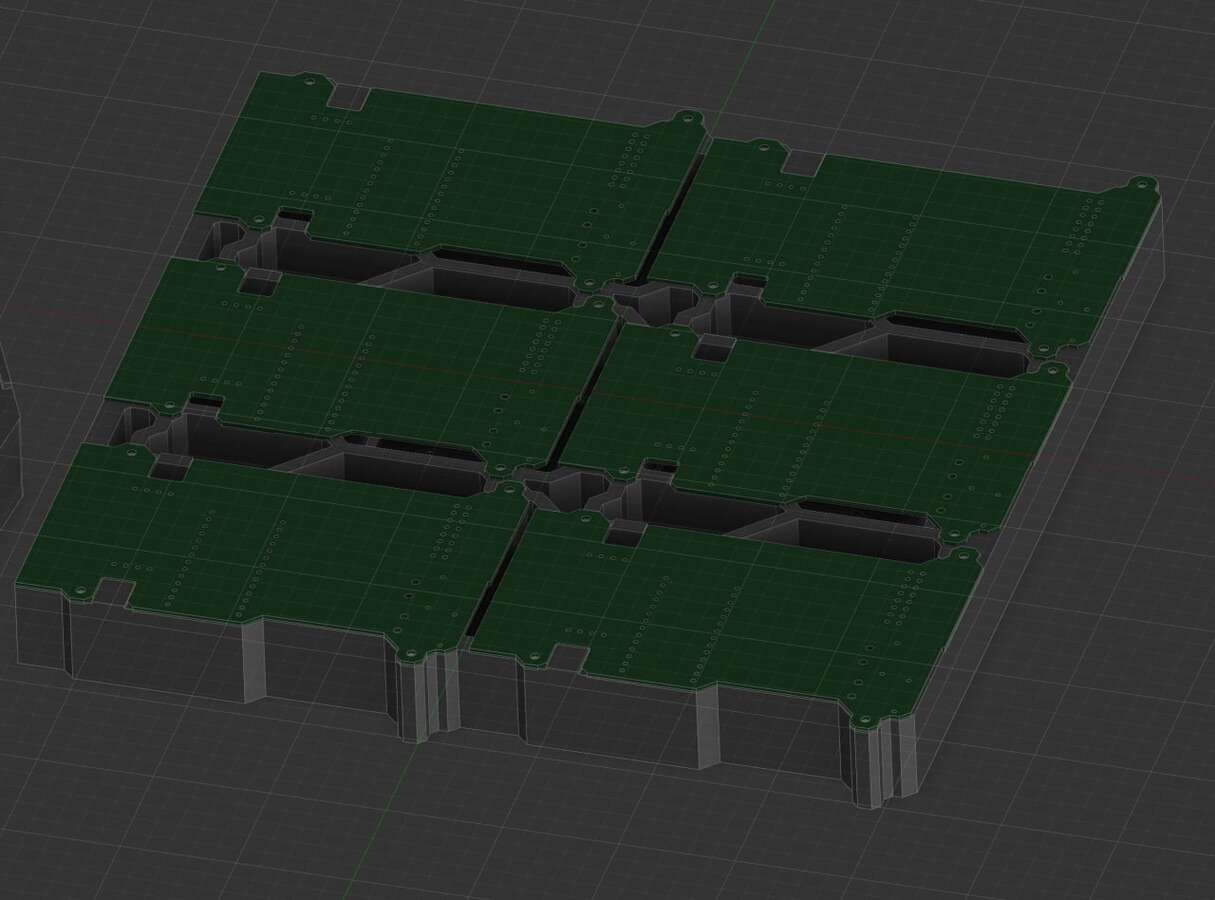
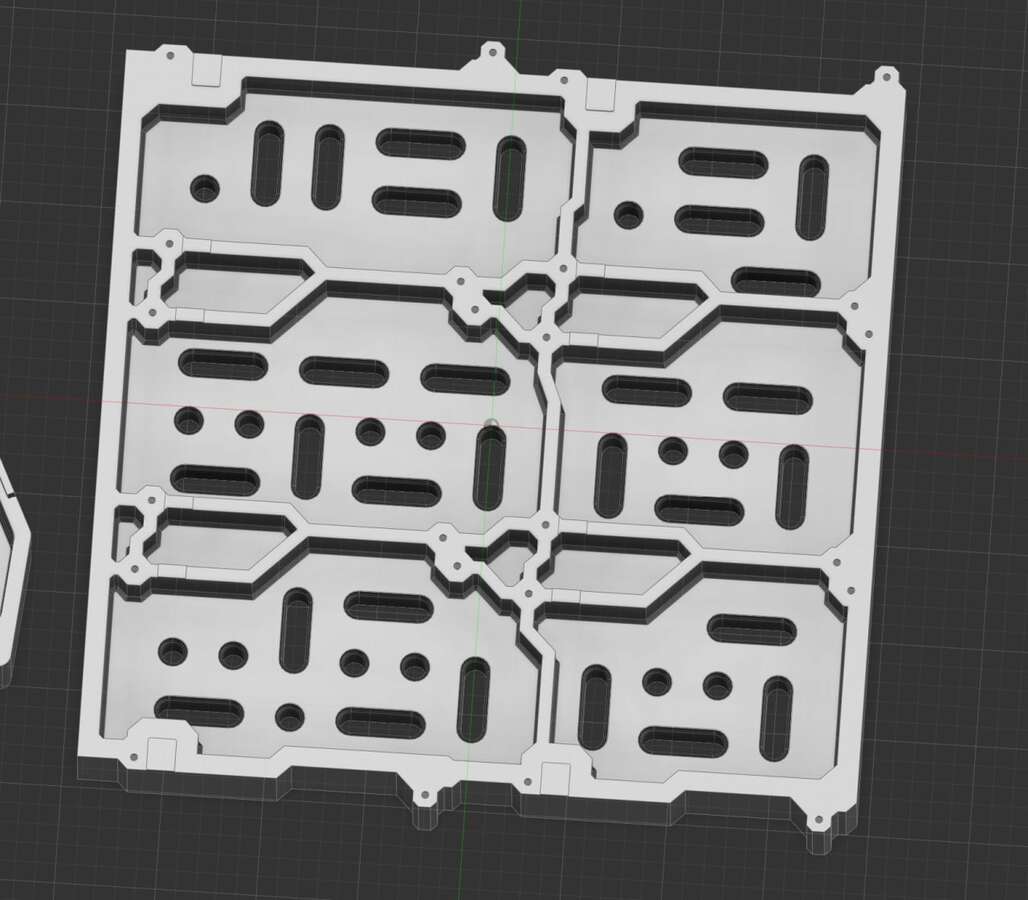
- SMT PCB Panelization Workflow: Panelized PCBs for small‑batch pick‑and‑place and reflow assembly
|
[+]
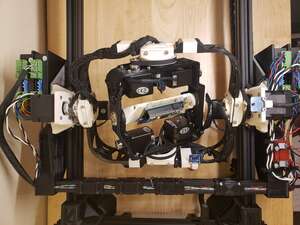
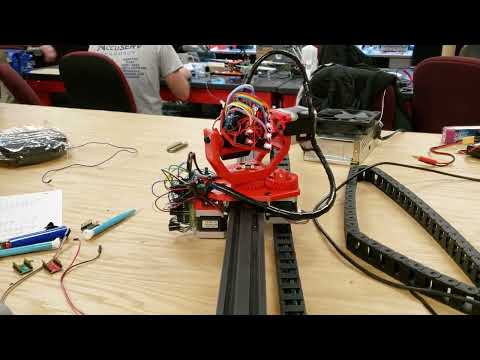
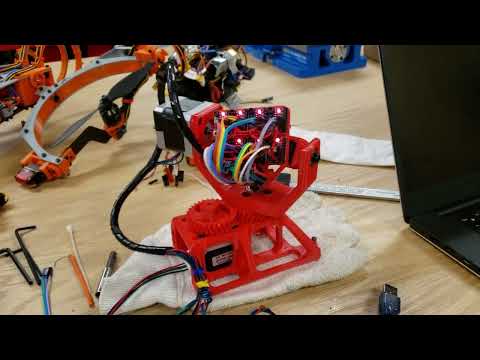
4-Axis Automated Gimbal for MEMS-Based Motion Processor Testing
| Github |
Solo Project
|
2018 - 2020
|
|
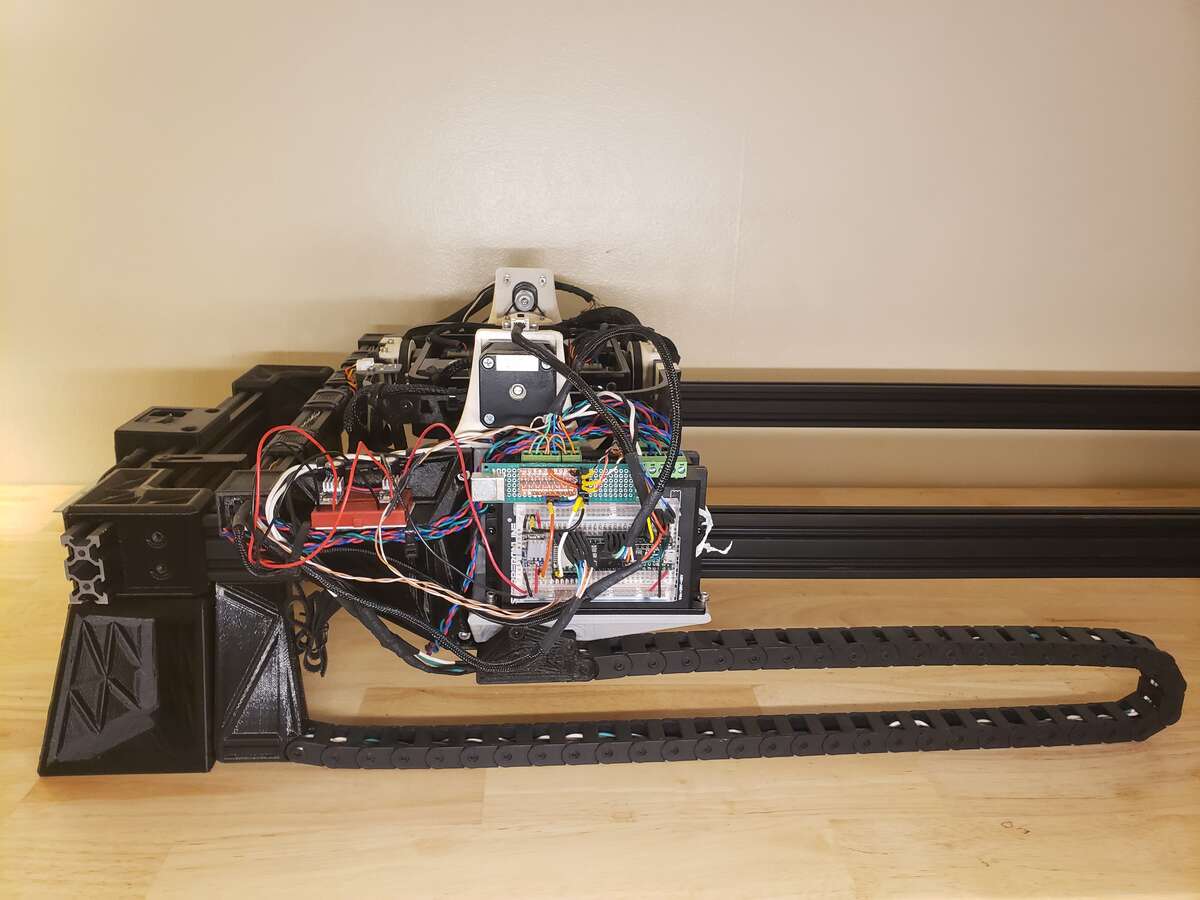
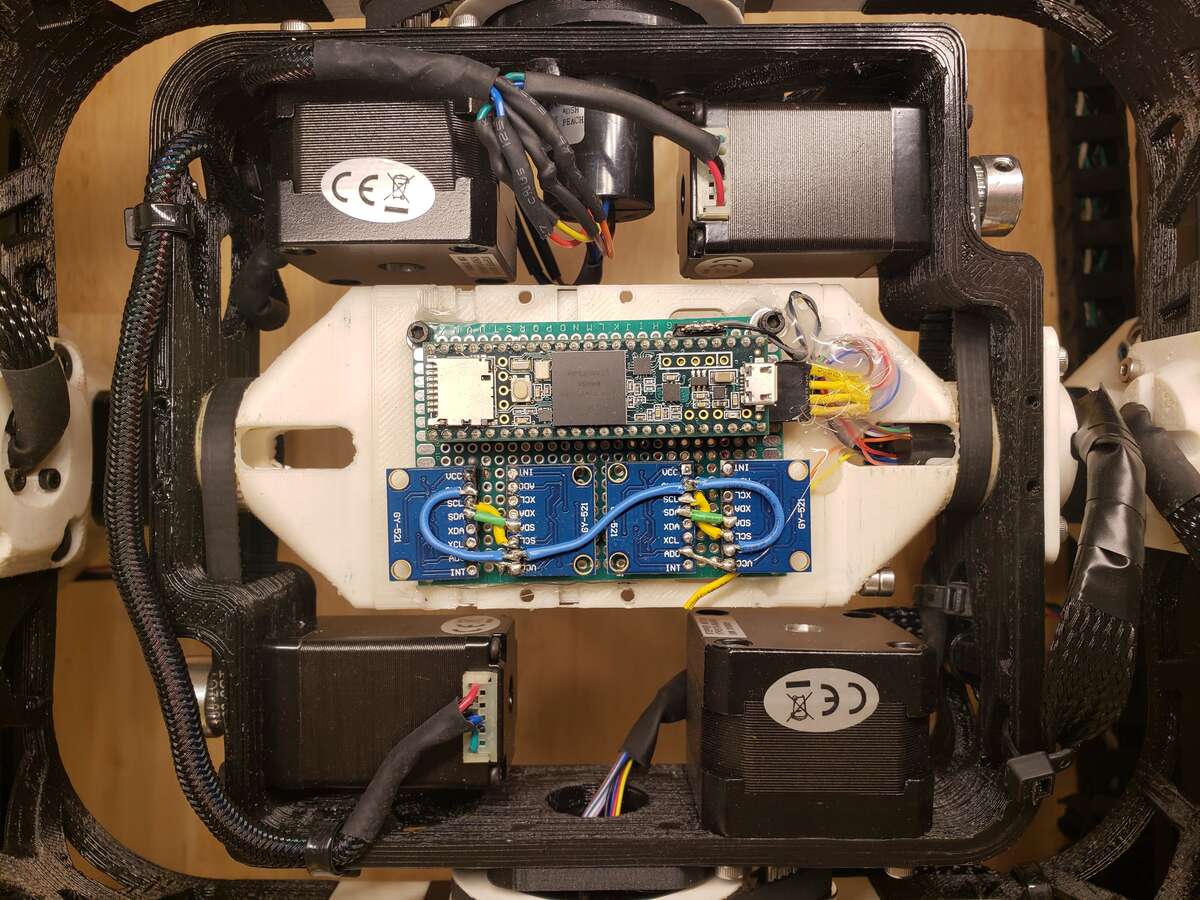
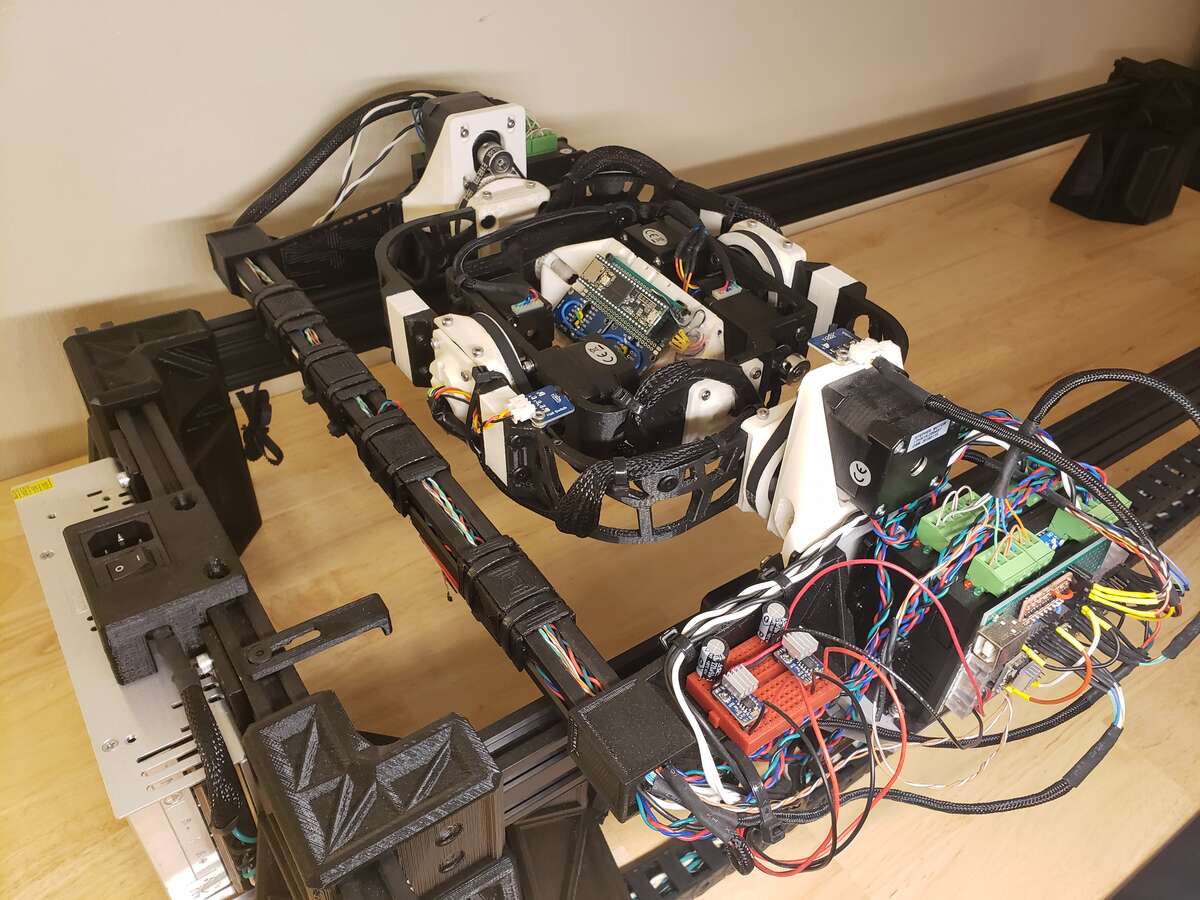
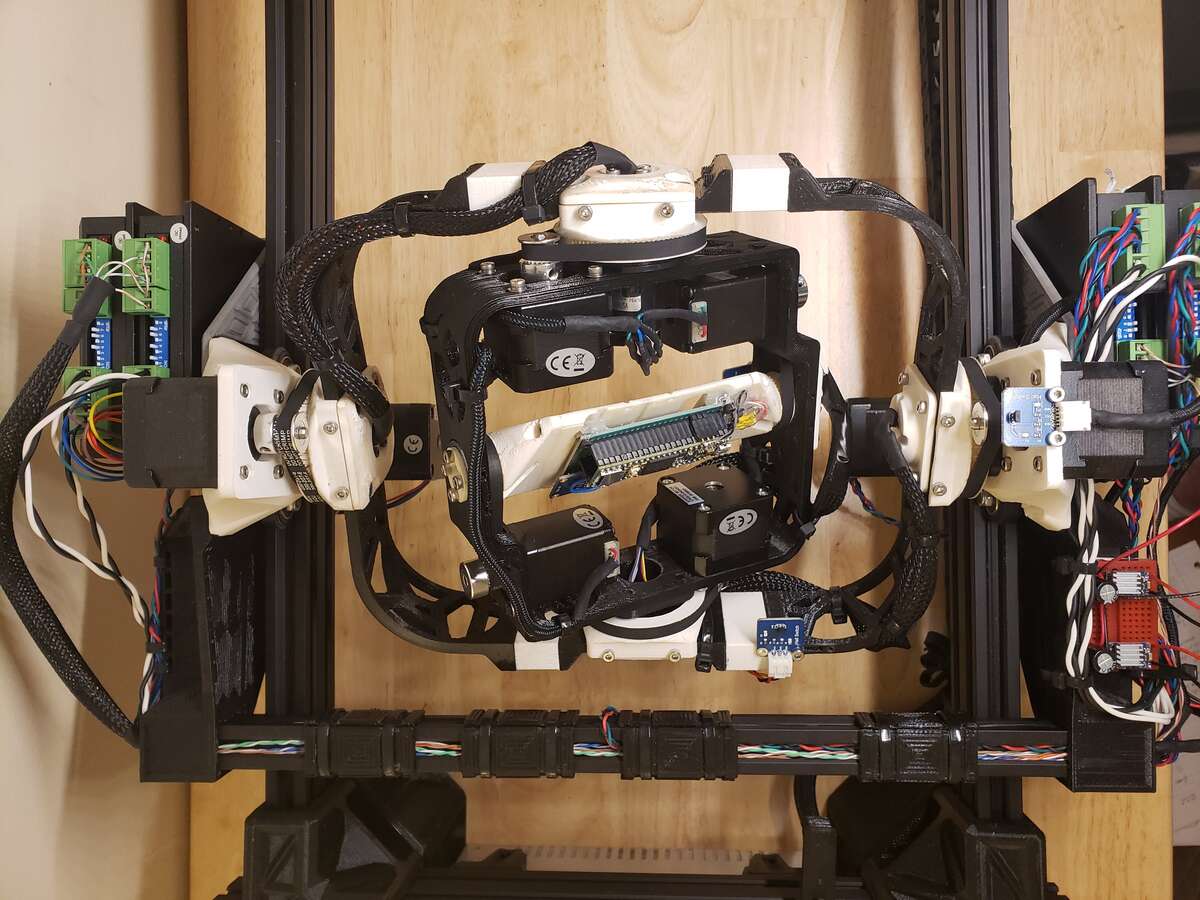
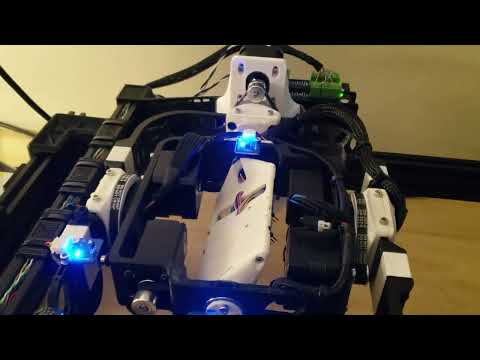
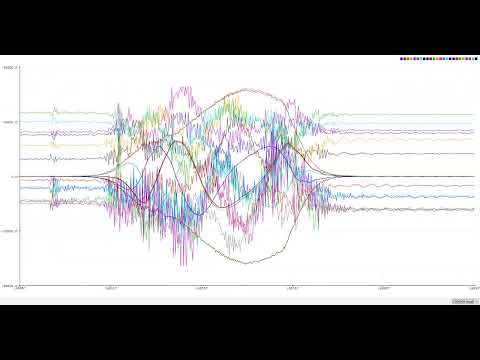
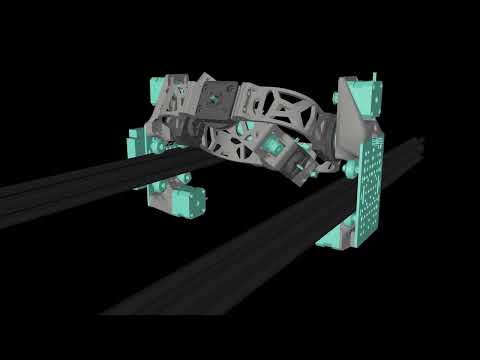
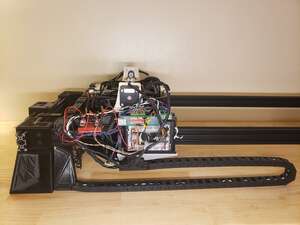
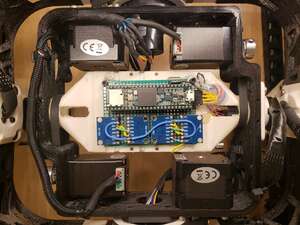
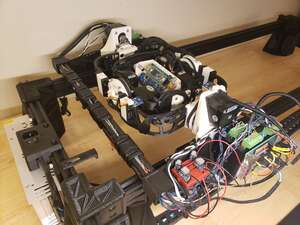
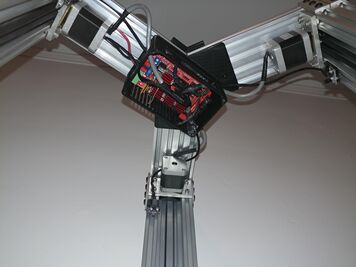
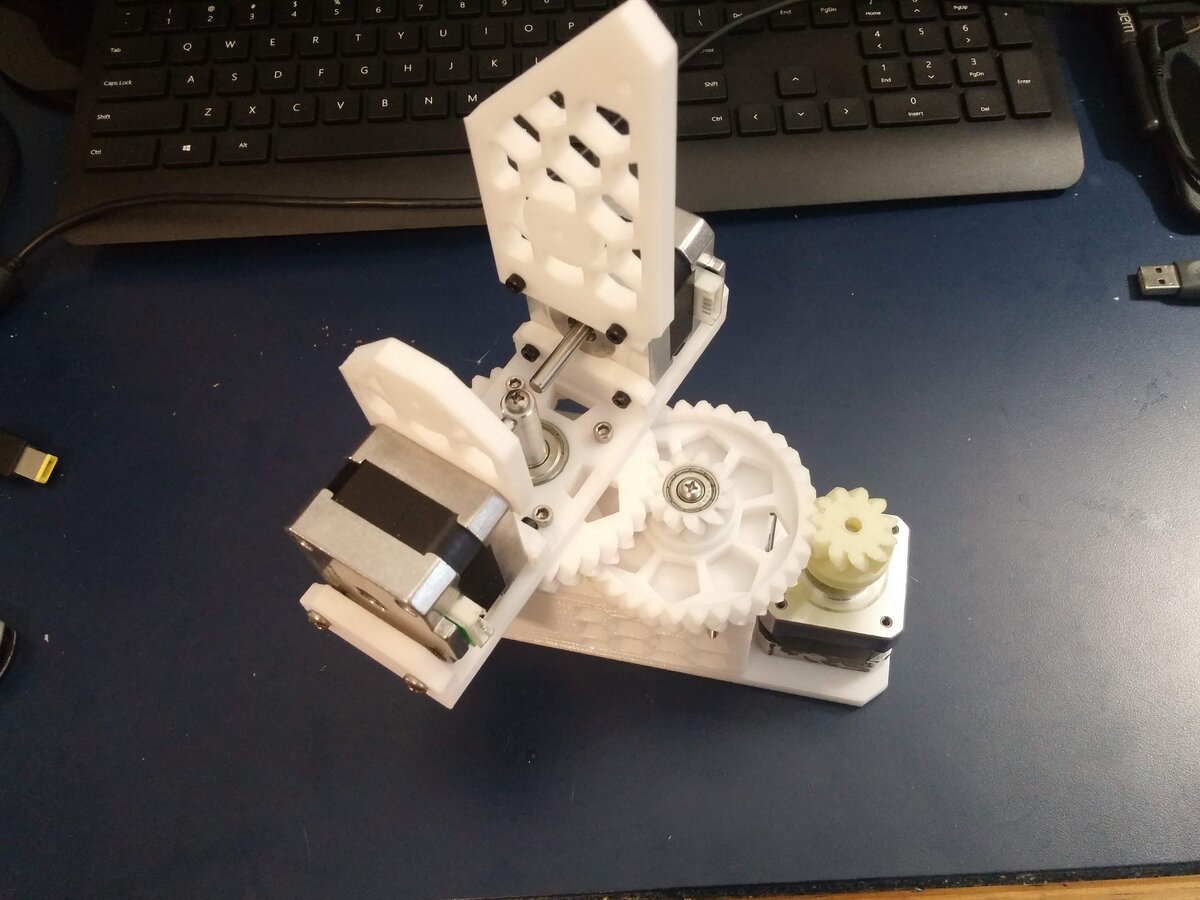
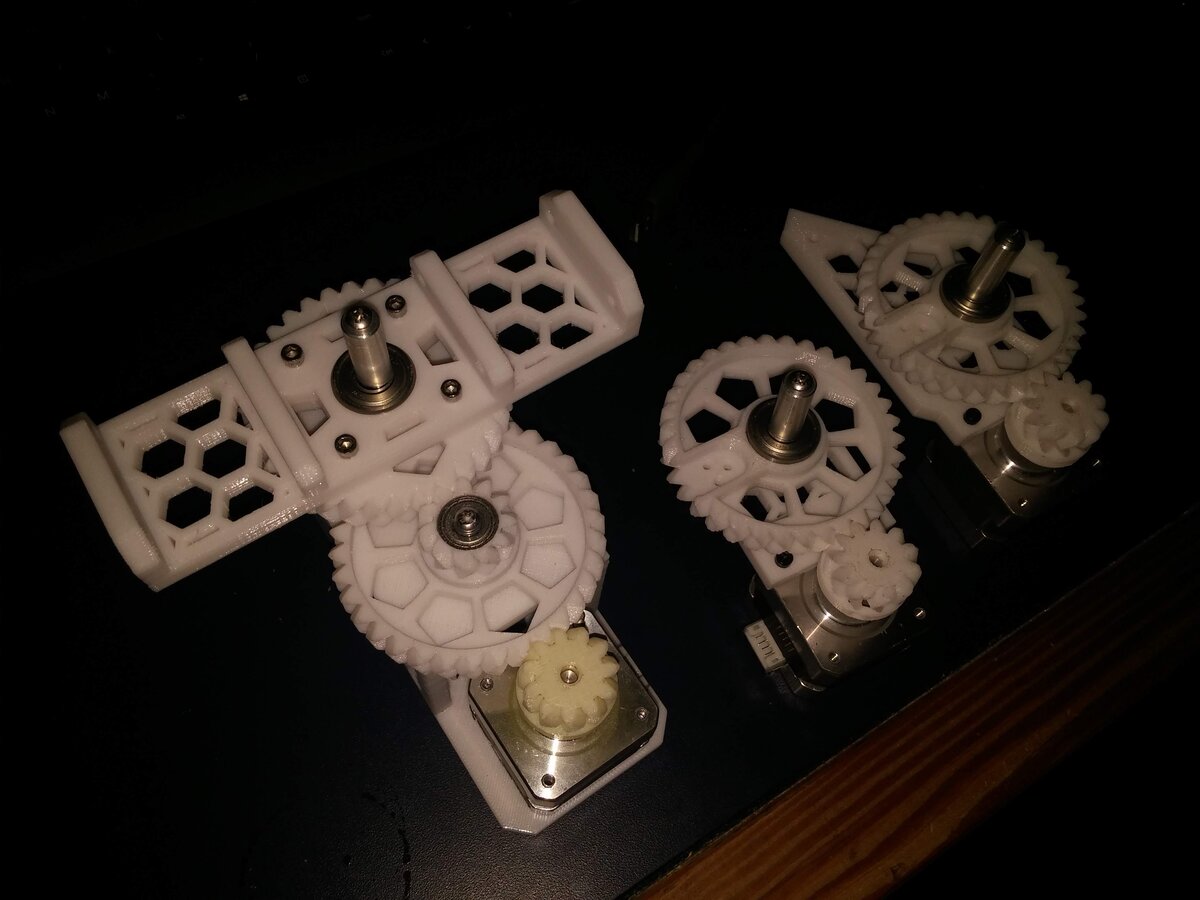
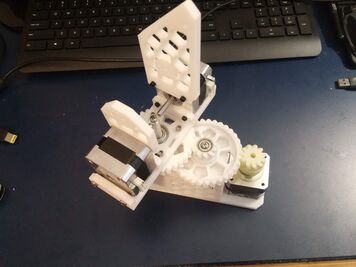
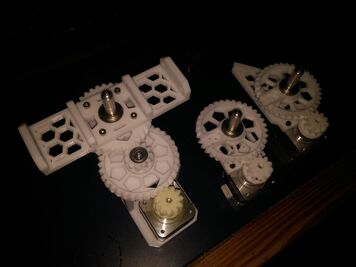
The 4-axis gimbal is the primary tool in a larger project. This project required accurate calibration of low-cost MPU6050 motion sensors. To perform the calibration a custom 4-axis motion system (3 rotational axes and 1 linear axis) closely follows a path while capturing the data (acceleration/angular velocity and for some also the magnetic field) from multiple inertial measurement units. A separate tool-the linked GitHub repository-simulates the system and generates ideal theoretical sensor outputs. Comparing real and simulated data is used to calibrate the system and develop filters for the sensors adjusted outputs.
|
[+]
Customized Voron CoreXY 3D Printer
|
Solo Project
|
2019 - 2021
|
|
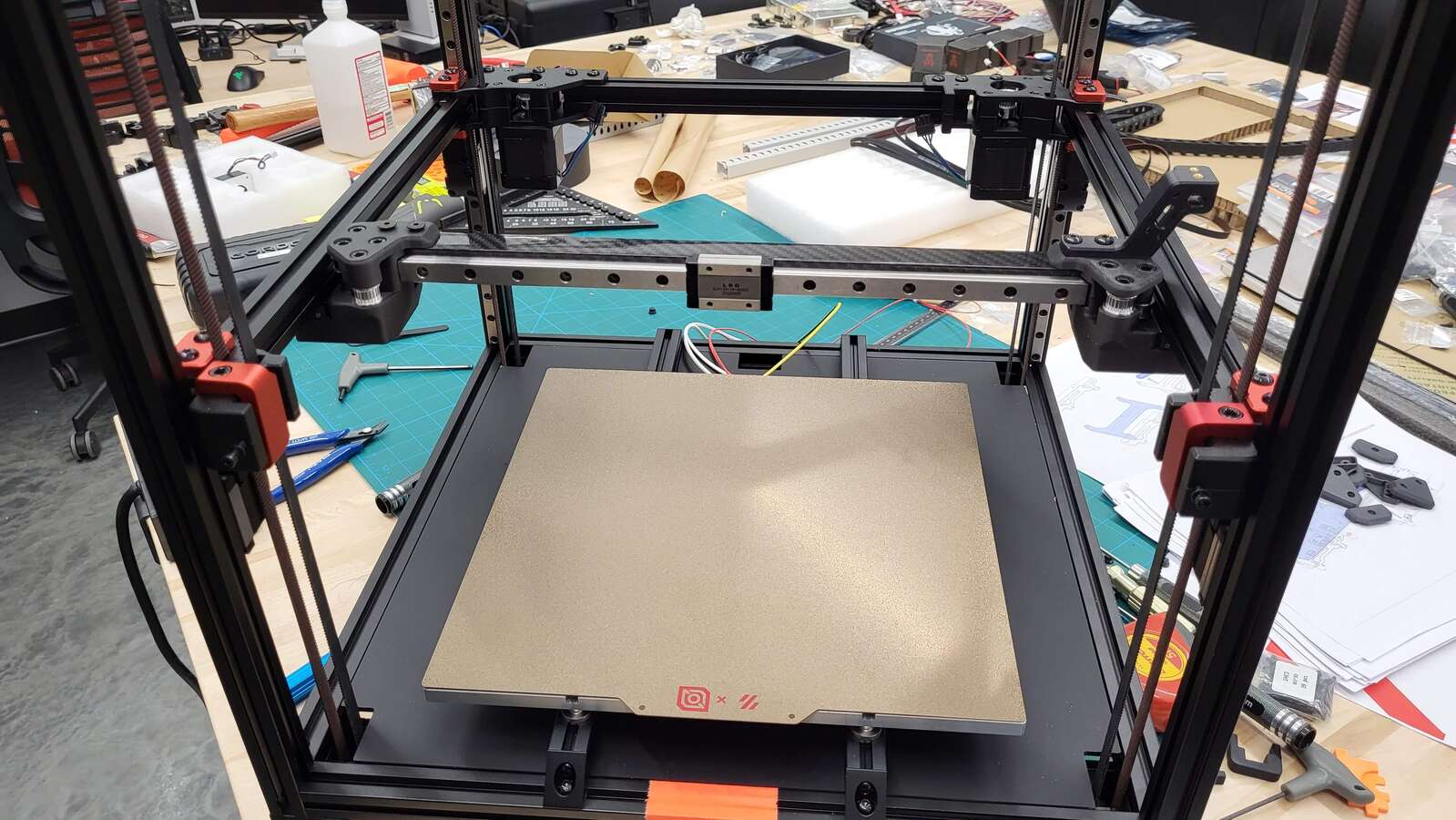
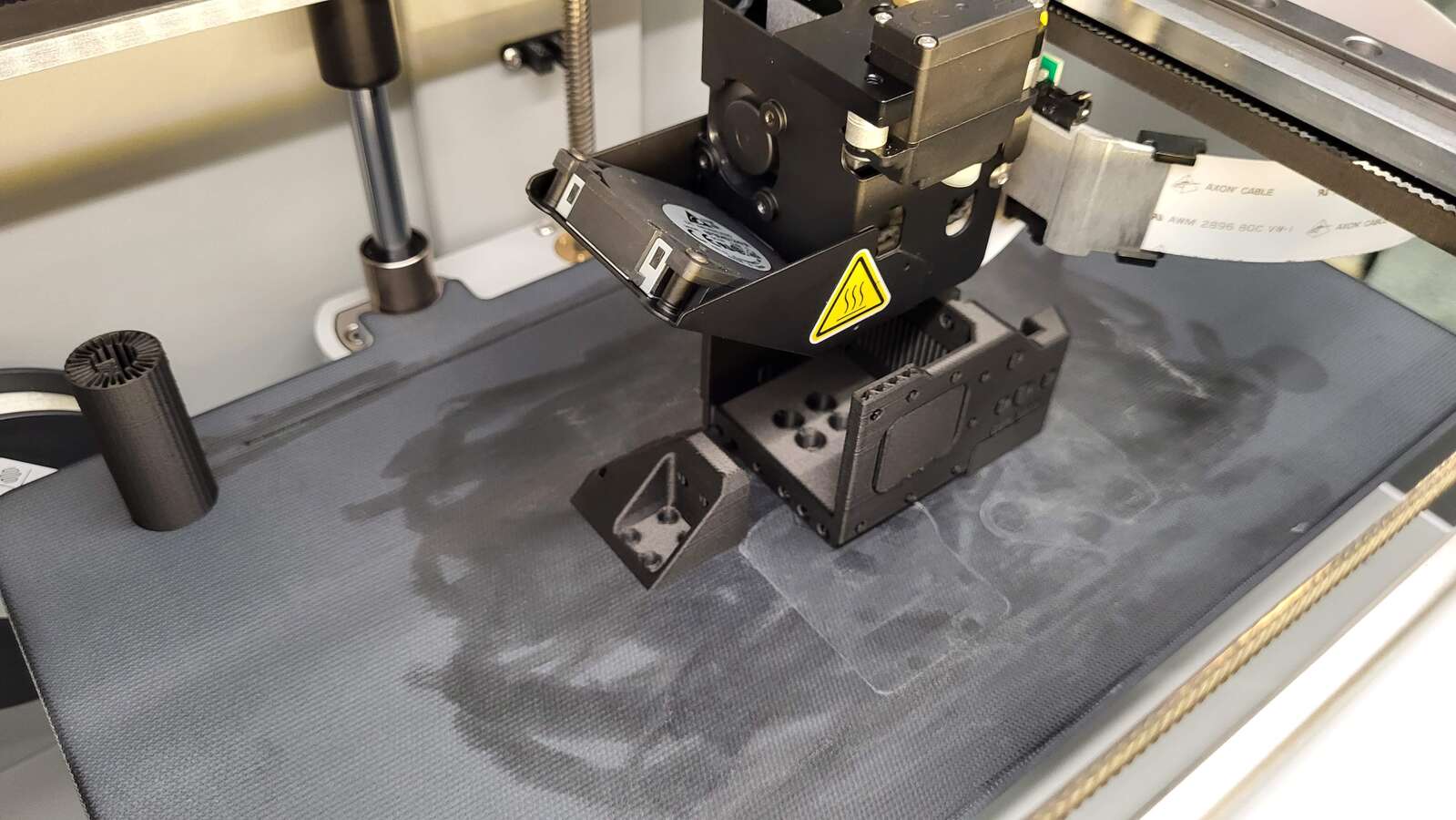
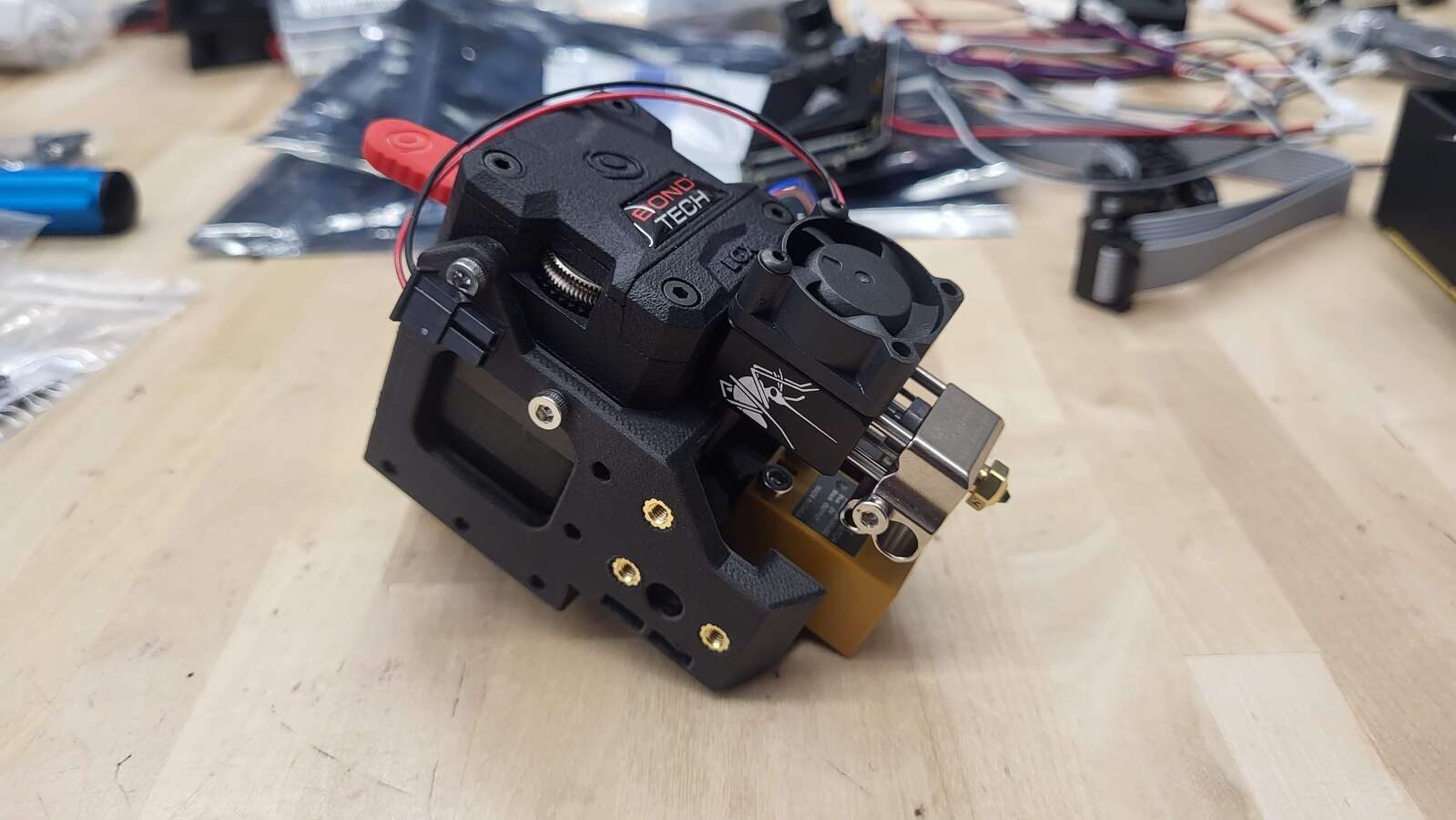
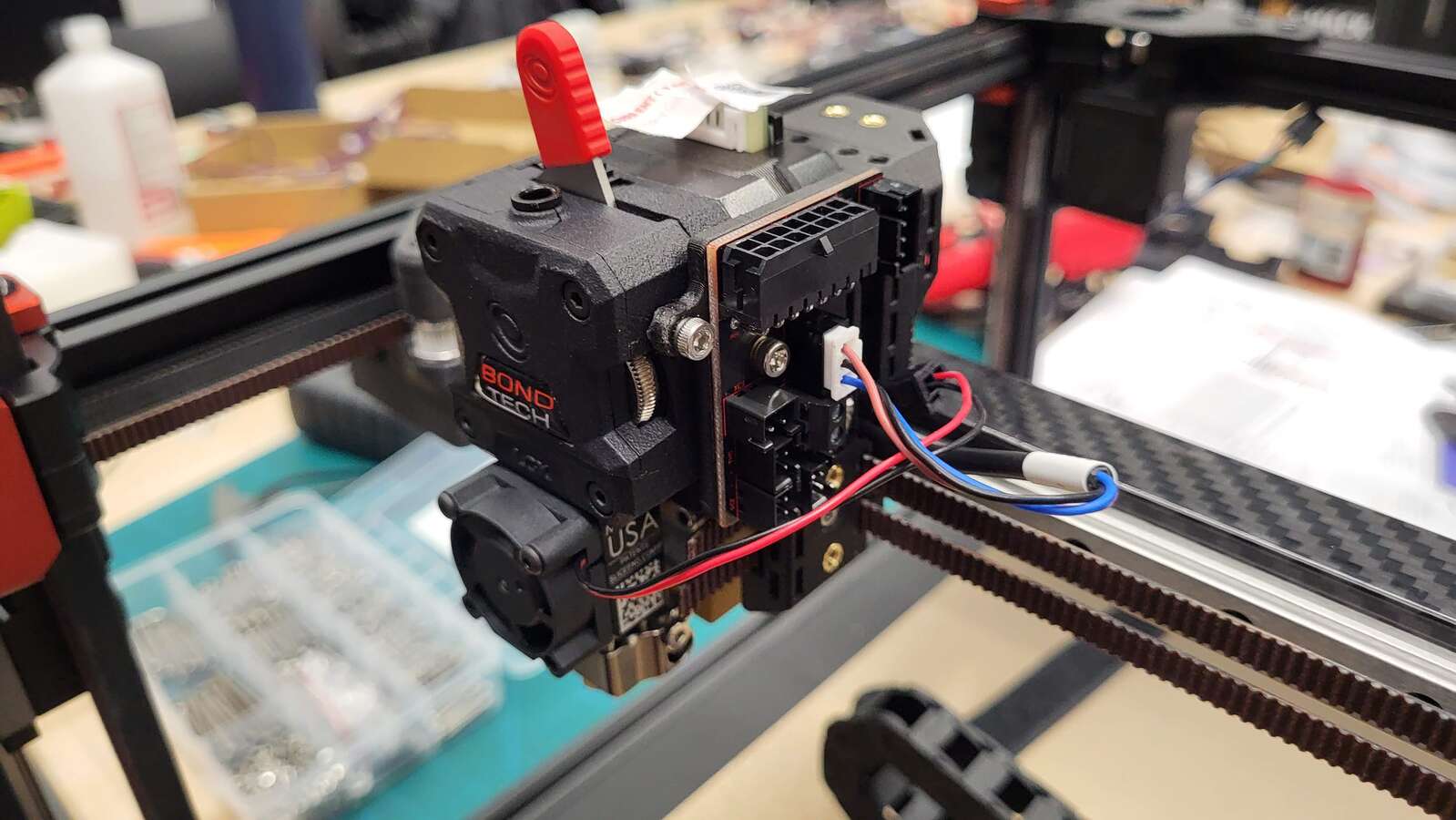
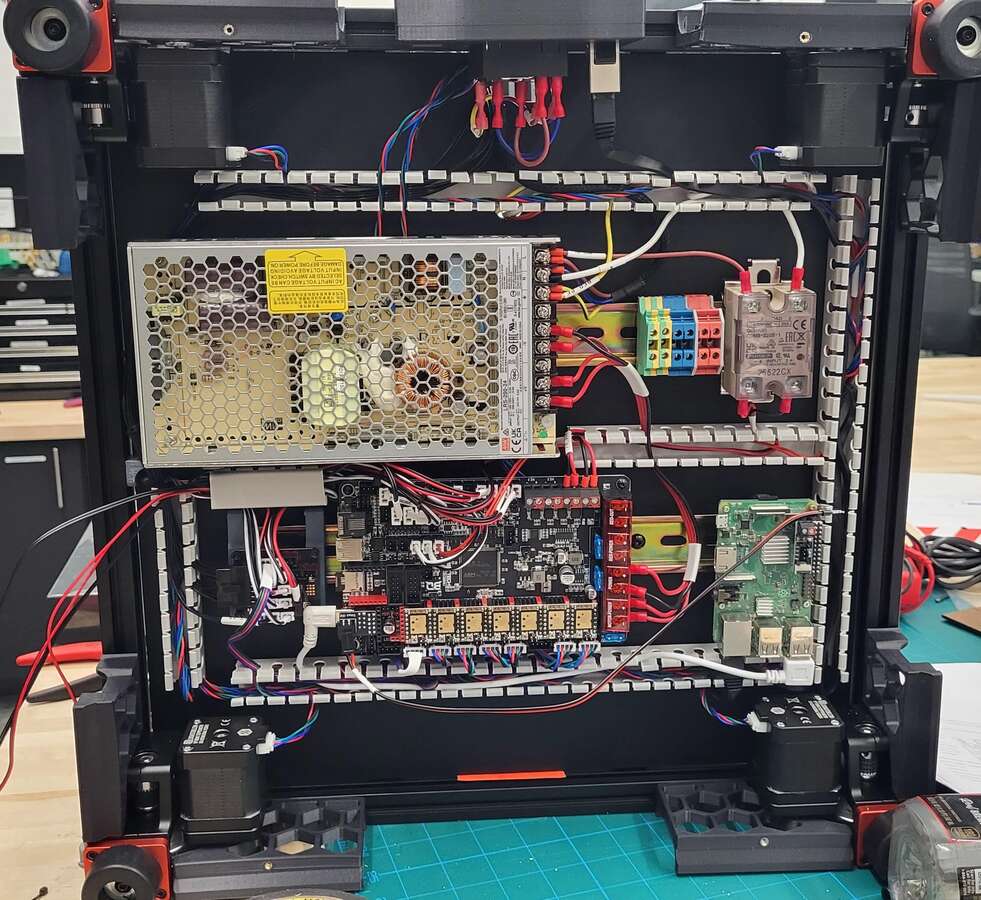
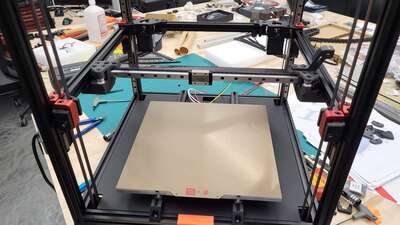
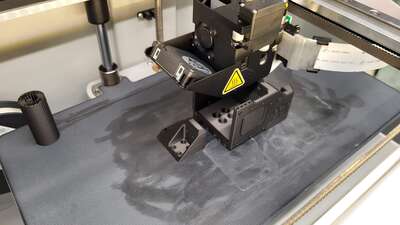
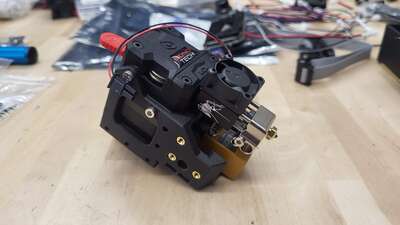
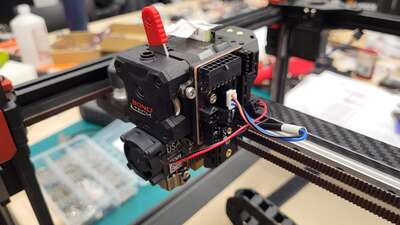
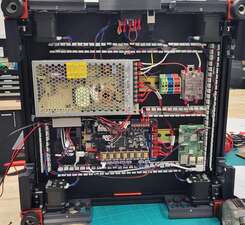
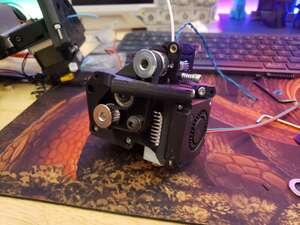
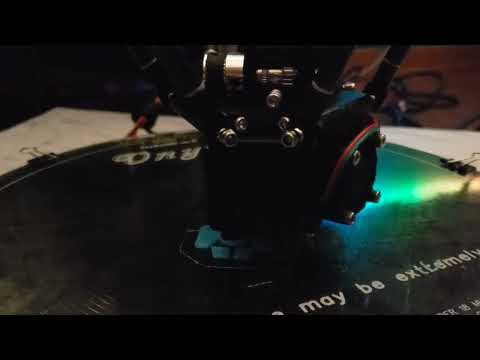
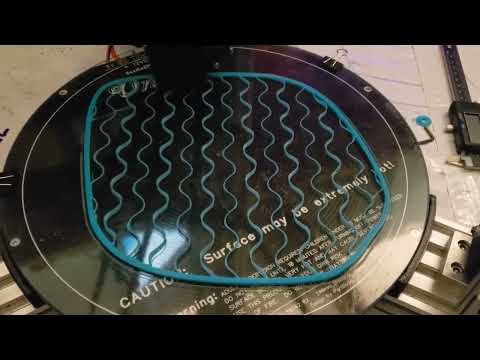
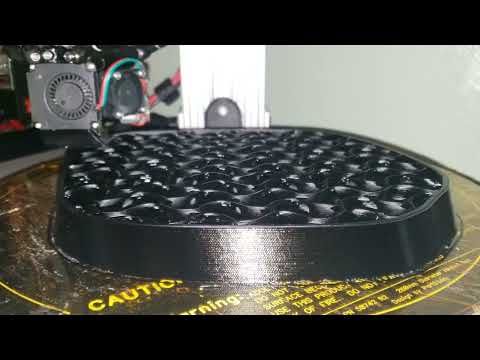
A custom 3D printer derived from the Voron project, built to explore the limits of FDM additive manufacturing.
- Extrusion and Motion Hardware
- BondTech LGX extruder with Mosquito Magnum hotend for high flow
- 48V powered stepper drivers with accelerations up to 2g (20m/s^2) and travel speeds near 600 mm/s
- Reinforced Structure
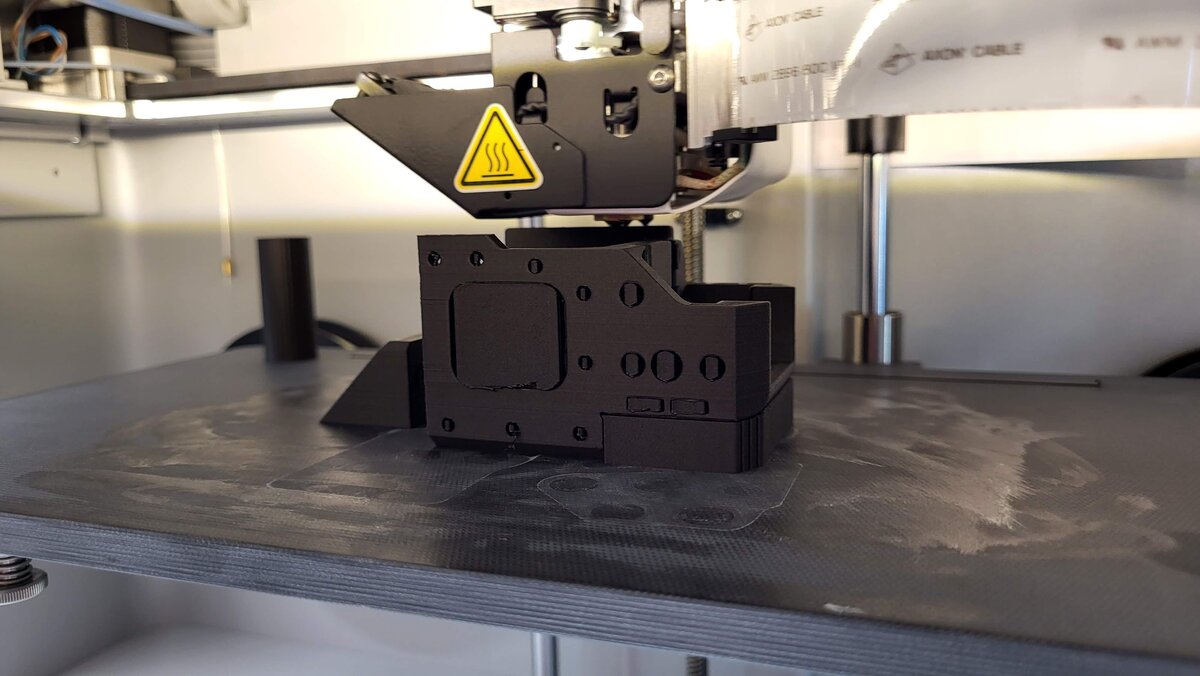
- Continuous carbon‑fiber-reinforced parts printed on the Markforged Mk2, plus a custom carbon‑fiber X‑gantry
- Firmware and Calibration
- Klipper firmware with computation offloaded to a Raspberry Pi
- Custom-tuned to maximize performance within the system’s limits
|
[+]
Wearable 3D Printed Designs with Integrated Electronics
| Github |
Solo Project
|
2020 - Now
|
|
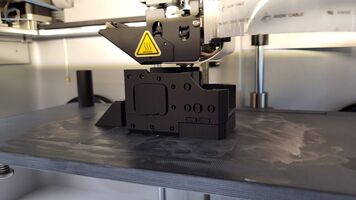
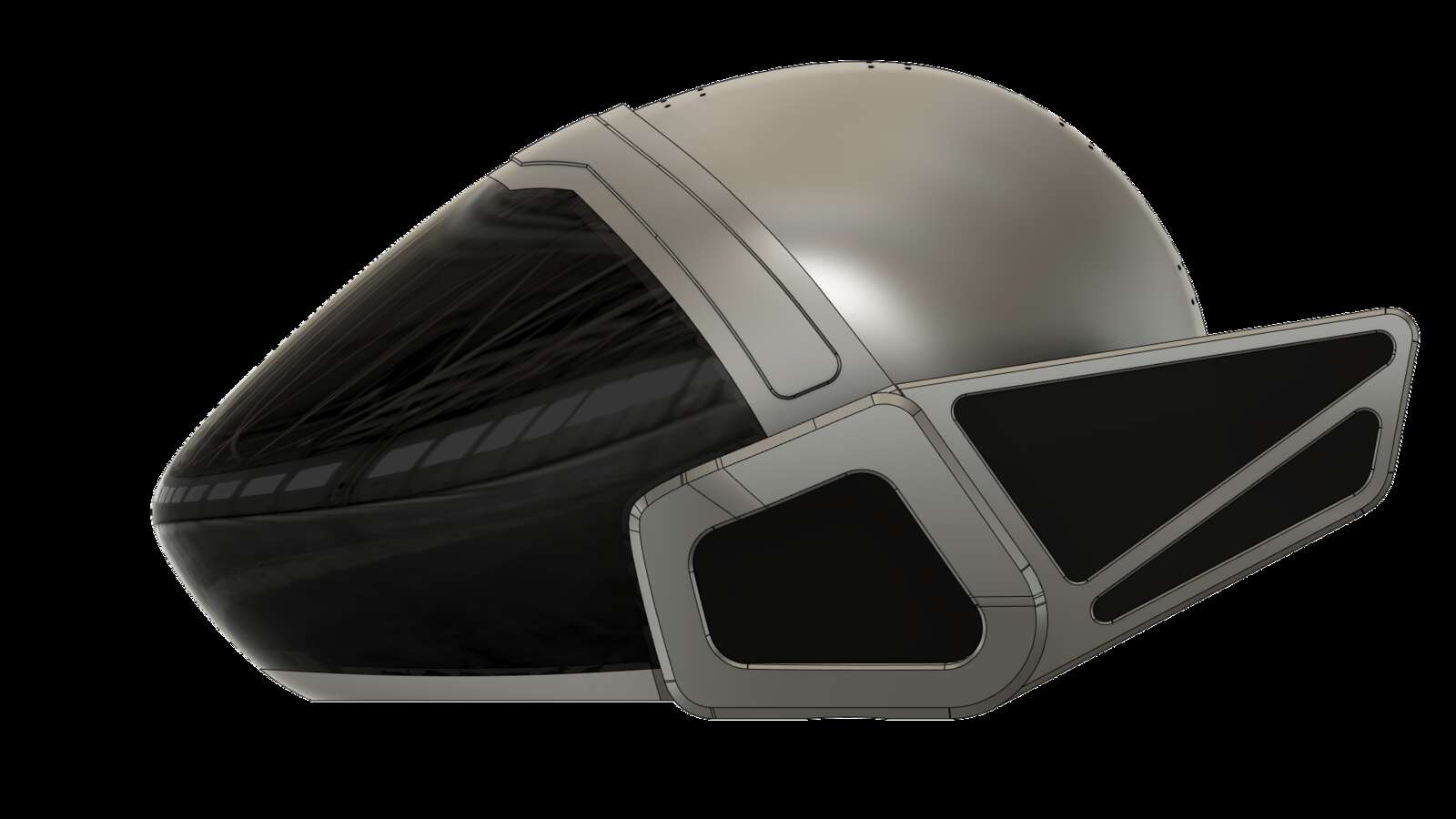
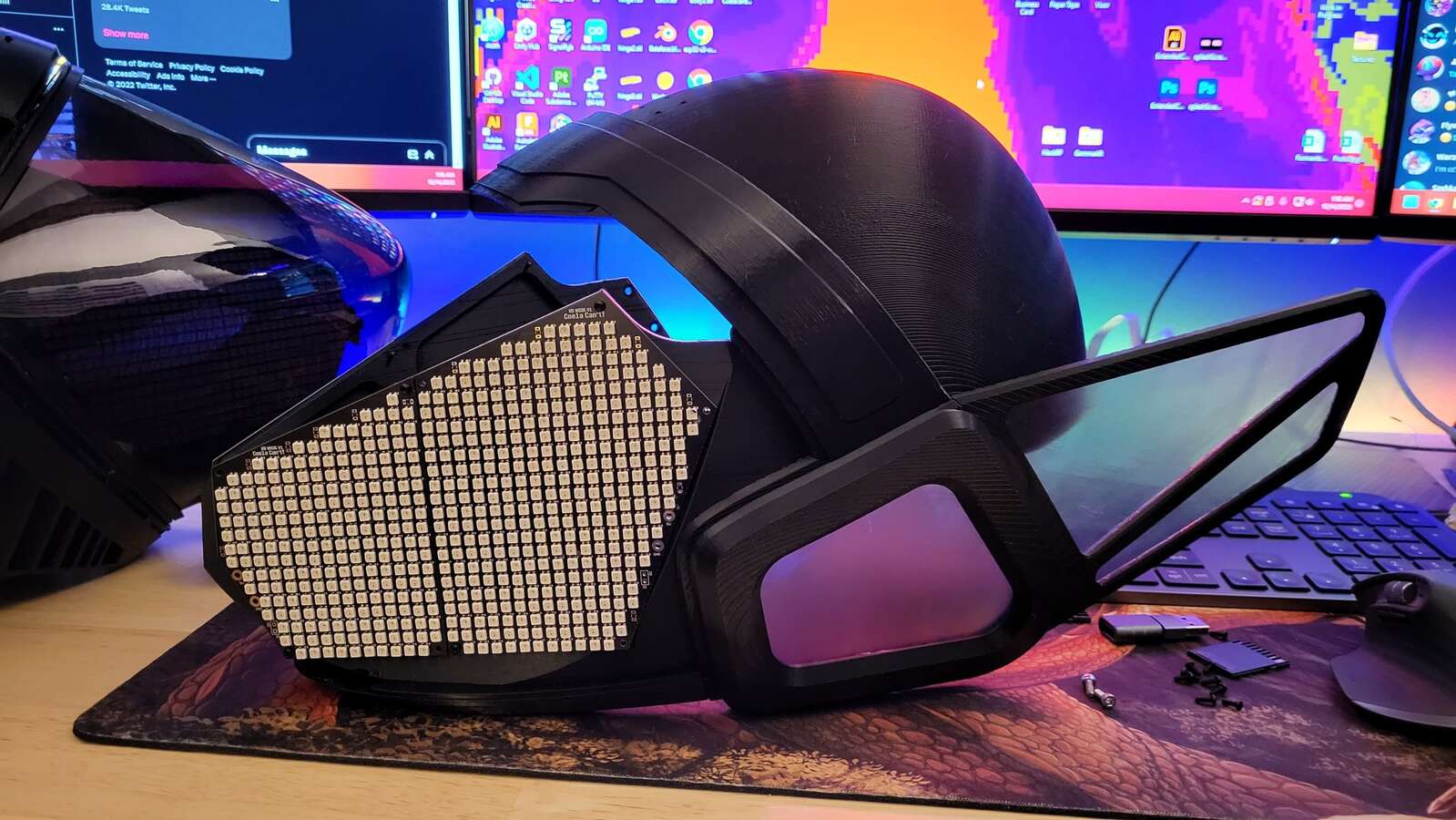
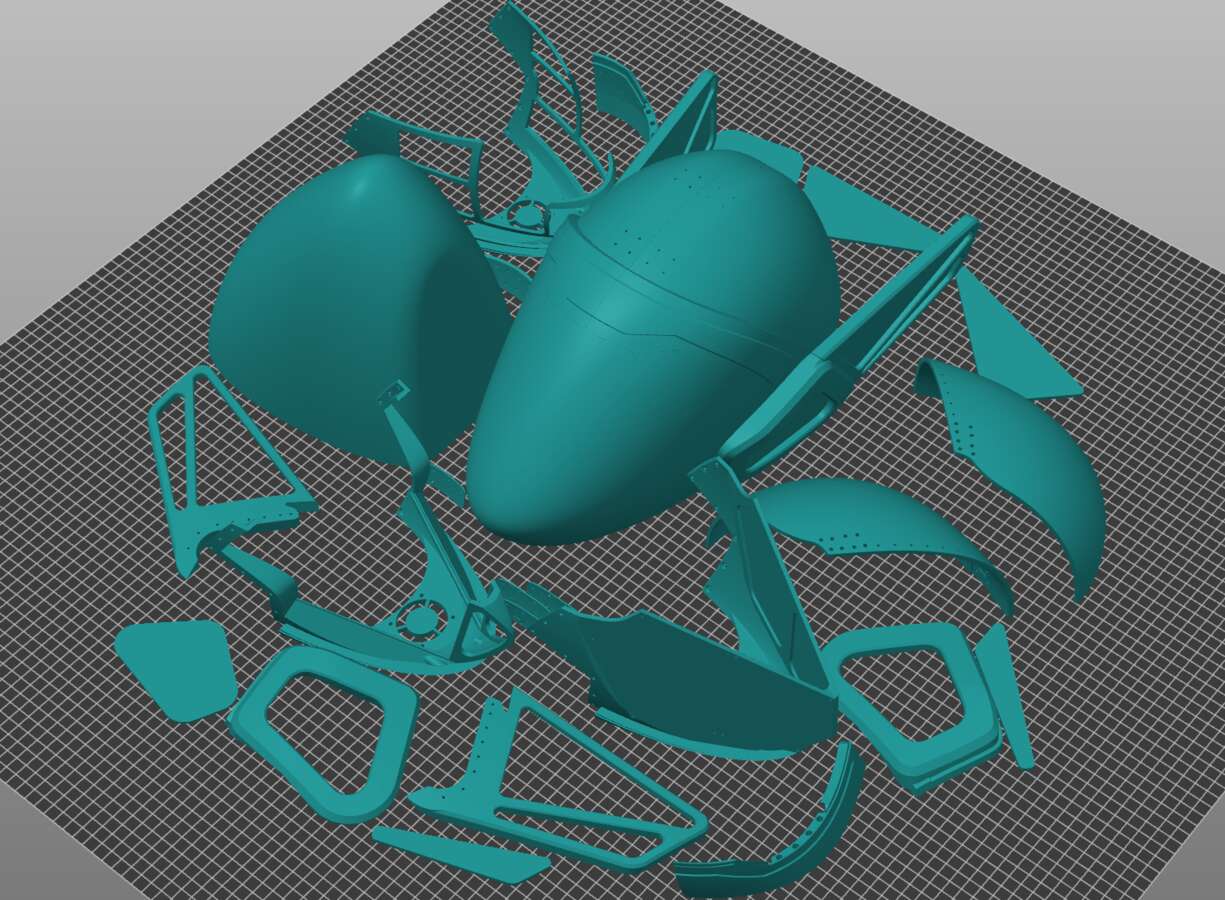
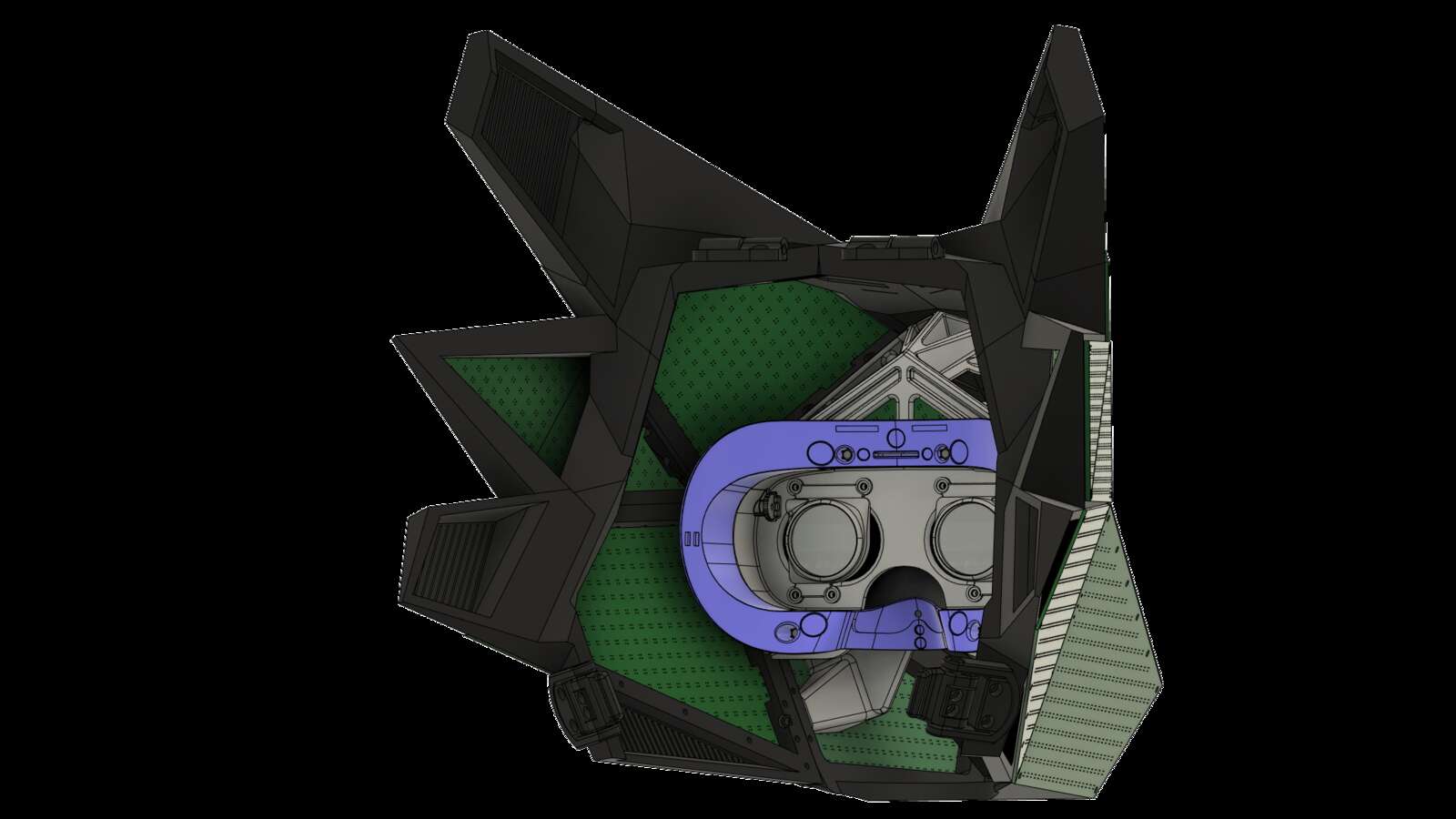
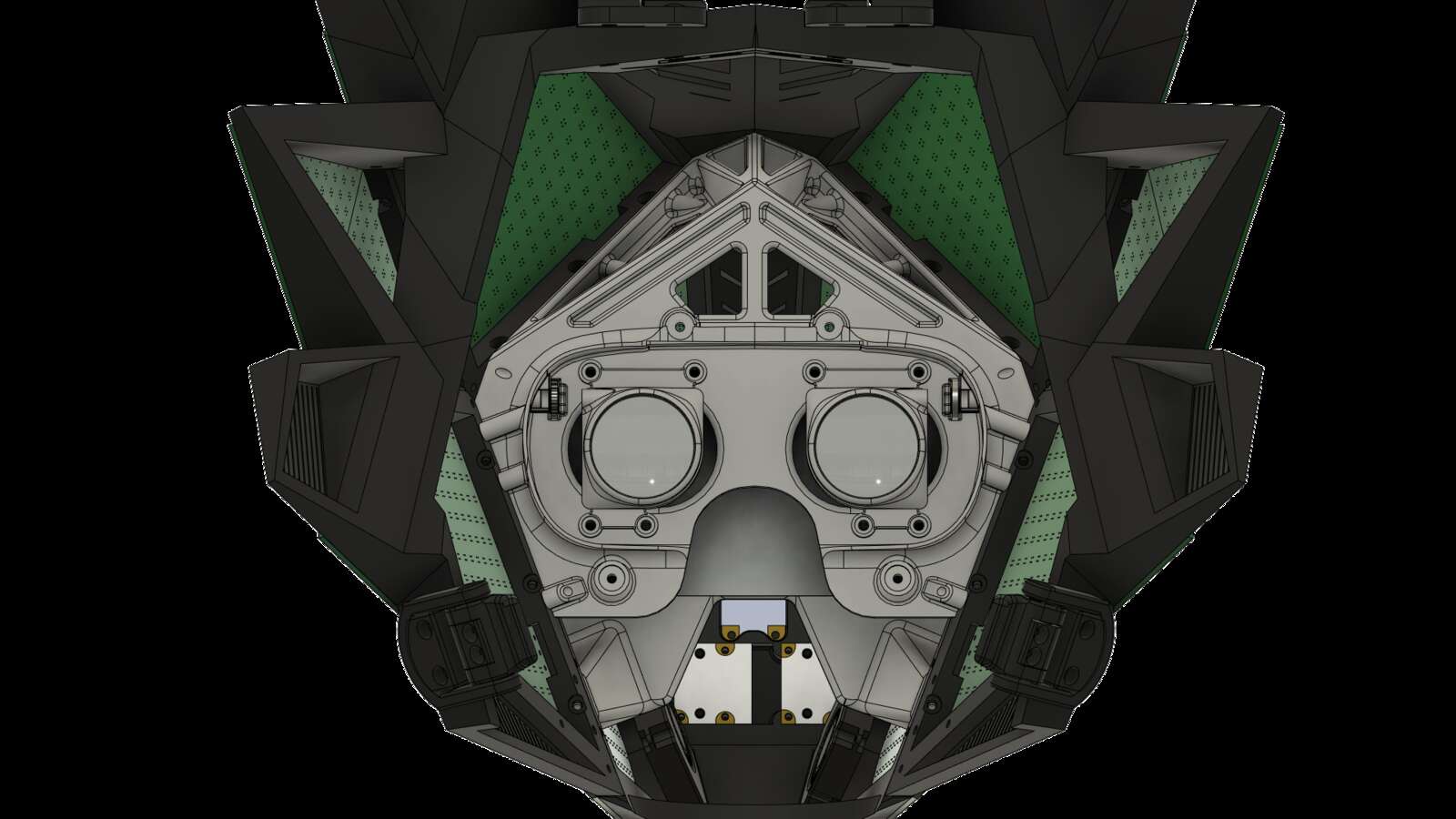
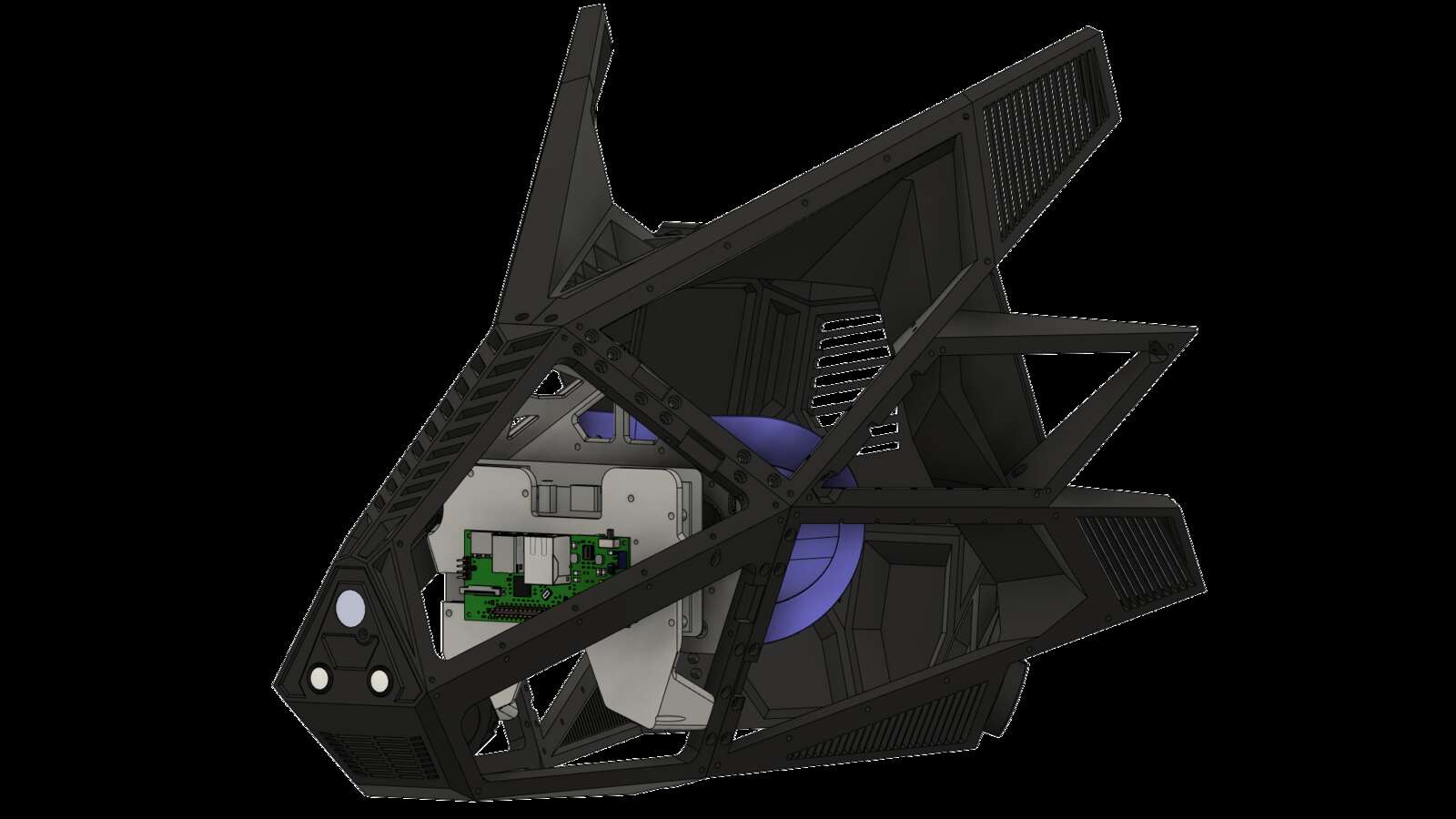
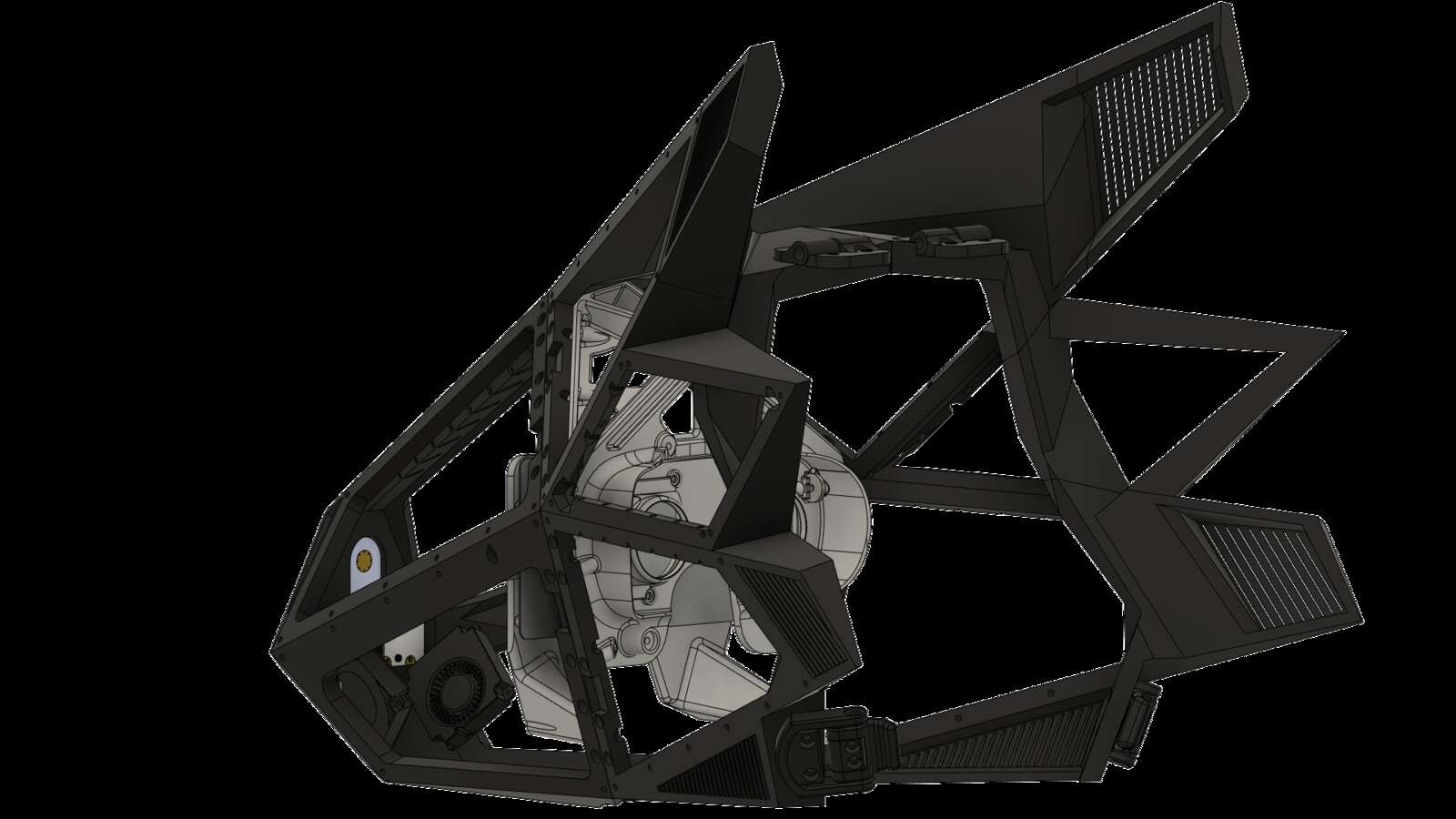
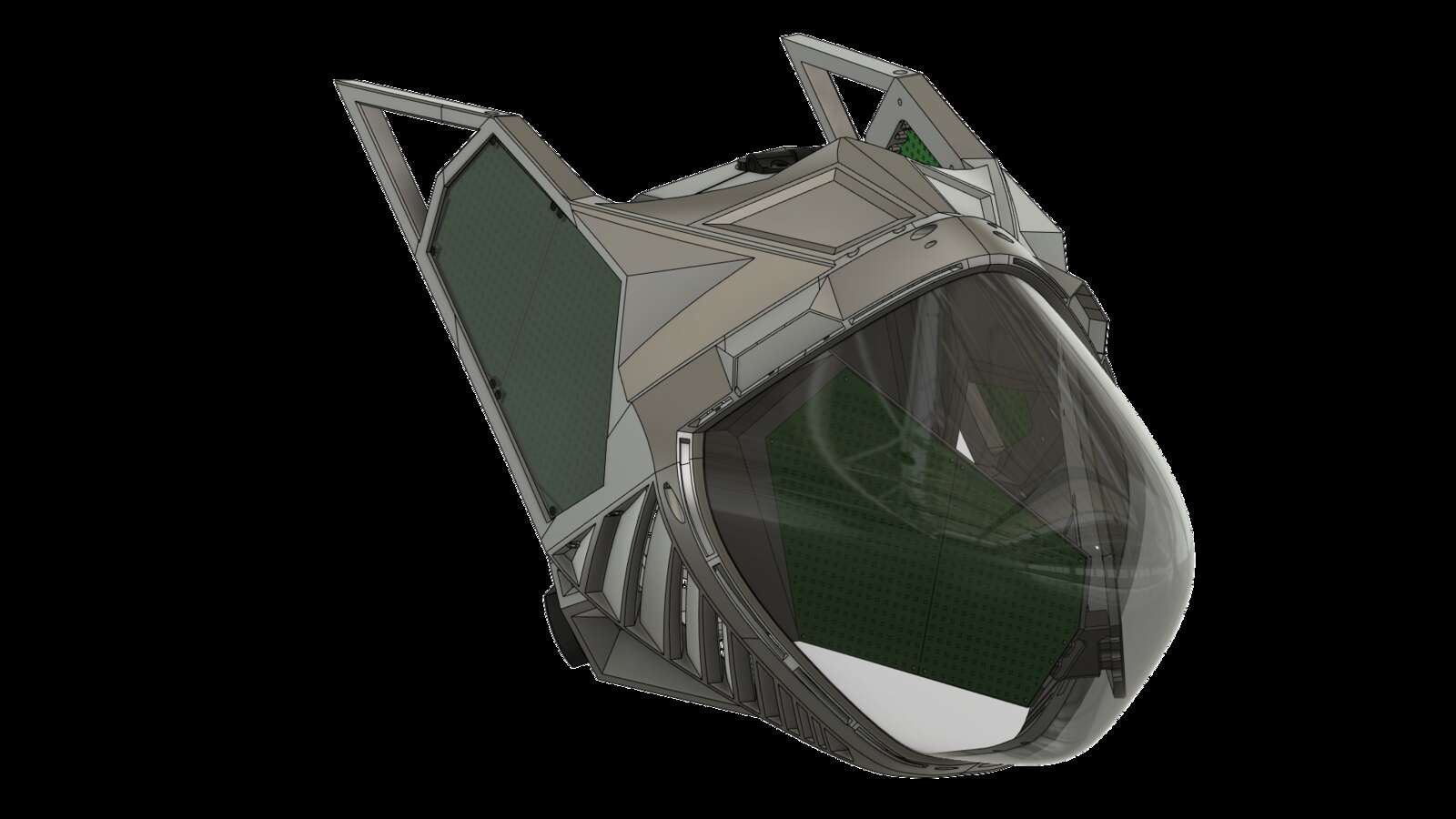
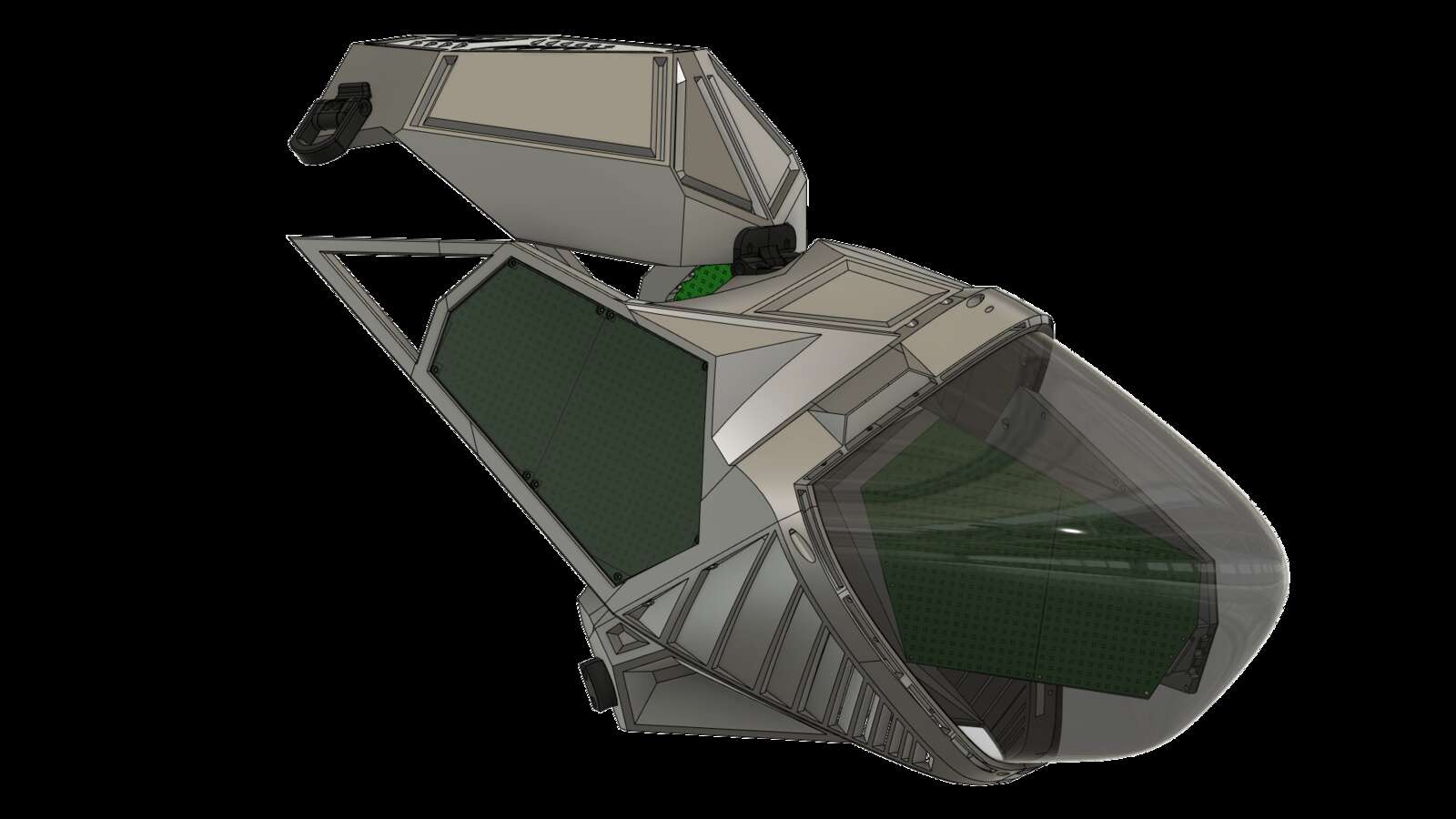
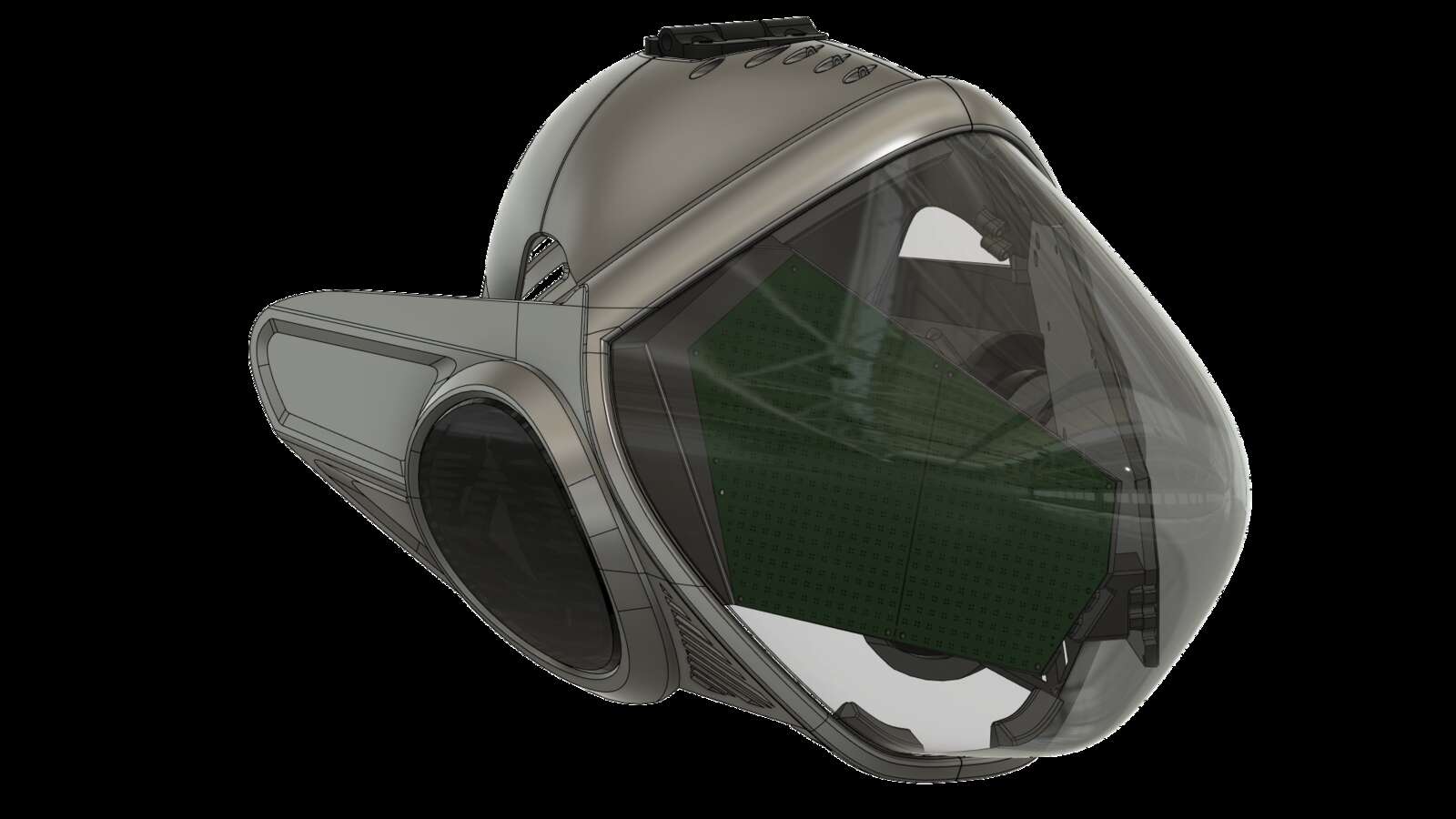
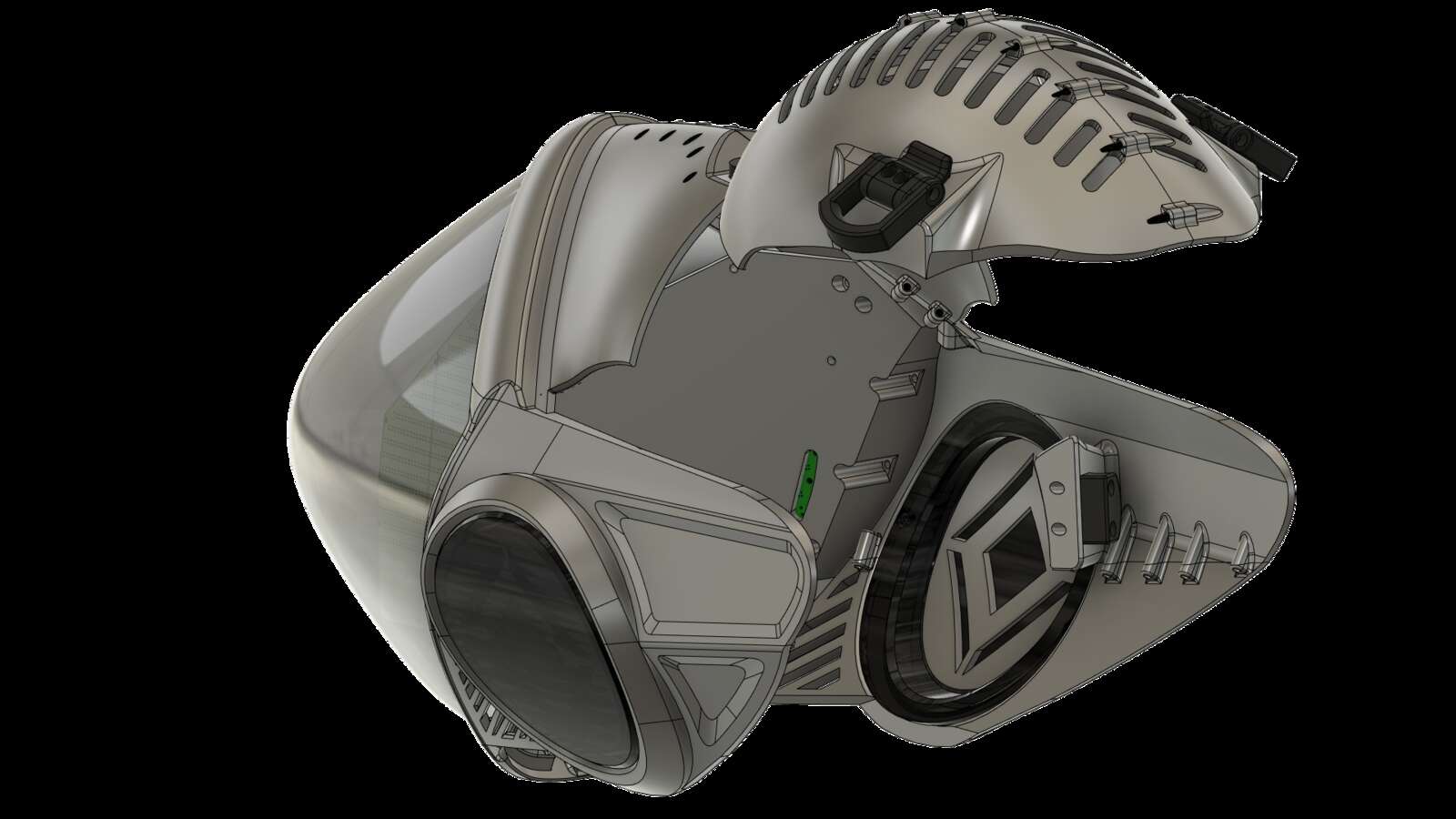
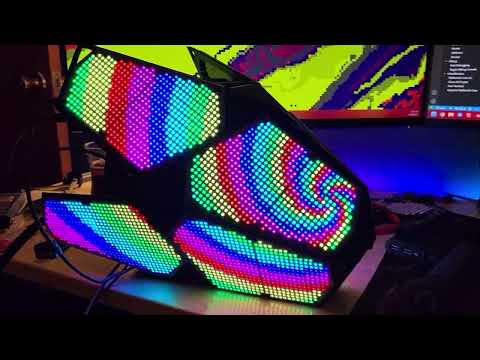
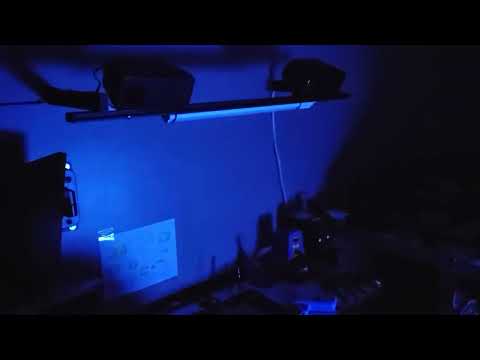
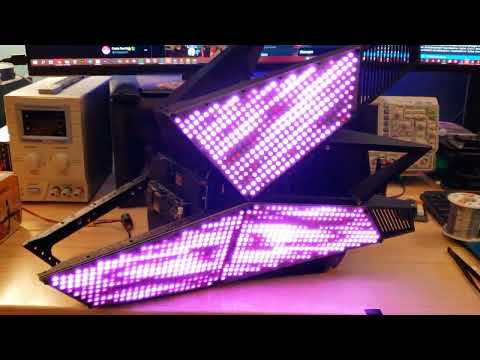
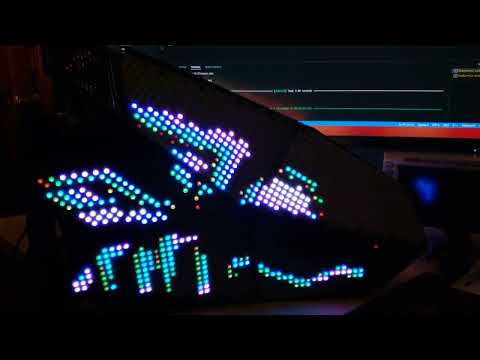
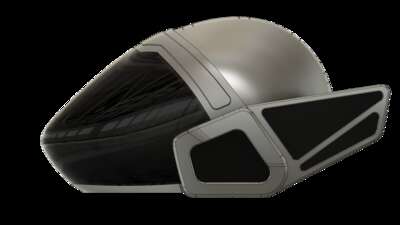
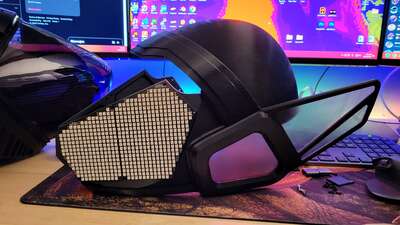
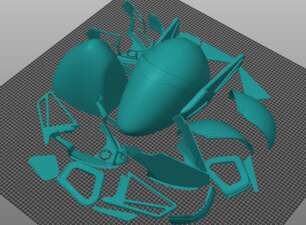
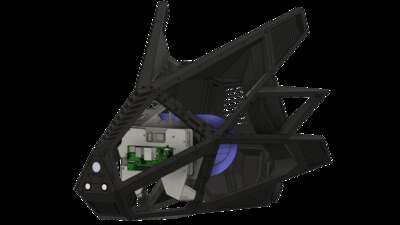
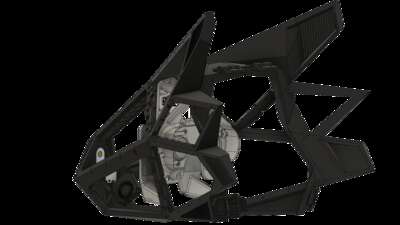
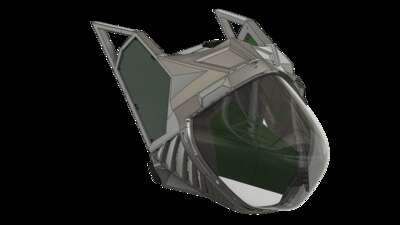
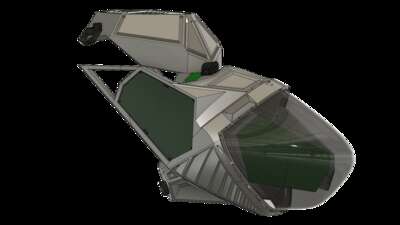
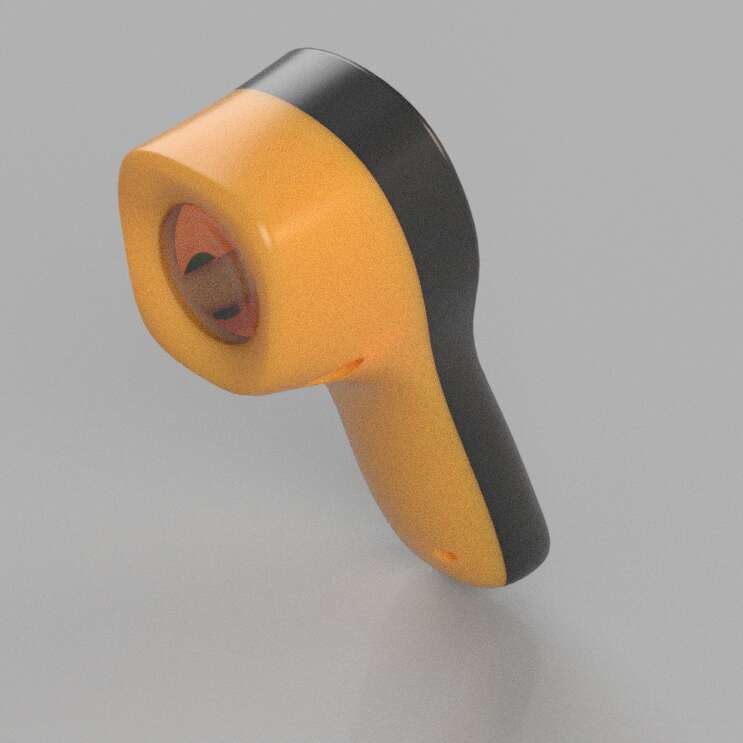
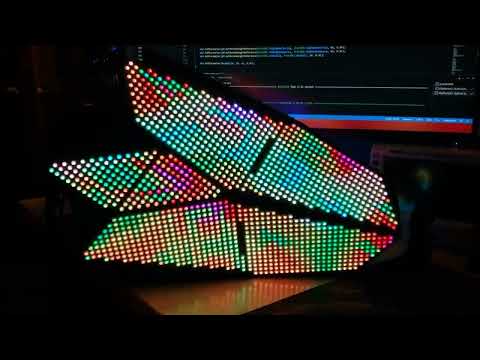
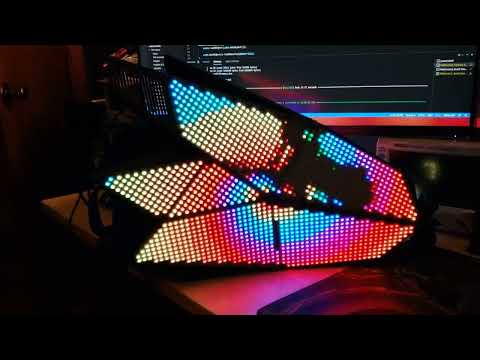
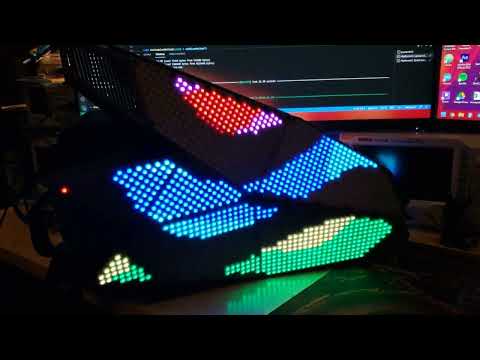
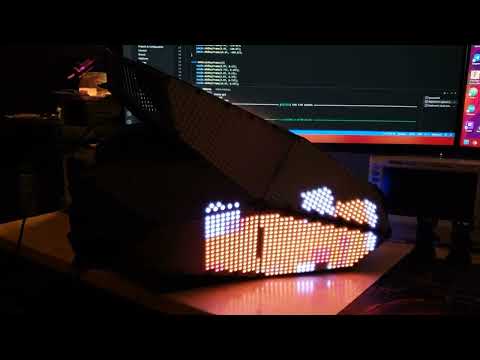
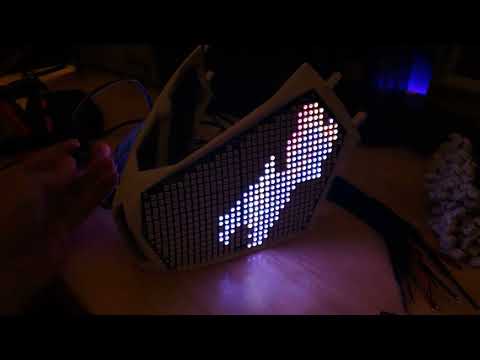
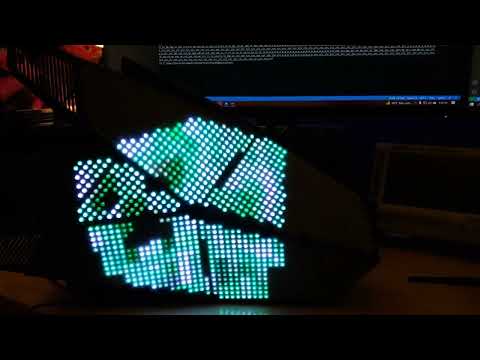
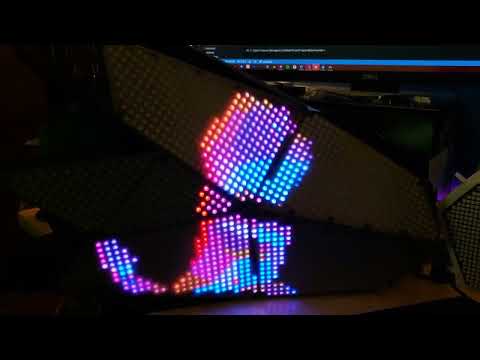
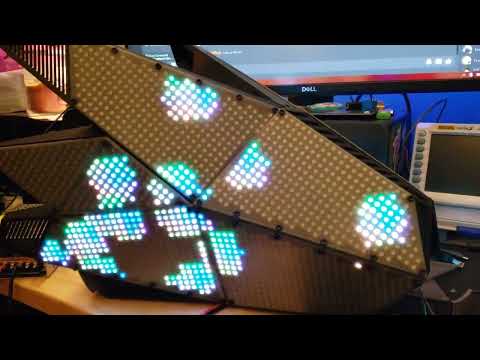
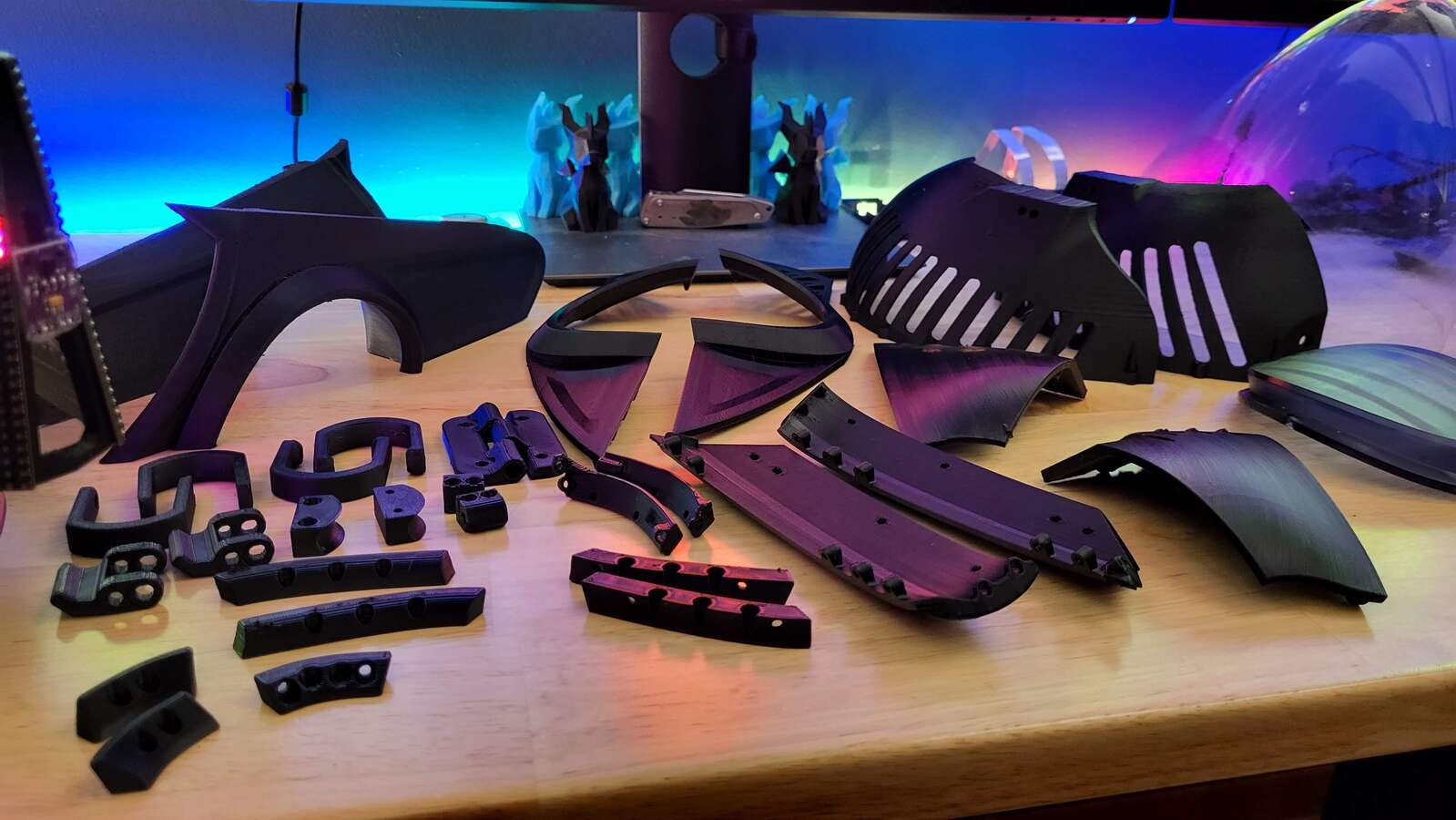
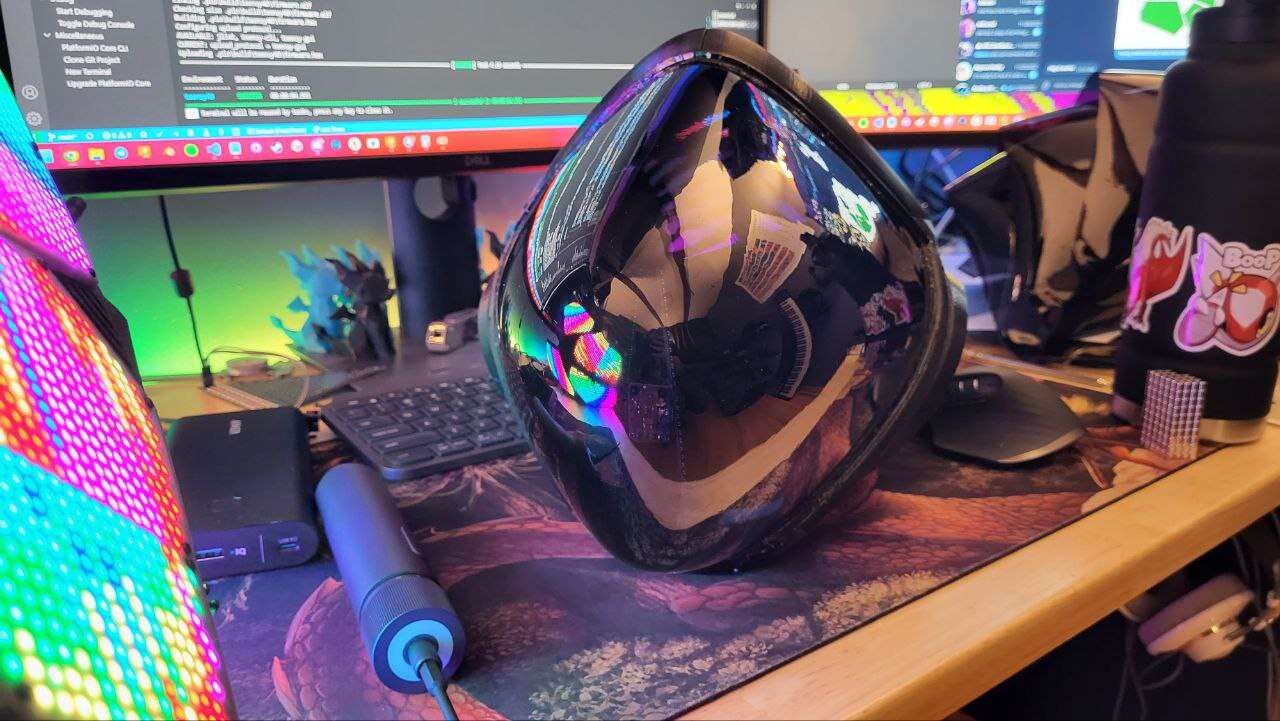
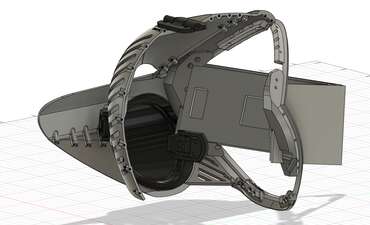
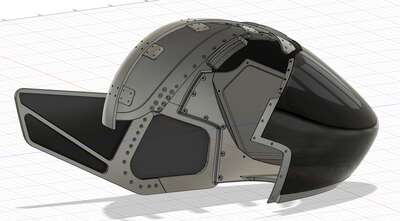
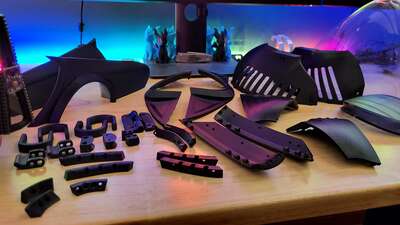
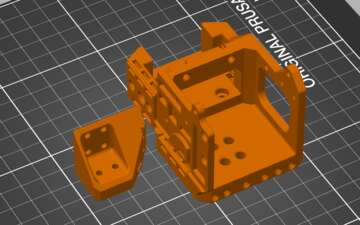
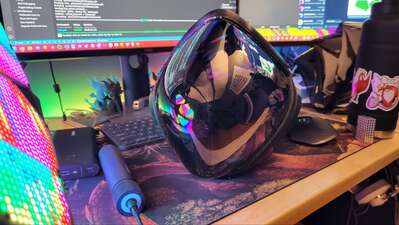
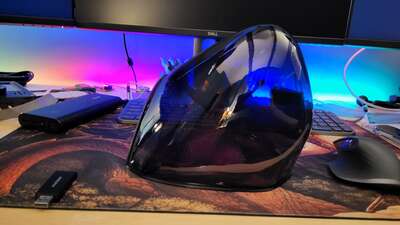
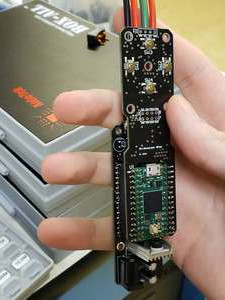
Designed and built 3D-printable cosplay hardware-currently have six designs in total. For the Beta, Delta, Epsilon, and Sigma, each model is available on GitHub as STL files optimized for common 3D printers. Every project includes an electronics wiring guide, custom ProtoTracer firmware binaries, and source code.
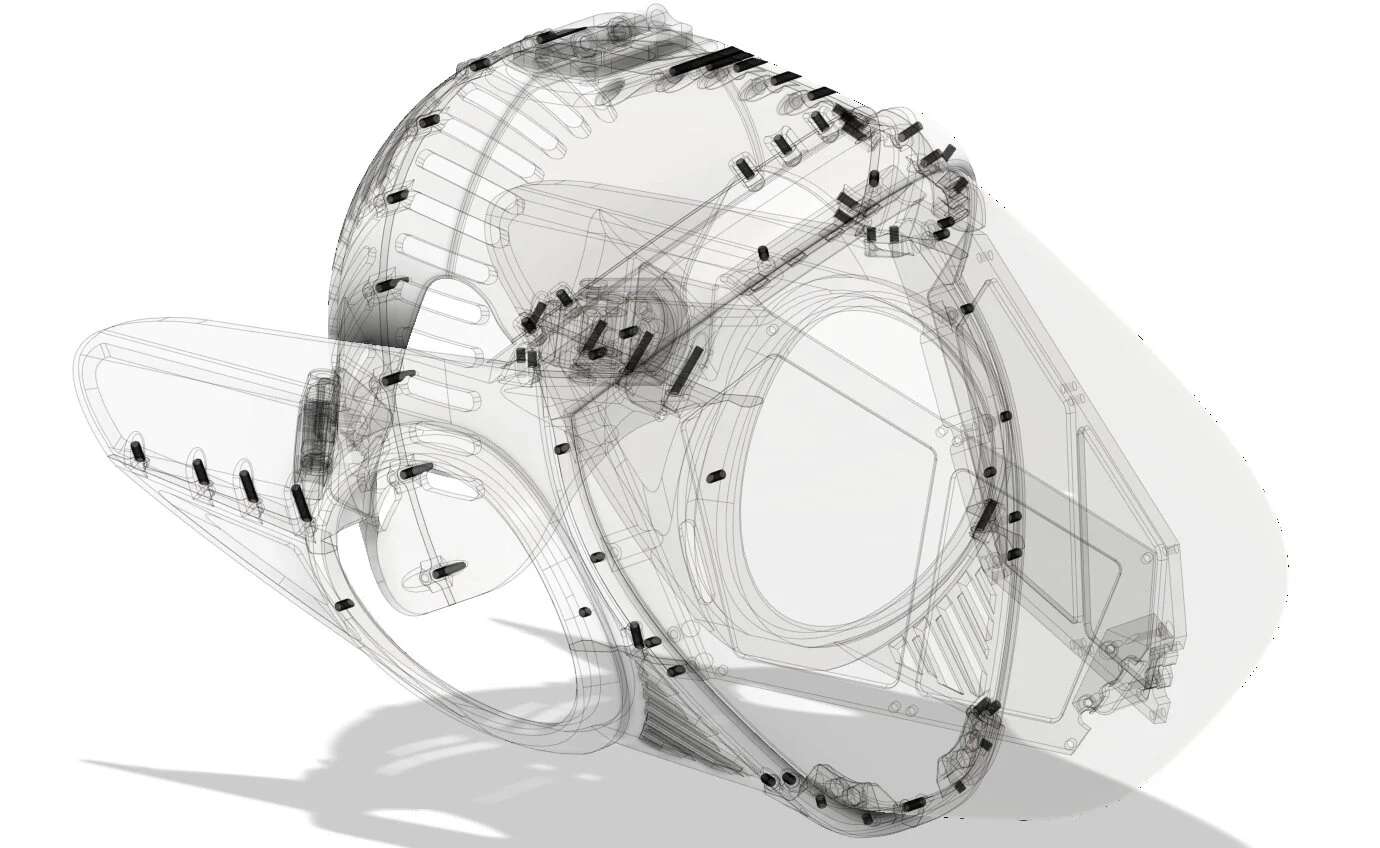
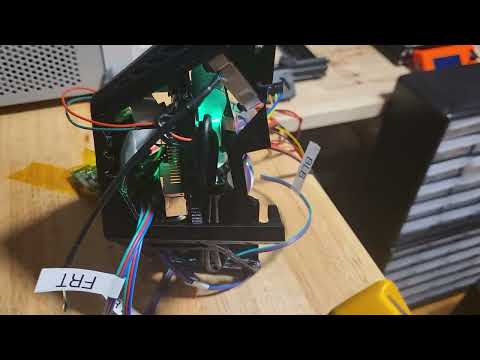
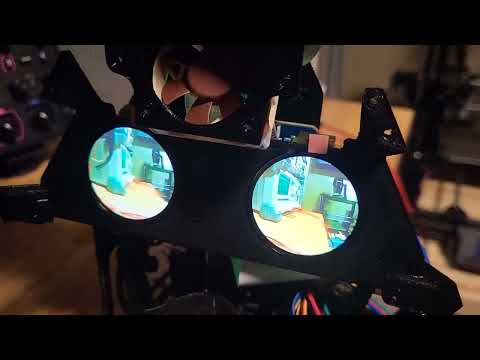
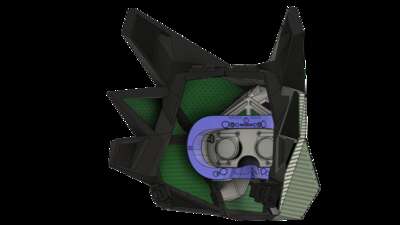
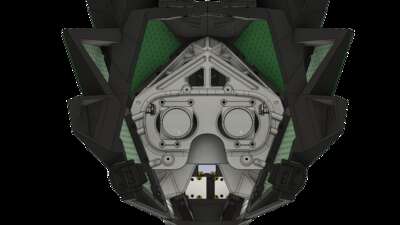
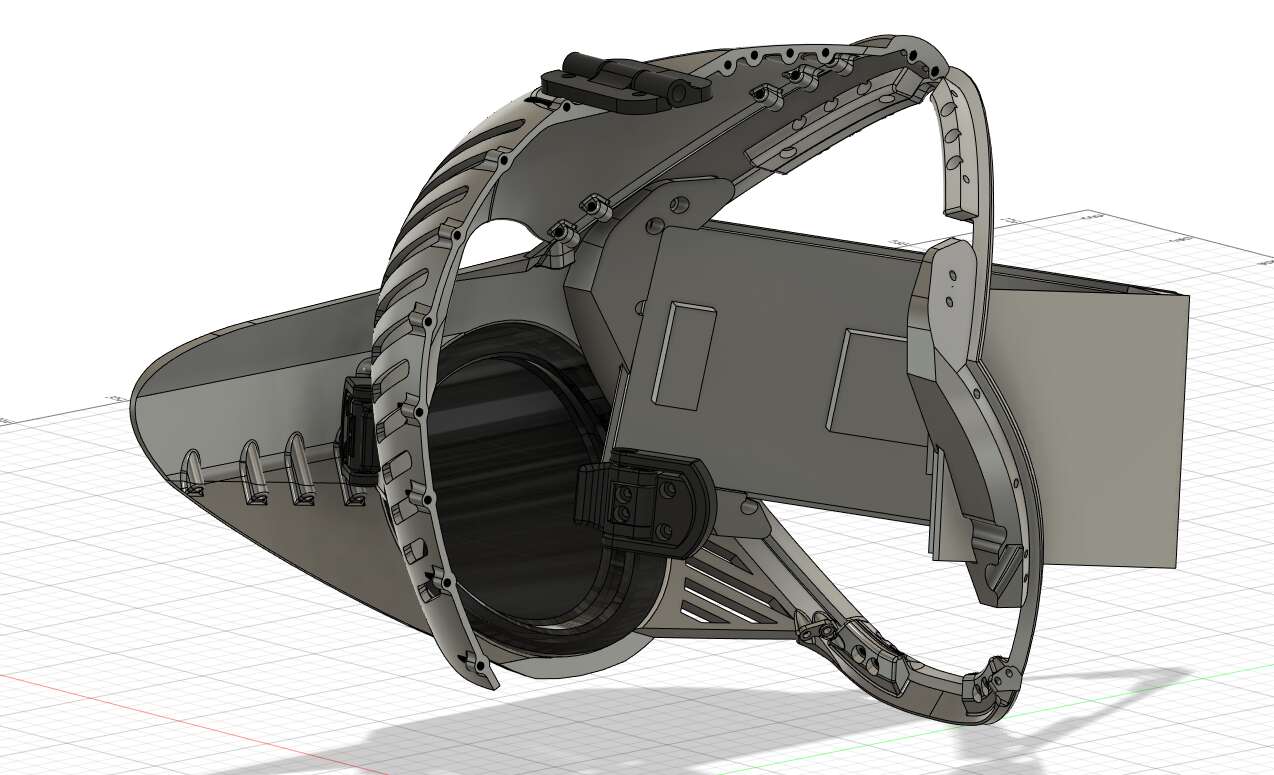
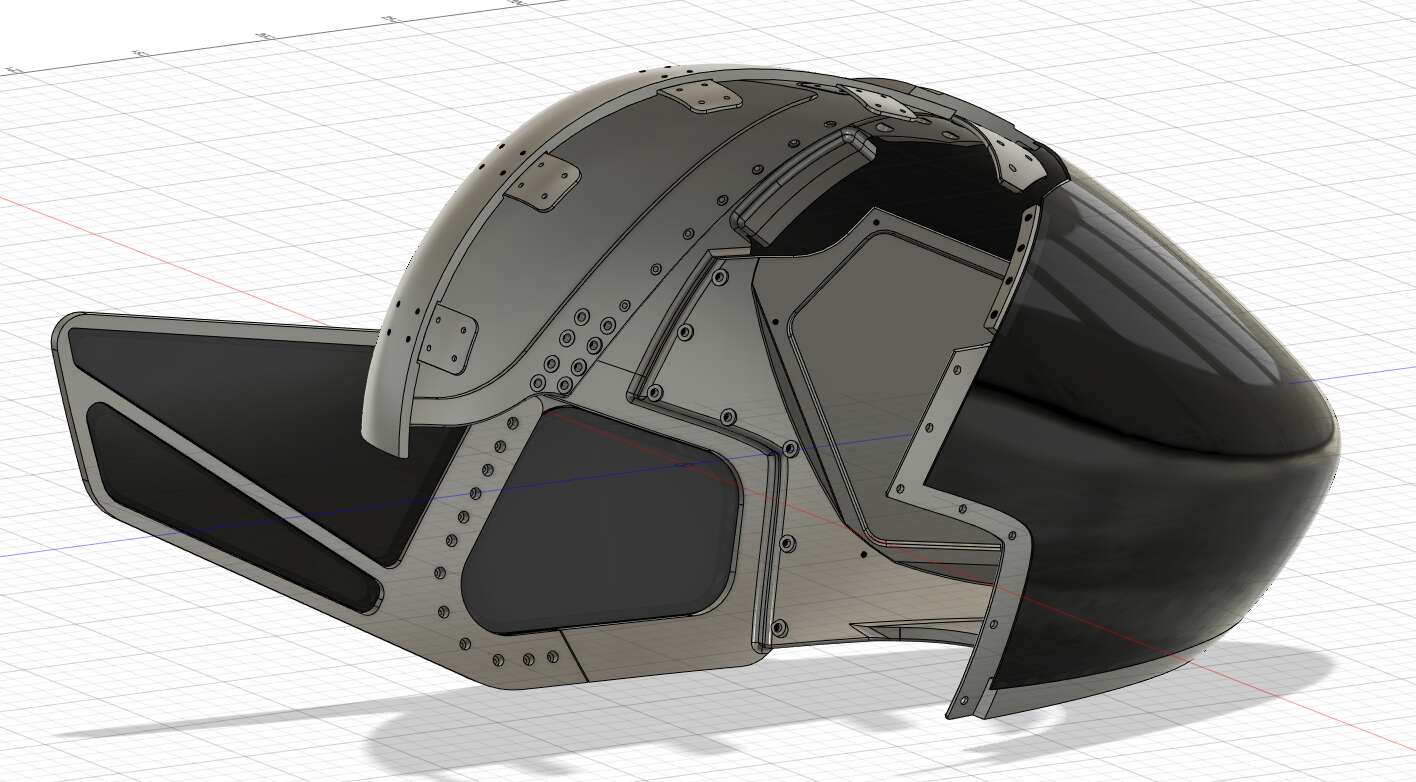
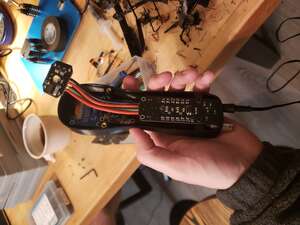
The Alpha and Gamma prototypes use real-time stereoscopic passthrough vision with a custom lens stack and display module. The vision-systems use modified software (running on a Raspberry Pi CM4) to reduce latency to about 15 ms and support the stereoscopic live synchronized display. This leaves as much area as possible for the LED displays. Each uses two synchronized microcontrollers to render live 3D graphics on the full-face displays. Integrated front-facing distance sensors and a 9-axis IMU modify the animation pipeline, so animations react instantly to motion and proximity.
|
[+]
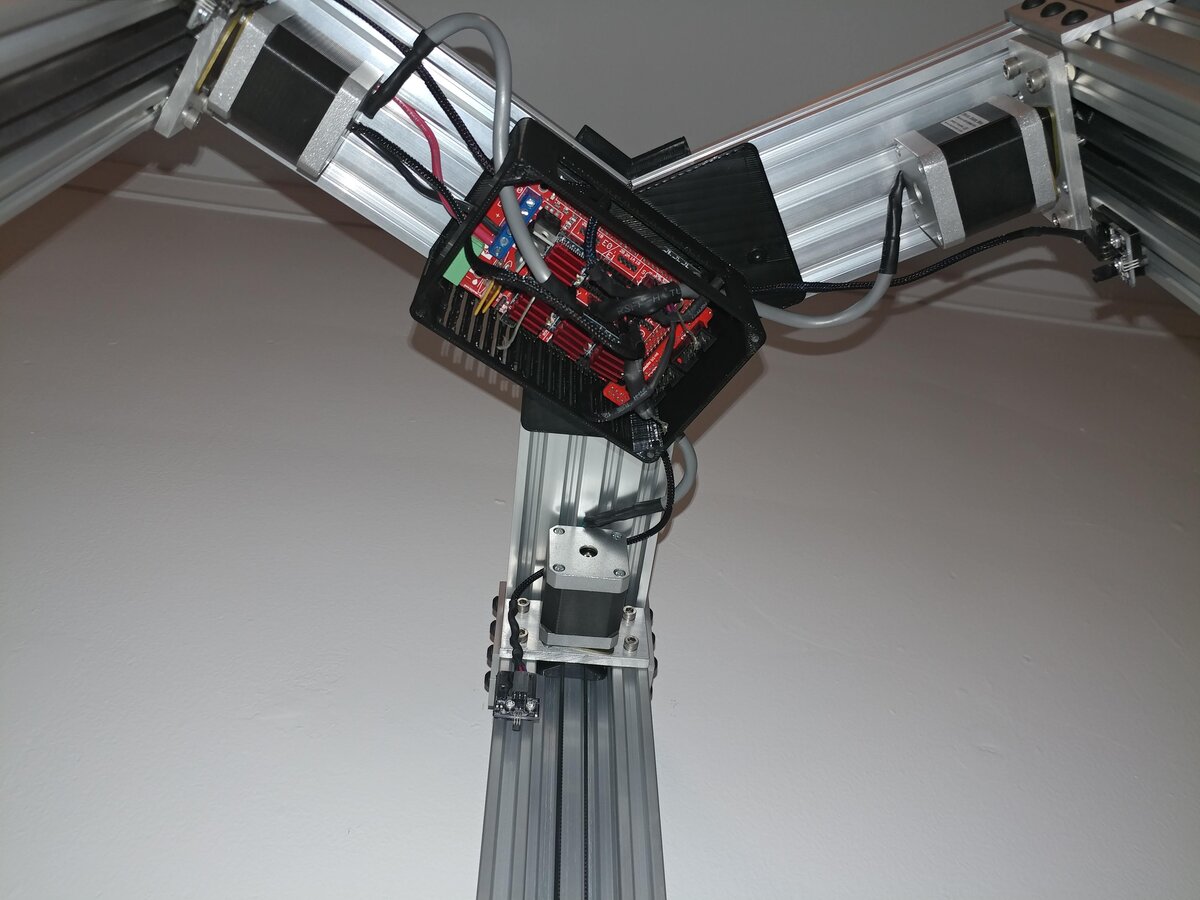
Custom High-Speed Delta 3D Printer
|
Solo Project
|
2014 - 2019
|
|
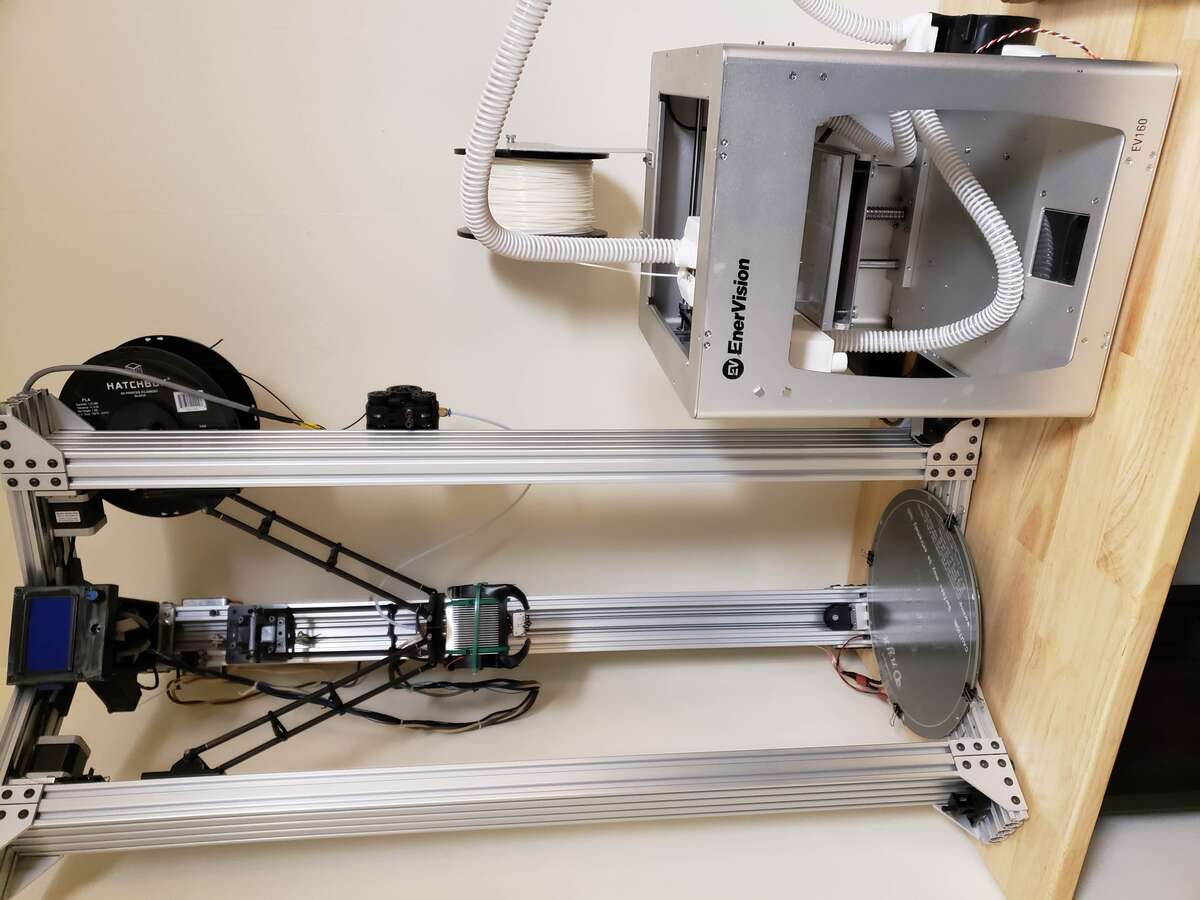
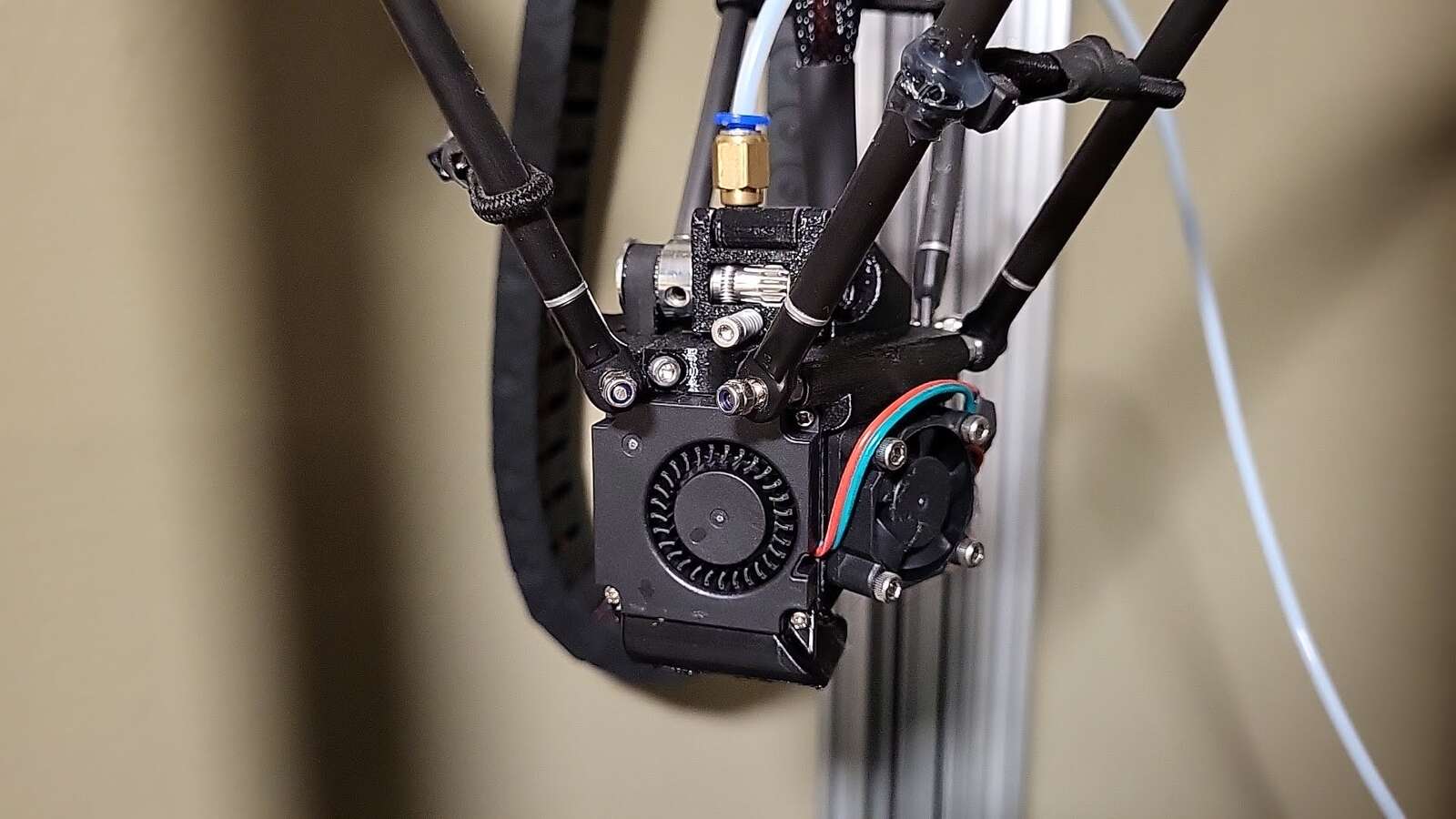
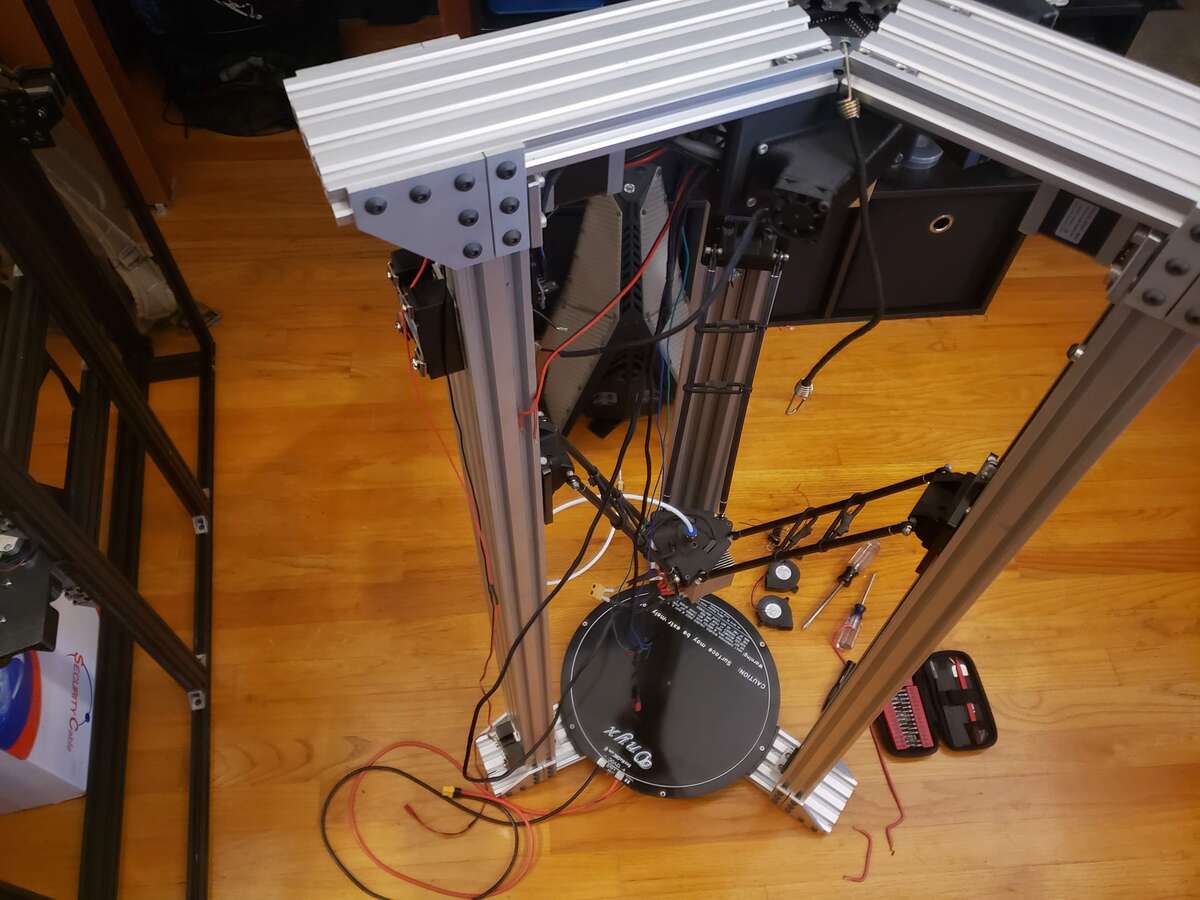
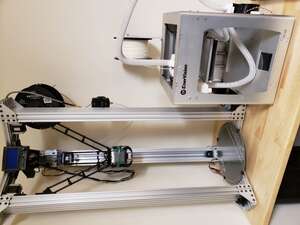
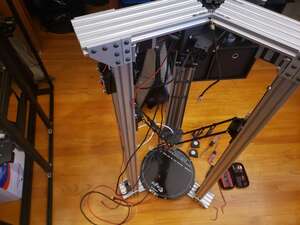
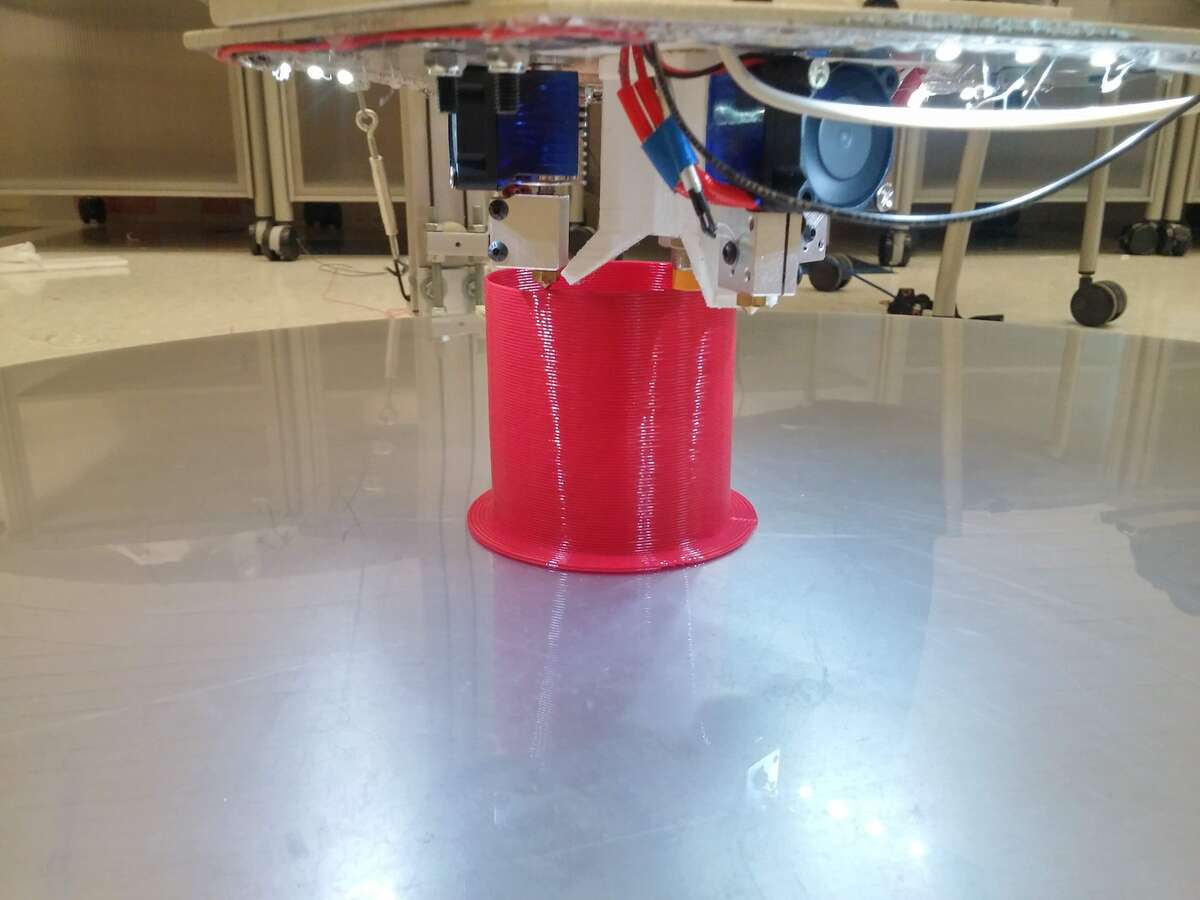
This project started in the era of the Prusa Mendel/i3 designs. Required faster print times than available 3D printers in the market, designed and built this system to solve that problem.
Features:
- 270mm build diameter
- ~490mm build height
- Printing travel speeds up to 500mm/s
- Printing speeds with extrusion up to 150mm/s (layer height dependent)
- Accelerations up to 10m/s^2
- 32-bit controller using Smoothieware/Marlin (previously 8-bit with Repetier)
- Custom frame and design
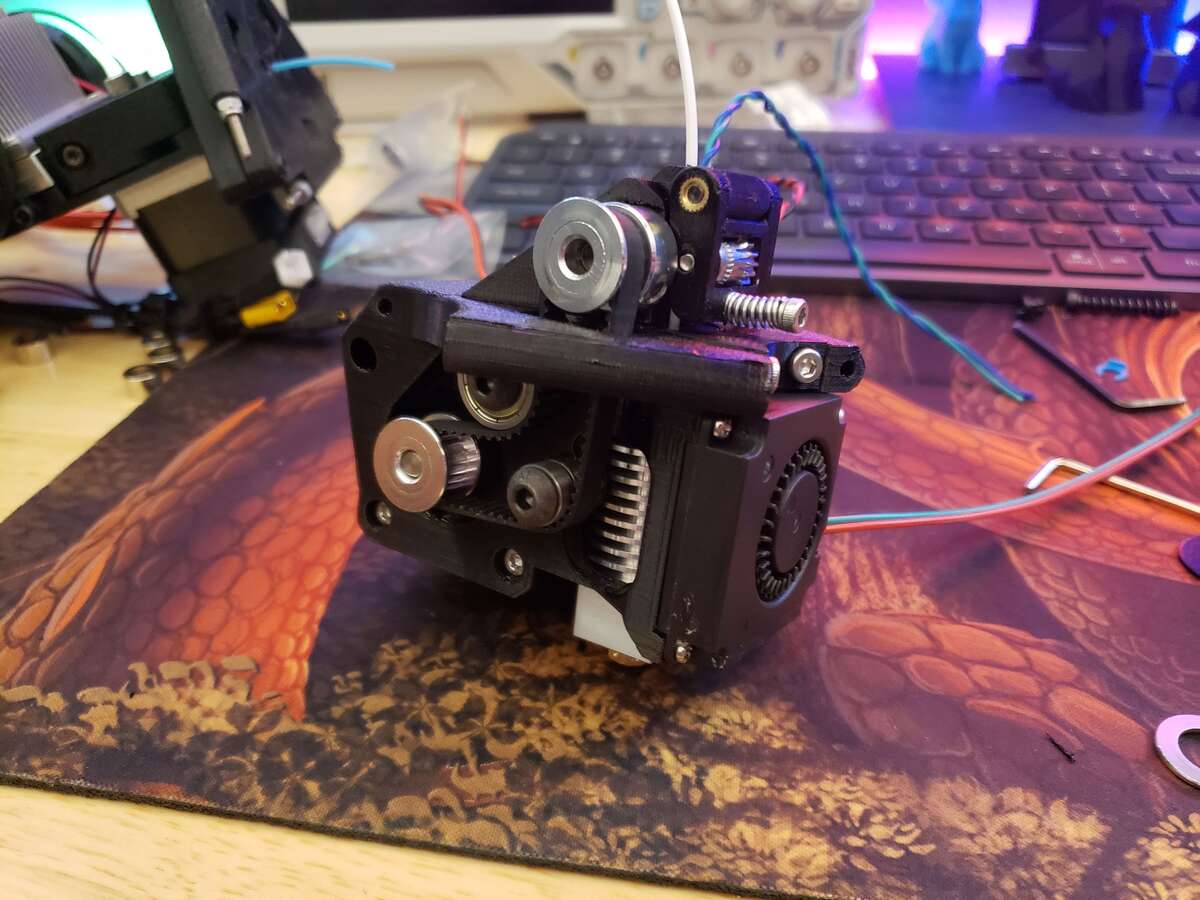
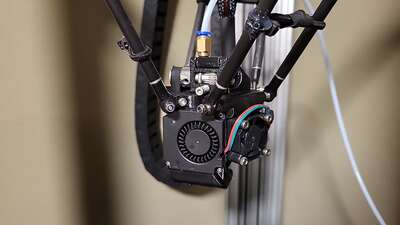
- Custom, compact end-effector and extruder combo
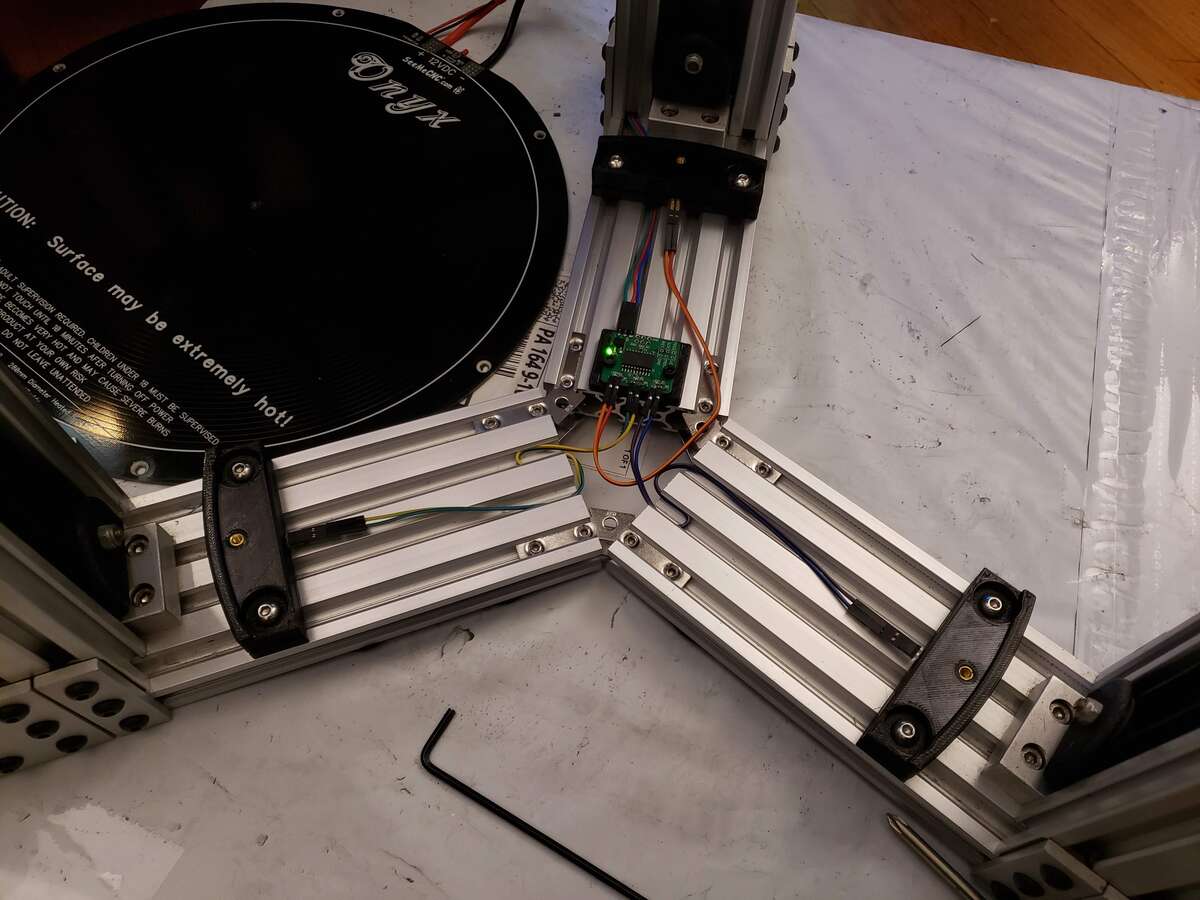
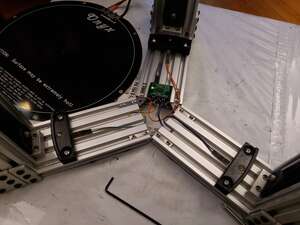
- Automatic bed leveling using FSRs integrated into the bed mounts
|
[+]
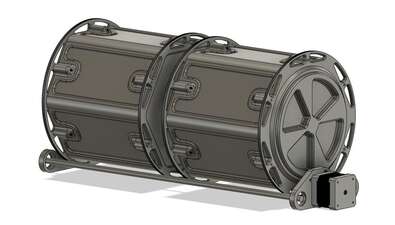
Beetleweight Combat Robot
|
with co-worker
|
2023 - 2024
|
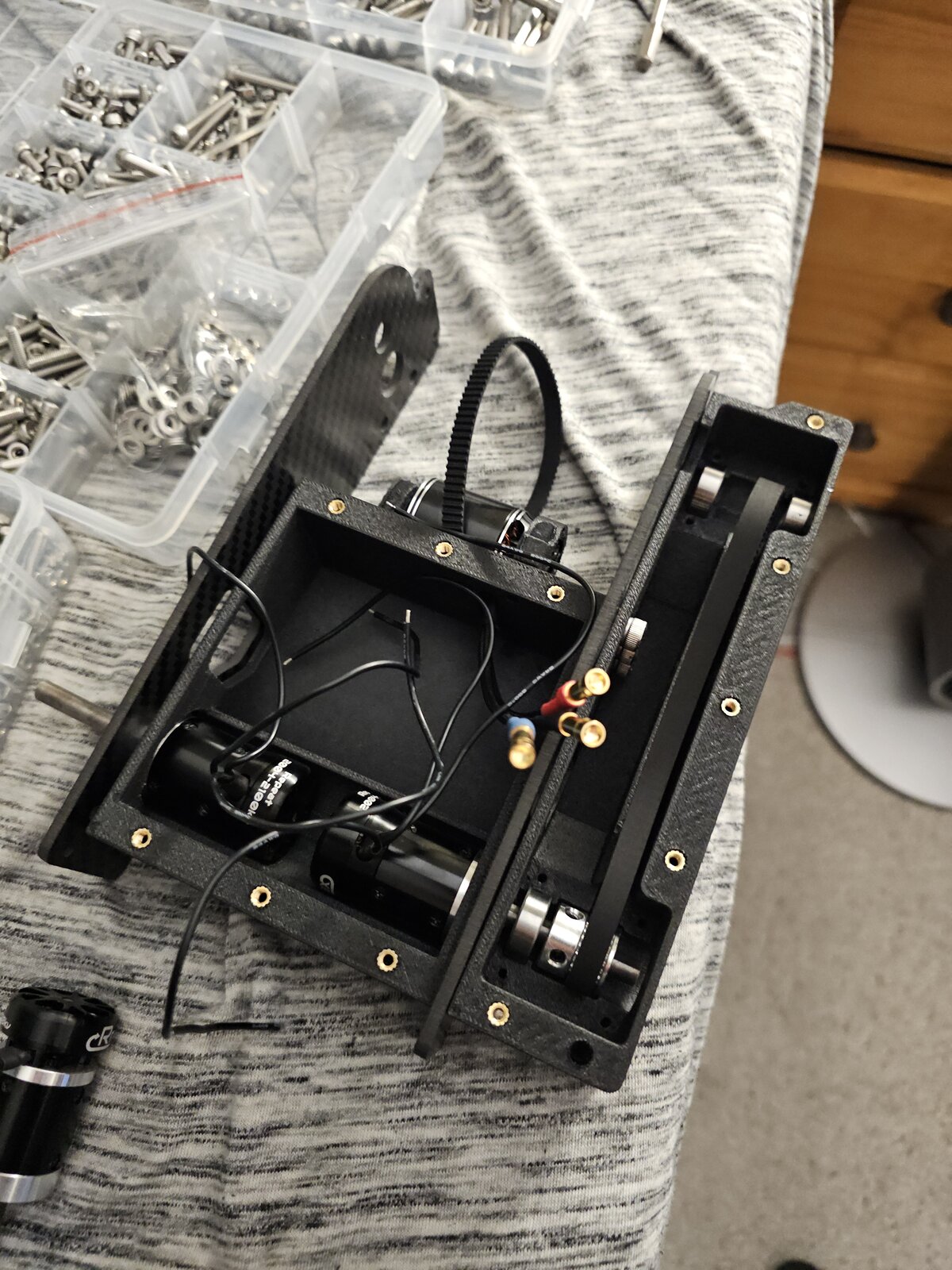
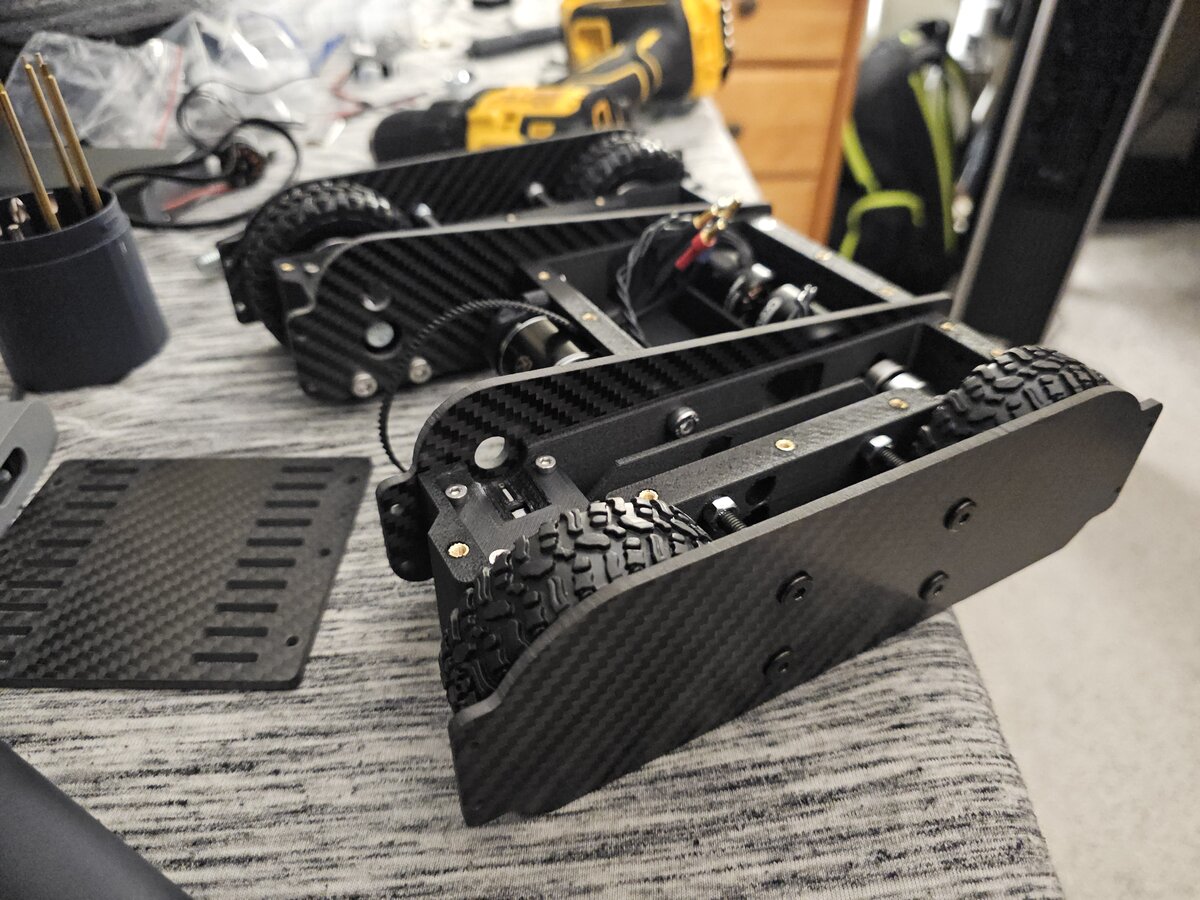
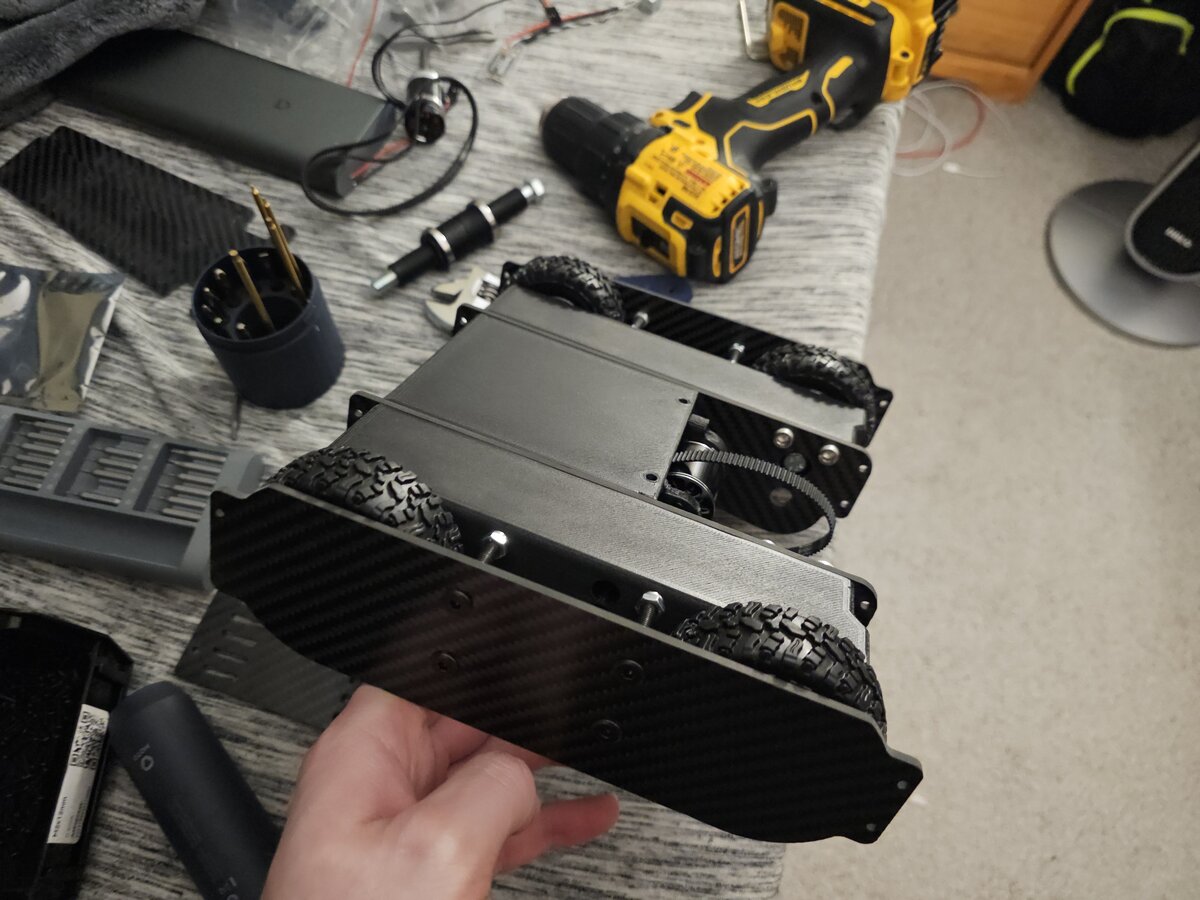
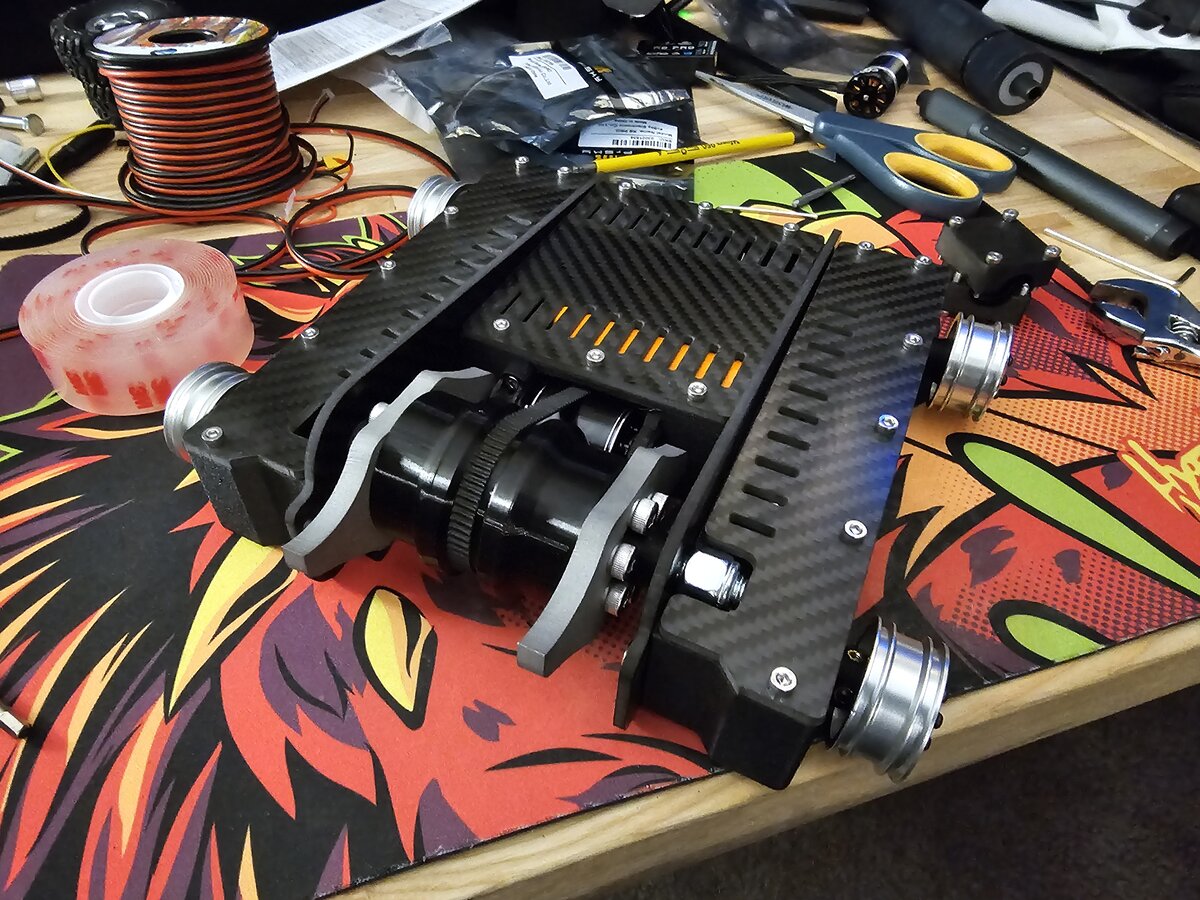
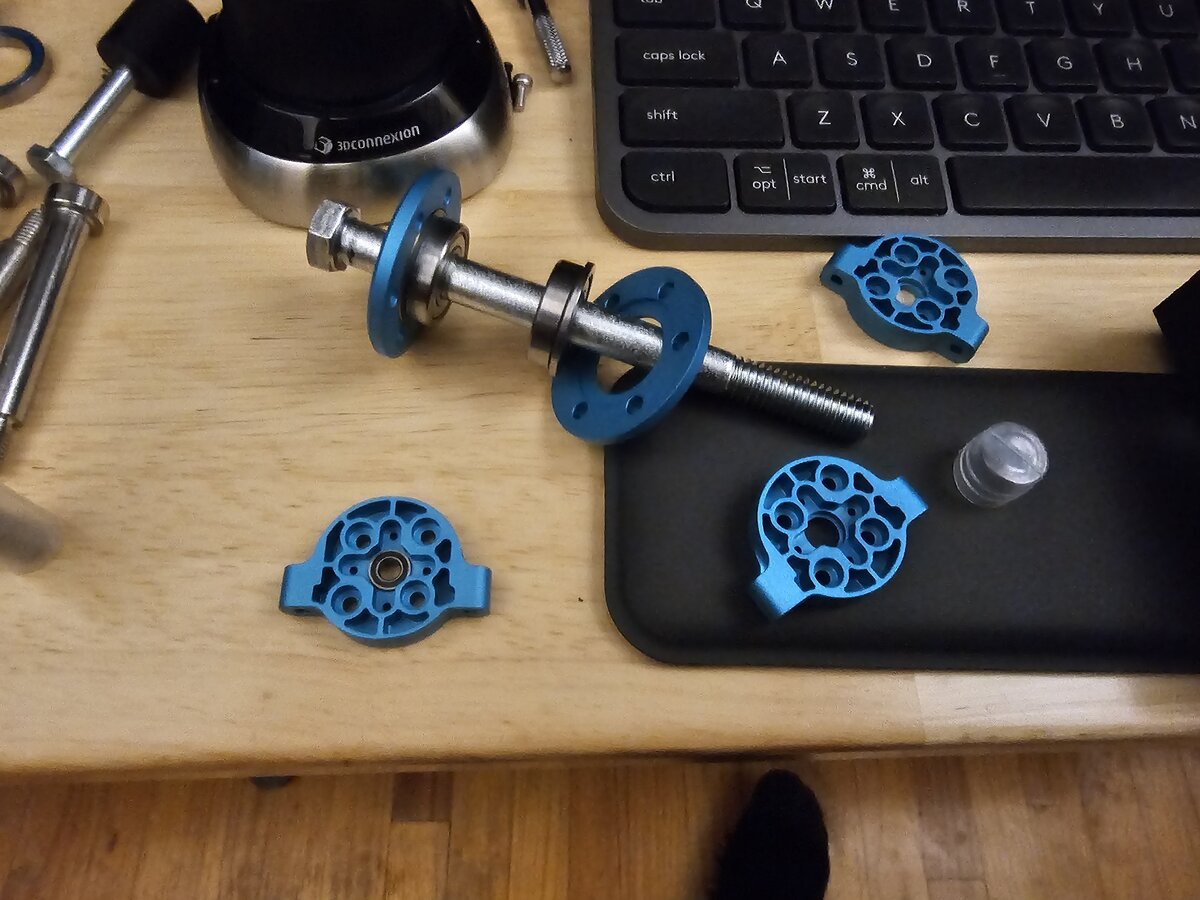
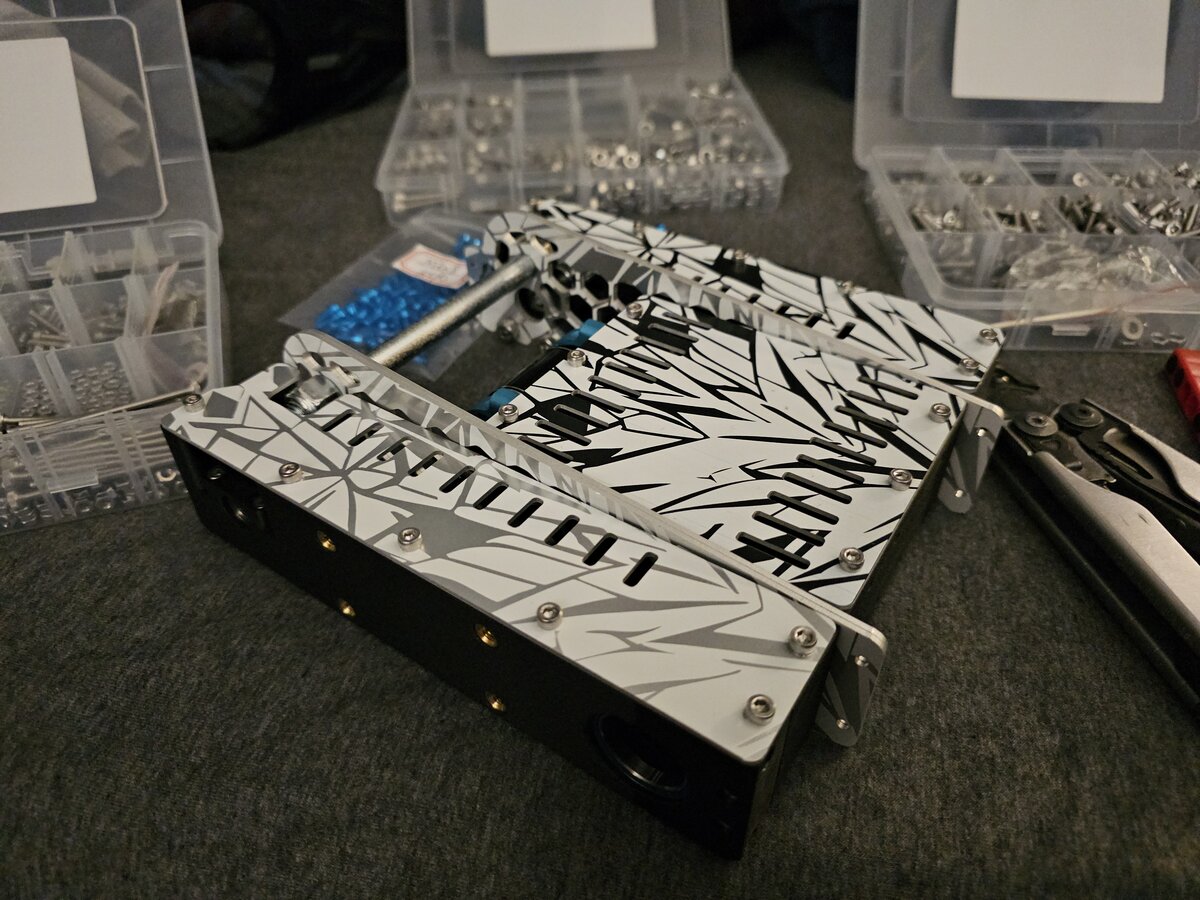
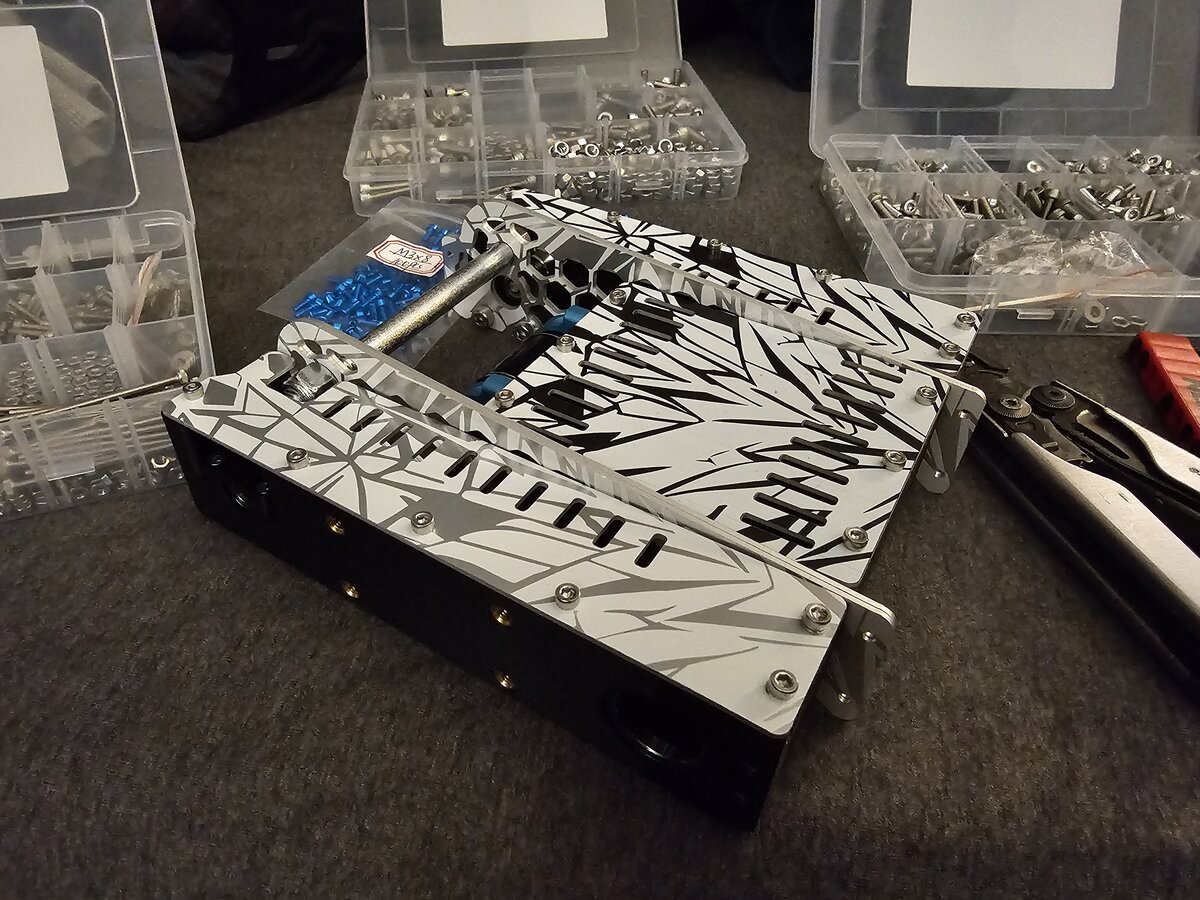
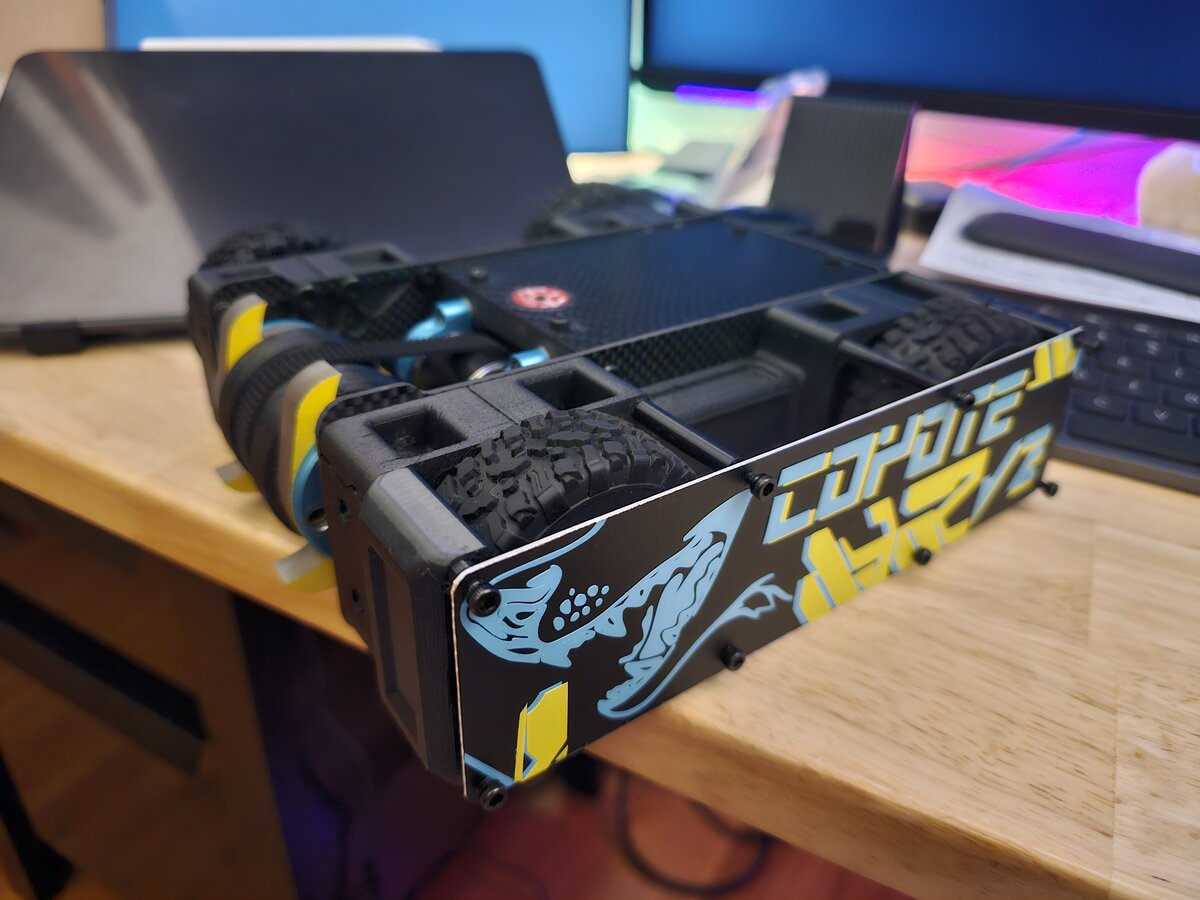
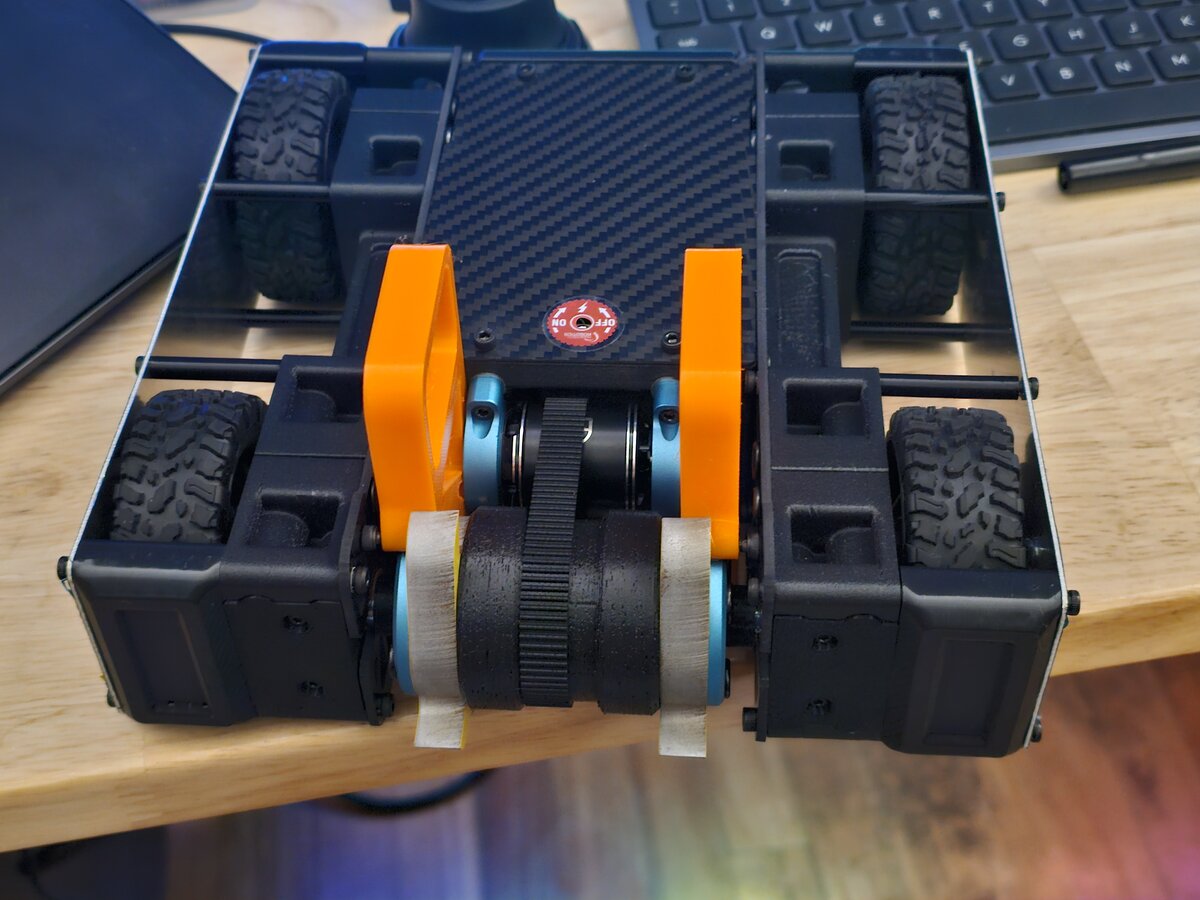
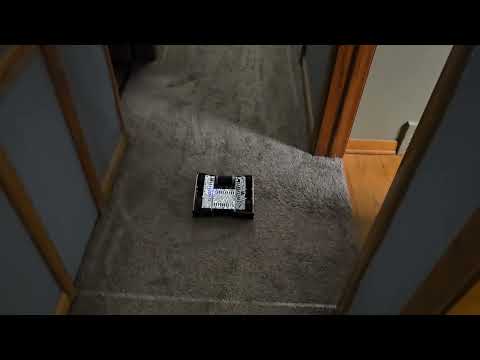
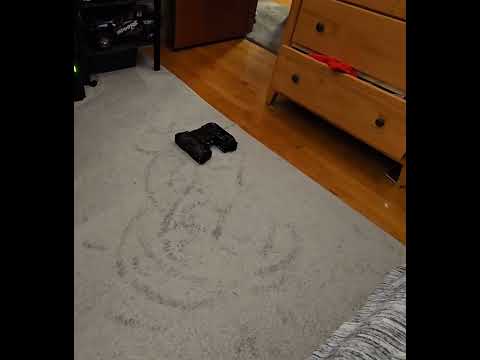
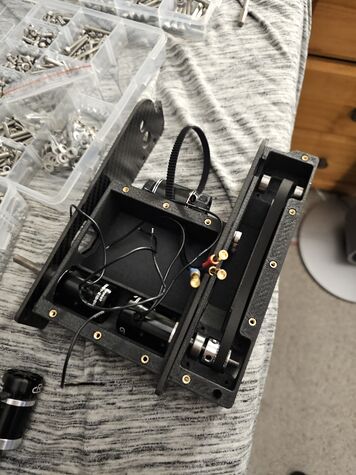
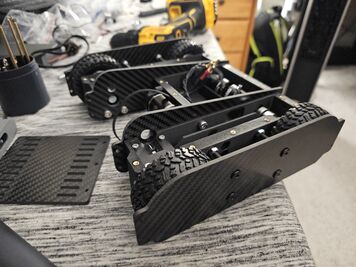
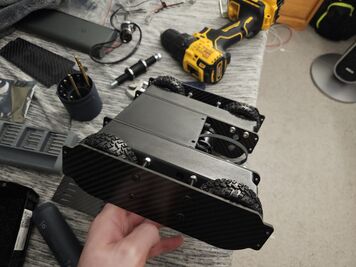
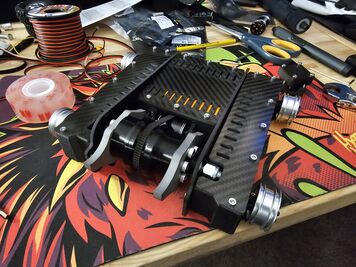
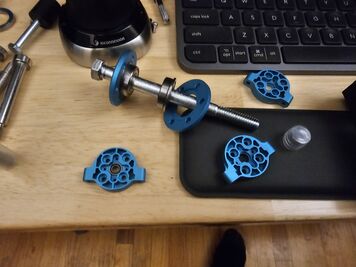
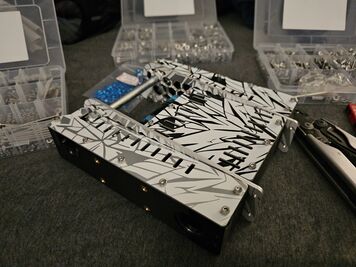
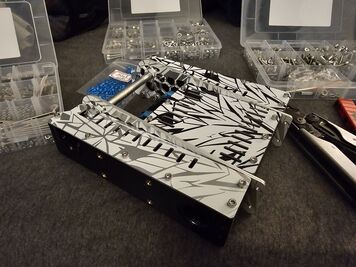
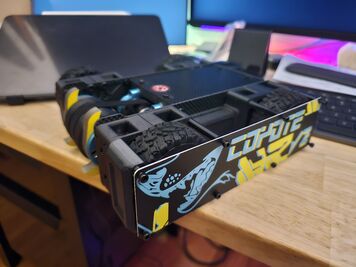
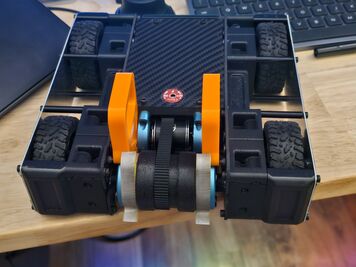
- Designed and constructed a 3 lb beetleweight combat robot featuring high-torque motors, LiPo power management, an all-wheel drivetrain (4 wheels) optimized for speed and acceleration, a vertical spinner weapon, and custom armor
- Iterated through two versions, with the second optimizing weight distribution, drivetrain efficiency, and weapon performance
|
[+]
Custom 4-Axis Machines and Fusion 360 Post Processors
| Github |
Solo Project
|
2023 - 2024
|
|
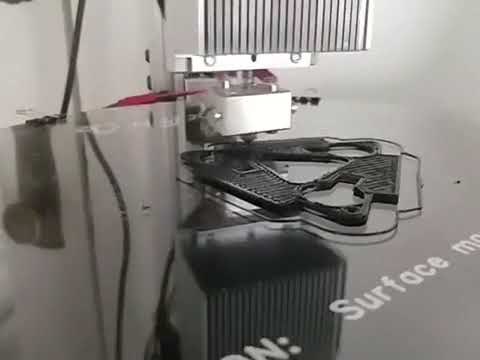
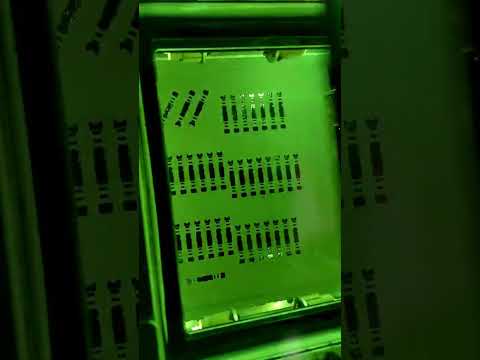
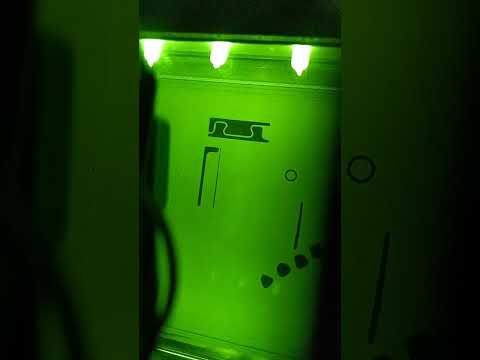
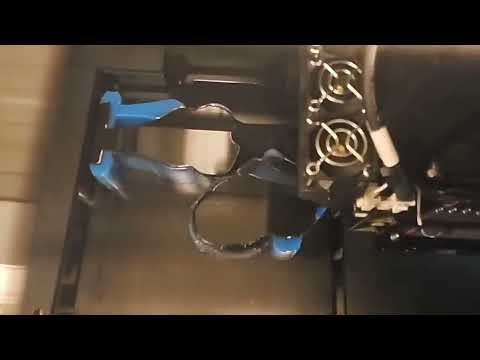
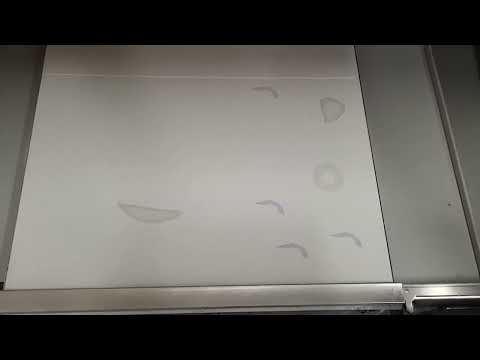
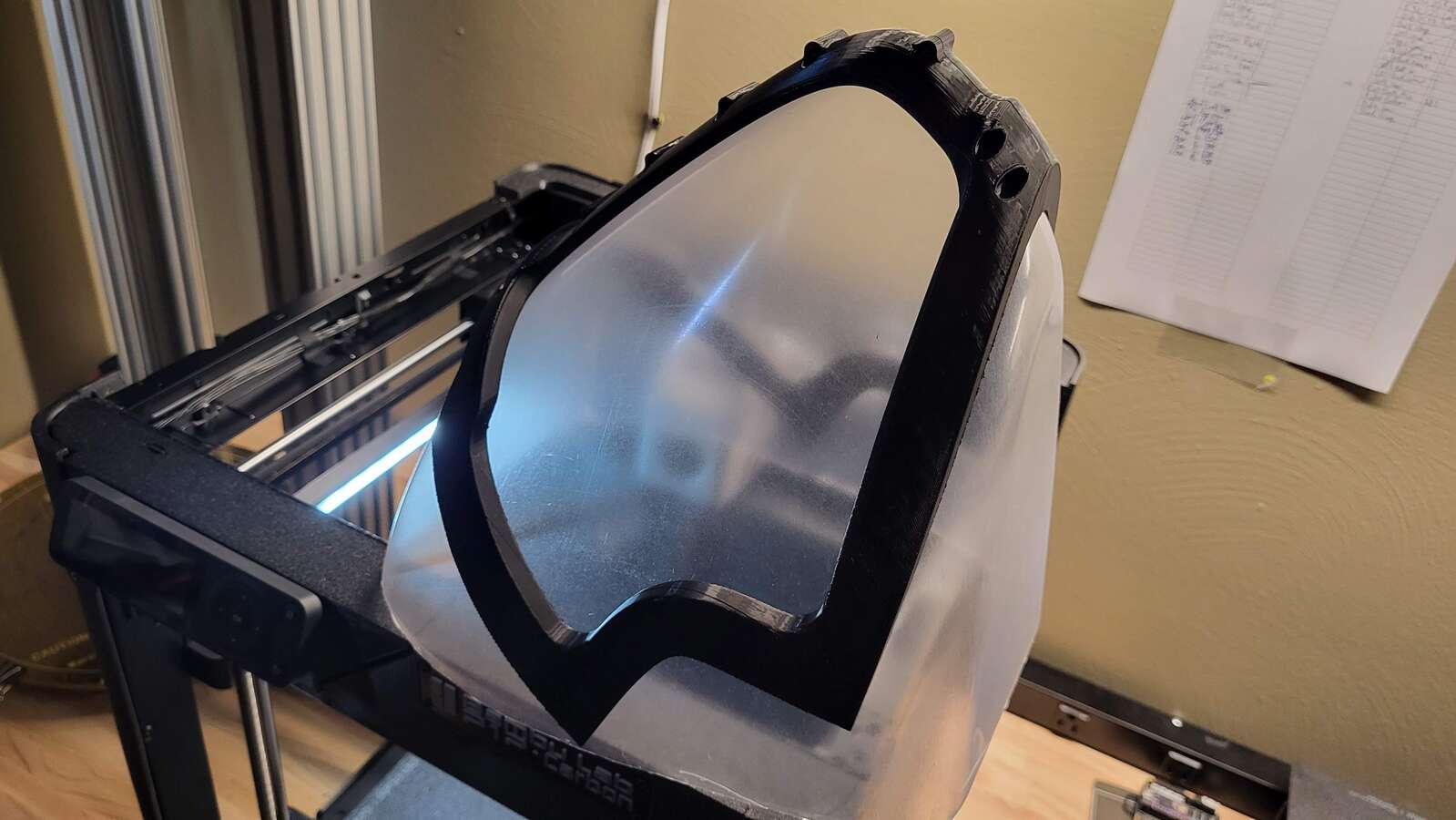
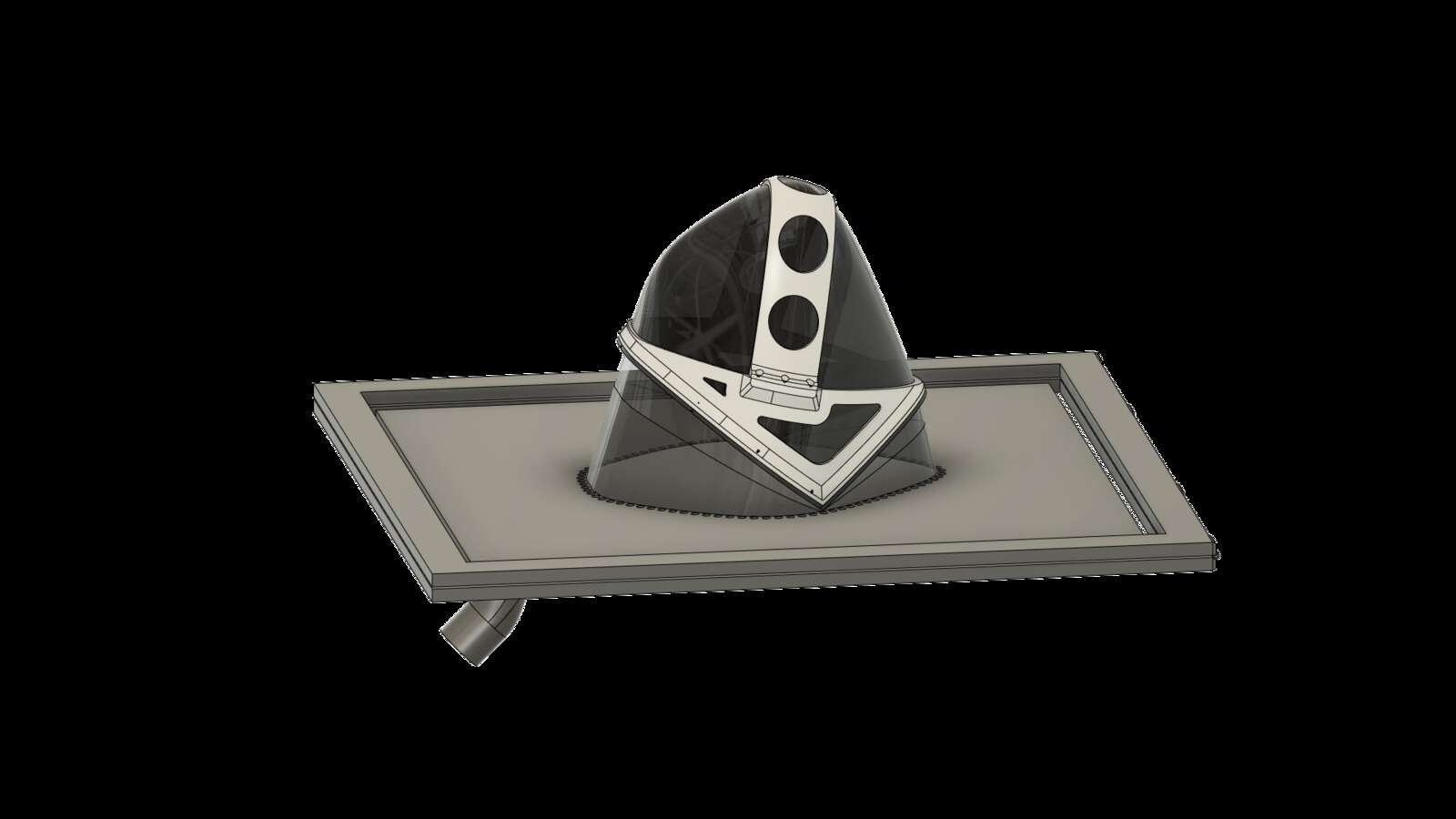
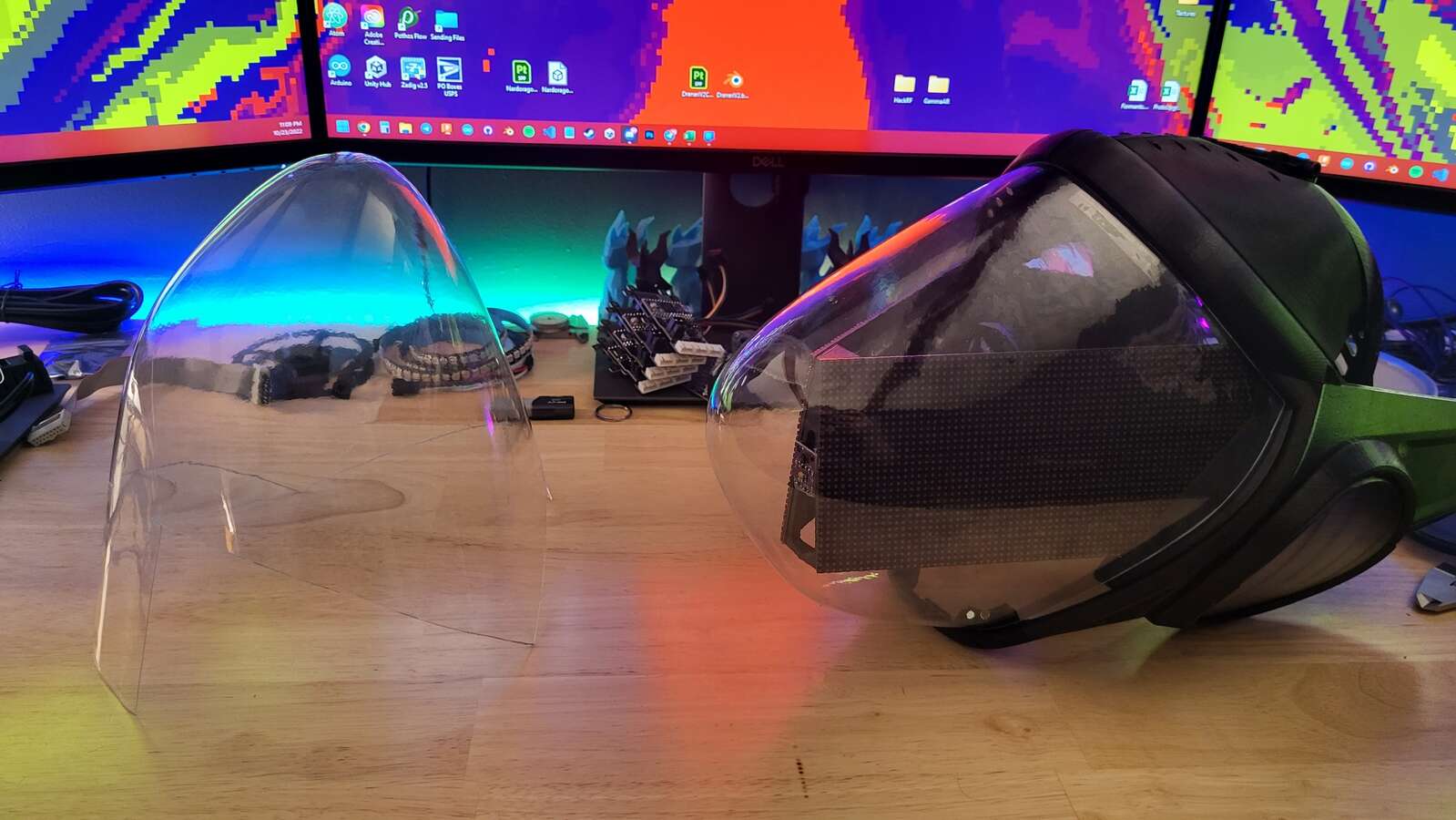
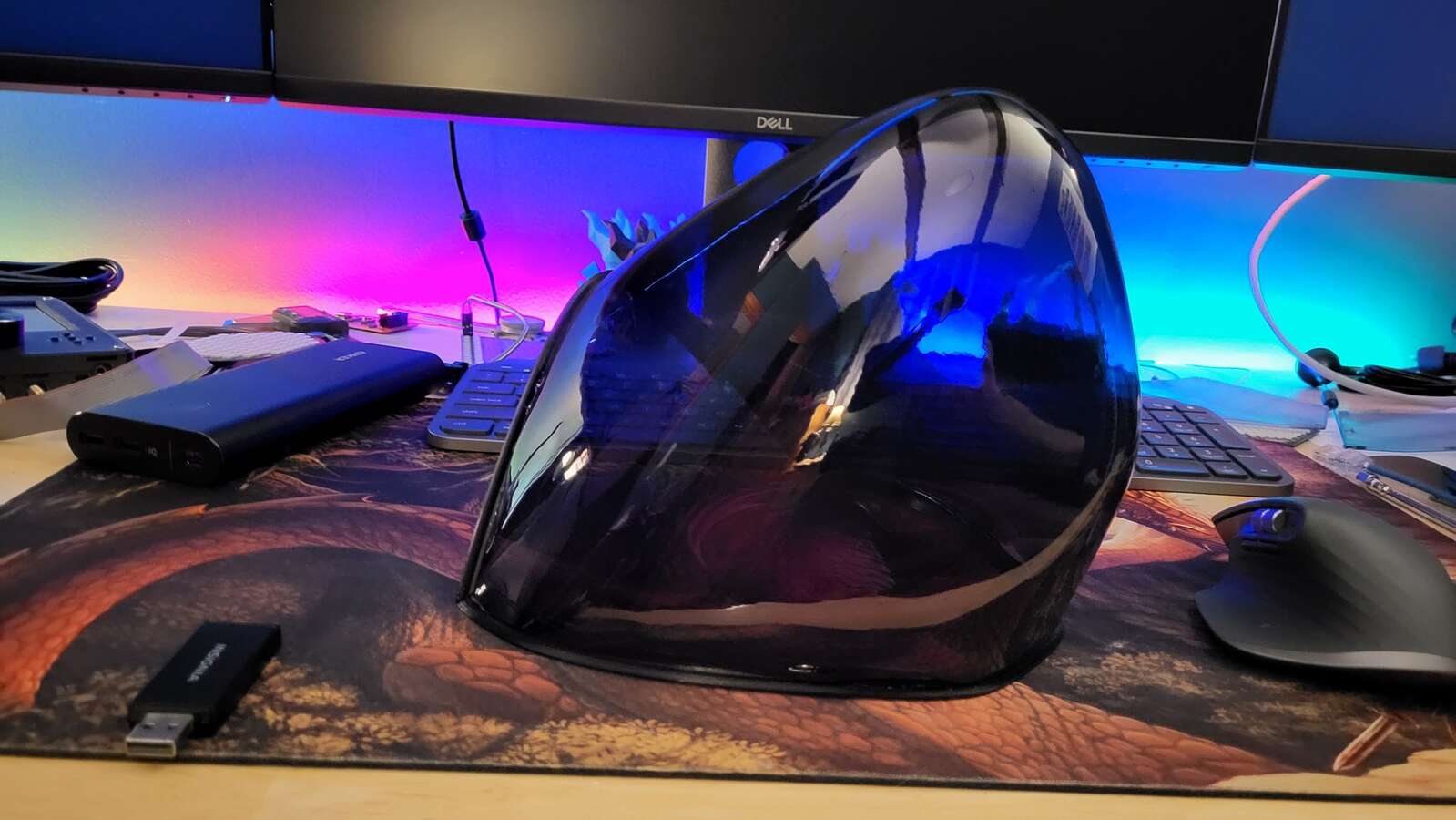
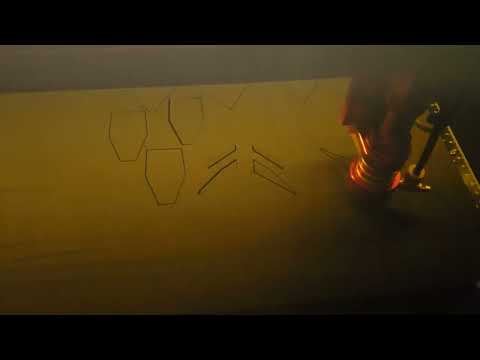
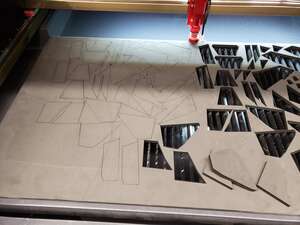
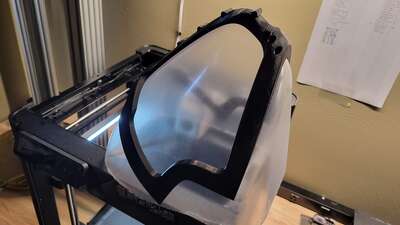
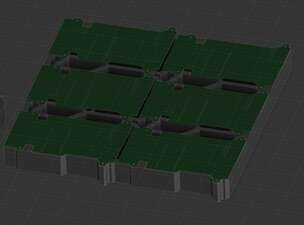
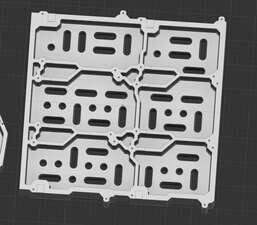
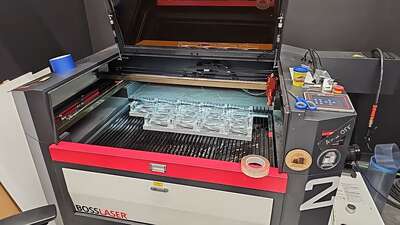
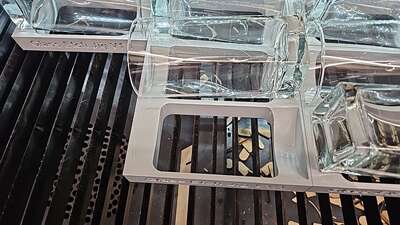
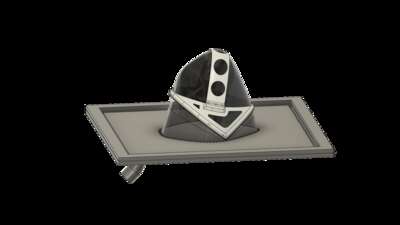
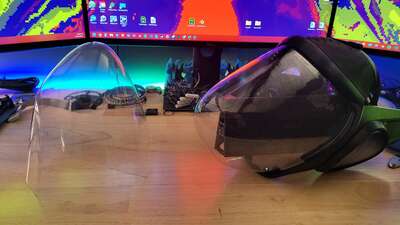
This project primarily is a custom-built Fusion 360 post-processor for multi-axis laser cutting and engraving. It was created to cut complex shapes into vacuum-formed plastic visors. The software is a Fusion 360 post-processor that uses the machine’s hardware configuration to convert 4-axis toolpaths into G-code for a custom 4-axis laser cutter.
The machine is an XYZ motion system with an additional large rotary axis that has an integrated fume exhaust system.
|
[+]
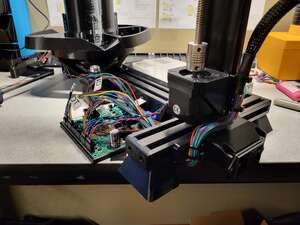
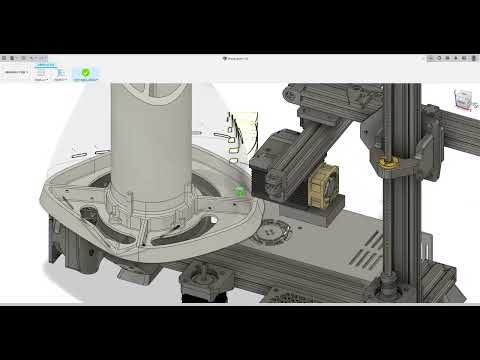
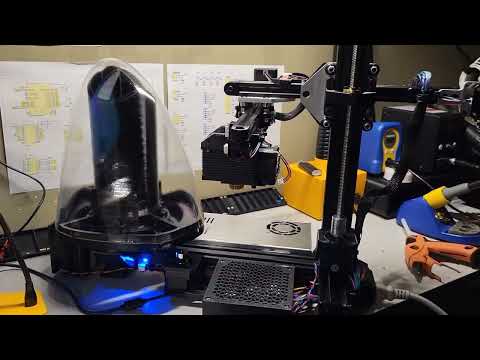
Dual-Tilt Rotor Quadcopter
| GitHub |
Software Solo | Hardware by Co-Workers
|
2018 - 2019
|
|
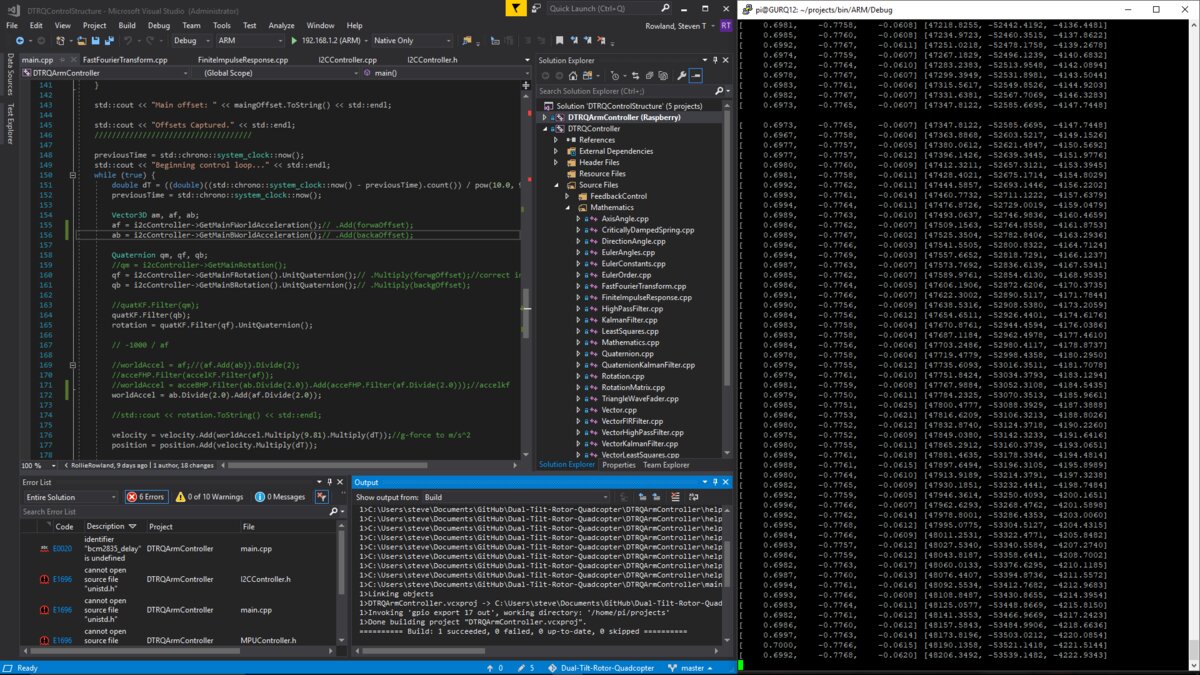
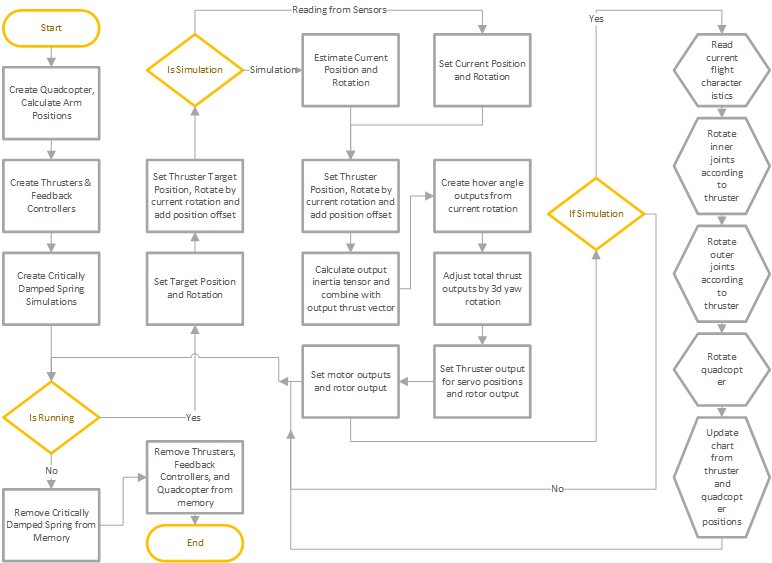
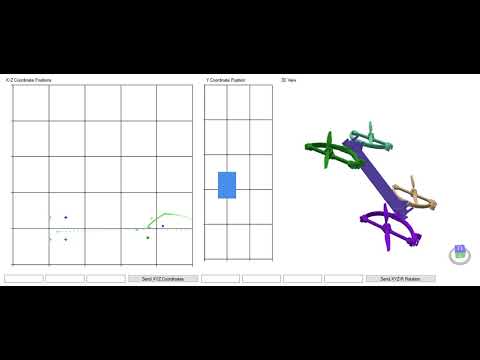
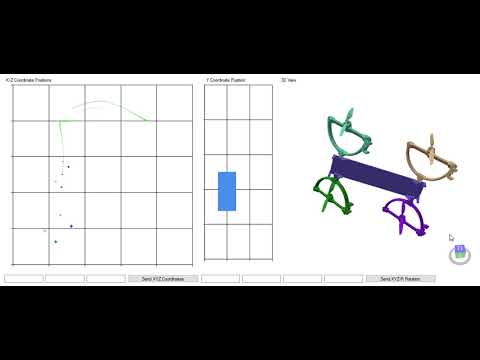
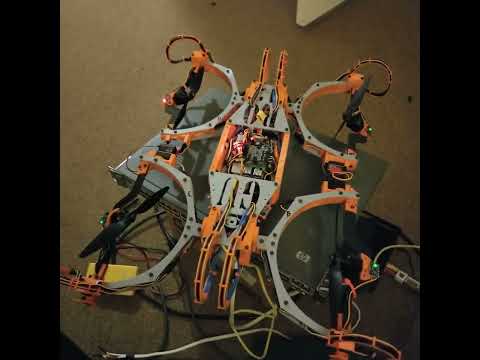
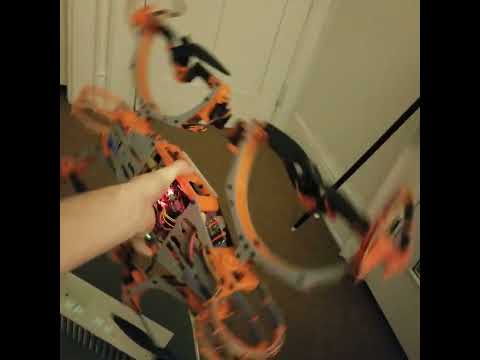
This project is an integrated control system for a quadcopter with independently tilting rotors. Each motor can pivot on two axes, letting the quadcopter perform complex maneuvers and fly at any angle. This was designed as a system to allow the quadcopter act as a gimbal to allow for a larger statically mounted camera while having a full 360 degree view.
Software Stack:
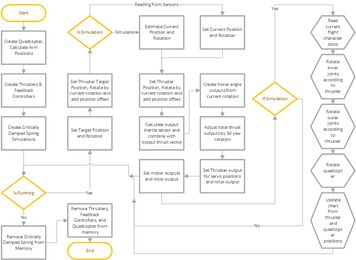
- Control algorithms in C++ for real-time dynamics
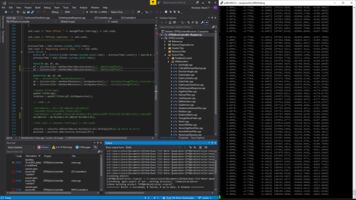
- C#-based physics simulation with a C++/CLI bridge and control-structure library for tilt-rotor modeling
Hardware Integration:
- Runs on a Raspberry Pi for onboard flight control
- Uses a PCA9685 16-channel PWM driver to manage motor speed and tilt servos
- TCA9548A I2C multiplexer with multiple IMUs (MPU6050/MPU9150) for attitude sensing
Highlights:
- Custom pipelines for planning aerial maneuvers and stabilizing flight
- Sensor fusion and control loops for autonomous operation
|
[+]
Small-Batch Consumer Electronics Production
|
Solo Project
|
2020 - Now
|
Founded and operated a small electronics business that took custom wearable-display and LED-controller hardware from prototype through production, firmware release, fulfillment, and customer support.
Beyond prototyping, several of the projects on this page were taken to small-batch production and shipped to customers worldwide. This involved owning the full pipeline end-to-end:
- Custom mixed-signal and power PCB design in Altium - LED drivers (HUB75, WS2812), USB-C PD, DC-DC buck converters, and motor/sensor controllers
- In-house SMT assembly down to 0402 components - stencil printing, custom CoreXY pick-and-place, reflow, microscope rework, and functional test
- Production fixtures - test harnesses, calibration jigs, programming rigs, and packaging tooling
- Firmware build and release pipelines, customer-facing documentation, and direct customer support for hardware and firmware issues
- Multiple PCB designs taken from prototype to production
The wearable display, LED controller, and protogen-platform projects below all flowed through this pipeline.
|
[+]
Other Product Prototyping, Engineering, and Software
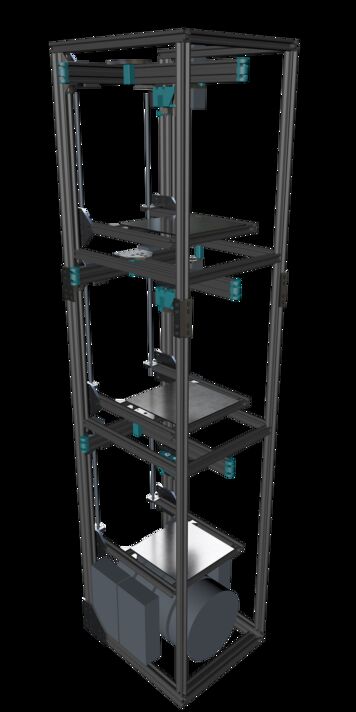
- Custom Print Farm: Designed and built custom compact and portable CoreXY stackable 3D printer farm (With Co-Workers)
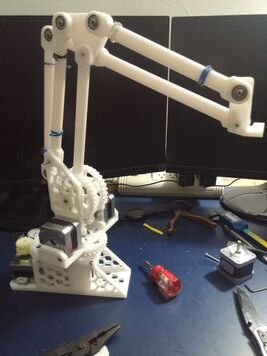
- Tripteron 3D Printer: Developed a Cartesian-parallel 3D printer prototype
- Reflow Heater Controller: Created hardware and firmware for a reflow heater, featuring PID temperature control and programmable profiles
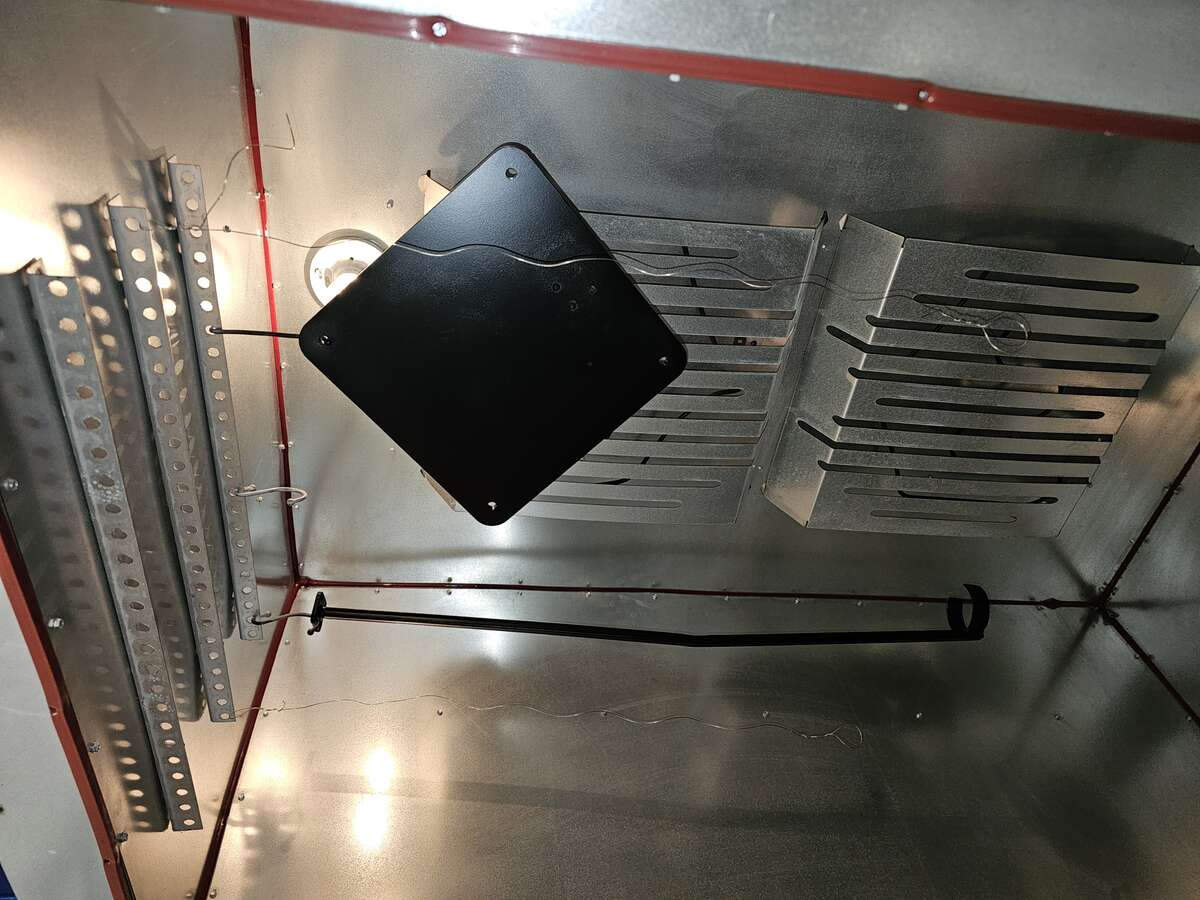
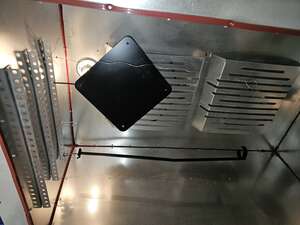
- Printer Conversion for PEEK/Ultem: Modified a Stratasys FDM printer’s hot end, control electronics, and build chamber to print high-temperature materials (PEEK/Ultem/Polycarbonate)
- Ozone Water Treatment System: Created a residential ozone generator for point-of-entry water sanitation, including ozone injection and feedback control with dissolved-ozone sensors
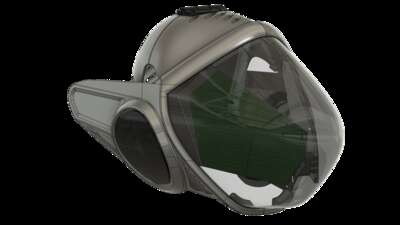
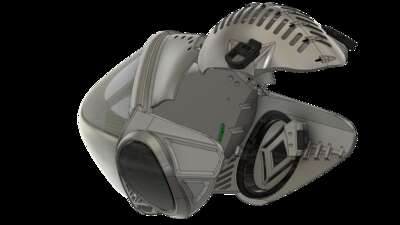
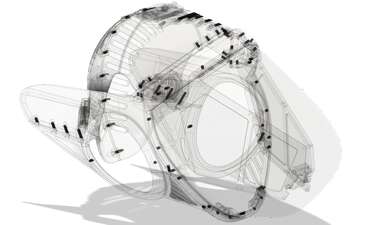
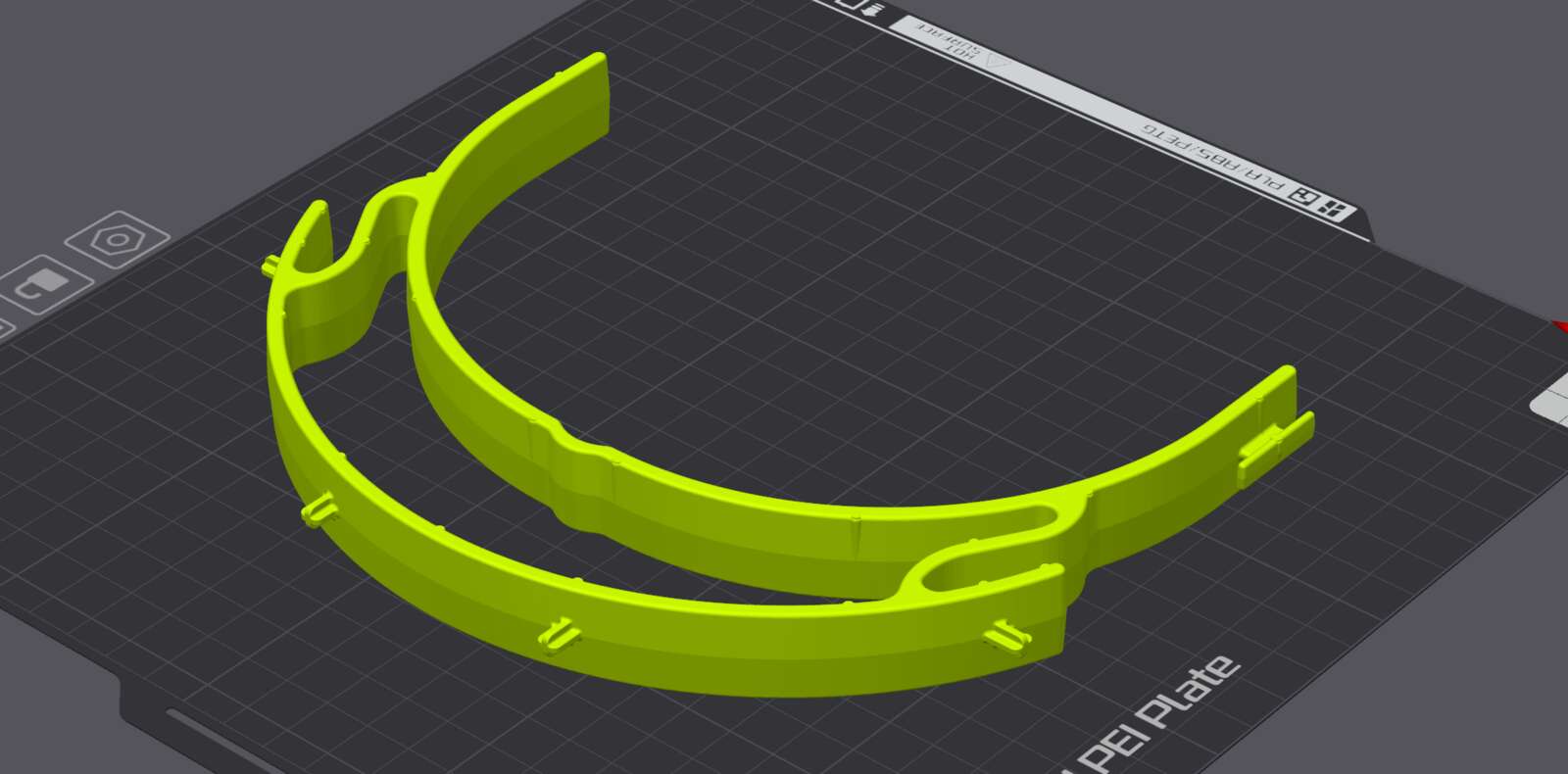
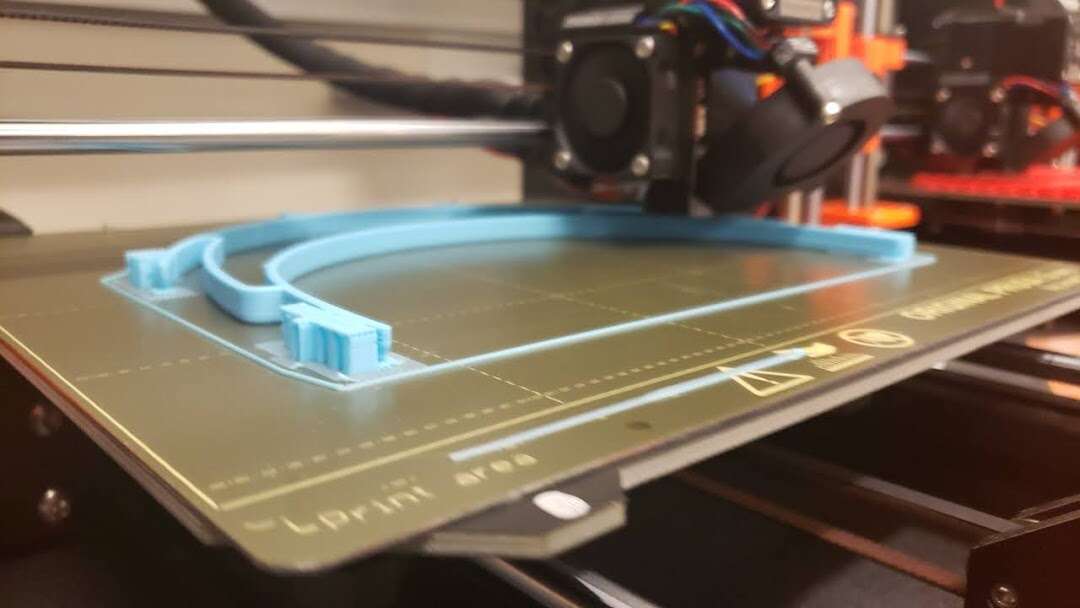
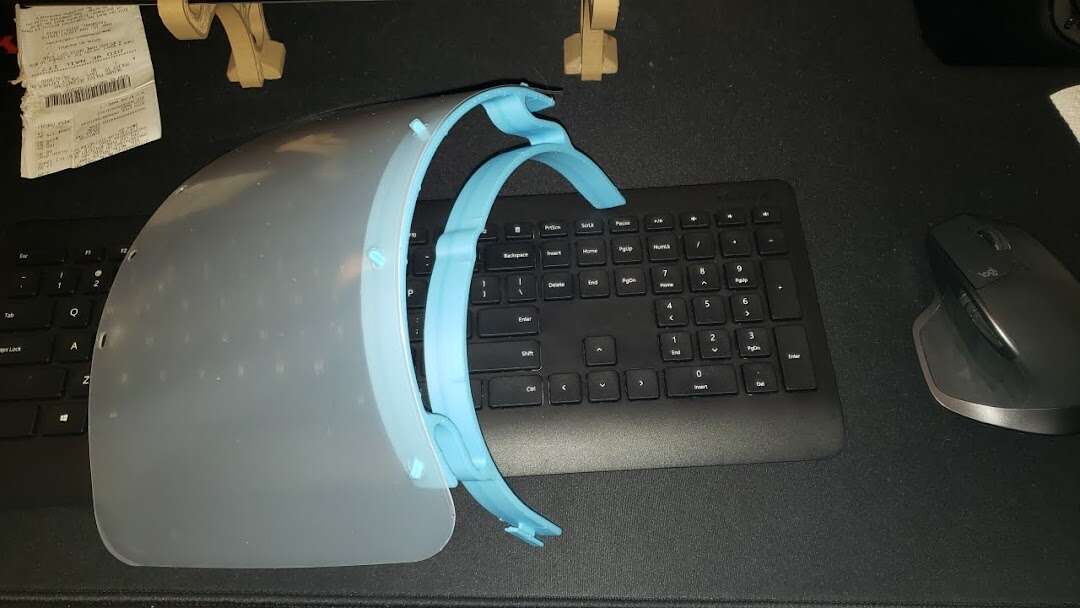
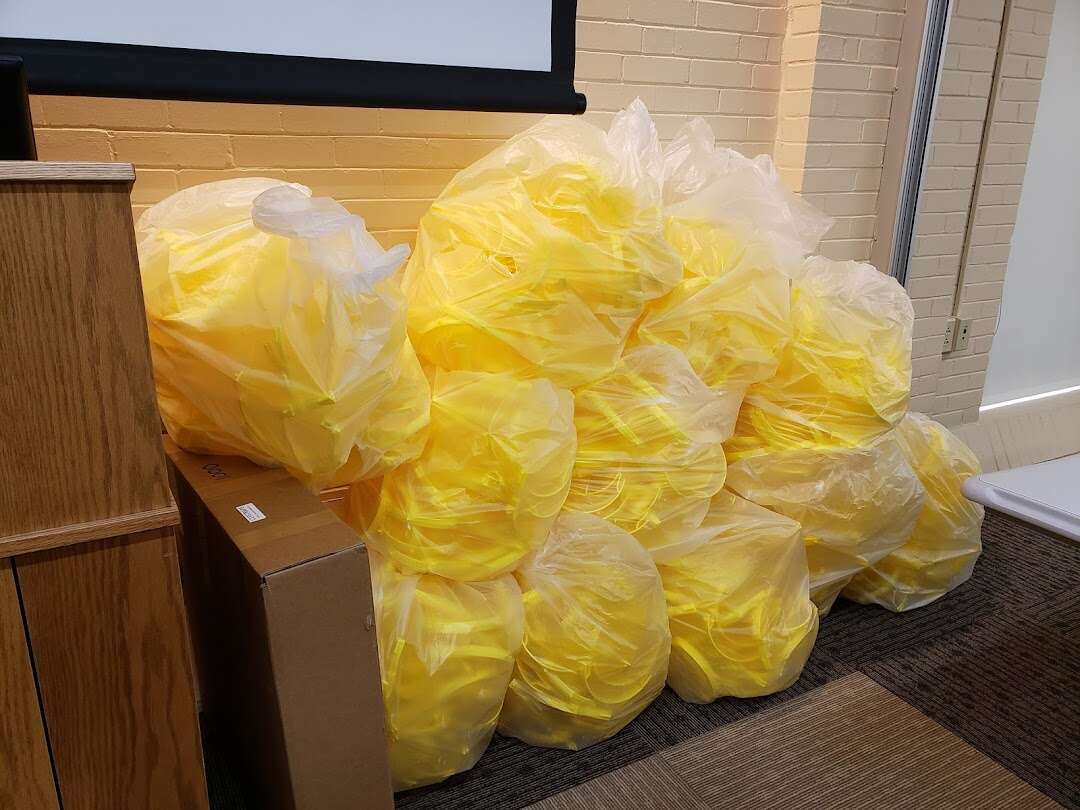
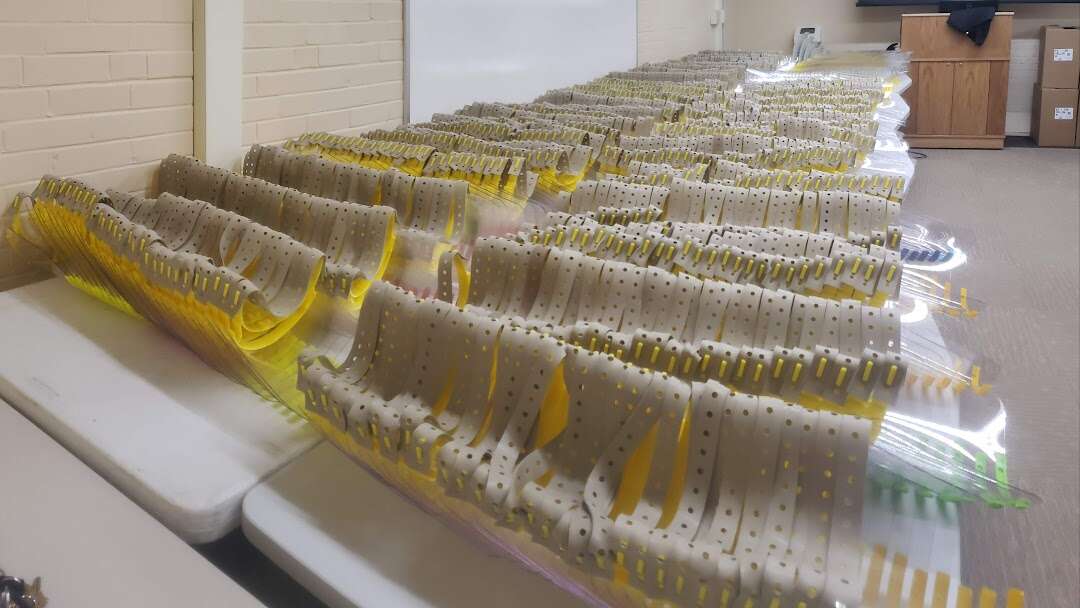
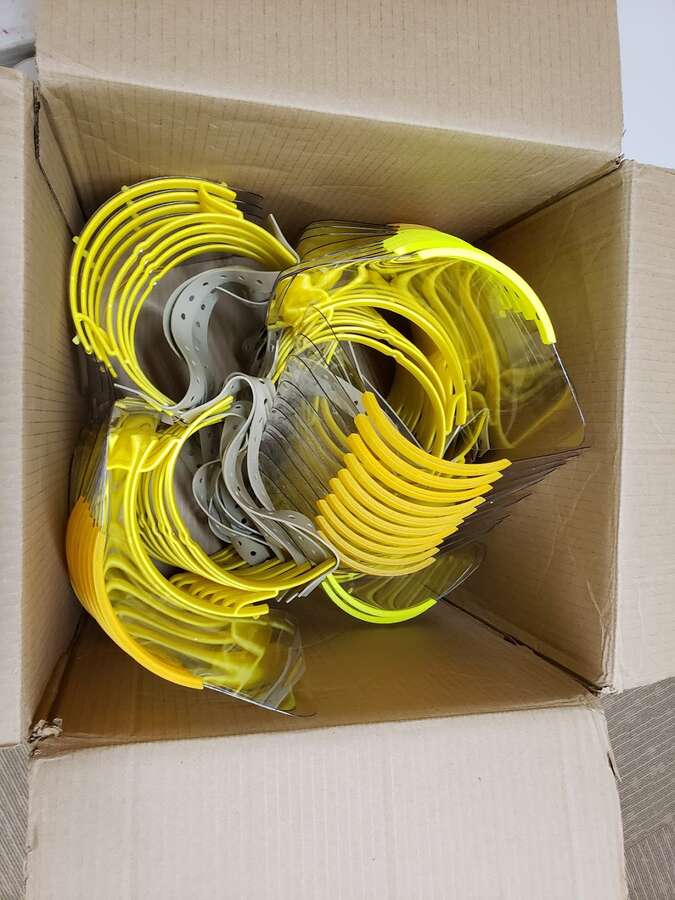
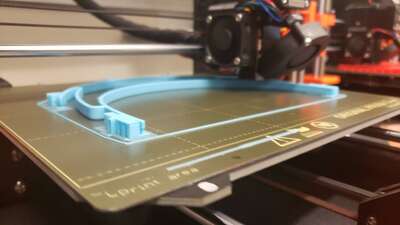
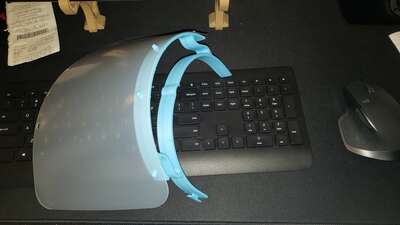
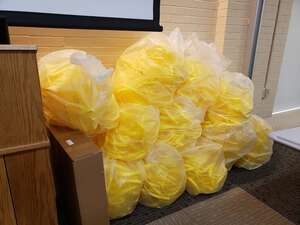
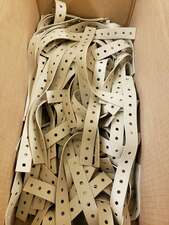
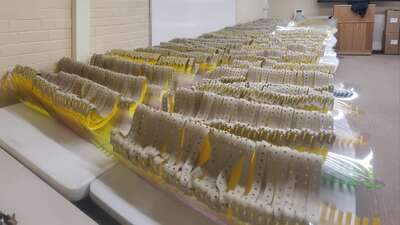
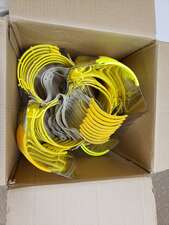
- Face Shield Production (COVID, 6,000+ units): Organized and scaled PETG face-shield fabrication using laser-cut visors, injection-molded frames, and die-cut elastic (with co-worker)
- High-Speed USB Current Device: Created a portable measurement device capable of sampling voltage and current at kilohertz rates-ideal for reverse-engineering ongoing tasks on electronics
- Medical Mattress Squeeze Table: Built a pneumatic squeeze-table assembly used in medical mattress manufacturing (with Co-Worker)
- Medical Mattress/Pad Heater: Built custom heating apparatus for sealing seams on medical mattress pads (with Co-Worker)
- Window Clip Manufacturing: Recreated obsolete window-clip parts via bulk additive manufacturing to replace thousands of failed components (with co-worker)
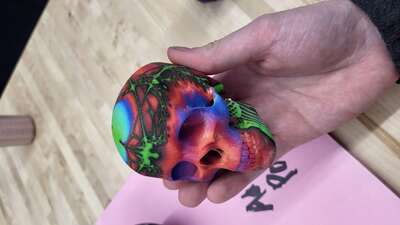
- Multi-Color FDM Production: Designed prototype parts for a consumer product and managed printing and post-processing of 500 multi-color FDM components
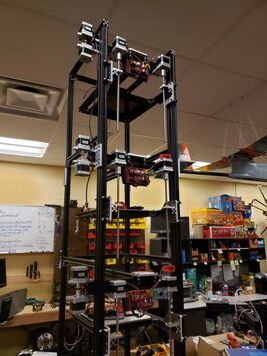
- Custom 10ft Delta 3D Printer: Co-designed and built a 10ft tall x 6ft wide large-format Delta 3D printer prototype in 45 days; used OpenDACT for kinematic calibration on a 4 ft diameter bed (with Co-Workers)
- High-Precision Stroboscope: Microcontroller-driven LED stroboscope with custom optics, power electronics, and a CNC-machined enclosure for high-speed photography and rotating-machinery analysis
- Programmable Electrospinner: Automated electrospinning device with high-voltage power supply, syringe-pump control, and a programmable interface for polymer-nanofiber research
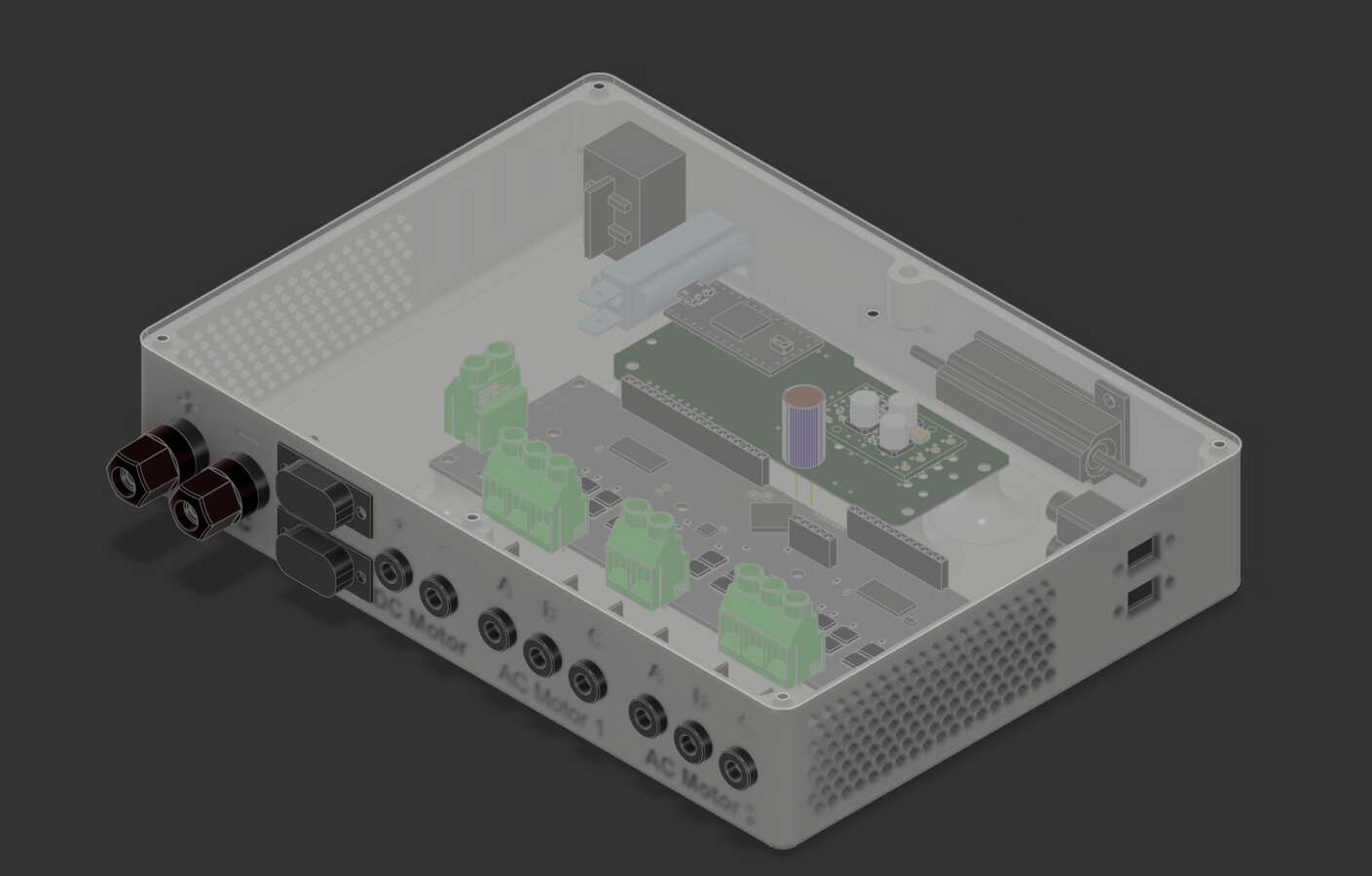
- Multi-Mode Motor Drives Hardware: Three-phase AC, BLDC, and brushed-DC motor controller in a single enclosure, with integrated power electronics and a common control interface used across multiple research projects
- Biomedical Haptics Driver: Motor and actuator driver hardware for a biomedical haptics research prototype
- Environmental Monitoring System: Networked sensor stations (BME280 + ESP-class MCUs) for temperature, humidity, and pressure logging with cloud upload and low-power deep-sleep operation
|
Software and Embedded Systems Development
[+]
AetherControl: Optimized CNC Firmware
| GitHub |
Solo Project
|
2023 - Now
|
|
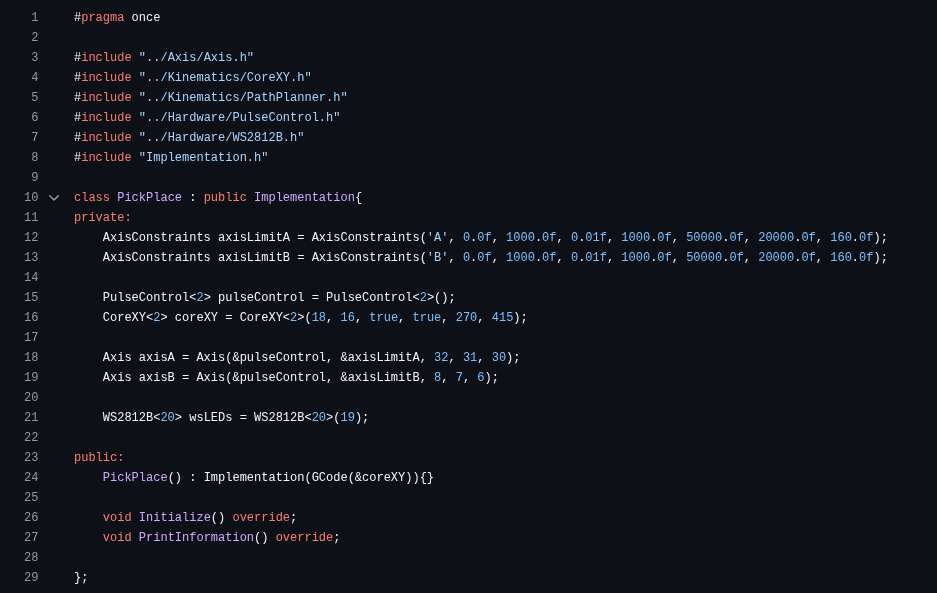
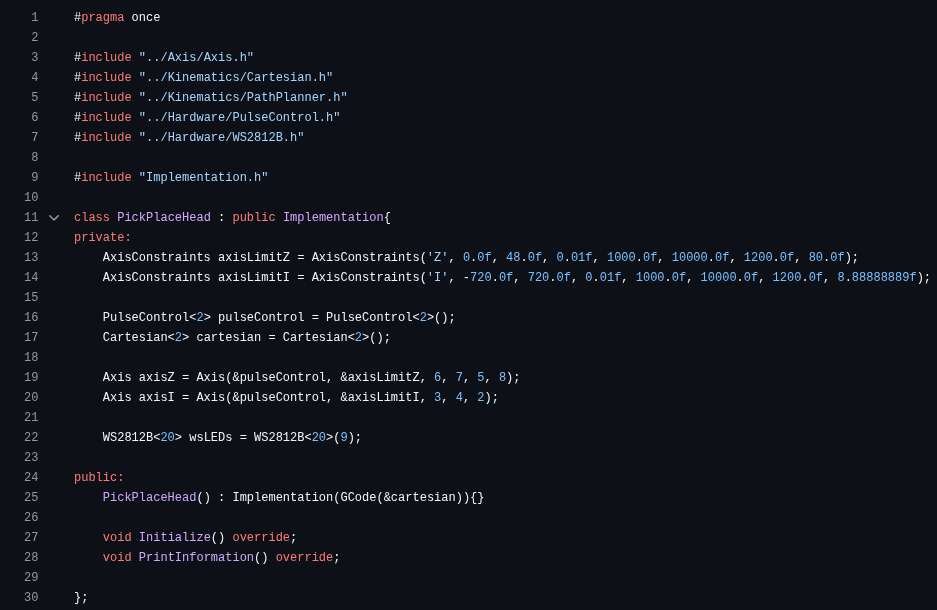
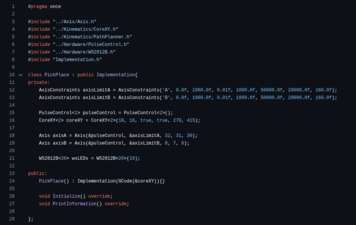
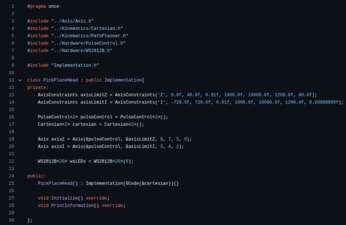
AetherControl is a streamlined and modular, C++ based motion-control firmware. It is built for real-time G-code parsing, motion planning, kinematics, and stepper-motor drive. Supports advanced kinematics like Stewart platforms, CoreXY machines, and Cartesian robots with dynamic trajectory planning.
Implementations:
- High-Speed CoreXY pick-and-place machine
- High-Speed 6x 1000W AC Servo based 6-axis Stewart platform used as a flight simulator
This includes features such as:
- Support for Stewart platform, Cartesian, CoreXY, and custom kinematics configurations
- Dynamic trajectory planning with velocity and acceleration constraints
- G-code parsing and execution for CNC command interpretation
- Real-time multi-axis synchronization and motion coordination
- Multi-Controller synchronization
- Layered modular architecture for easy customization and extension
- Support for sensor calibration and automated testing routines
- Optimized for ARM Cortex-M microcontrollers with efficient resource use
- Deterministic path planner for high-channel-count step generation on GPIO-constrained ARM microcontrollers
- Demonstrated in production on an in-house custom CoreXY pick-and-place at sustained 800 mm/s travel and 2G acceleration
|
[+]
OpenDACT: Automatic Delta Kinematics Calibration Software
| Github |
Contributors on GitHub
|
2014 - 2017
|
|
Open-source - 53+ stars on GitHub, with an active international user base.
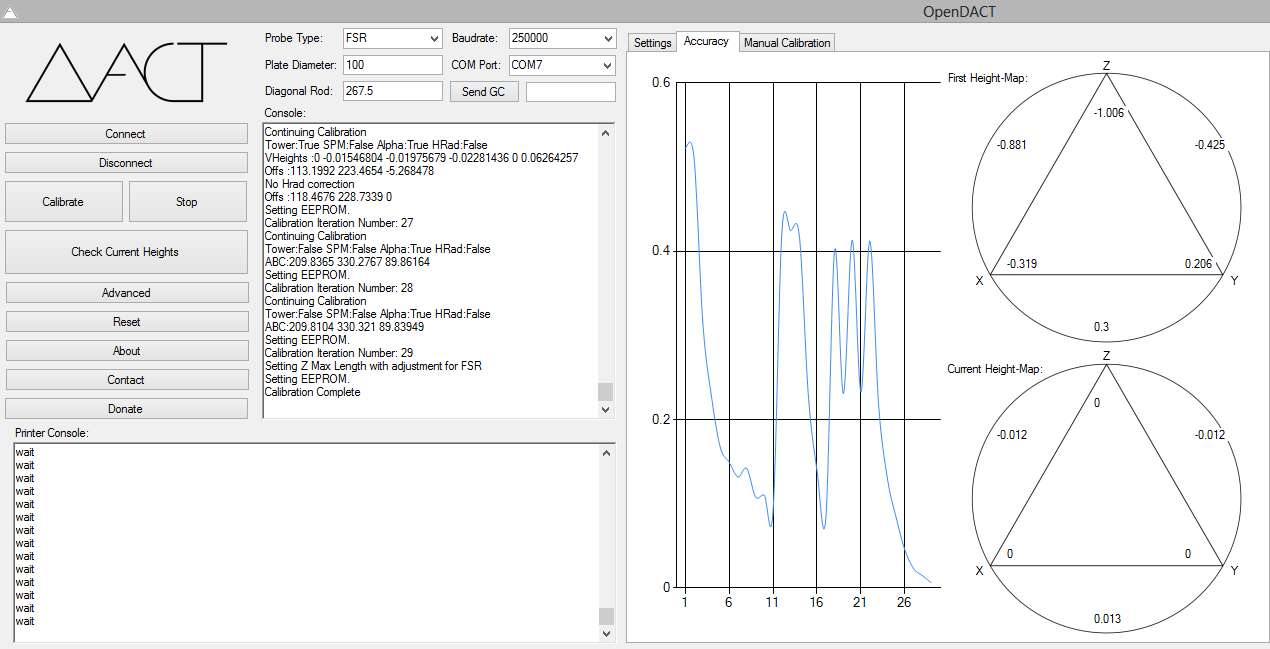
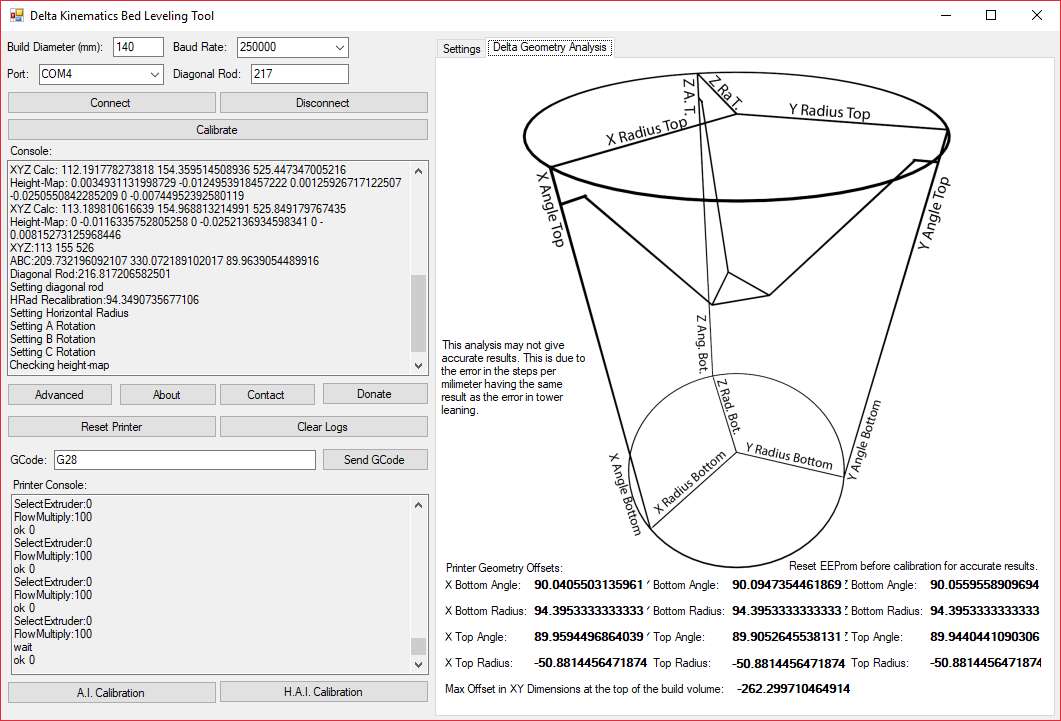
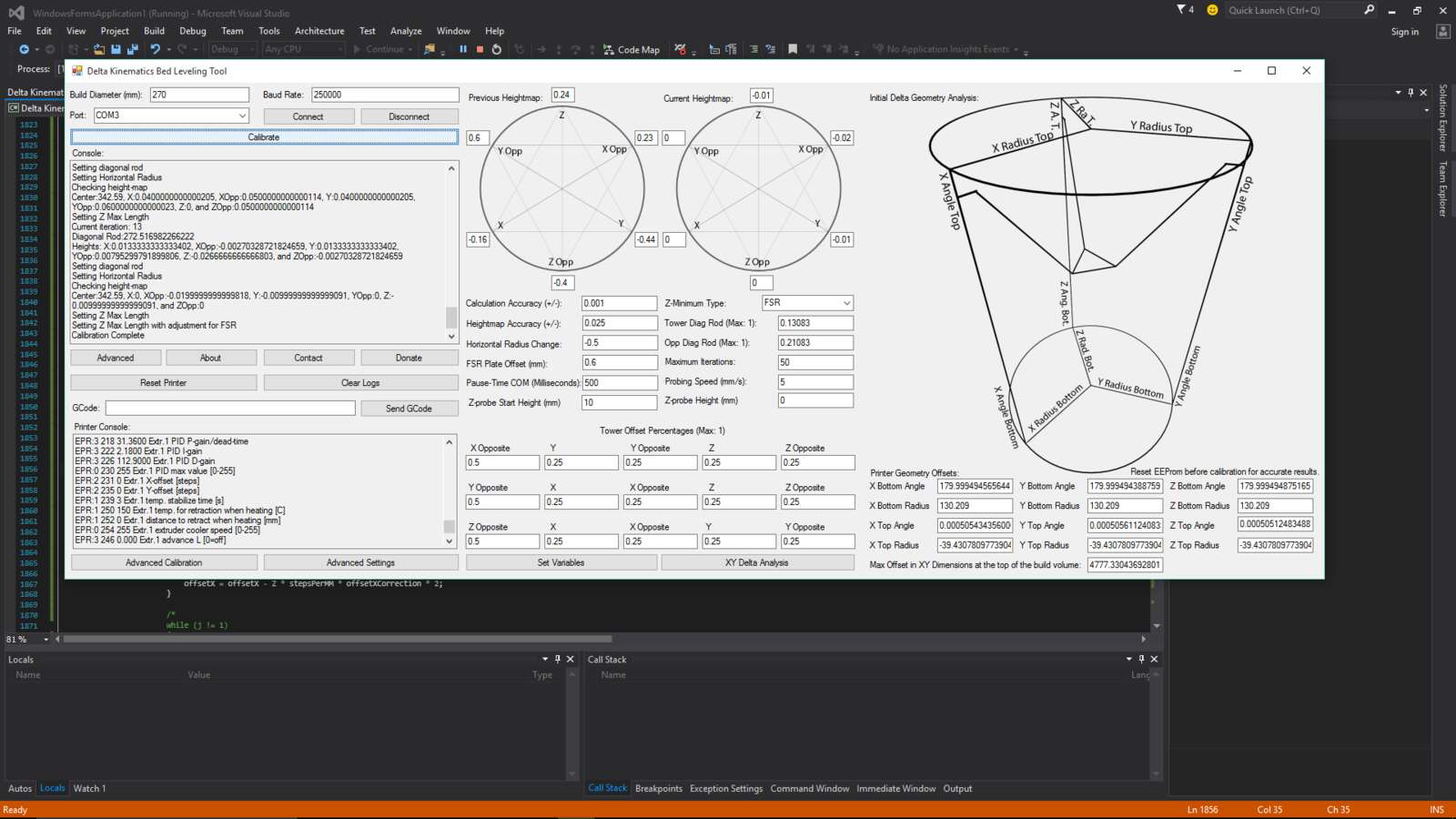
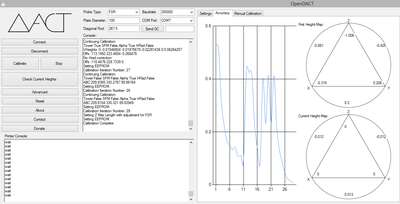
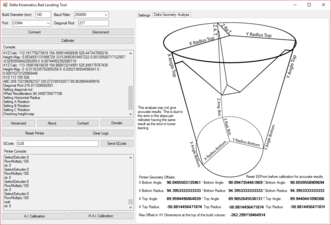
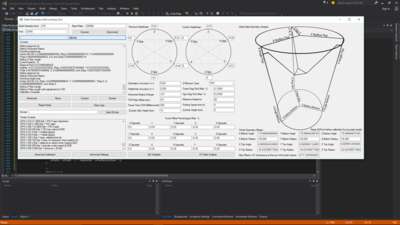
OpenDACT (Open-source Delta Automatic Calibration Tool) is a calibration tool for delta robots. It calibrates generic delta robots and automates calibration of Repetier-firmware-controlled delta robots (primarily 3D printers). The calibration uses forward and inverse kinematics measurements to make adjustments. It takes Z-height readings at key XY points on a flat plate (print bed) to iteratively calculate hardware offsets. Users can manually adjust hardware or apply software offsets to correct for imperfections.
This software solves for the following mechanical offsets:
- Diagonal rod lengths
- End effector radius
- Horizontal radius
- Endstop offsets
- Angles of the ABC towers
For Repetier based robots, these offsets are automatically saved on the controllers EEPROM upon a successful calibration. Z-bed distortion on a newly completed build could have offsets of +/- 2mm across the plate, this tool (assuming issues in the above offsets) can calibrate the systems down to 5-10 microns.
This software has been tested and successfully used on small-form factor deltas (100mm plate diameter) and large-form factor deltas (1.5 meter plate diameter).
|
[+]
Bambu Lab Cloud API: Python Library and Compatibility Layer
| PyPI | GitHub |
Solo Project
|
2025 - Now
|
|
Open-source - 108+ stars on GitHub. Deployed as the data layer for a 40+ printer industrial digital-twin research project for a major aerospace prime.
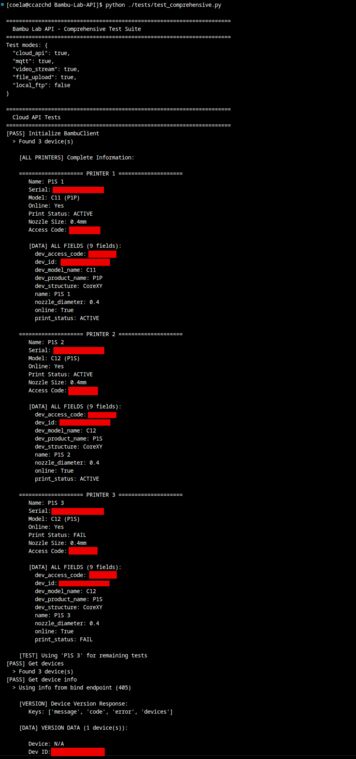
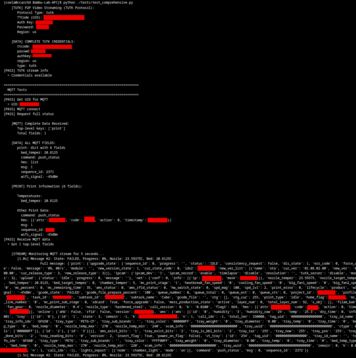
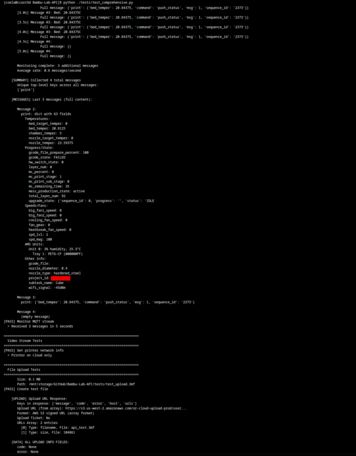
A documentation effort and Python library for communicating with Bambu Lab 3D printers through their Cloud API, MQTT protocol, and local connections. Originally built as a read-only proxy and data layer for a 43-printer fleet / digital-twin workflow, then generalized into a library for monitoring and controlling print farms without needing developer mode on the printers.
Features include:
- API endpoint reference built from network traffic analysis, split into focused modules (auth, devices, users, files/printing, MQTT, AMS/filament, camera, errors)
- Unified Python client (
bambulab) covering Cloud API, MQTT, local FTP upload, and video streams
- Authentication with 2FA / email verification code support and token caching
- Real-time MQTT monitoring and control of print state and printer telemetry
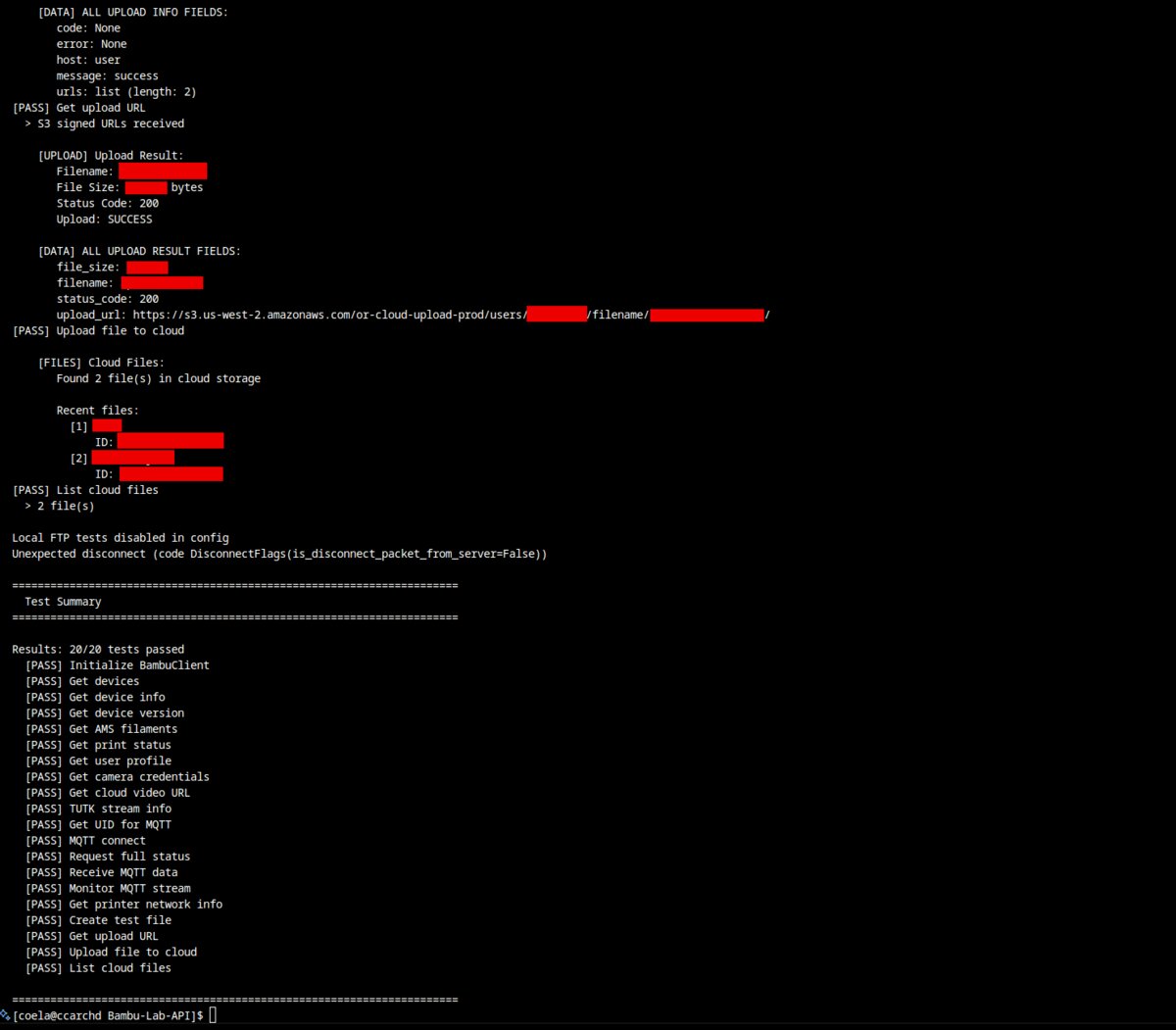
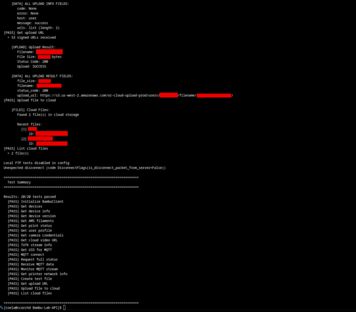
- File upload via both Cloud API (S3) and local FTP
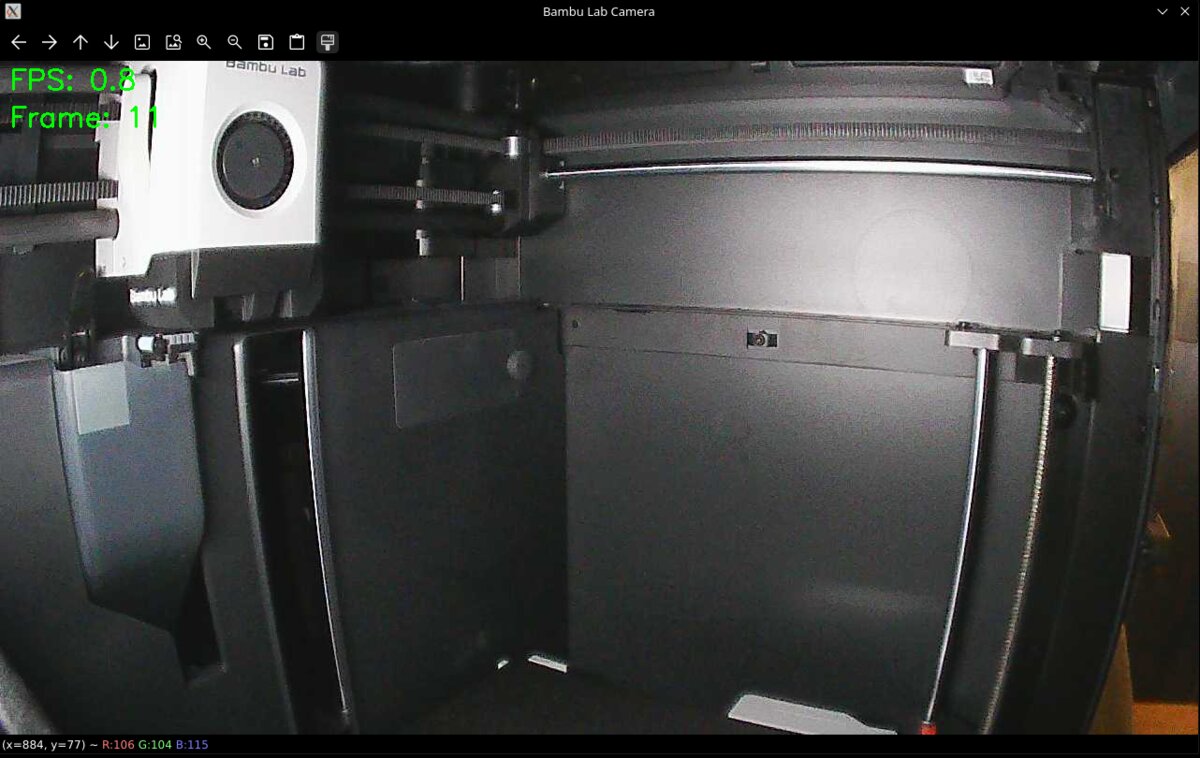
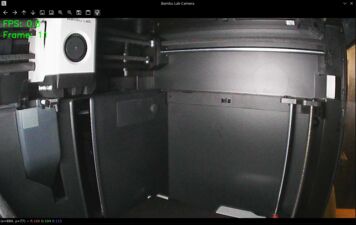
- Video streaming: RTSP for X1 series, JPEG frame streaming for A1/P1 series
- Compatibility server that bridges Home Assistant, OctoPrint, and other tools to the Cloud API without enabling developer mode
- Strict read-only and full-mode proxy servers with rate limiting for safe gateway use
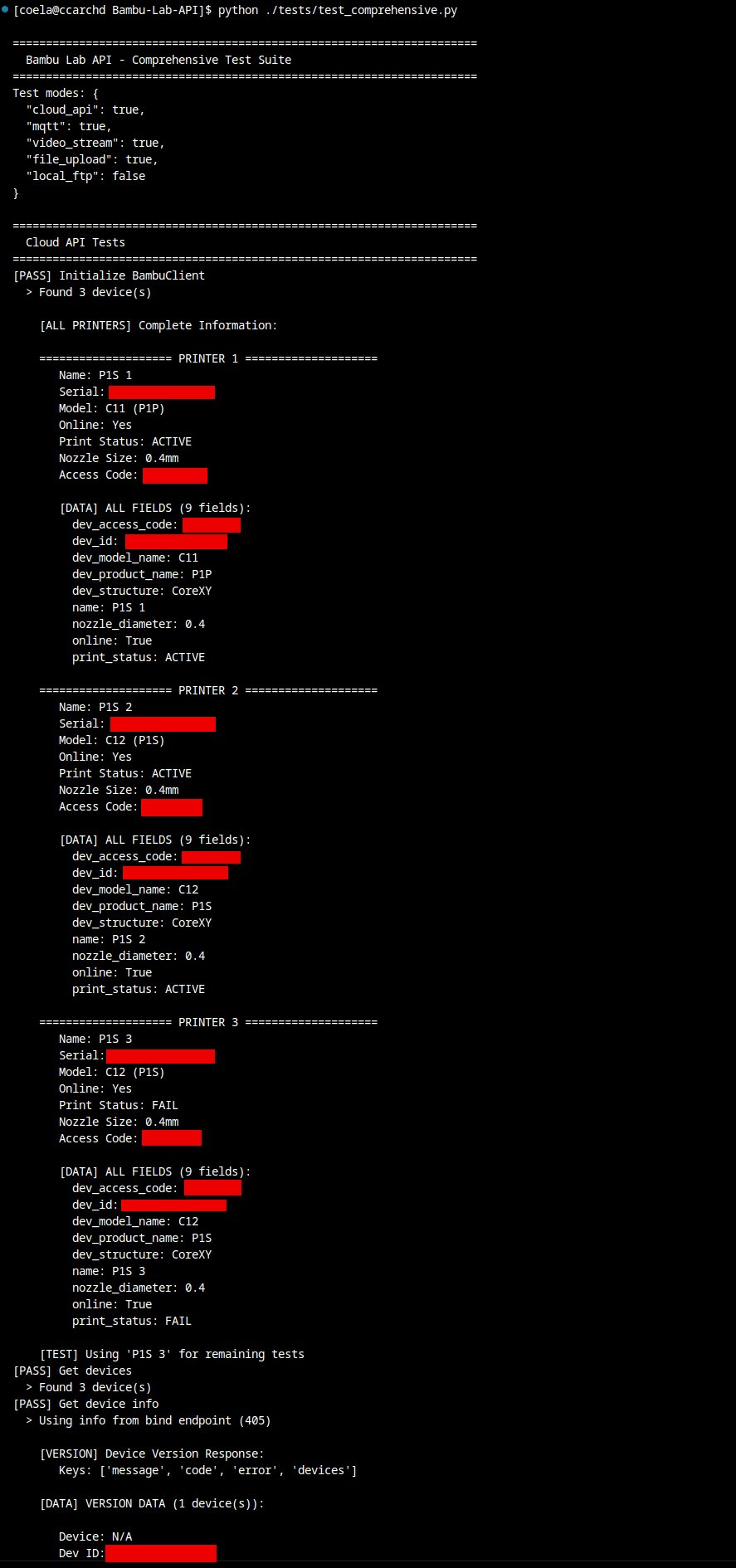
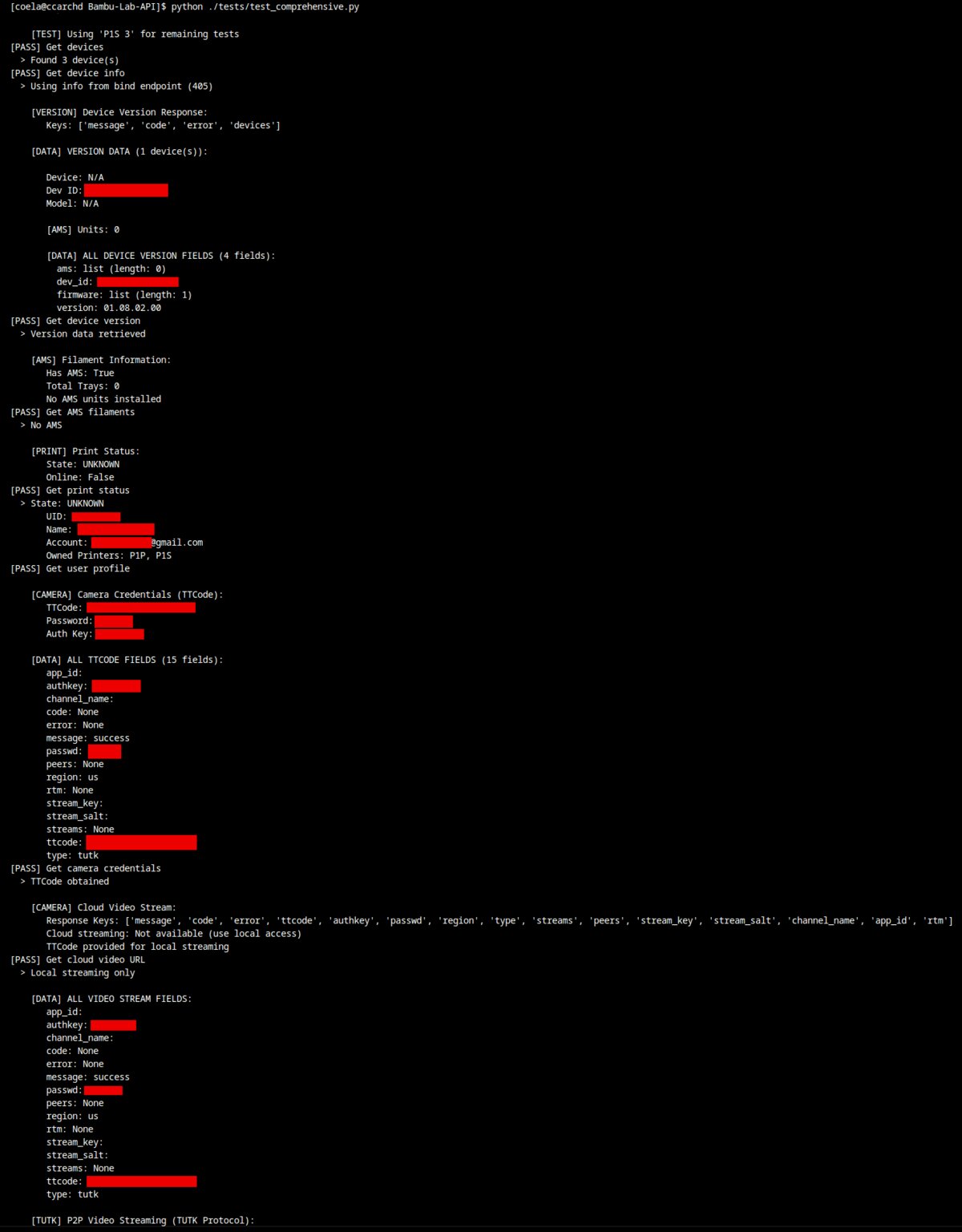
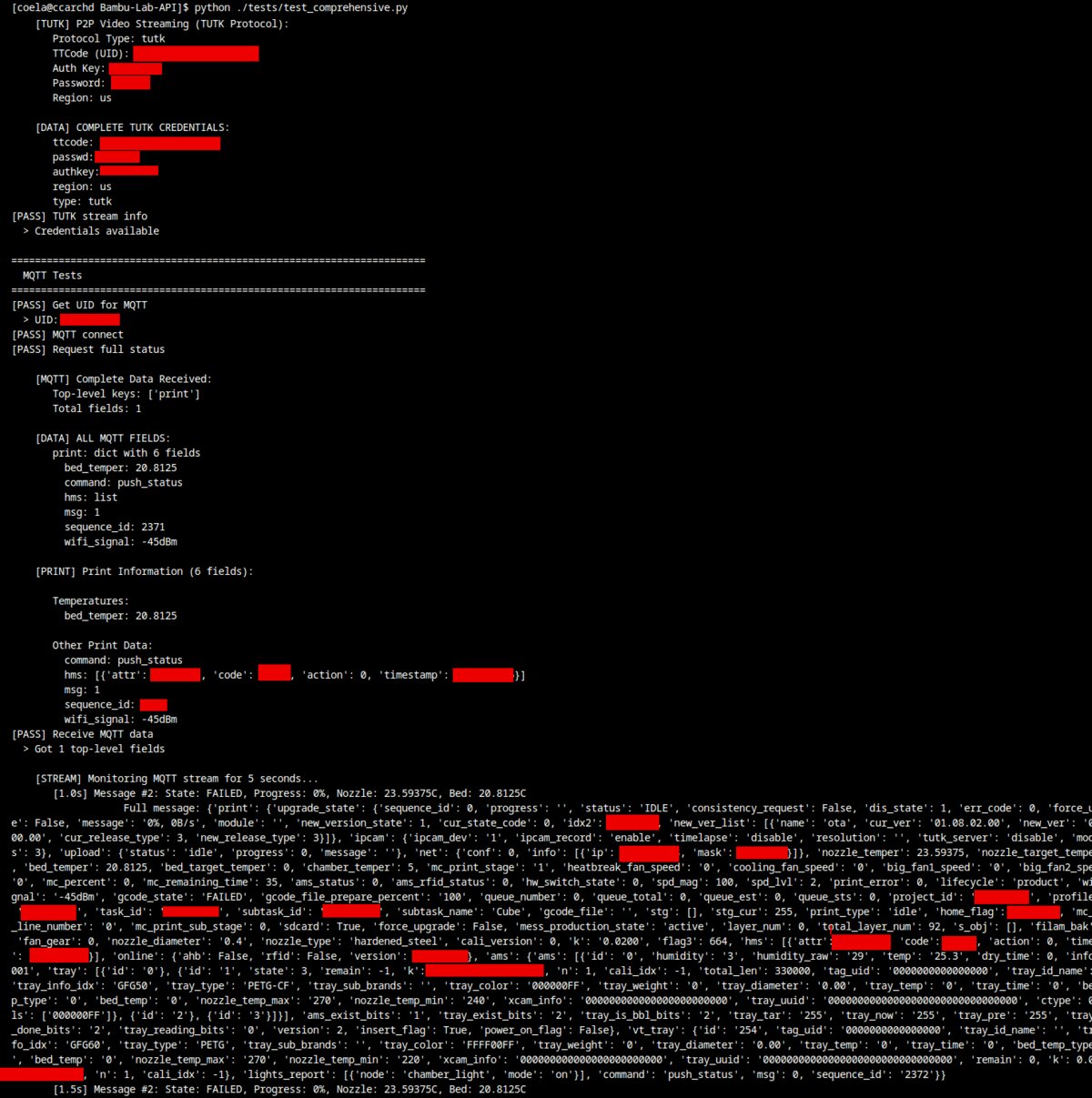
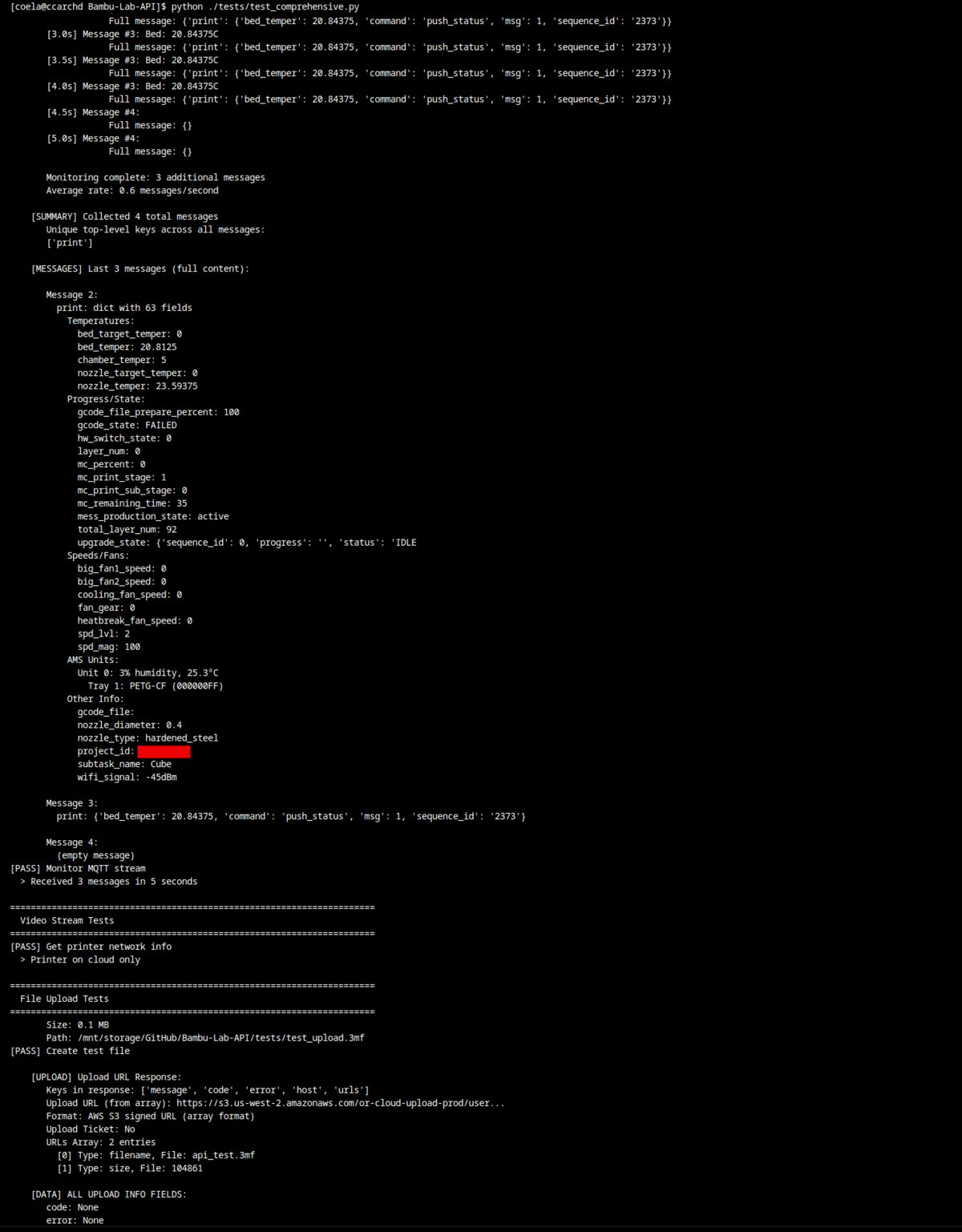
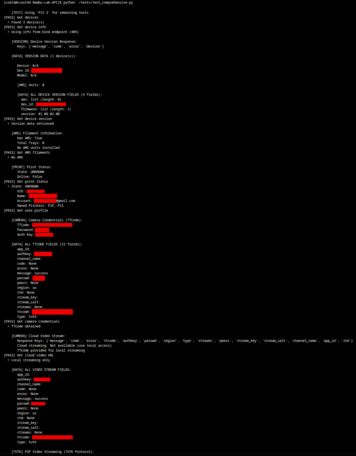
- Comprehensive test suite covering 20+ endpoints, MQTT live data, S3 file upload, and TUTK video credentials
- G-code reference documentation for supported printer models
- Distributed on PyPI as
bambu-lab-cloud-api
|
[+]
ProtoTracer: Embedded 3D Rendering Engine
| Website | GitHub |
Contributors on GitHub
|
2020 - Now
|
|
Open-source - 205+ stars, 50+ forks on GitHub.
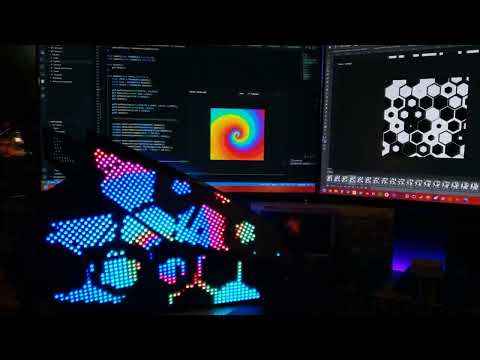
ProtoTracer is a C++ based 3D rendering engine optimized for microcontrollers. It calculates dynamic 3D scenes in real-time, reacting to sensor or user inputs to adapt the output. This software is designed to be modular for use in other projects.
This includes features such as:
- Keyframed animations with support for automated easing
- Display of custom converted FBX, OBJ 3D Models with support for textures using any static image format as well as support for animated GIFs
- Custom camera definitions and parameters for specialized display shapes and 3D outputs
- Support for driving HUB75, WS2812, and APA102 based LED displays, with controller definitions making it easy to create other interfaces
- Raster-based 3D rendering as well as Raytraced rendering
- Segmented-rendering optimization using quadtrees
- Custom rendering pipeline optimized for high frame rates on constrained hardware
- Enables PS1-level graphics rendering
- Custom static and animated shader materials
- Simplex Noise Shaders
- Audio Reactive Shaders (Oscilloscope/Spectrum Analyzer)
- TV Static emulation
- Gradient/Normal/UV Tiled/Depth Materials
- Audio Analysis
- Voice analysis for matching vowel sounds to viseme shapes
- Allows user calibration for custom formant maps
- Fourier Transform for analysis/spectrum analyzer display
- Filtering and automatic scaling for background noise
- Filters: FFT/Kalman/Peak/Ramp/Running Average
- Physics Simulator
- Hardware Support for:
- SSD1306 Status Display/HUD
- Communication with secondary controller for wireless control
- PWM Fan Controls through a user menu
- APDS9960 Color/Distance Sensing
- BNO055 Quaternion input for space-mouse like control
- MMC56X3 Magnetometer input
- SHARPGP2Y Distance Sensing
- MAX9814/SPW2430 Microphone Input
- Screenspace Shaders for manipulating 3D rendered frames with 2D modifications
- Fisheye distortion
- Glitch distortion
- Box/Radial blur
- Magnetic Lens distortion
- Phase Shifting
- Live object manipulation
- Position/Scale/Rotation
- Distortion with custom object deformer
- Modifies 3D space via transformation functions
- Perspective Deform
- Sinusoidal Deform
- Dropwave Deform
- Automatic 3D object alignment
- Allows alignment of center of volume or mass to a target coordinate
- Fit alignment to a plane
- Allows users to rapidly add their own model with any scale/rotation and it will autofit to a target size and plane
- Custom Optimized Math Library
- Rotation library with support for Axis Angles, Direction Angles(Custom), Euler Angles, Quaternions, Rotation Matrices, Yaw-Pitch-Roll
- Vector2D and Vector3D Library
- Quaternion Library
- Kalman and Running Average Filters for Quaternion Space, Cartesian Space
- Automated Testing to verify custom math libary
Doxygen genereated documentation from sourcecode:
|
[+]
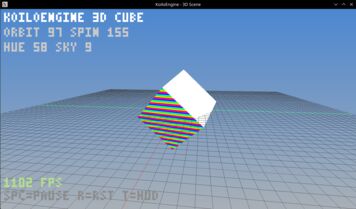
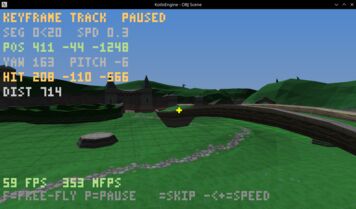
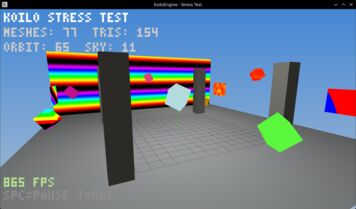
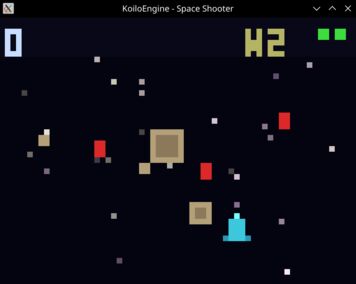
Koilo Engine: C++ Game Engine with Runtime Scripting
| GitHub |
Solo Project
|
2025 - Now
|
|
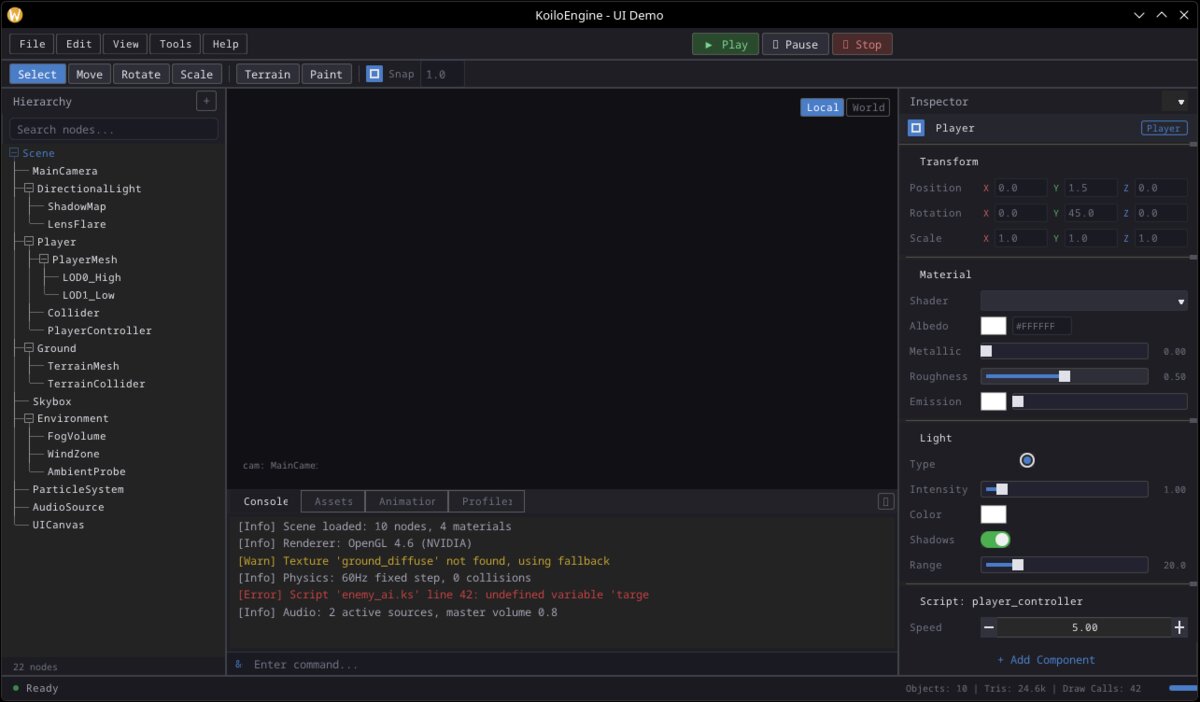
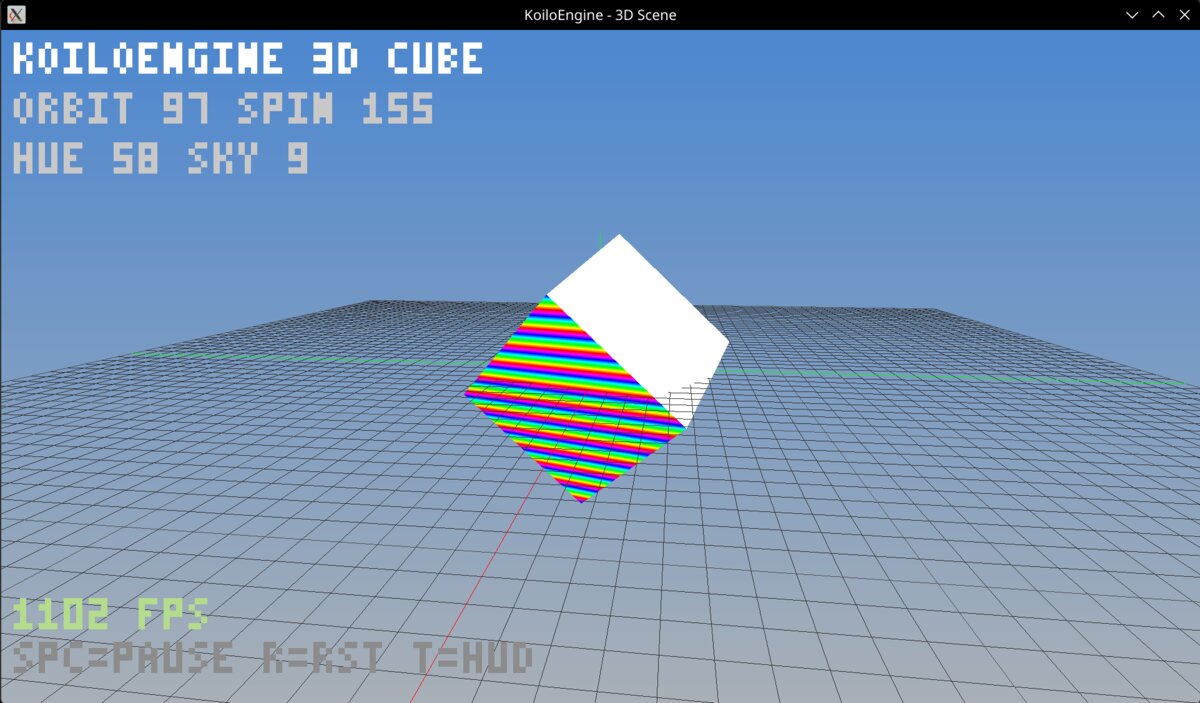
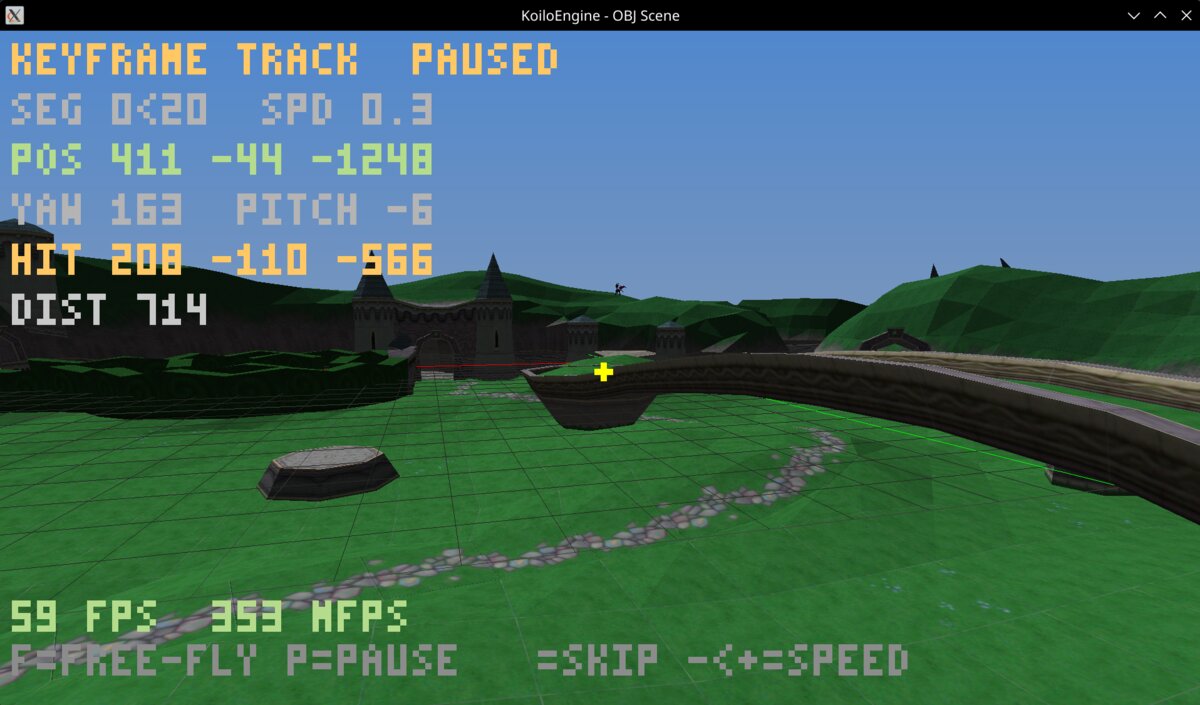
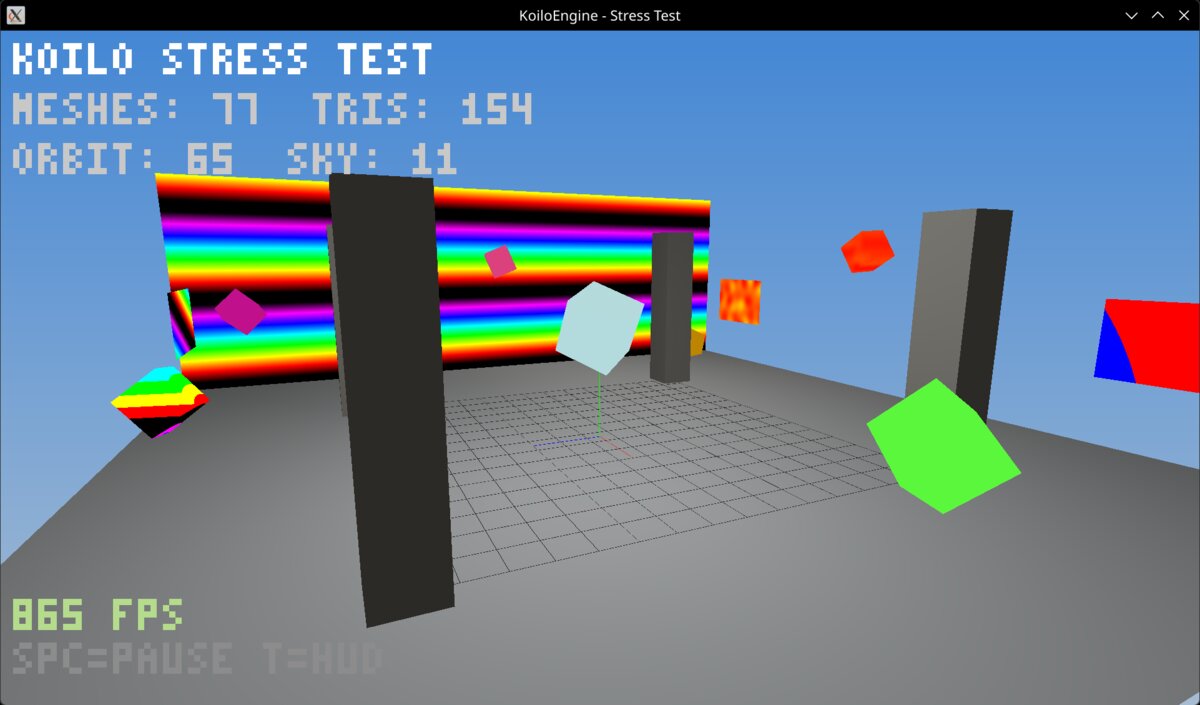
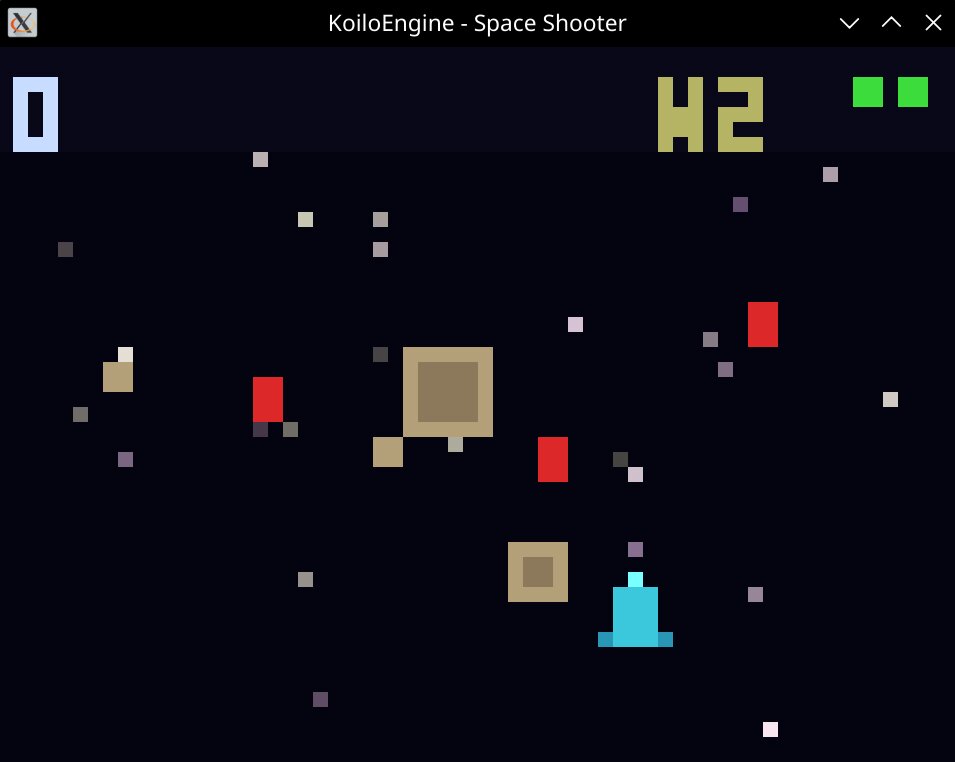
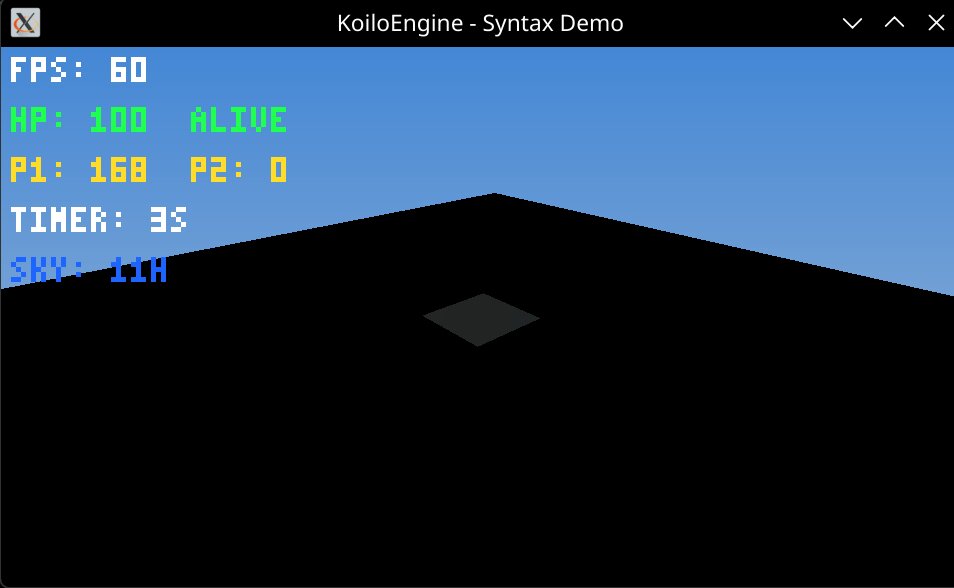
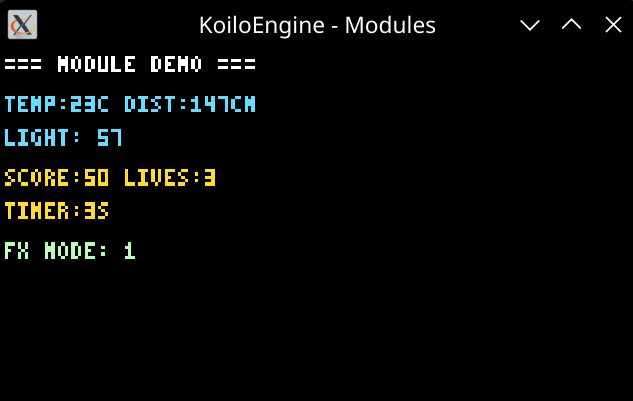
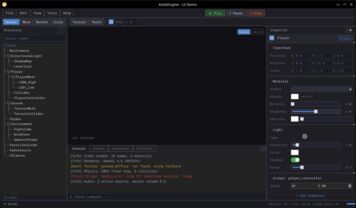
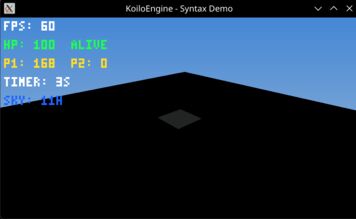
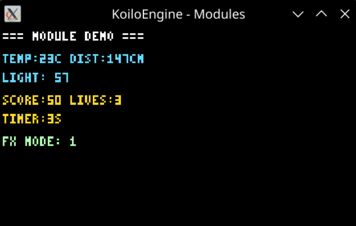
Koilo Engine is a compact C++17 game engine designed to run across both desktop systems and resource-constrained microcontrollers. Scenes and game logic are authored in KoiloScript (.ks), a bytecode-compiled scripting language with full access to engine internals through runtime reflection. This is the spiritual successor to ProtoTracer, generalizing the renderer and physics core into a portable engine usable on both PCs and embedded targets.
Targets include Linux, Windows, Raspberry Pi, Teensy 4.x, ESP32-S3, and STM32.
Features include:
- Multi-backend rendering with a common interface
- Vulkan, OpenGL 3.3, and a CPU software rasterizer
- KSL shaders compile to both GLSL and CPU from the same source
- KoiloScript scripting language
- Variables, functions, classes, coroutines, signals, imports, operator overloading
- Direct calls into C++ objects through a reflection bridge
- Reflection system for exposing C++ classes to scripts via macros (no external codegen)
- Hot-reloadable dynamic modules (
.so/.dll) with lifecycle hooks and phased init
- Scene graph and ECS with transform propagation and dense component storage
- Animation: skeletal playback, keyframe camera tracks, morph target blending, material animation
- Optimized math library: vectors, quaternions, matrices, transforms, splines, spatial indexing, noise, Kalman filters, FFT
- Asset pipeline with the KoiloMesh format (morph targets) and OBJ/FBX offline conversion
- Optional subsystems: AI (pathfinding, behavior trees, FSM), SDL2 audio, particles, LED panel output, HTTP live preview
|
[+]
RT-950 Pro: Open-Source Handheld Radio Firmware
| GitHub |
Contributors on GitHub
|
2025 - Now
|
|
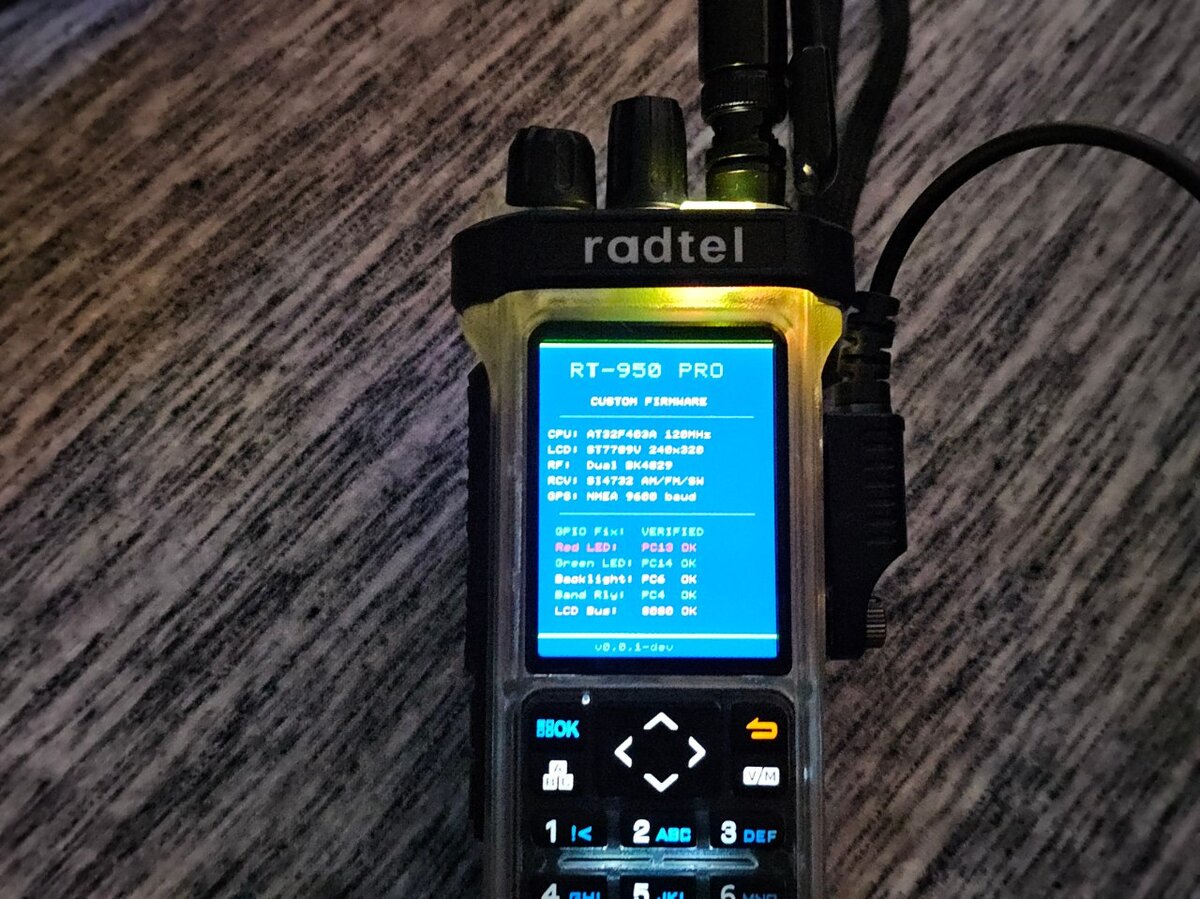
Open-source bare-metal firmware for the Radtel RT-950 Pro handheld radio, targeting the Artery AT32F403A (ARM Cortex-M4F @ 120 MHz, 1 MB flash, 96 KB SRAM). Built by reverse-engineering the stock firmware from disassembly into thousands of annotated assembly instructions, then reconstructing drivers, peripheral access, and protocol behavior in maintainable C. The custom firmware loads through the OEM bootloader using the standard .BTF update flow with no CRC or signature, so users can flash it through the existing OEM tool.
Hardware bring-up confirmed on real hardware:
- ST7789V 240x320 LCD via 8080 parallel bus with custom text rendering
- Status LEDs, dual backlights, power latch, and band relay control
- Boot, GPIO, and display fully functional under custom firmware
Implemented (code-complete, hardware testing in progress):
- Drivers: GPIO, SPI2 (flash), bit-bang SPI for BK4829, bit-bang I2C for SI4732, multiple UARTs, ADC2, DAC1+TIM6+DMA, dual-channel DMA, ST7789V 8080 parallel
- RF: dual BK4829 transceiver driver with frequency programming, TX power control, and flash-stored calibration tables
- Application: dual VFO (A/B/C), PTT with active-low relay routing, debounced keypad scanner, rotary encoder, S-meter, hierarchical 12-category menu, frequency entry
- Digital modes: APRS (hardware FSK via BK4829, MIC-E packets), DTMF encode/decode, CTCSS/DCS tone generation
- Receivers: SI4732 AM/FM/SSB broadcast, FM presets, NOAA weather channels
- Storage: SPI flash layout for 990 channels, VFO configs and settings, wear-leveled NV storage, CPS programming over UART4
- Comms: GPS NMEA parser, BLE data bridge, VOX
- UI: splash screen, zone browser, text input, scanner, spectrum analyzer
- Cross-band repeat with band-specific relay routing and verified PTT polarity for PA safety
- Tooling: BTF firmware encrypt/decrypt, CPS flash read/write, serial firmware uploader with auto-restart
- Hardware self-test suite covering backlight, UART, LCD, BK4829/SI4732 chip IDs, SPI flash JEDEC ID, ADC, DAC tone, keypad, GPS, and full system diagnostics
|
[+]
Teensy WebHID Firmware Loader
| Example Page | Github |
Solo Project
|
2025 - Now
|
|
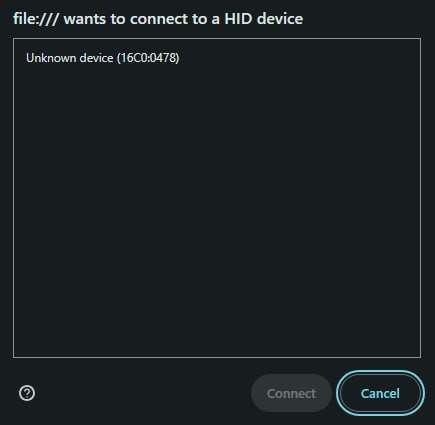
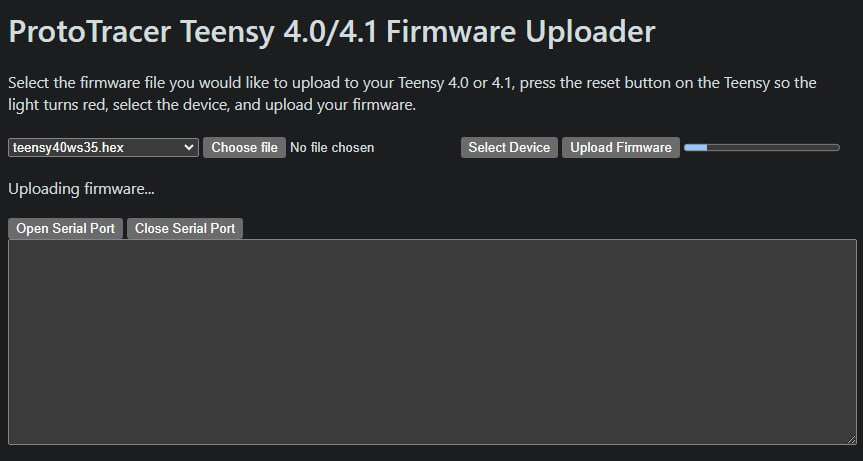
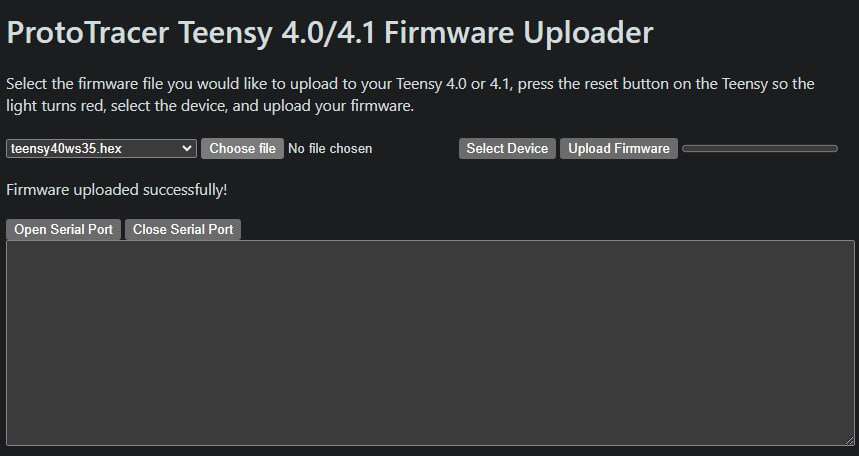
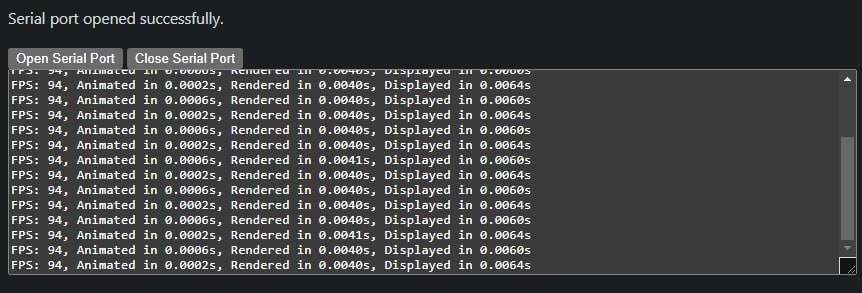
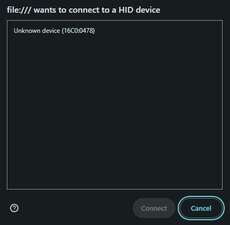
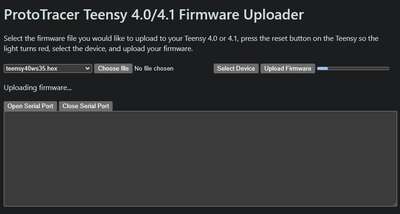
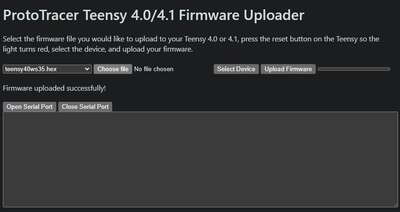
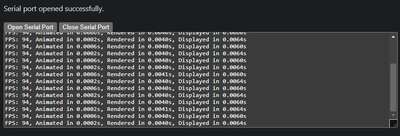
The Teensy WebHID Loader is a Chromium-based firmware flasher replicating PJRC’s Teensy Loader. It parses and uploads HEX and BIN files to Teensy microcontrollers, manages serial connections, and lets end users update device firmware without installing any software.
|
Advanced Manufacturing
[+]
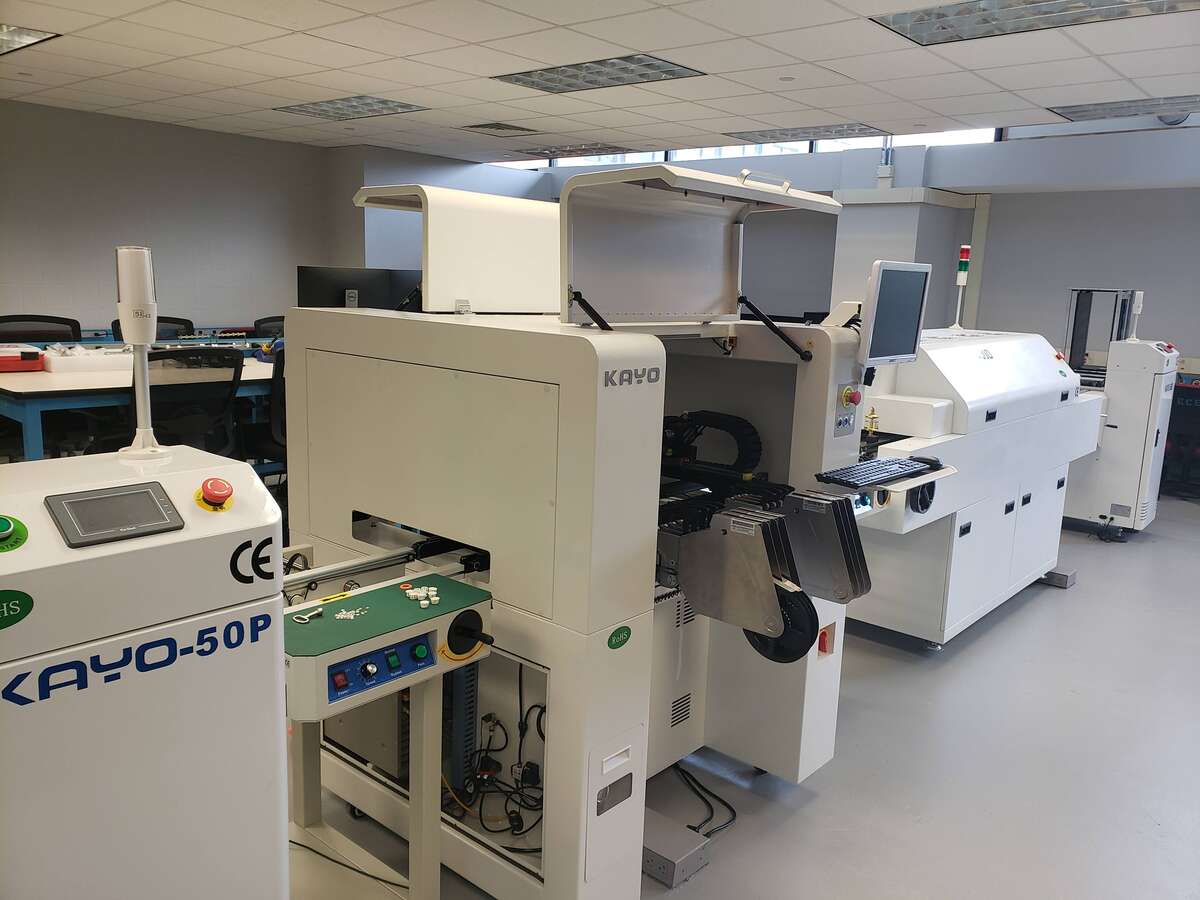
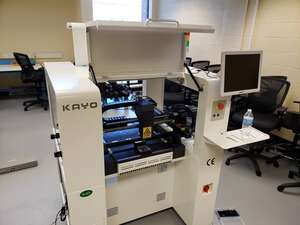
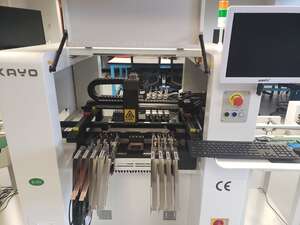
Installation and Operation of Automated Pick-and-Place Assembly Line
|
Solo Project | Assistance with Moving Equipment
|
2019 - 2021
|
|
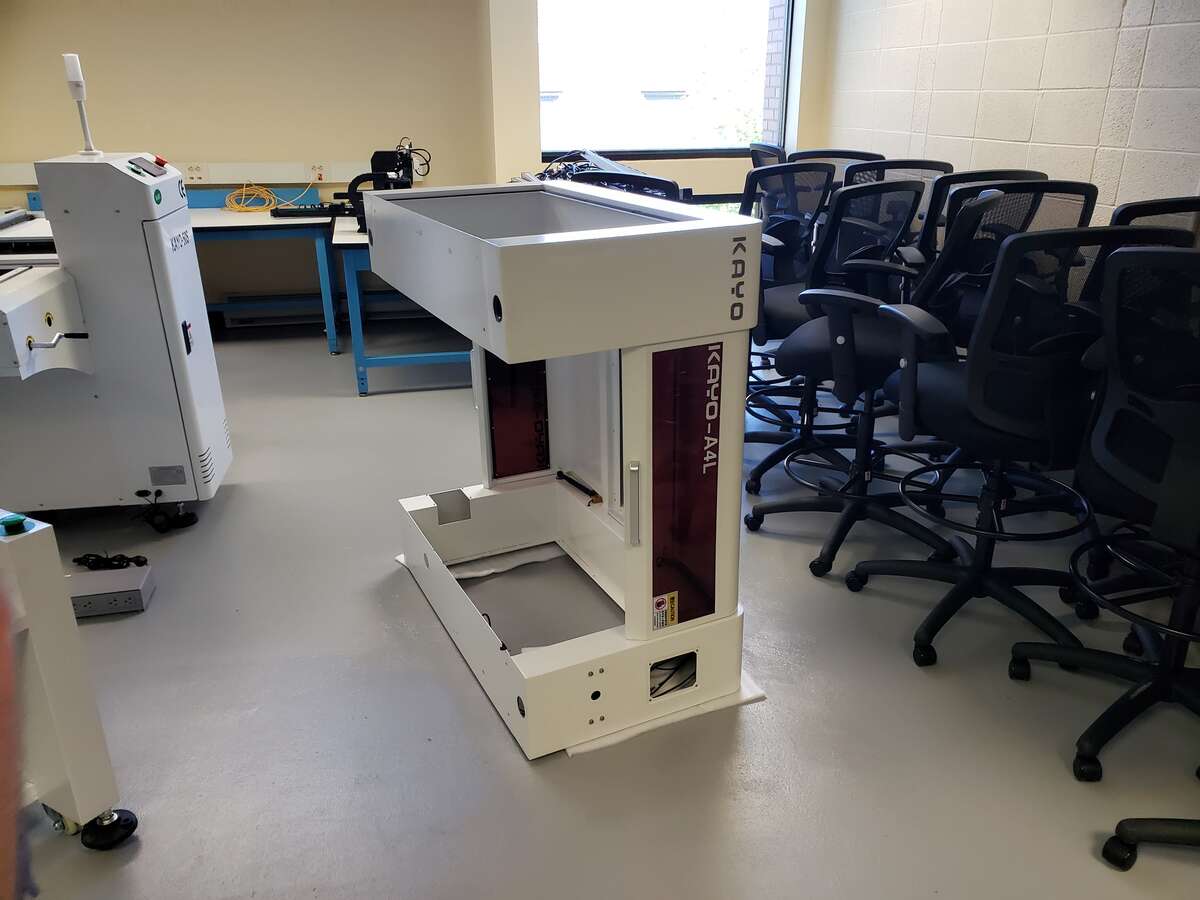
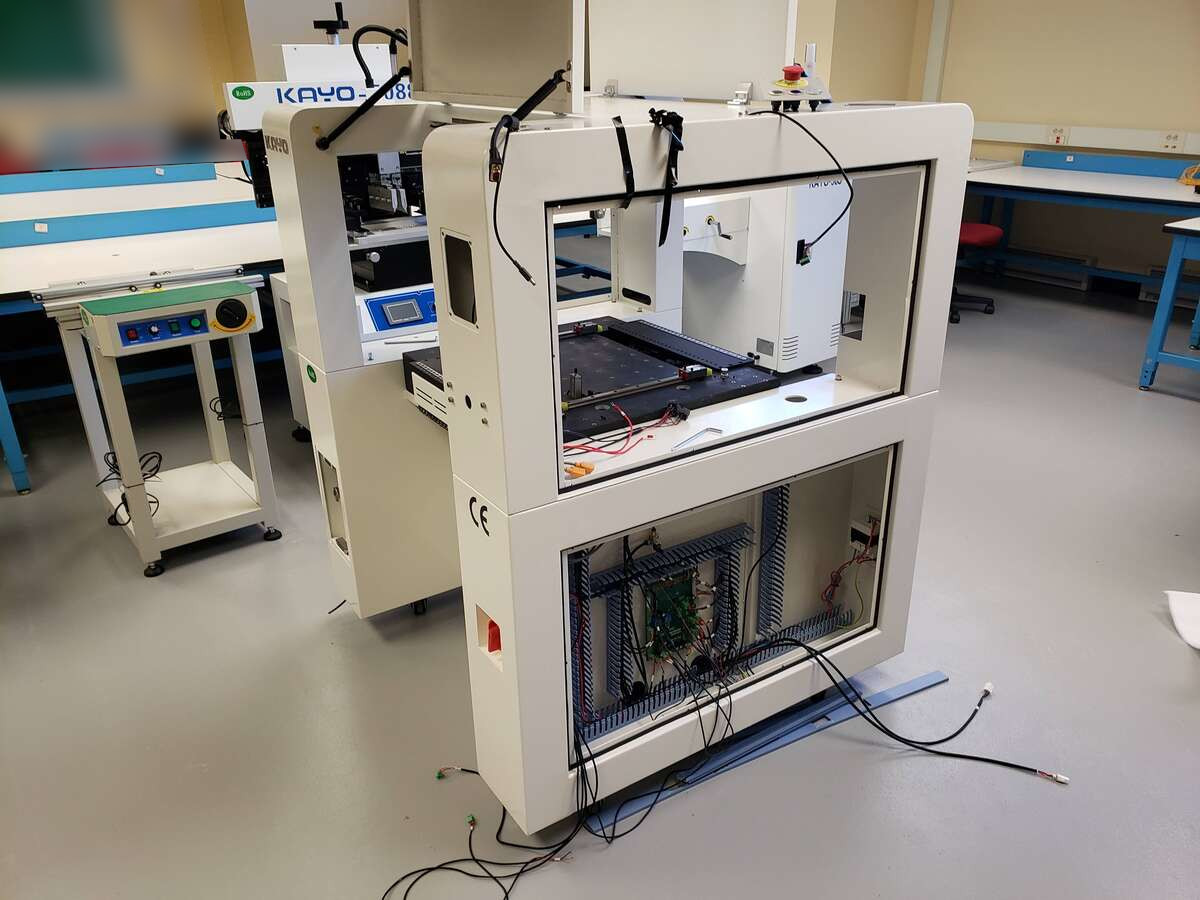
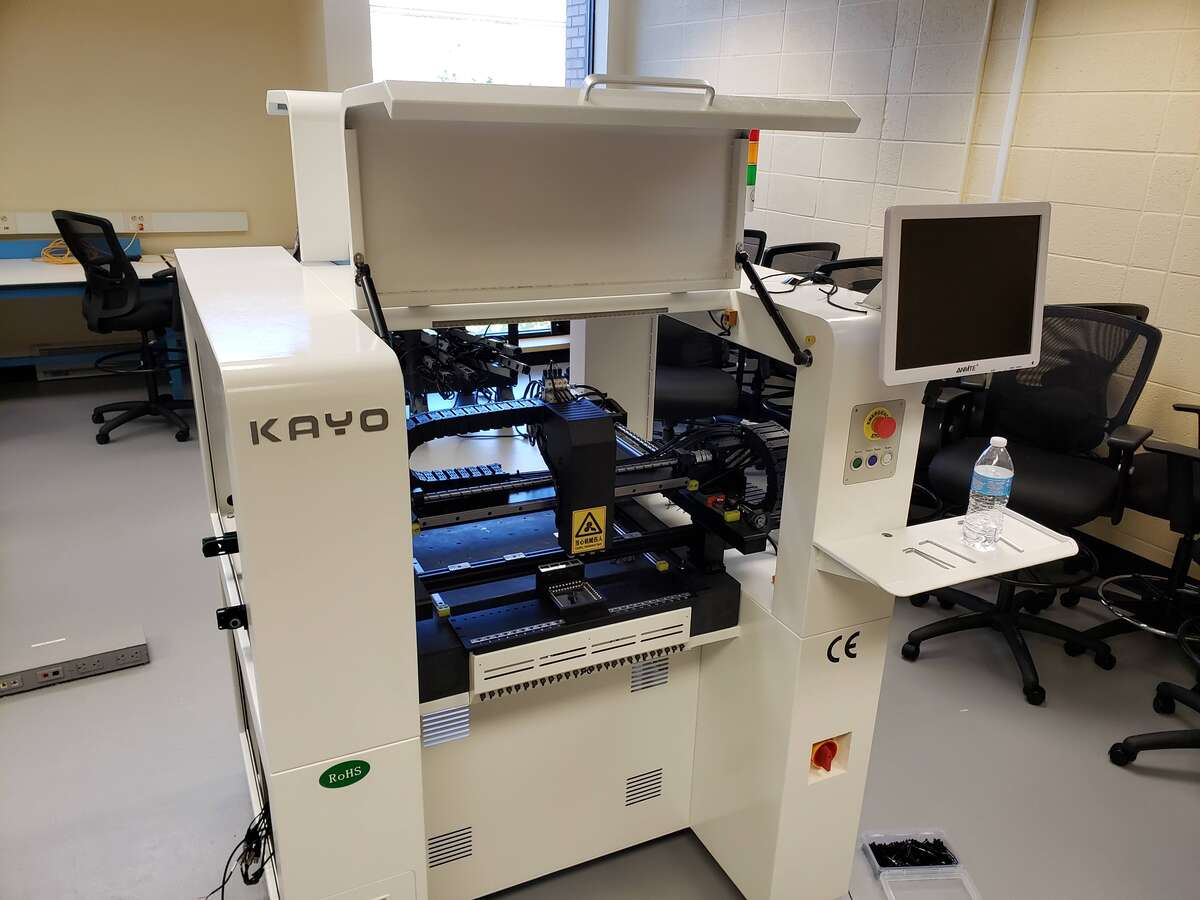
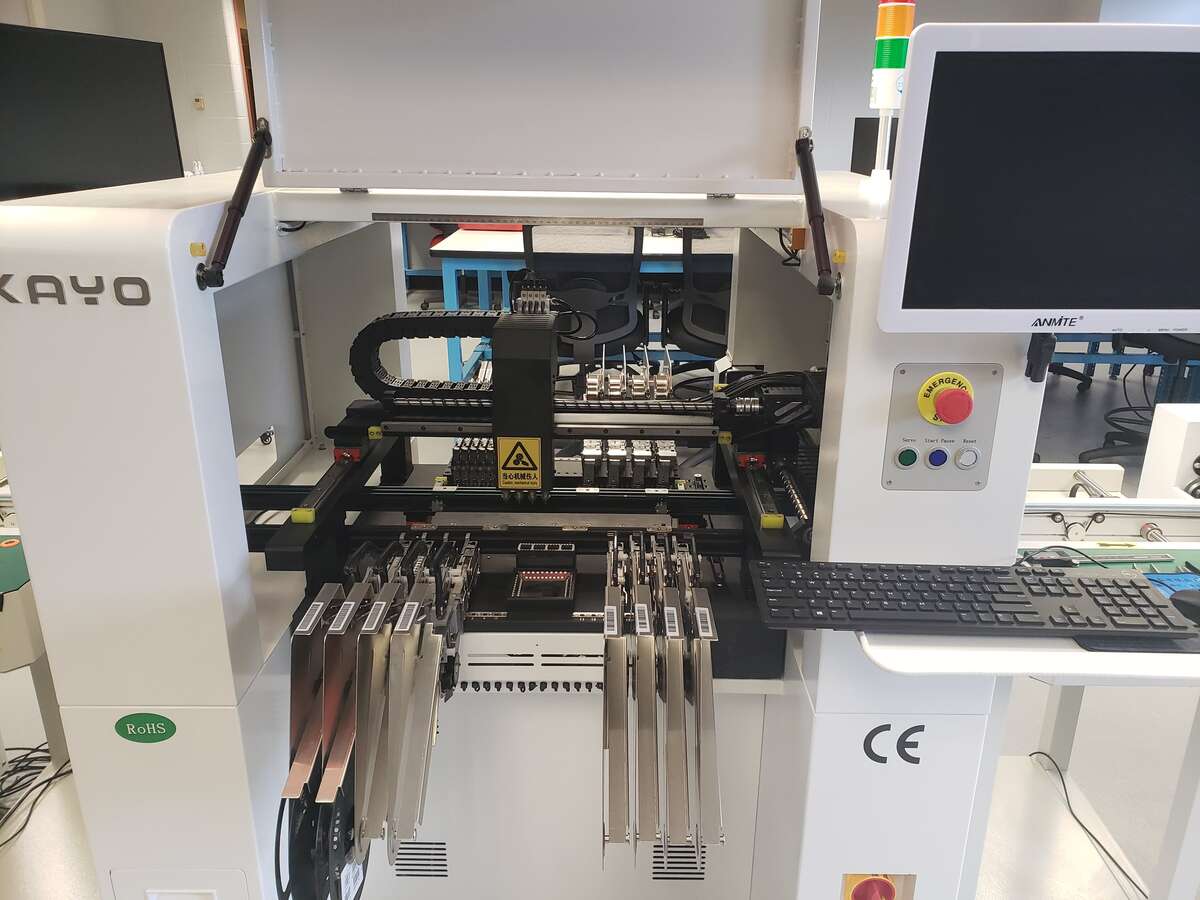
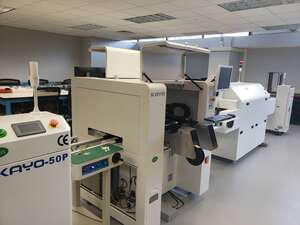
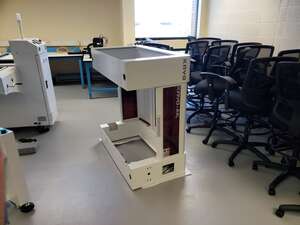
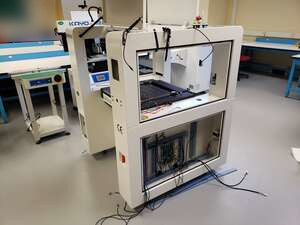
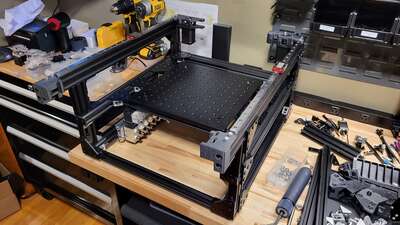
Led the installation, configuration, and operation of an automated pick-and-place assembly line, overseeing the import of the equipment and integrating it within our facility. This project required infrastructure planning, and teardown/rebuild of machinery to match our requirements.
The final setup included:
- Semi-Automatic Solder Paste Screen Printer (KAYO-5088)
- Manual Screen Printer (KAYO-P1000)
- Solder Paste Mixer (KAYO-500S)
- Automatic PCB Unloader (KAYO-50S)
- 2X Inspection Conveyors (KAYO-ICO6)
- Automatic Pick-and-Place Machine (KAYO-A4L)
- Convection Reflow Oven (KAYO-RF430)
- Automatic PCB Loader (KAYO-50P)
- Post Inspection Station (Digital Microscope/Testing Hardware)
|
[+]
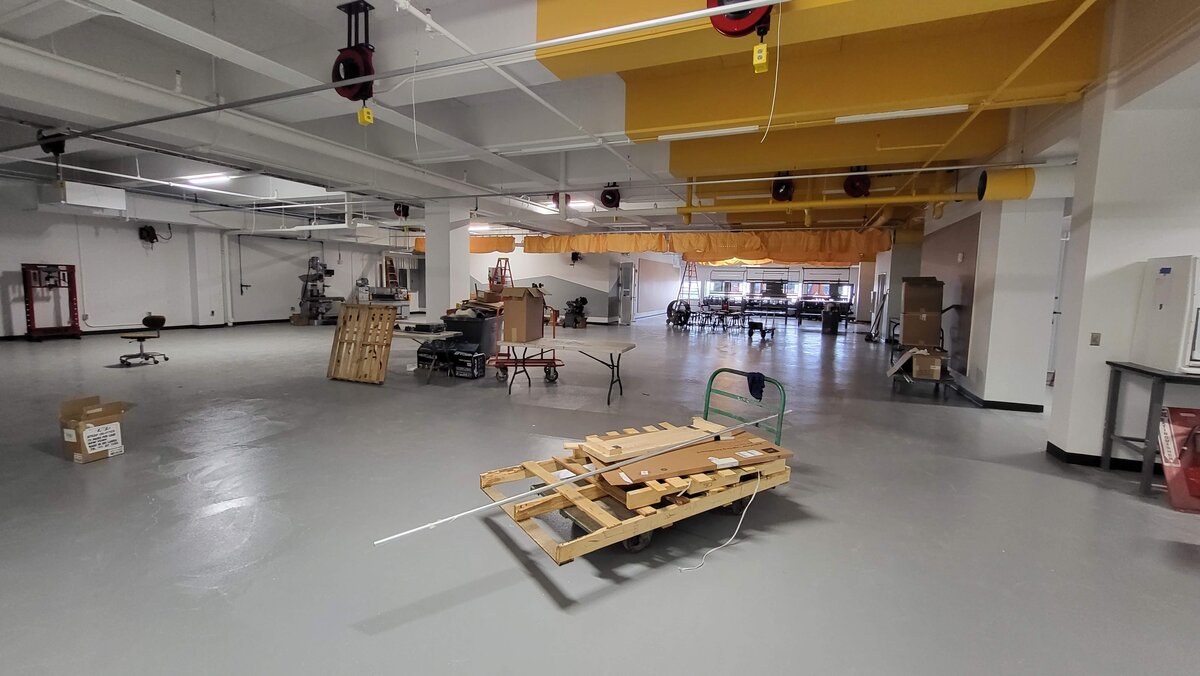
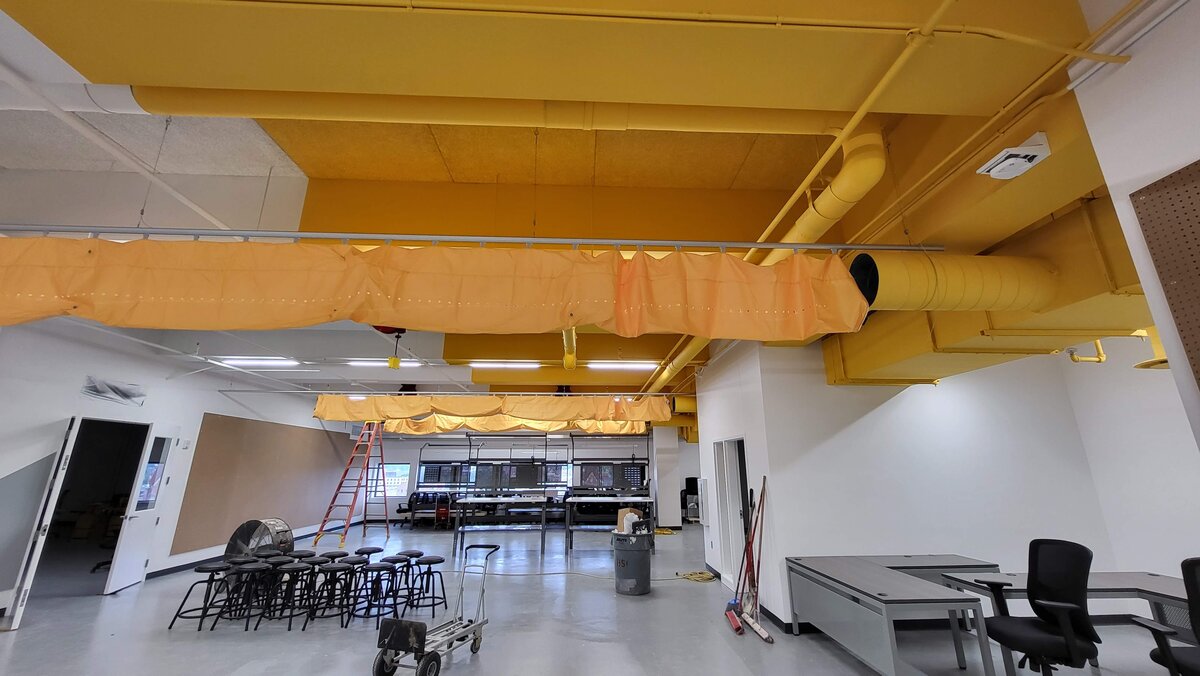
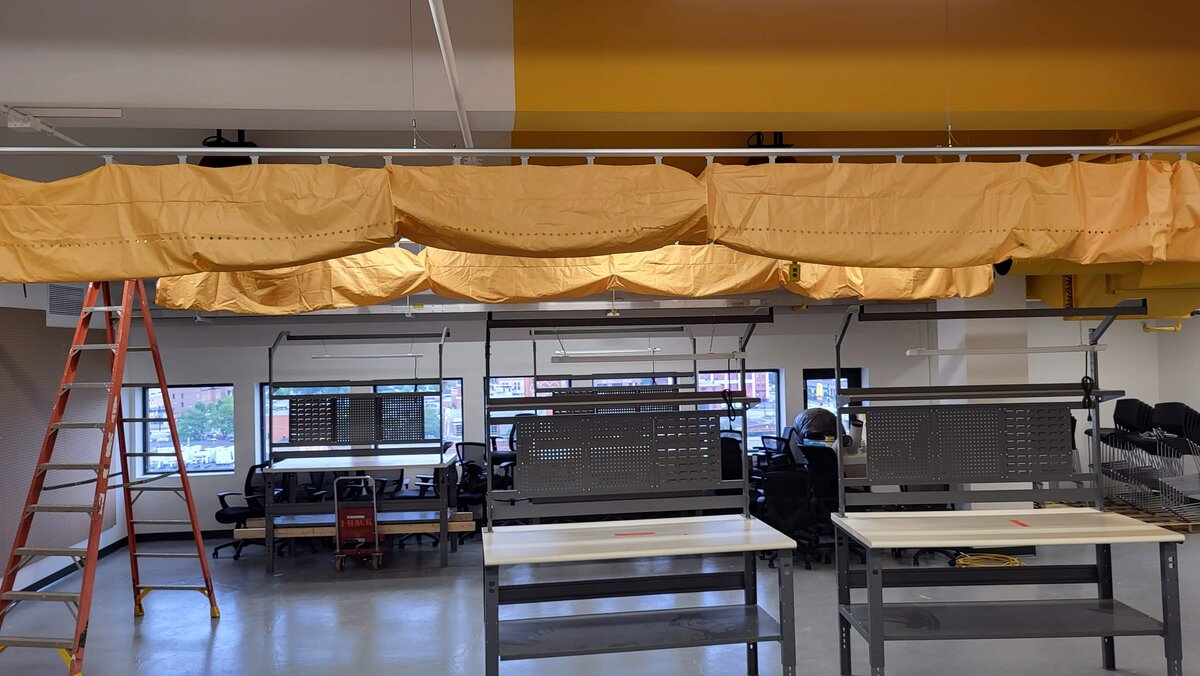
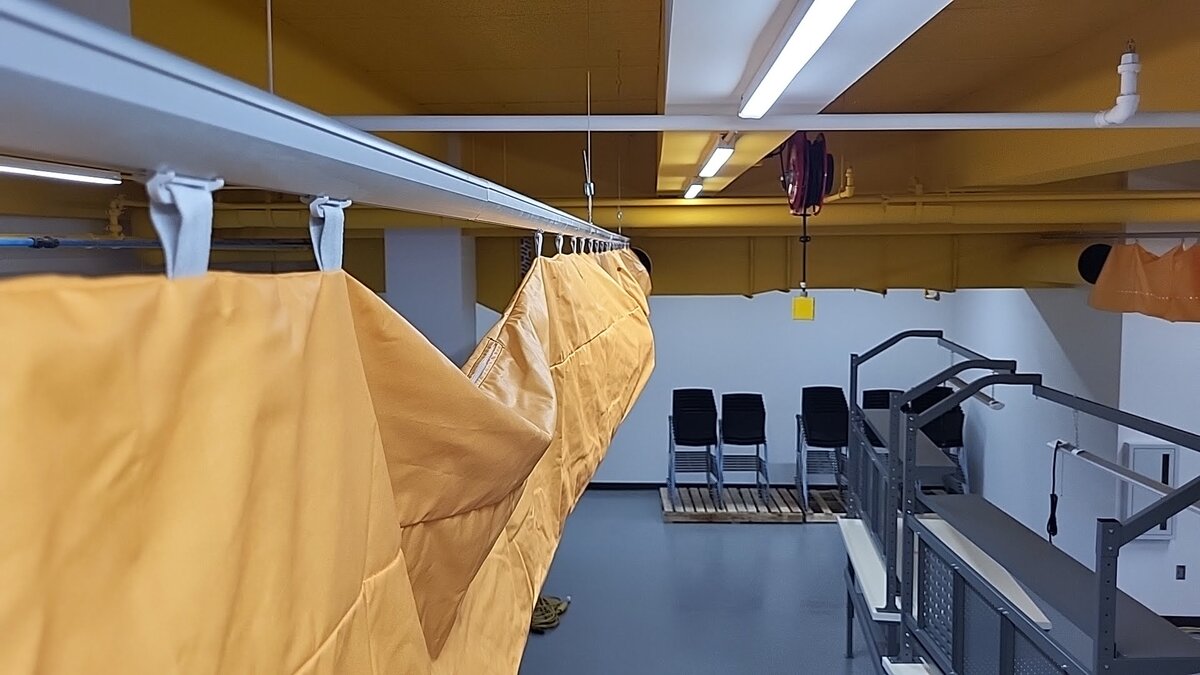
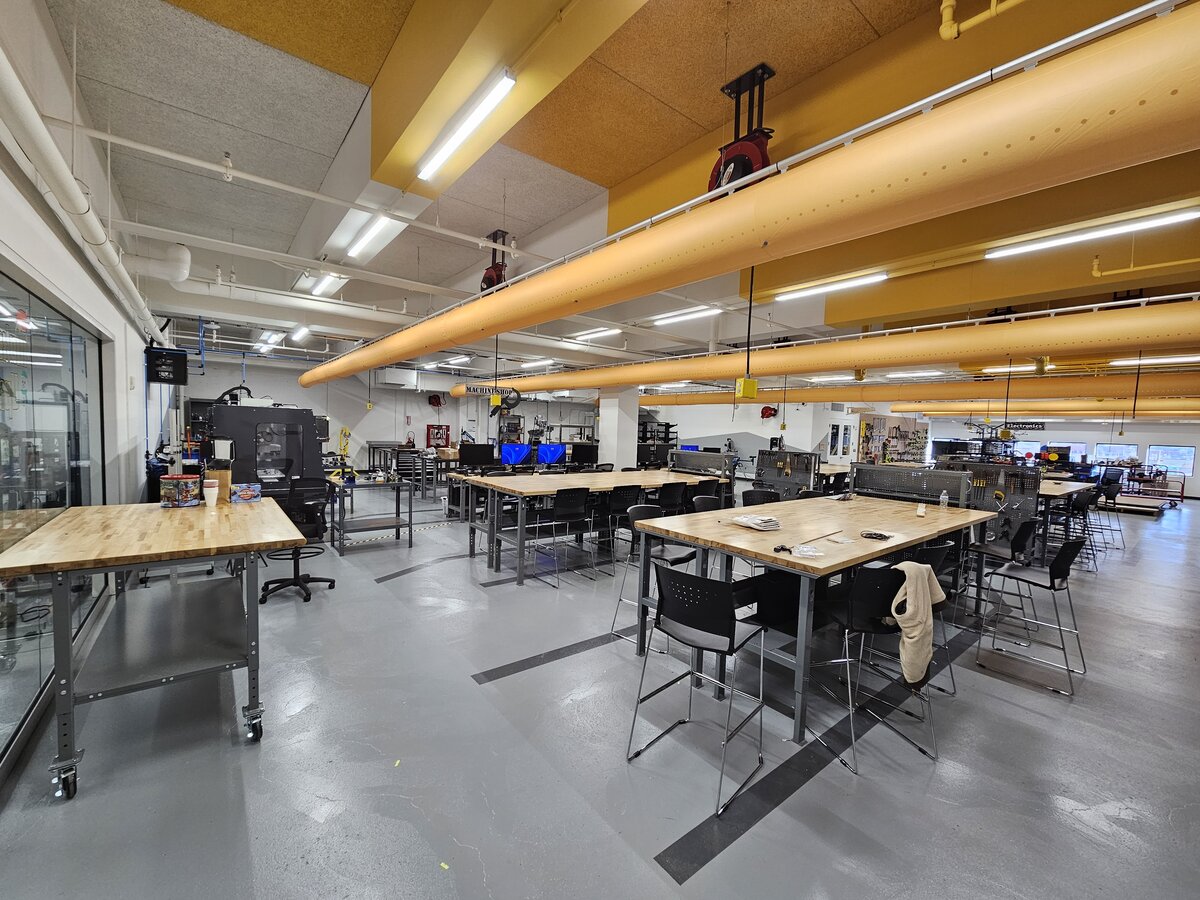
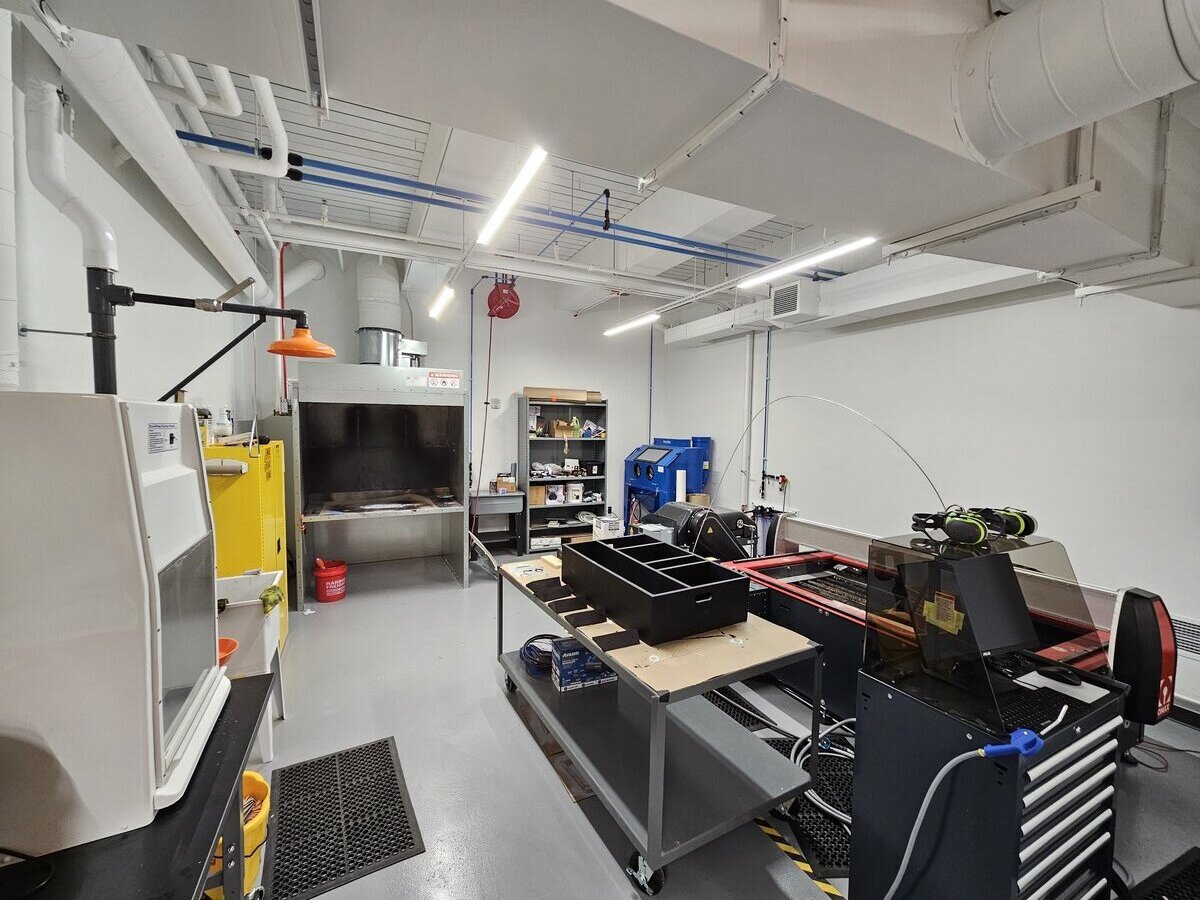
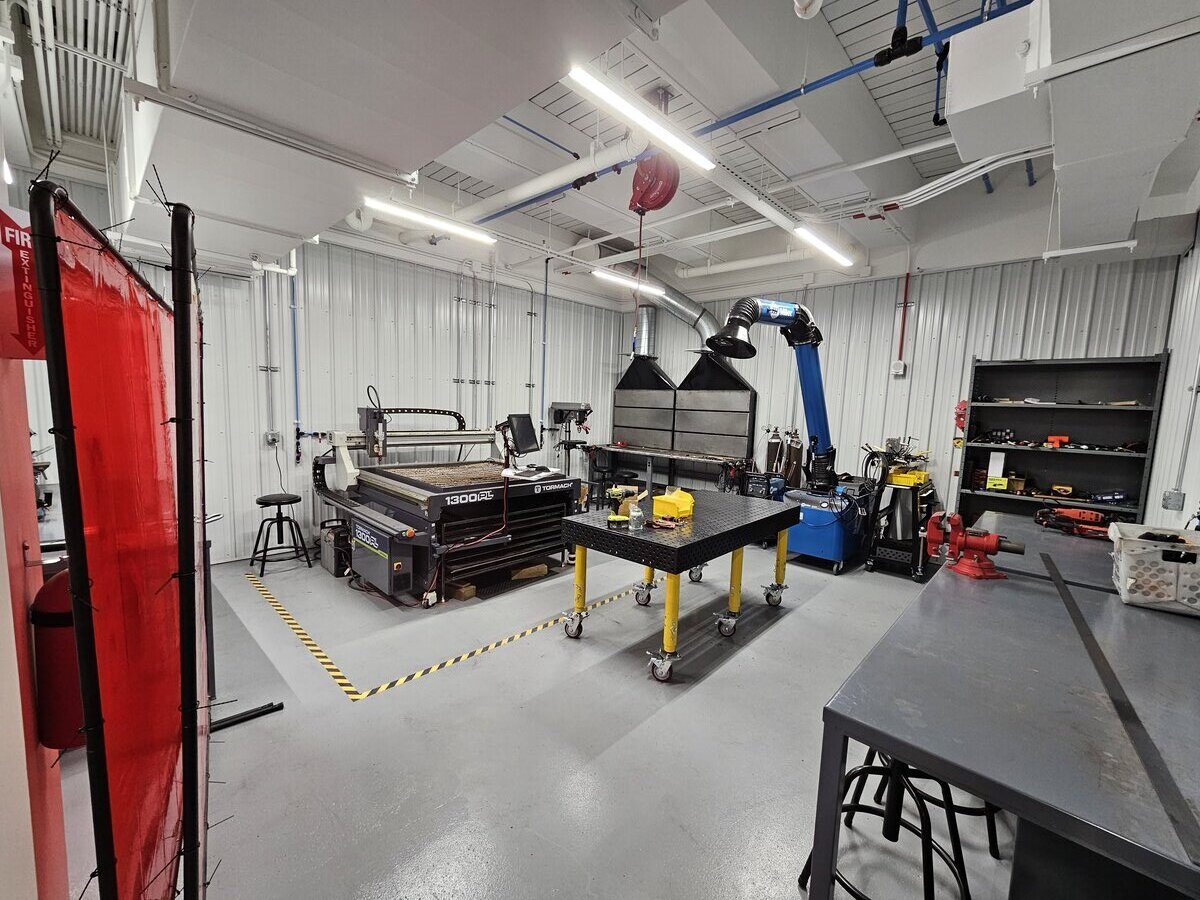
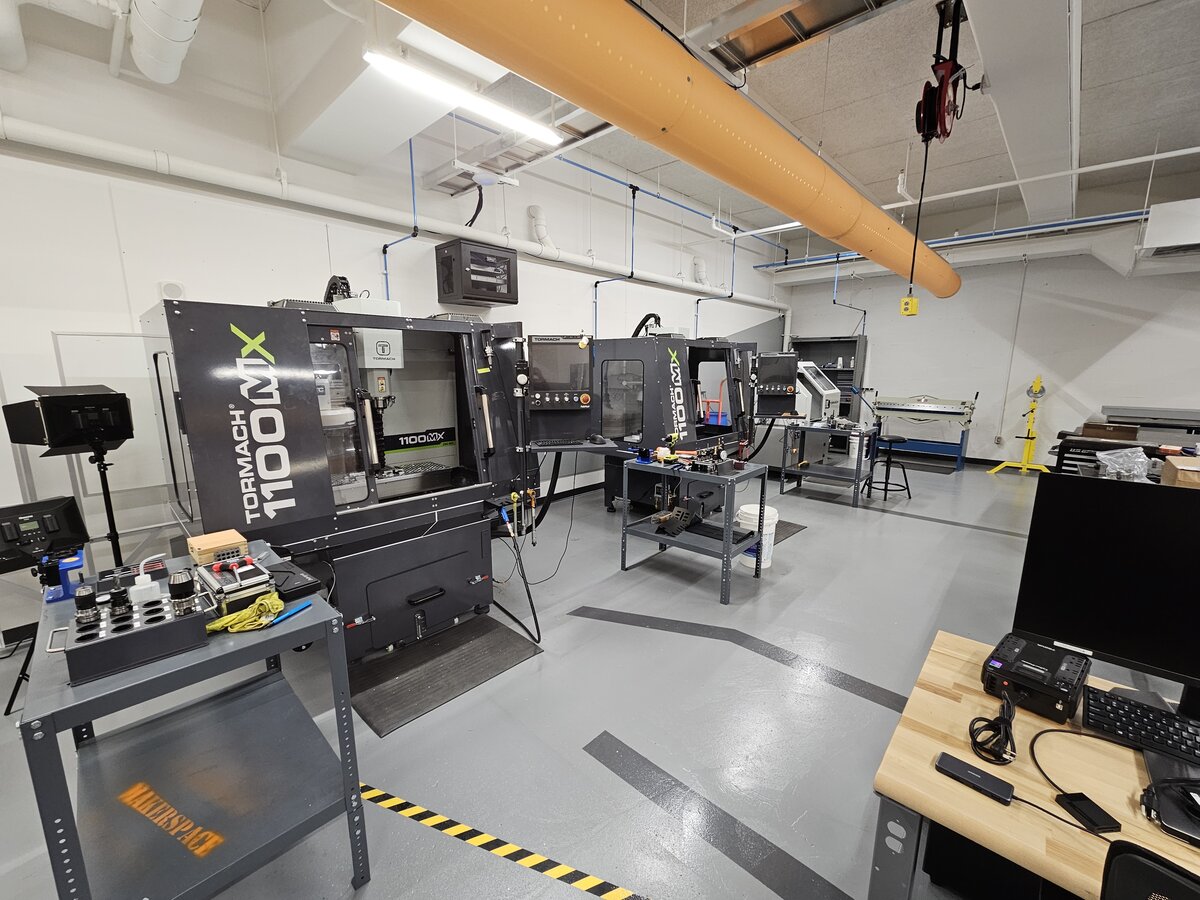
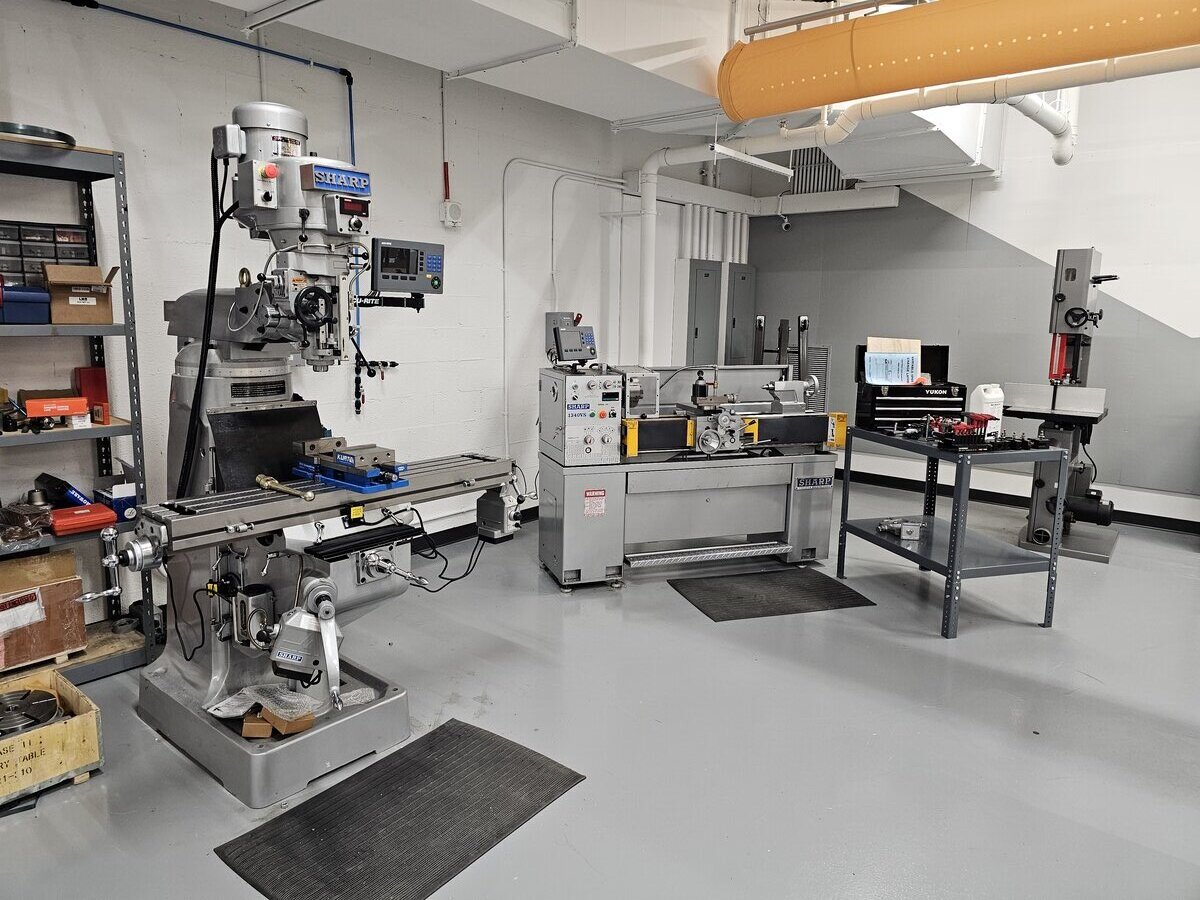
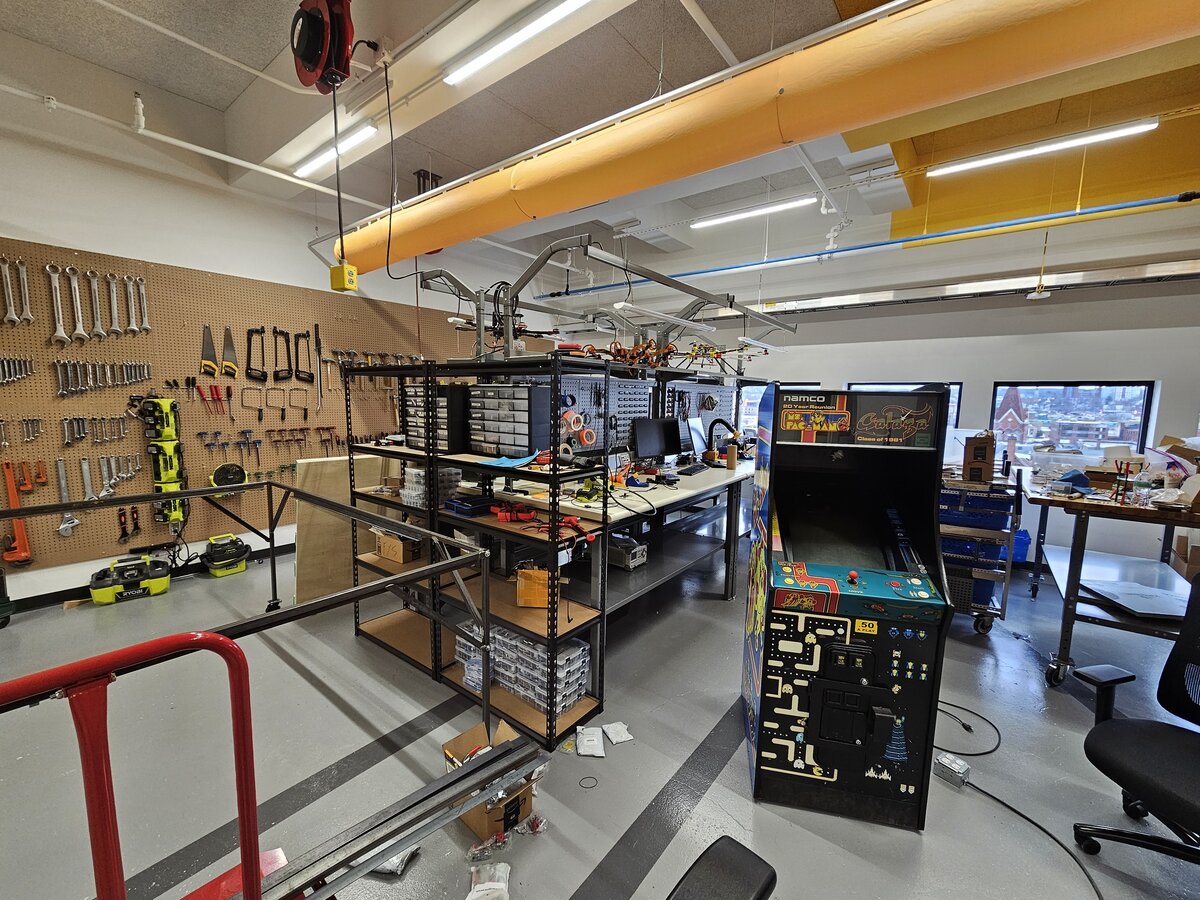
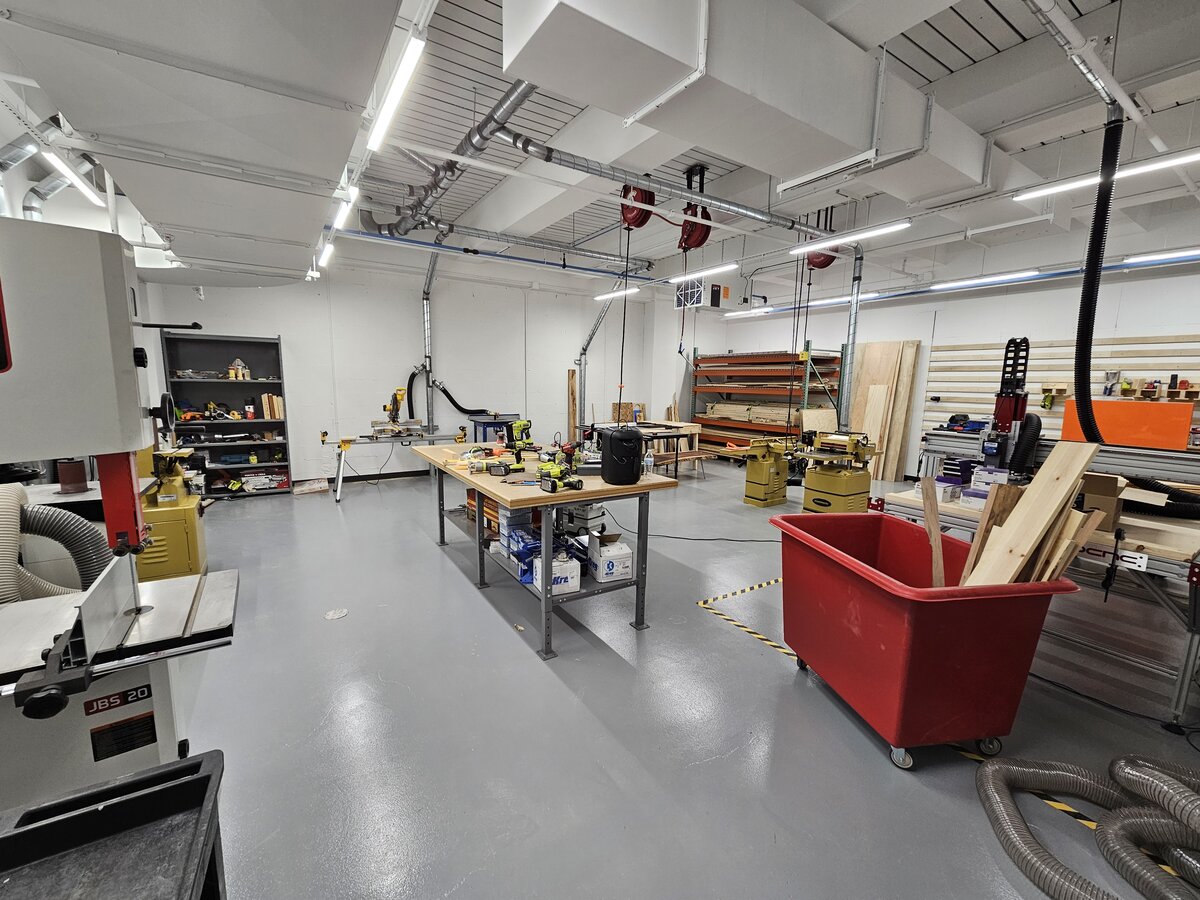
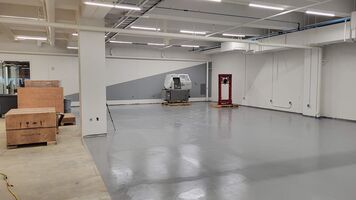
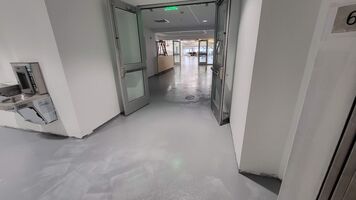
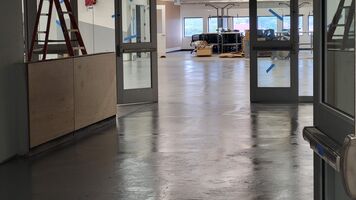
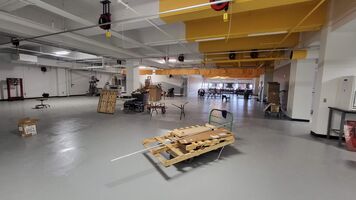
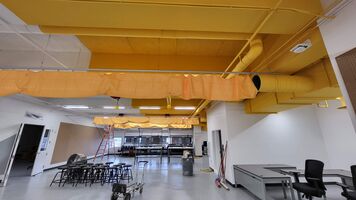
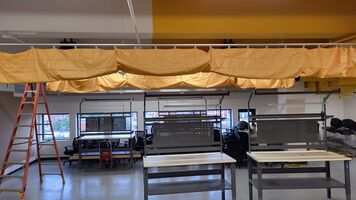
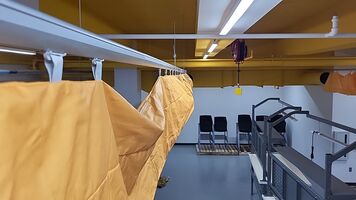
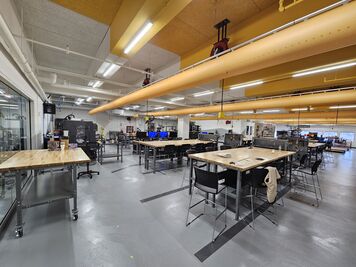
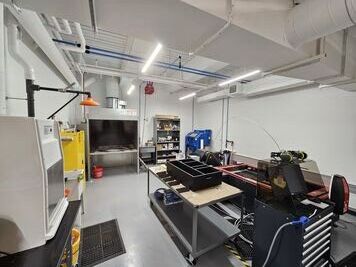
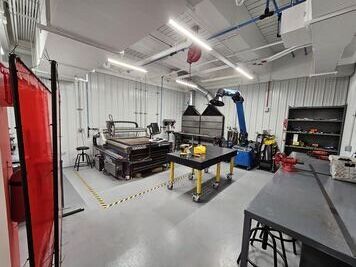
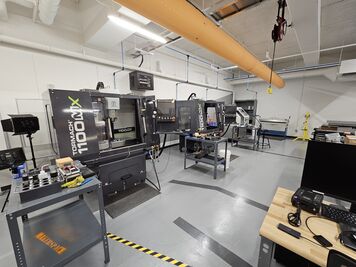
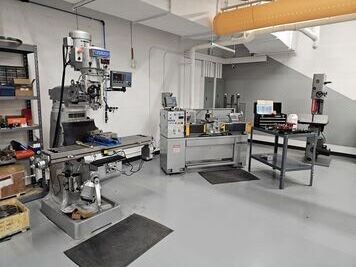
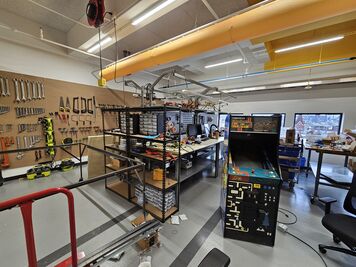
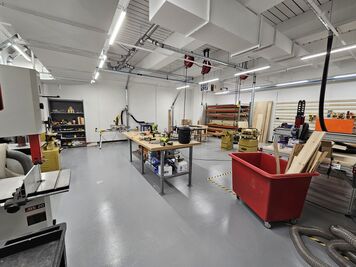
Co-Implementation of a Large-Scale Manufacturing Lab
|
Co-Author on Funding Grant | Co-Lead on Design, Build-Out, and Operations
|
2022 - Now
|
|
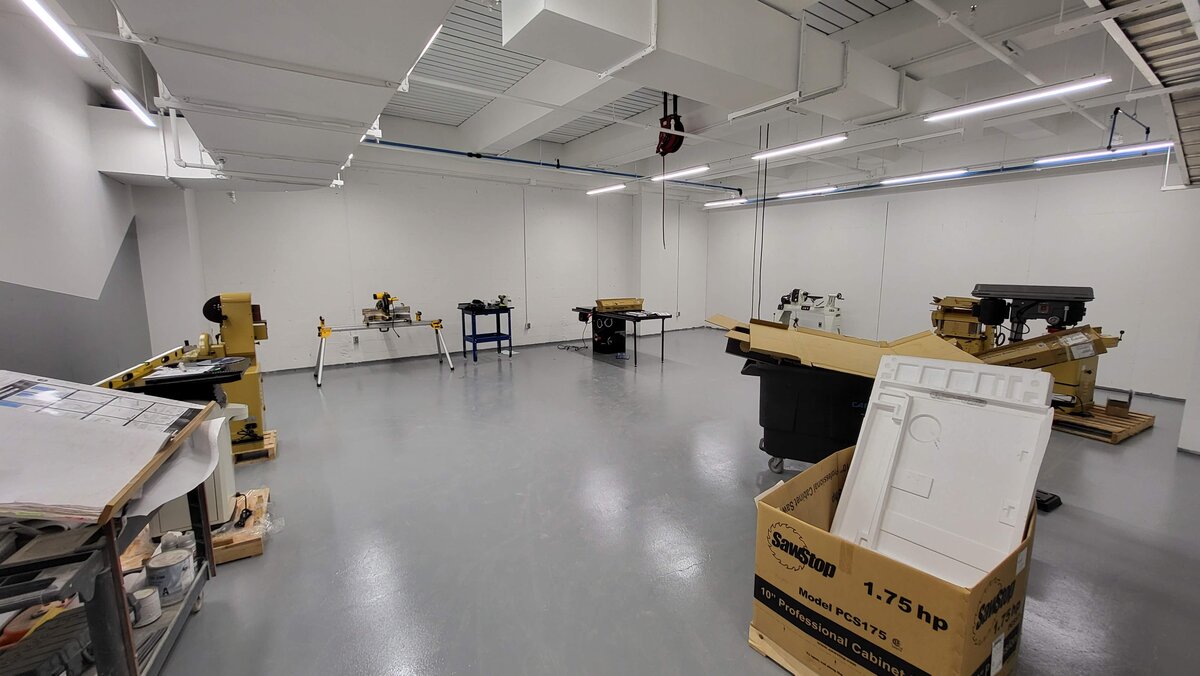
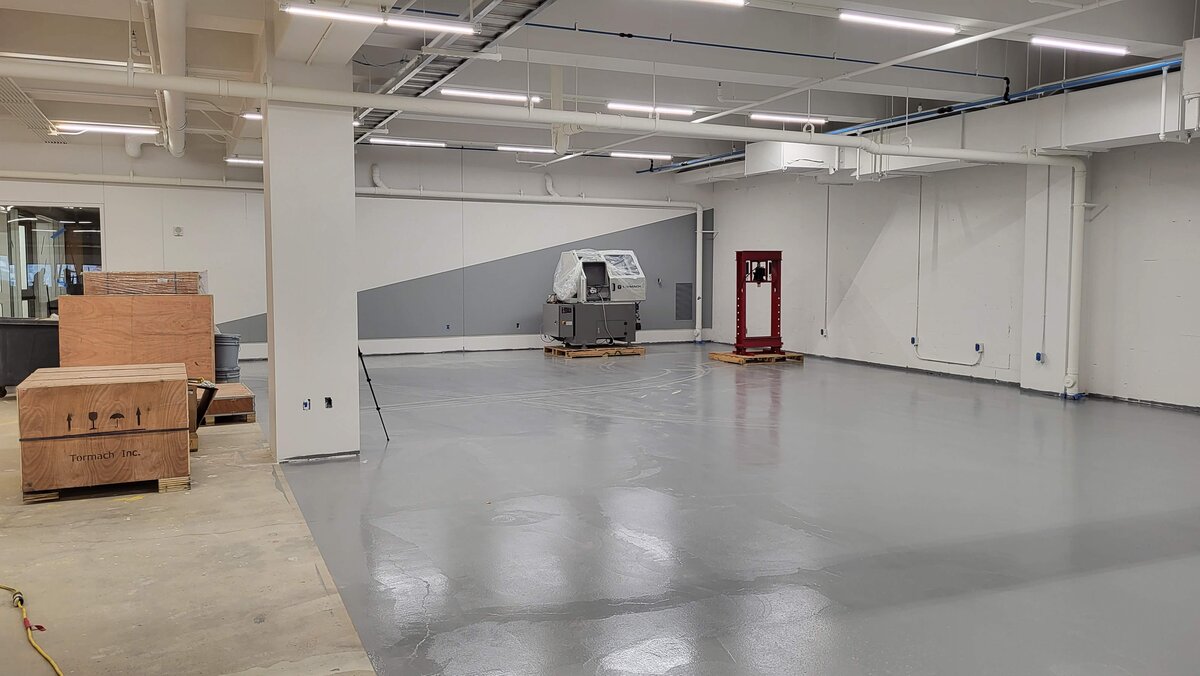
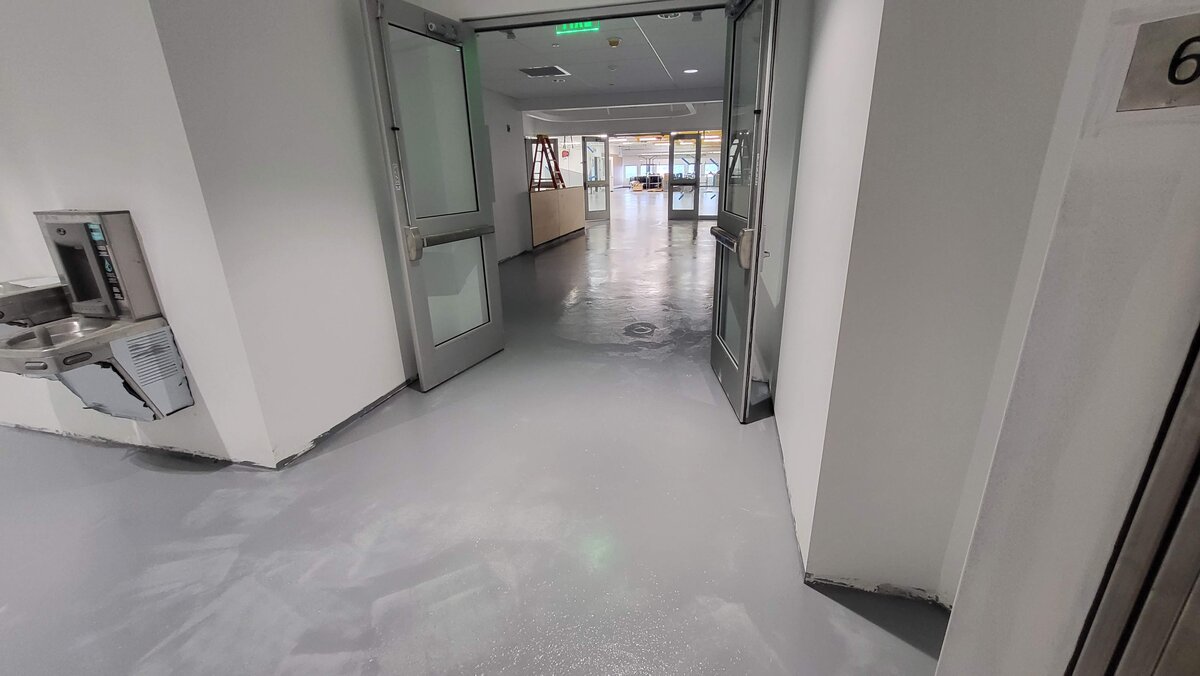
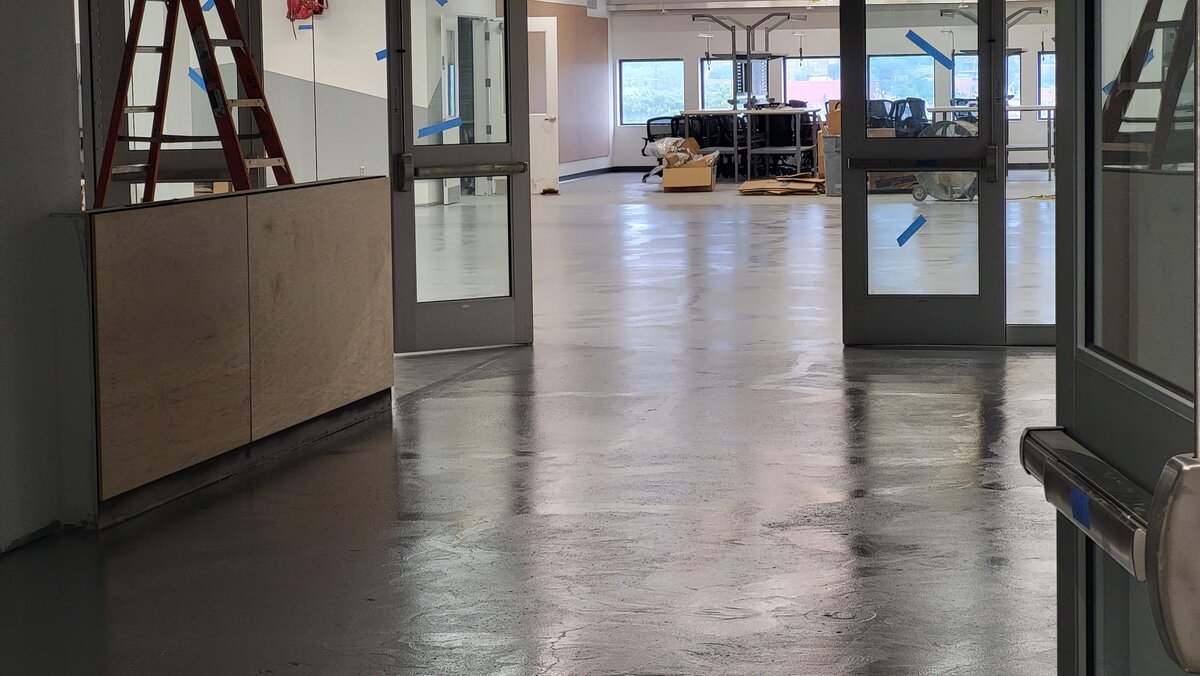
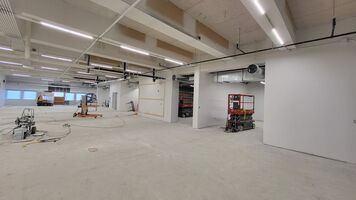
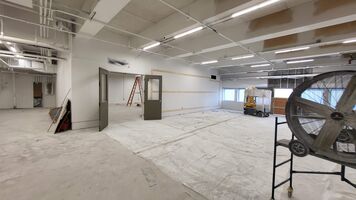
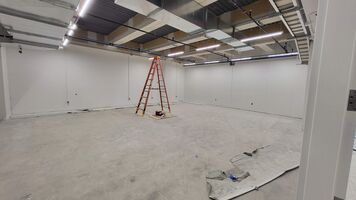
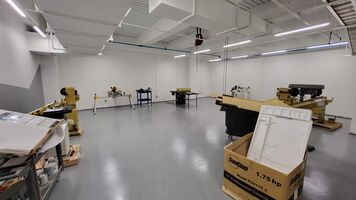
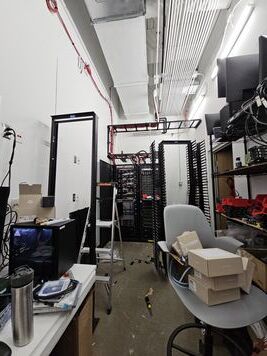
Co-authored the technical scope for a large-scale, externally funded manufacturing lab, then co-led the design, build-out, and equipment commissioning. Owned the back-end infrastructure-network, compute, lab IT, and capital-equipment uptime-that keeps the space running.
Scope of work:
- Co-author on the funding proposal that brought the space online
- Worked directly with the architects on space layout, zoning of fabrication areas, utilities, ventilation, and safety planning
- Coordinated with the builders during construction to keep the design intent intact and resolve build-out questions in real time
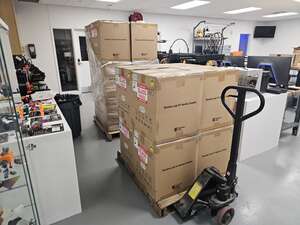
- Filled out the space: specified, sourced, received, and placed all of the equipment
- Set up and commissioned the equipment, including additive manufacturing, subtractive machining, electronics, laser, and finishing stations
- Continue to assist with running the space day-to-day, including training, maintenance, and process improvements
|
[+]
Advanced Additive Manufacturing Technologies
|
Collaboration with Co-Worker
|
2022 - Now
|
|
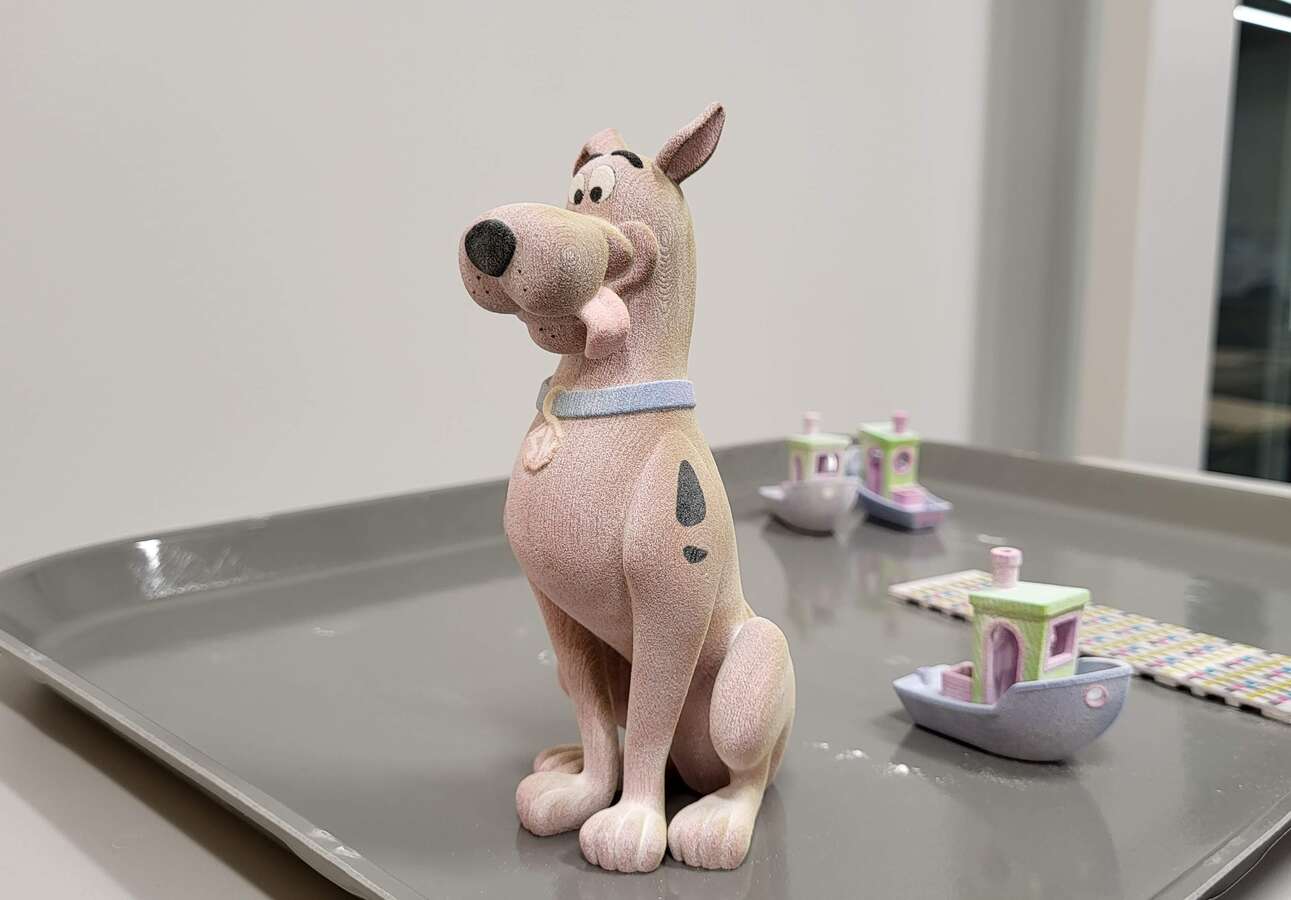
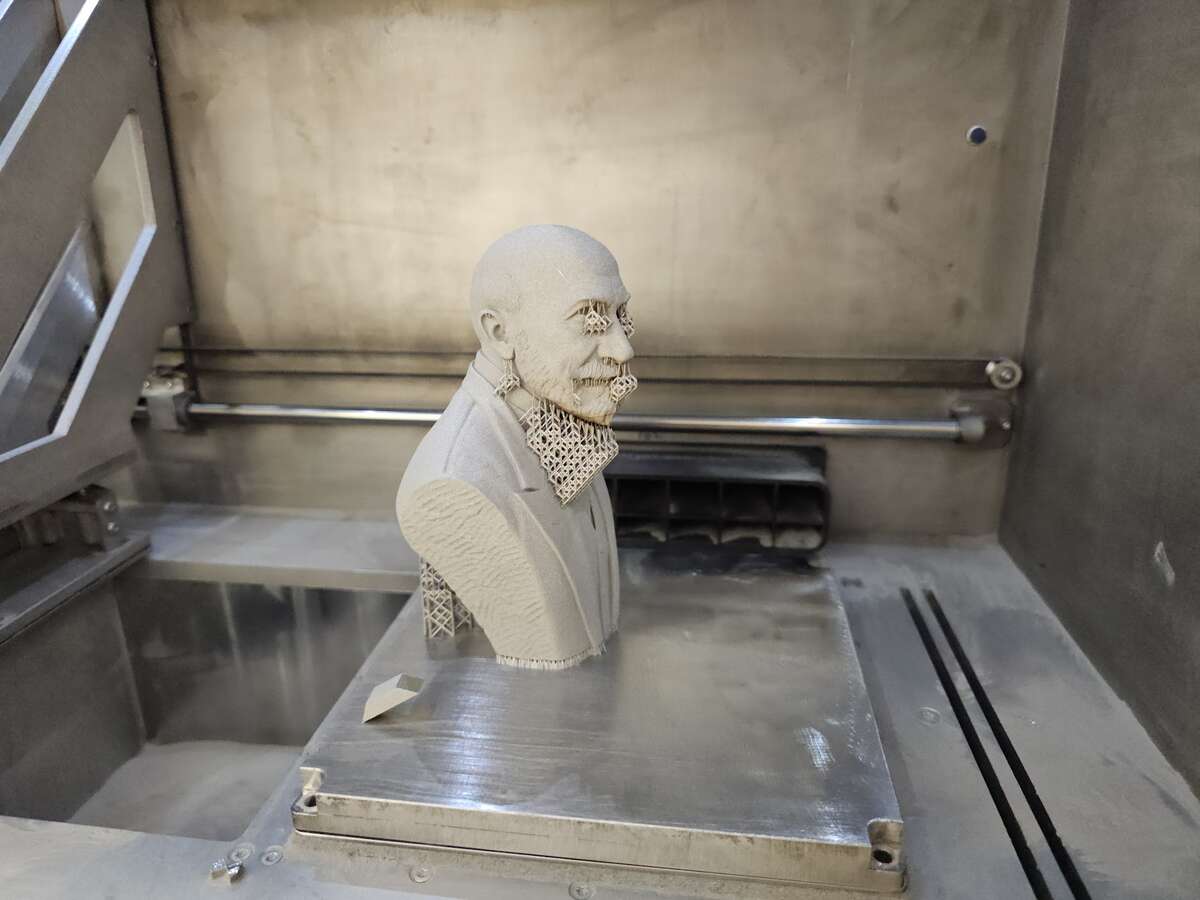
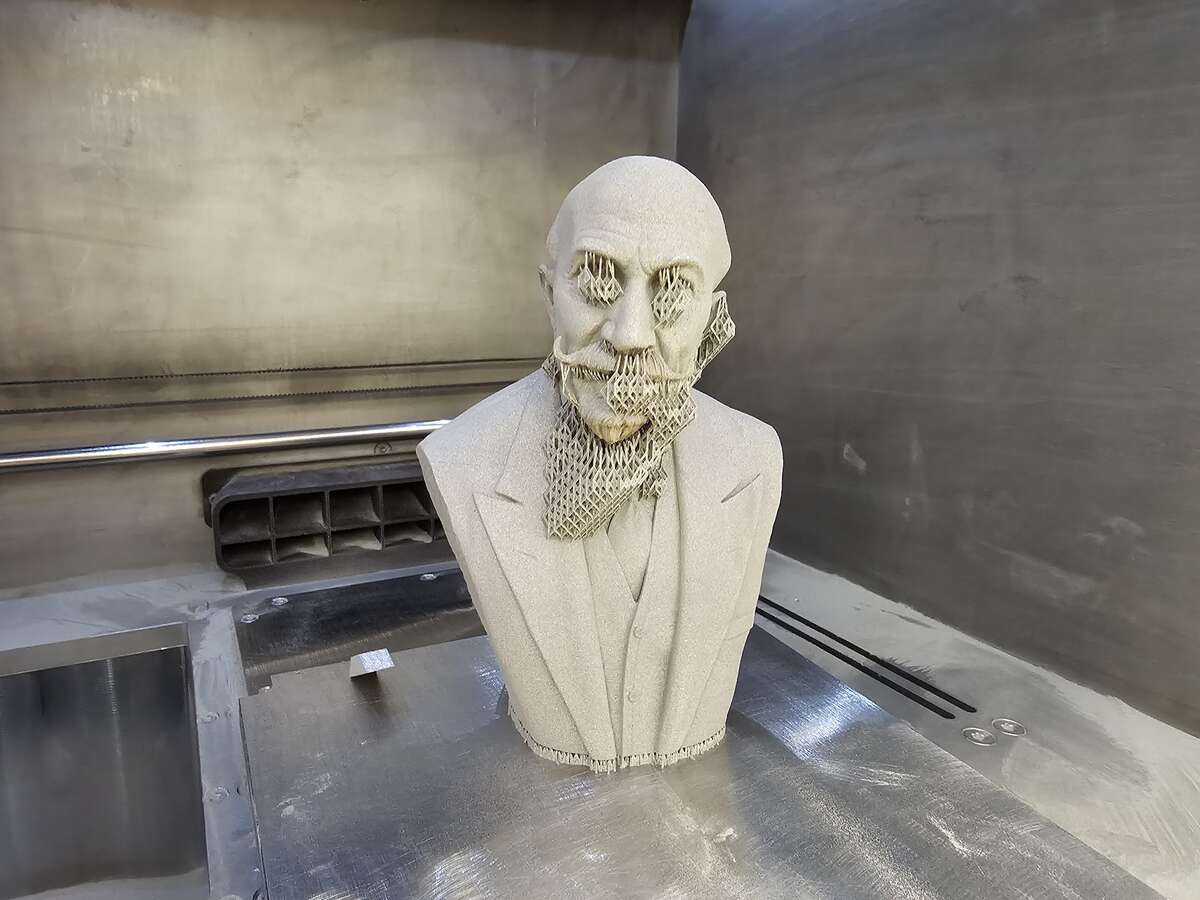
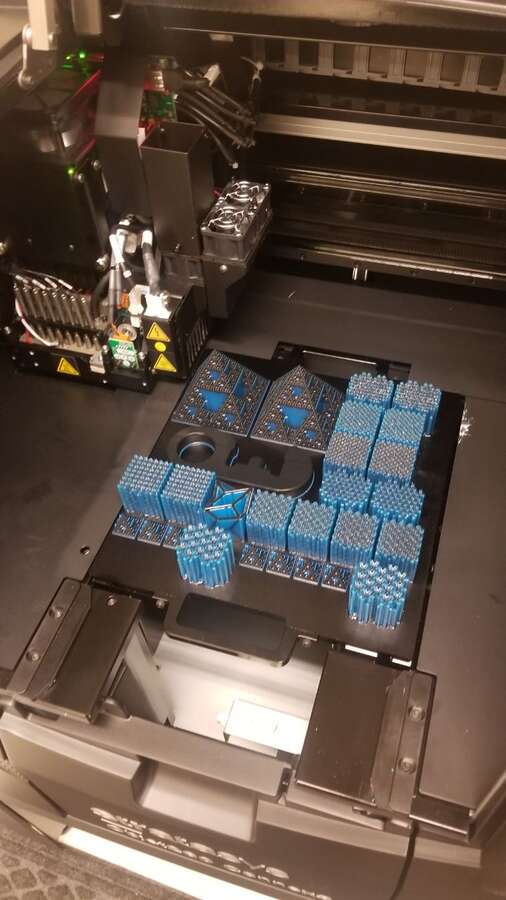
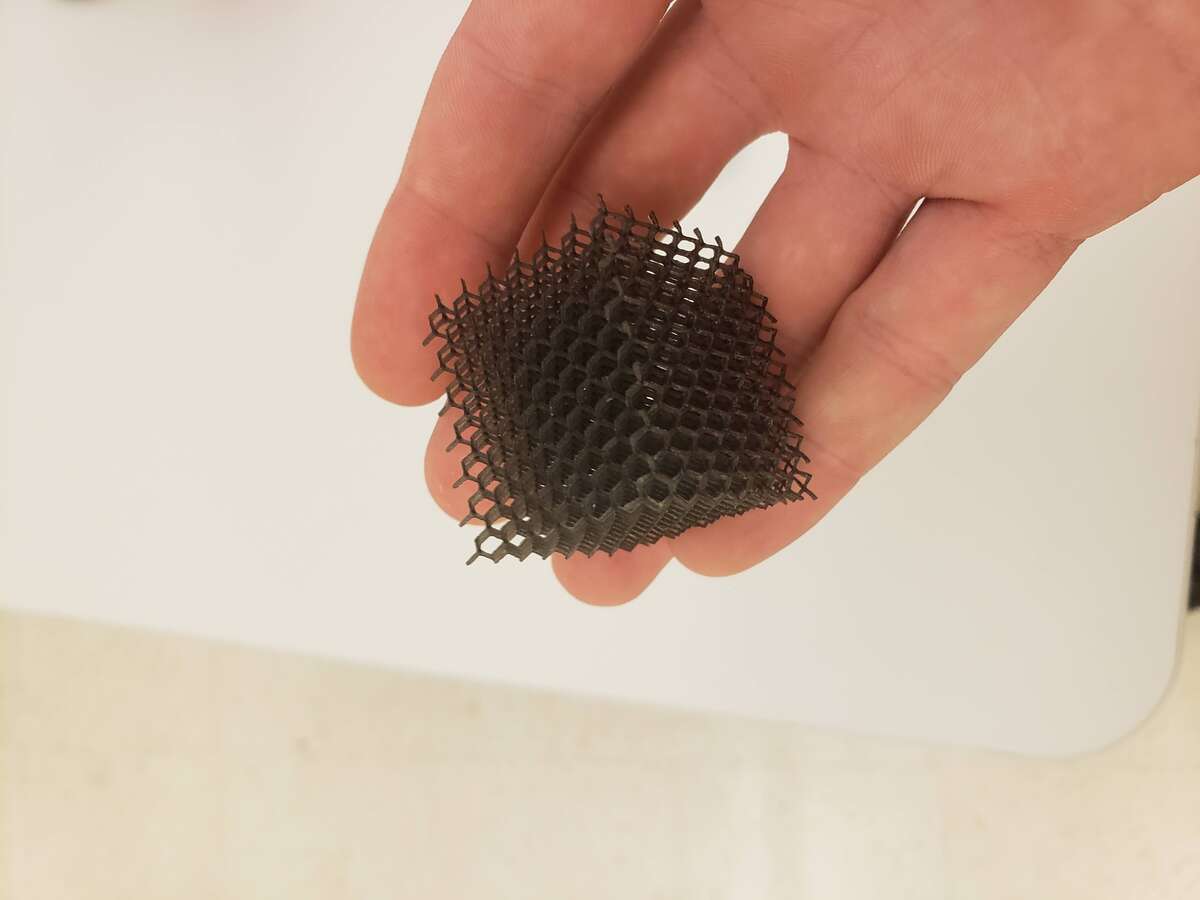
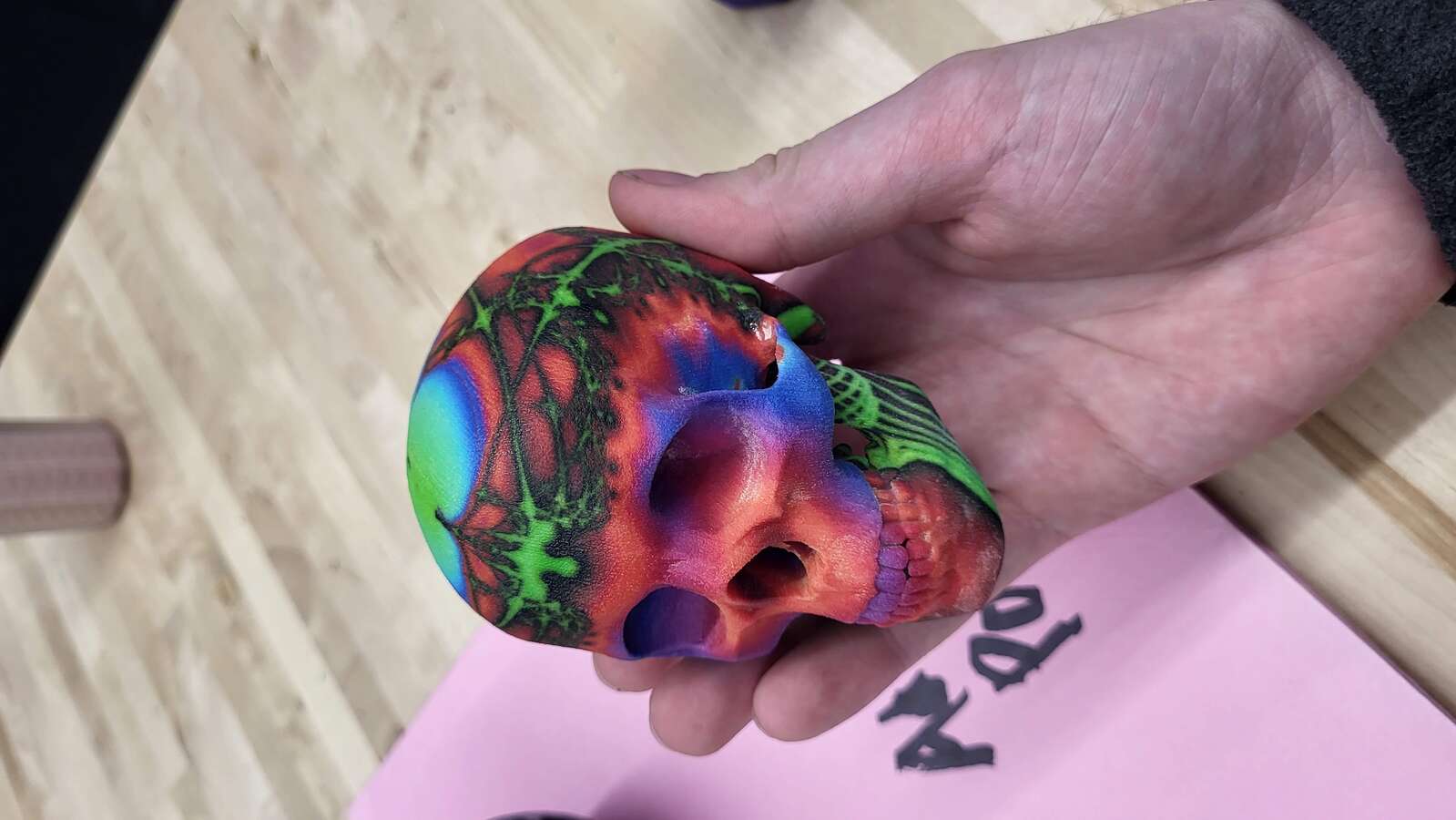
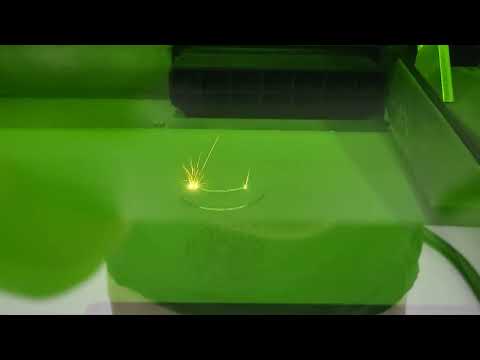
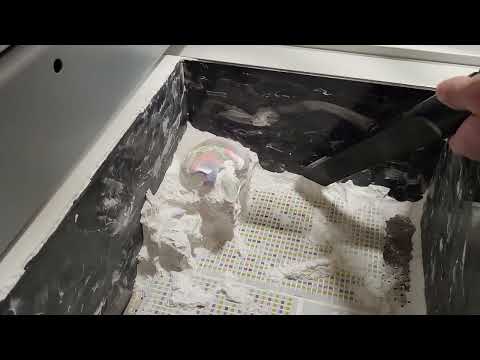
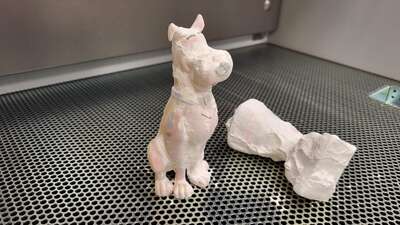
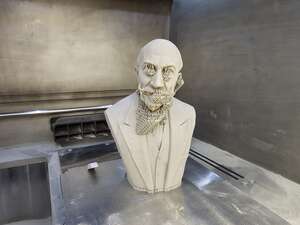
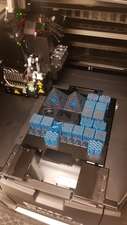
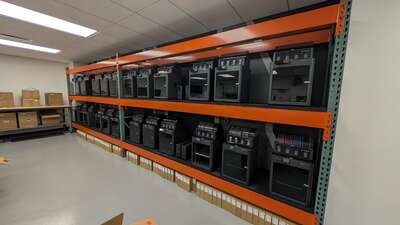
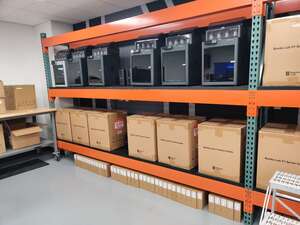
Shared responsibility for commissioning, operating, maintaining, and supporting uptime on advanced additive manufacturing platforms across metal DMLS, SLS, PolyJet, binder jetting, composite FDM, and large FDM printer fleets.
Key systems managed:
- Xact XM200G (DMLS) - Metal powder handling, build chamber calibration, and print configuration/support creation
- Stratasys Objet 260 (PolyJet) - Multi‑material jetting setup, print head maintenance, and resin reservoir management
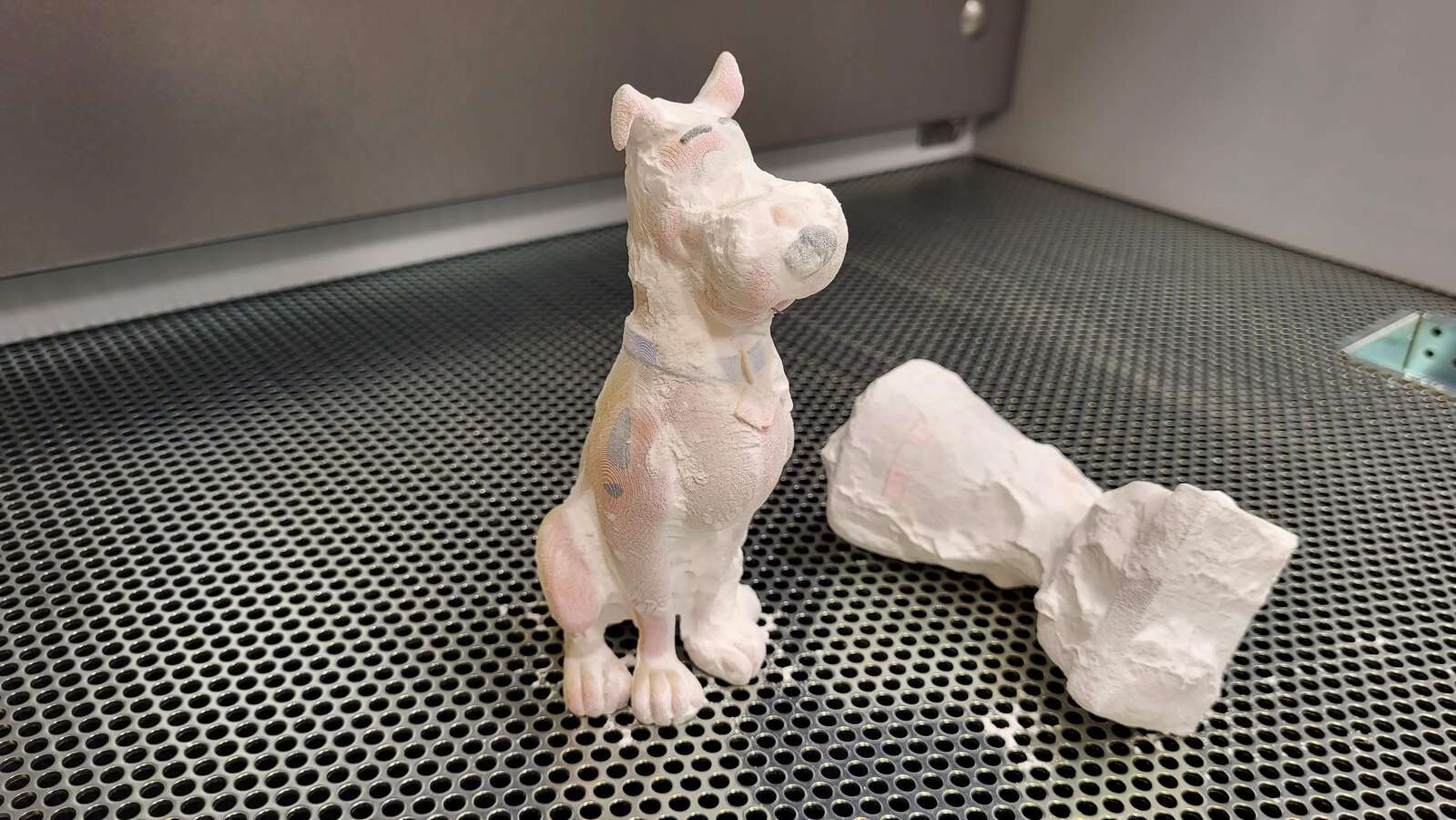
- Sinterit Lisa and Lisa X (Nylon SLS) - Powder bed preparation, laser power calibration, part depowdering workflows, and periodic chamber cleaning
- ProJet 660 Pro (Binder Jetting) - Binder delivery system checks, powder/agent replenishment, print tray realignment, and part post processing
- Markforged Mark 2 (Composite) - Print parameter tuning, fiber reinforcement strategies, and routine nozzle and drive‑system upkeep
- 23X BambuLab P1S FDM
- 4X BambuLab A1 FDM
- 1X BambuLab X1C FDM
- 2X BambuLab H2D FDM
- 2X Prusa XL Multi-Toolhead FDM
- 2X Prusa i3 MK4 FDM
- 16X Prusa i3 MK3s FDM
- 10X Prusa Mini FDM
- Formlabs Form 4 Resin
- Other miscellaneous printers (~75 total)
|
[+]
Print Farm Implementation and Management
|
Implemented with Co-Worker
|
2023 - Now
|
|
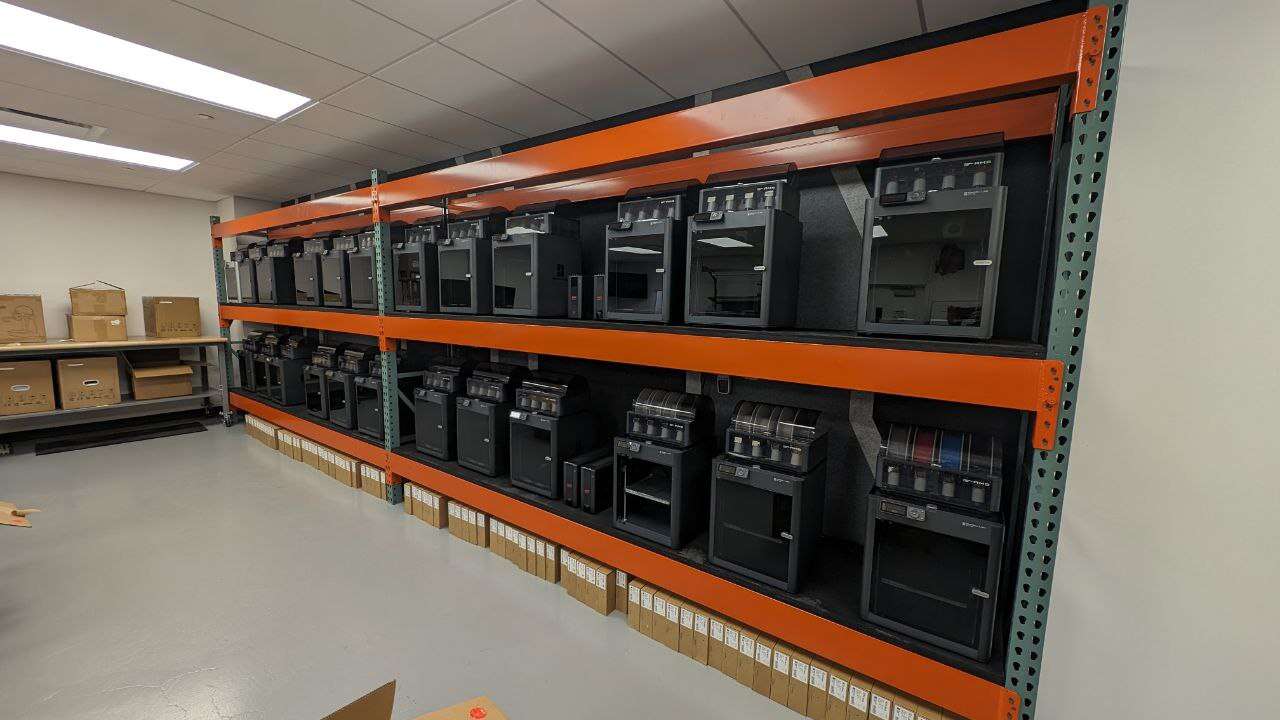
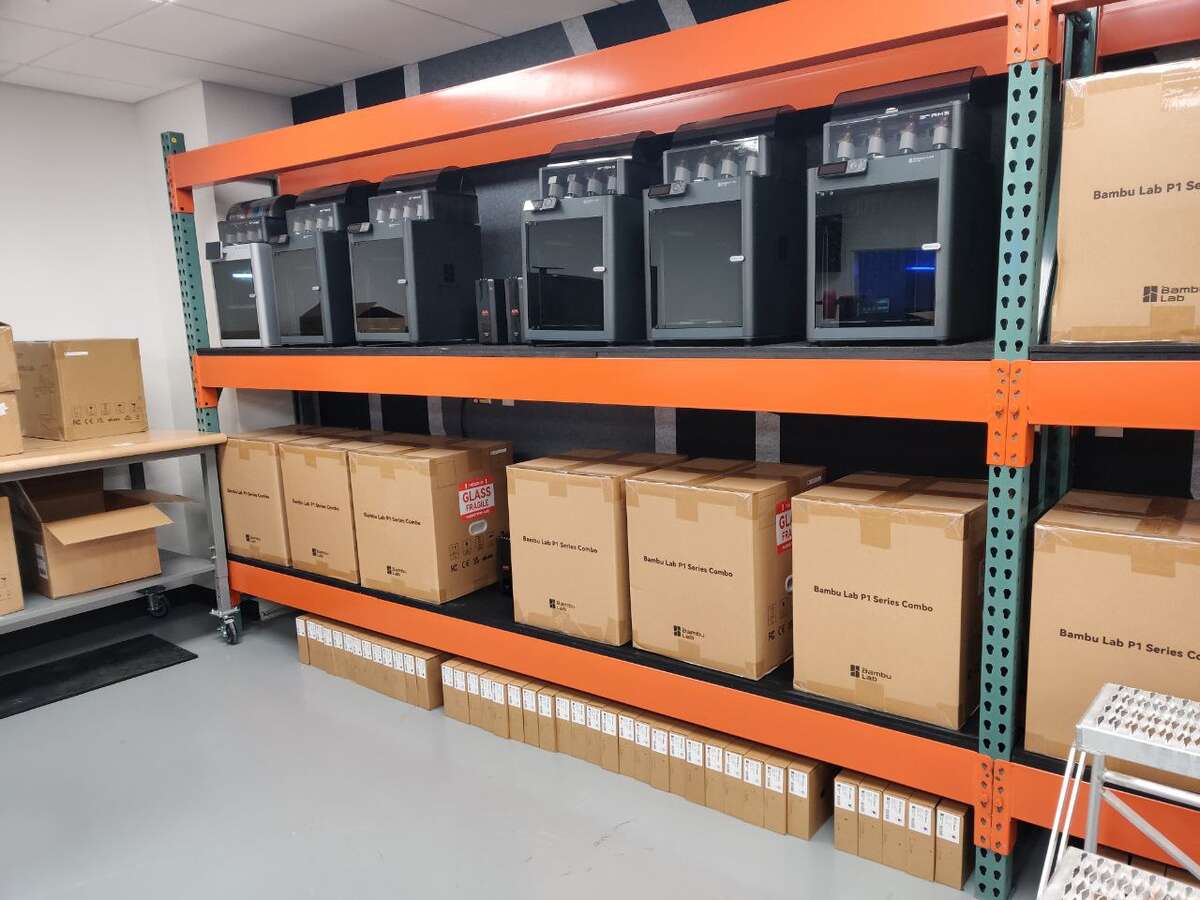
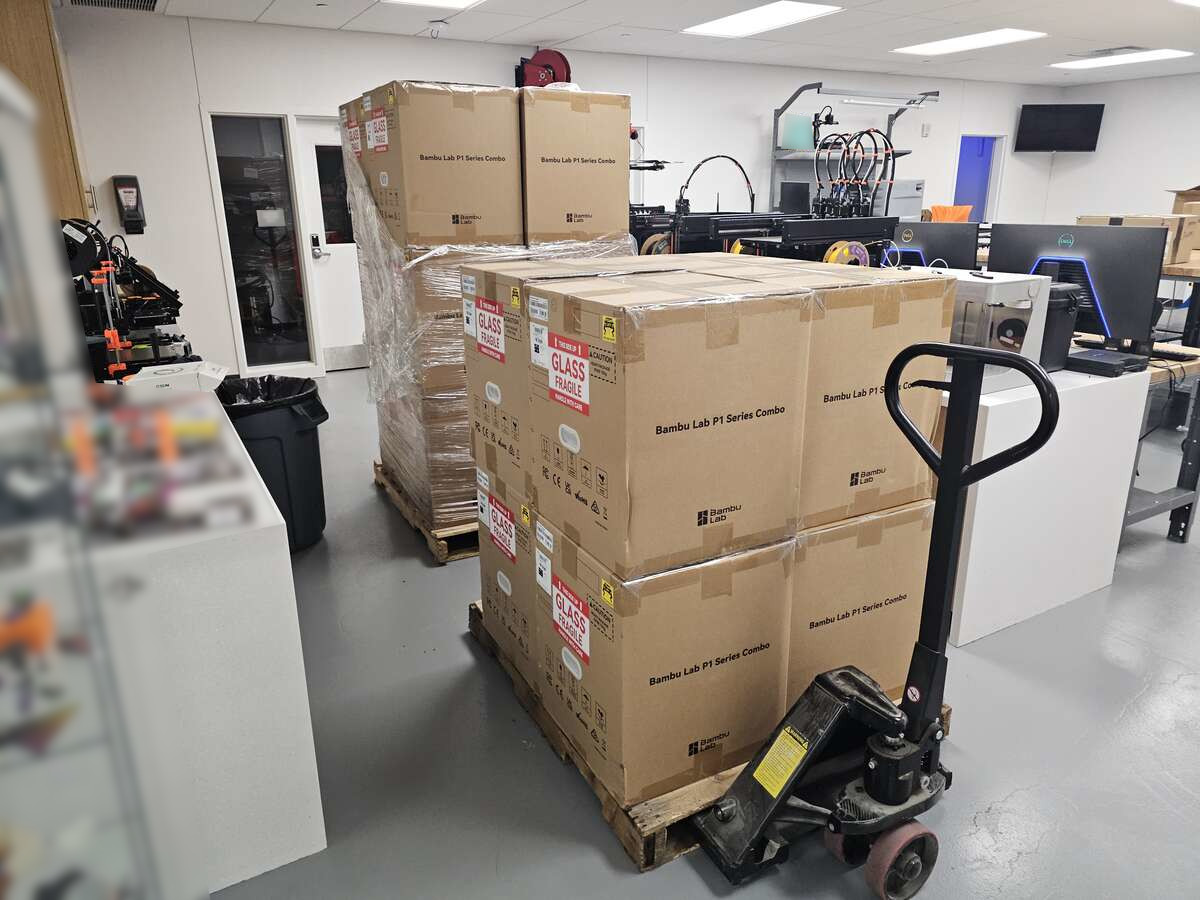
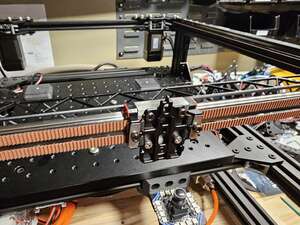
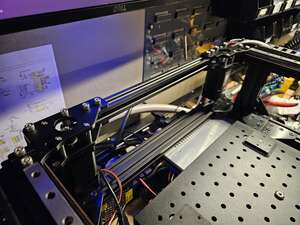
Worked with a co-worker to implement and operate a 30x BambuLab (P1S, X1 Series X1C and H2D, A1/A1 Mini) and 30x Prusa (MK4S, XL, MK3S, Mini) 3D printer farm, I helped optimize most aspects of our additive manufacturing workflow:
- Deployment and Configuration: Deployed and networked 30 BambuLab machines, standardizing slicer settings, and filament profiles to ensure consistent performance across P1S, X1C, H2D, A1, and A1 Minis. As well as an additional 30 Prusa machines, some offline and some managed by PrusaConnect
- Process Optimization: Tuned print profiles (temperatures, speeds, etc) for various materials-PLA, PETG, ASA, and composites
- Preventive Maintenance: Managed maintenance routines (lubrication, nozzle swaps)
- Quality Control and Troubleshooting: Diagnosed and resolved failures, and optimized processes for batch print jobs
|
[+]
Manufacturing, Tooling, and Fixturing Expertise
|
Production tooling shared with Co-Worker | Fixtures and most other work solo
|
2011 - Now
|
|
Programmed, commissioned, maintained, and supported production use of a variety of manufacturing tools, plus designed and built the tooling and fixturing that supports repeated production:
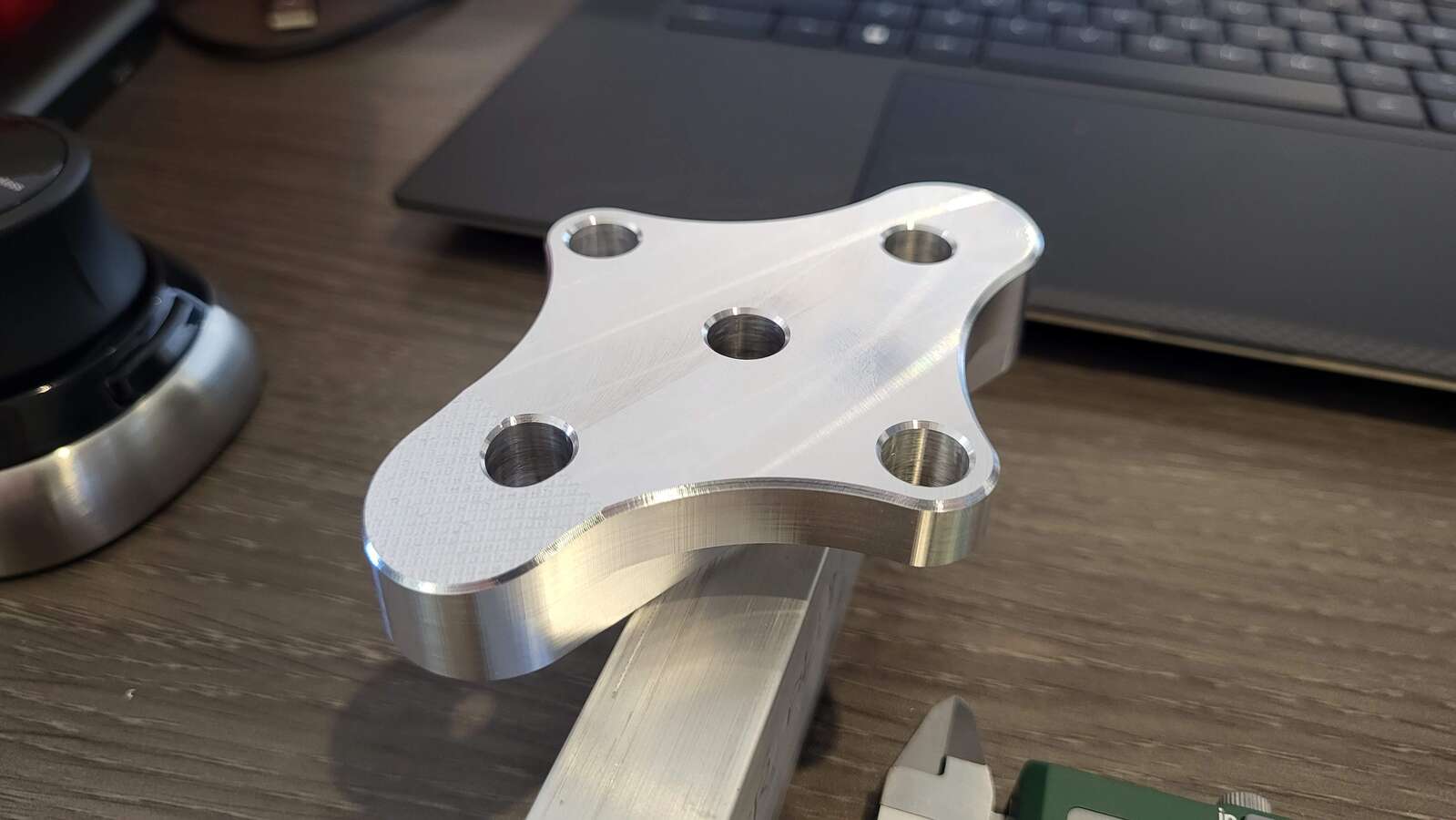
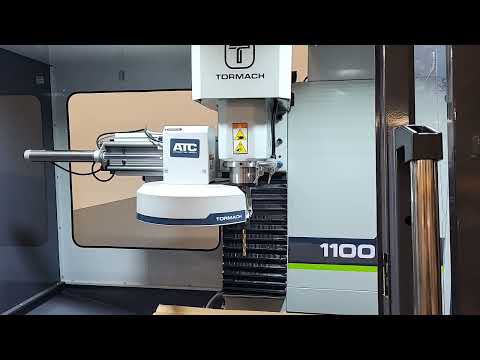
- 2X 3/4‑Axis CNC Milling with a Tormach 1100MX and 1X Tormach 440MX
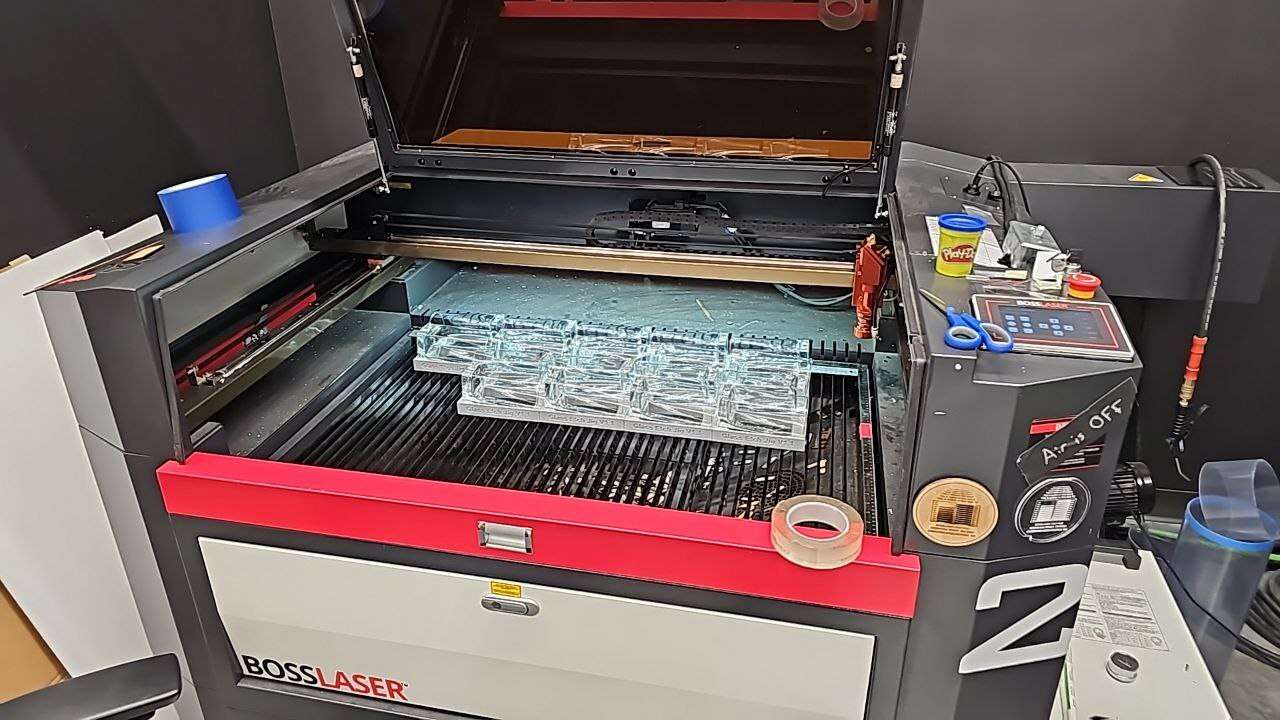
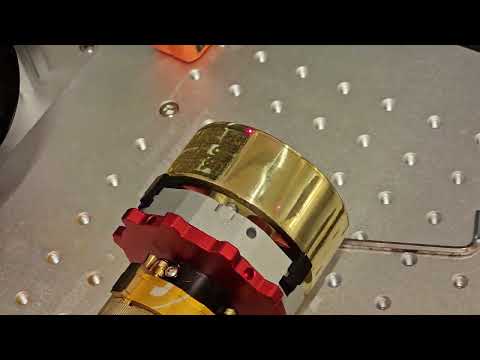
- Engraving and cutting with BossLaser Fiber (1X) and CO₂ Lasers (2X) + Rotary
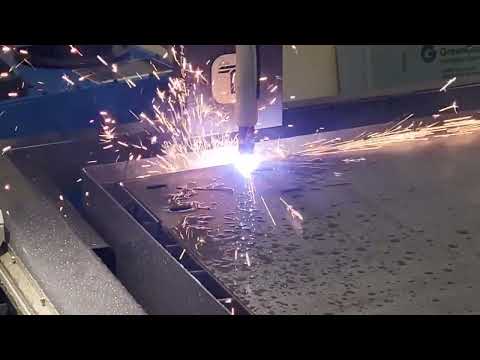
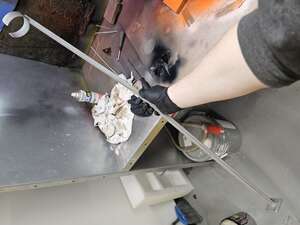
- CNC plasma cutting with a Tormach 1300PL
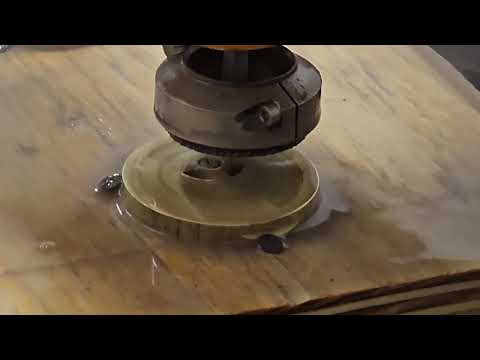
- Waterjet cutting with an Omax 1508
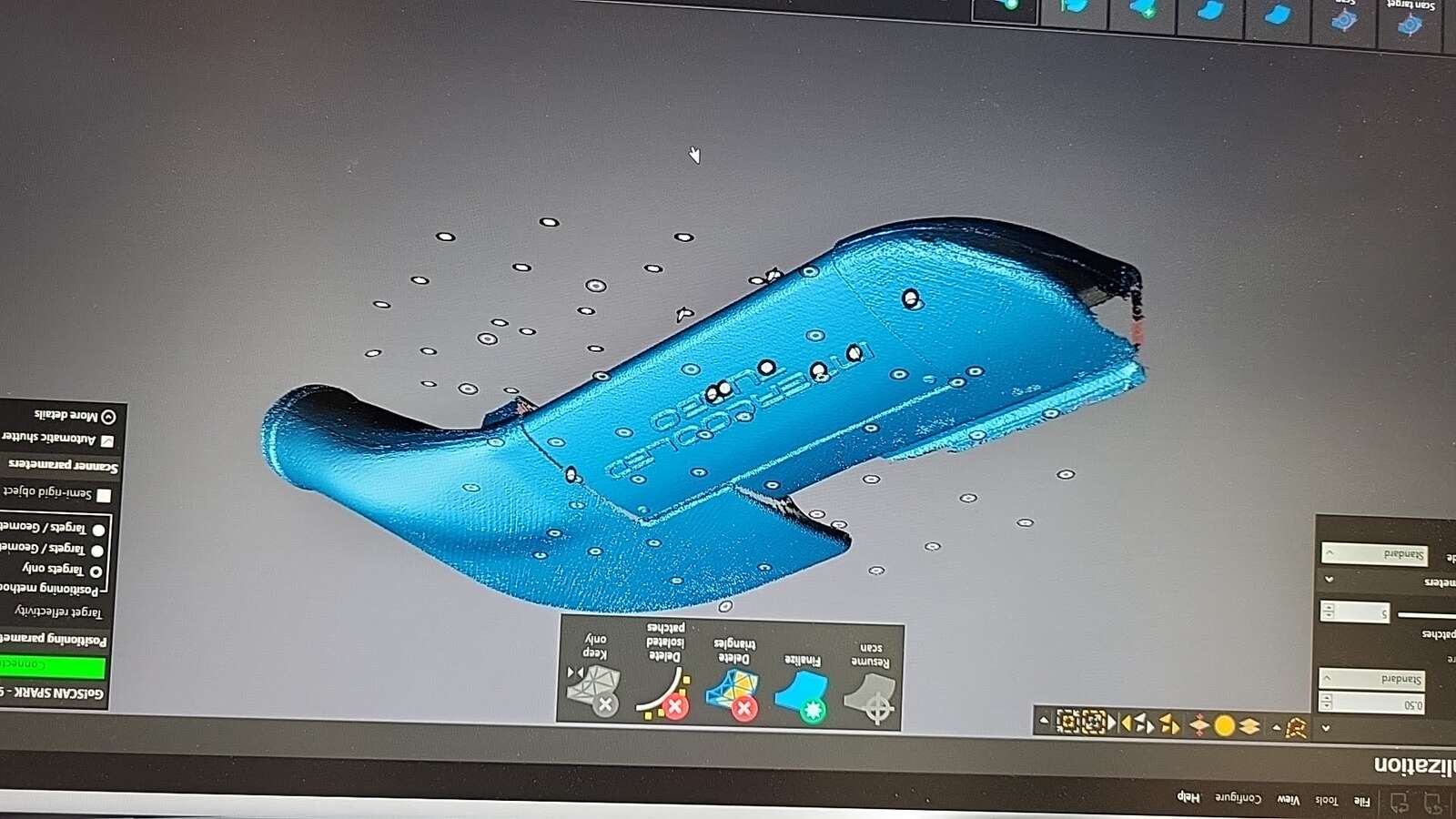
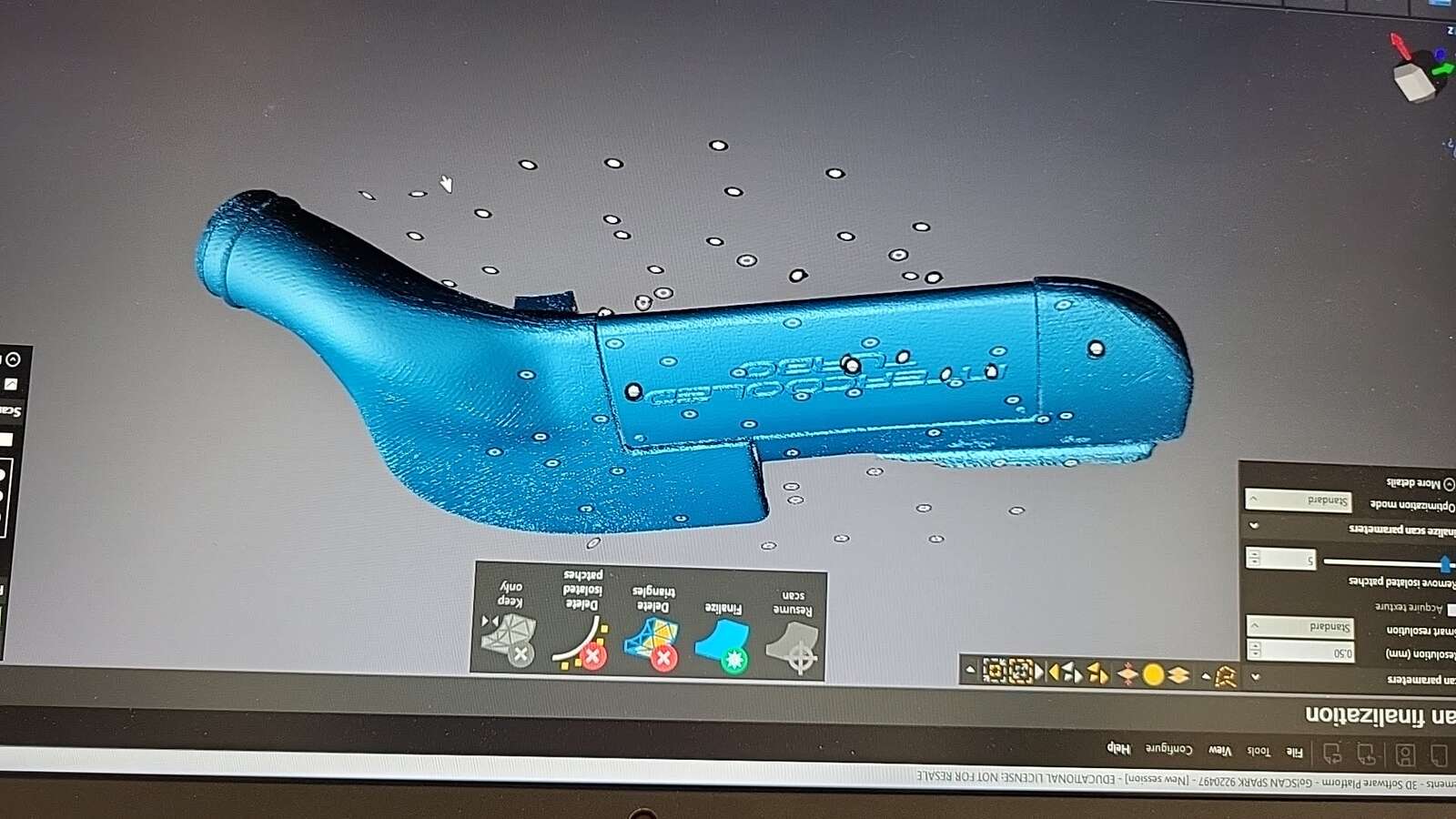
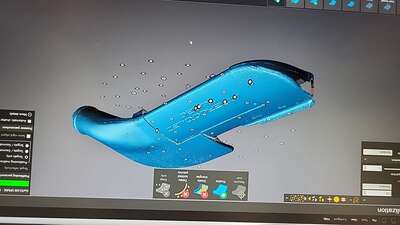
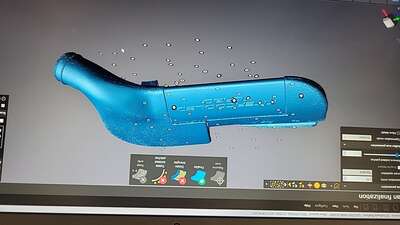
- 3D scanning with the Creaform Go!SCAN Spark and VXElements software suite
Tooling and fixturing design (injection molding, vacuum forming, jigs):
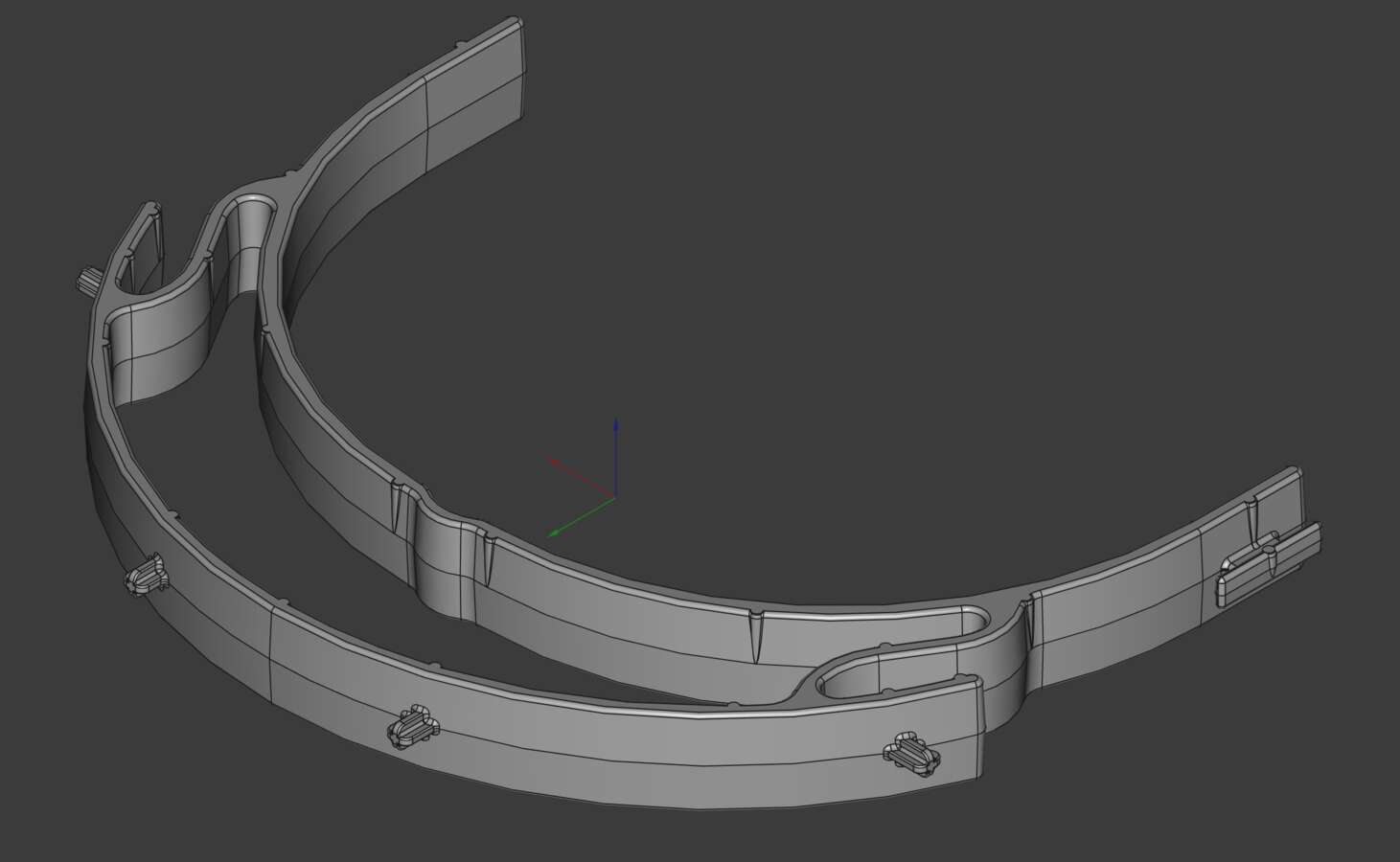
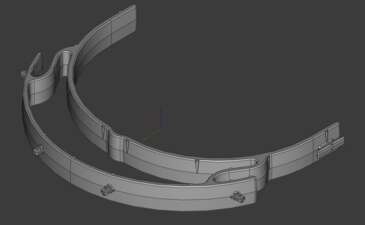
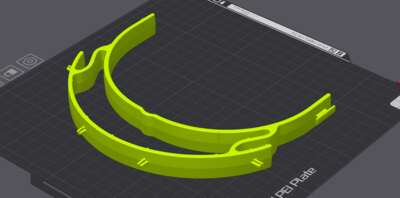
- Injection‑Molded Face Shield Frames: Designed parts optimized for automated injection molding; tooling produced over 6,000 units for local clinics and hospitals
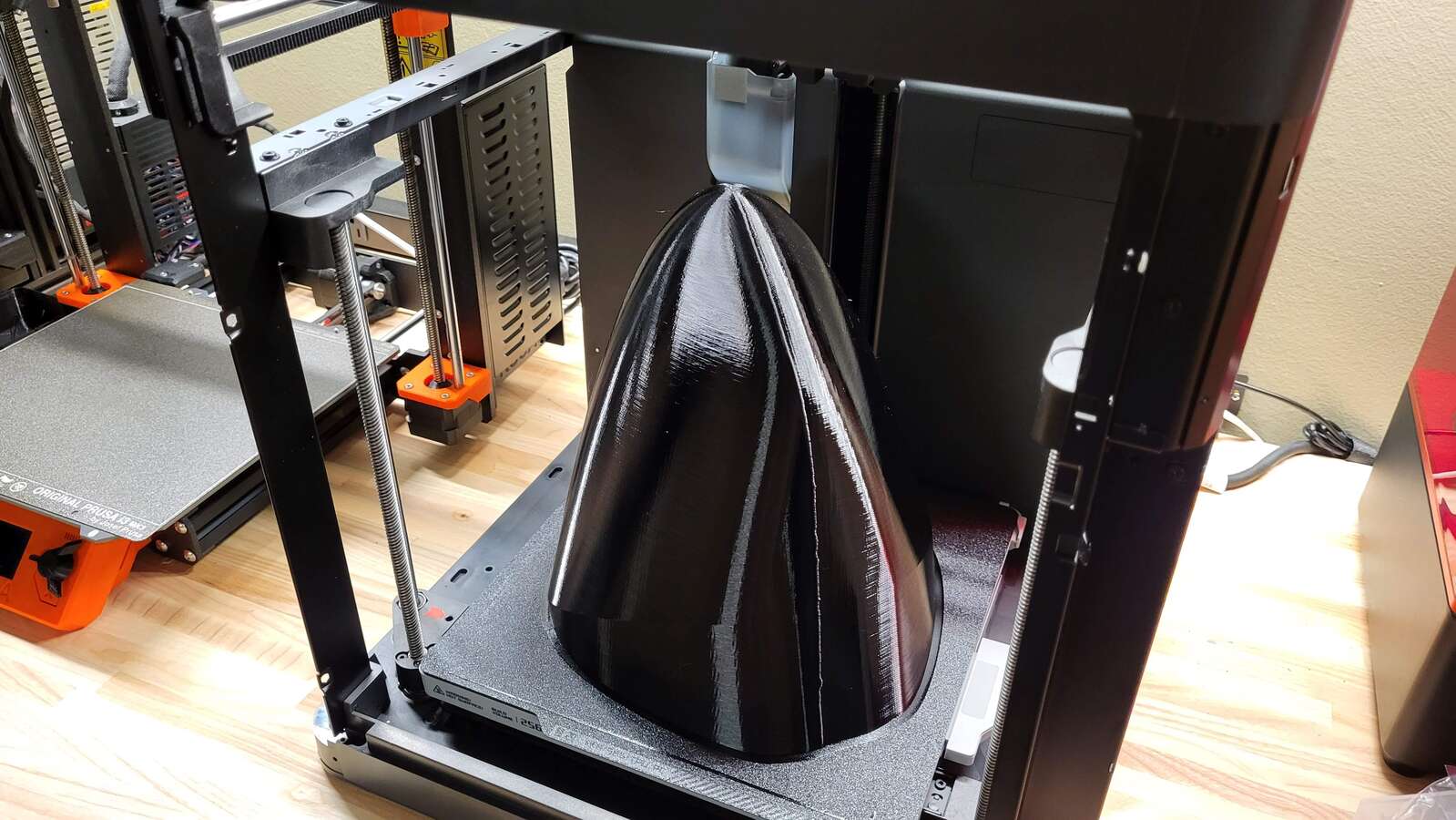
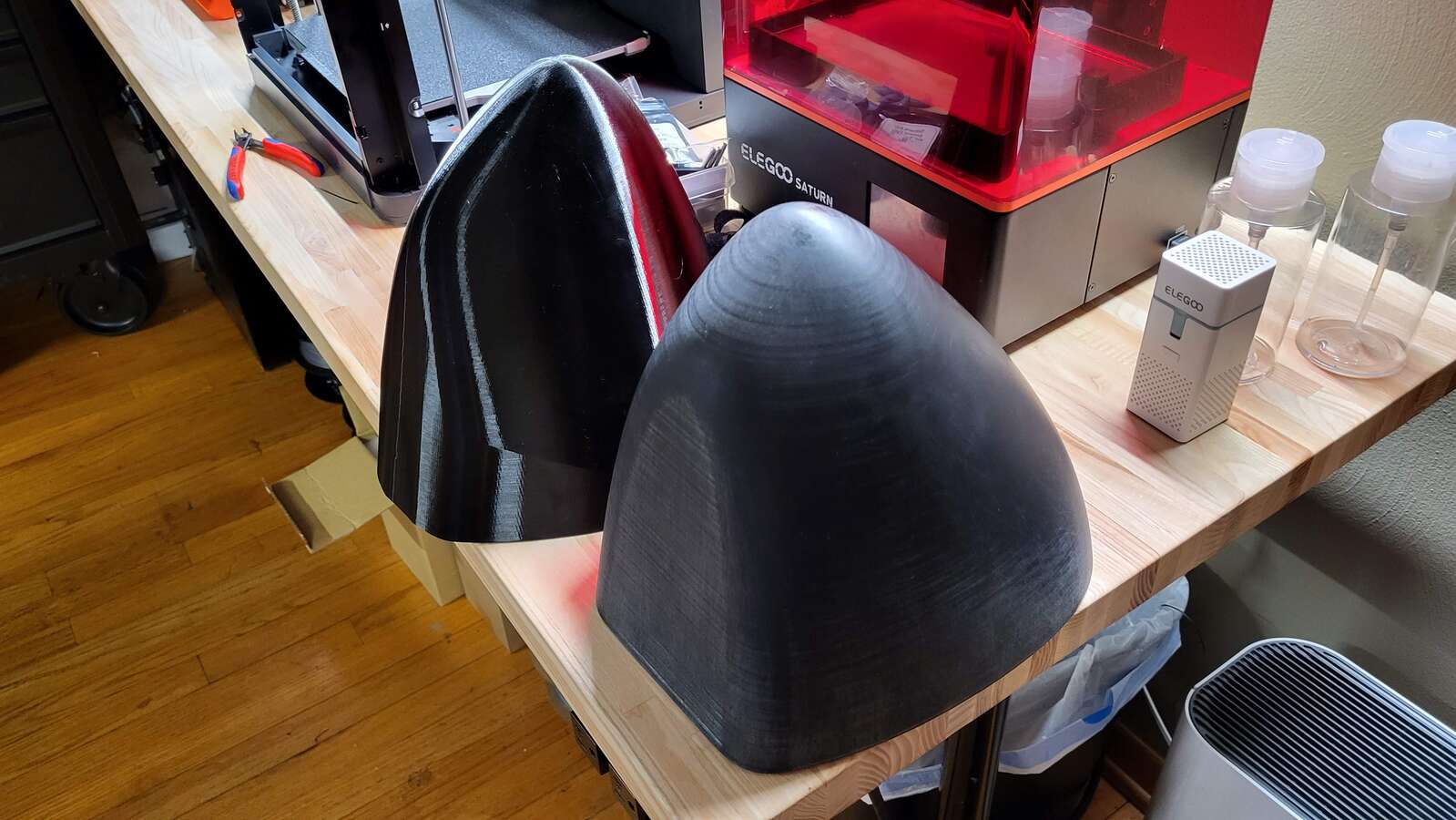
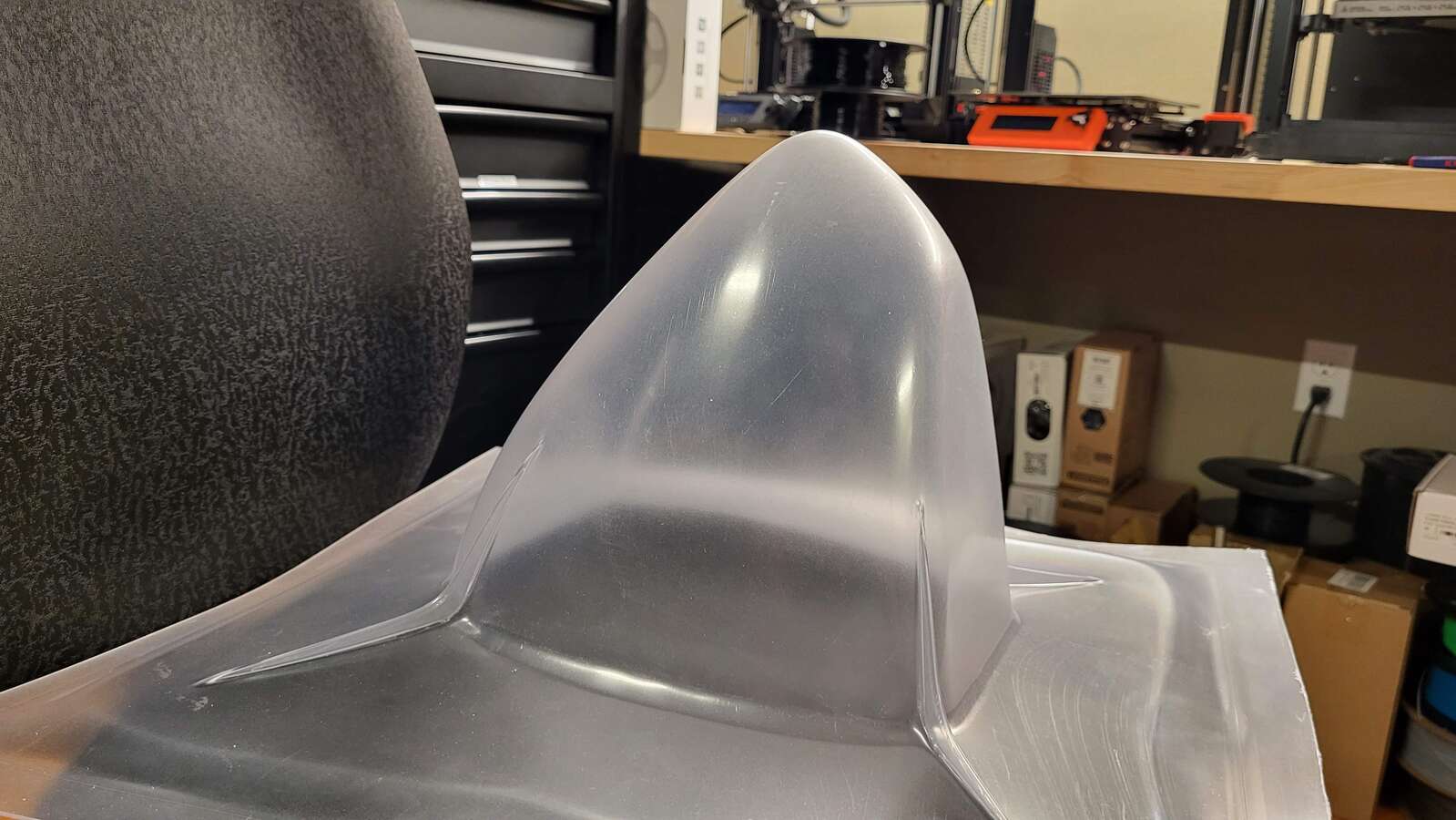
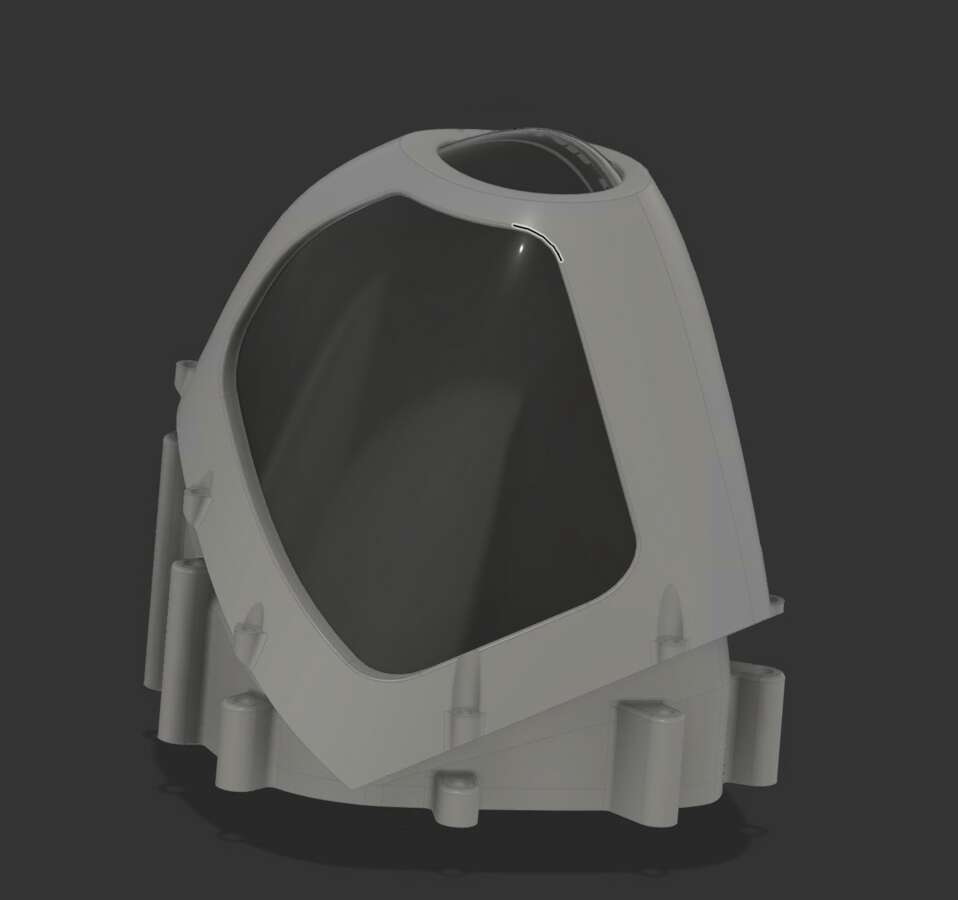
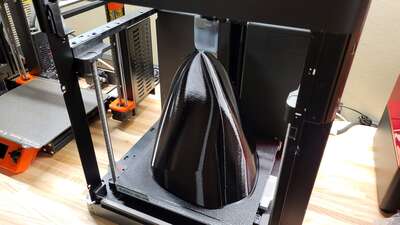
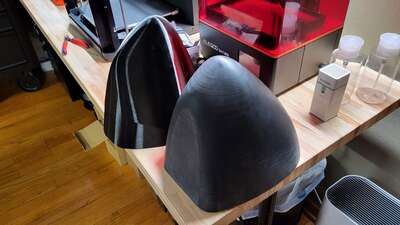
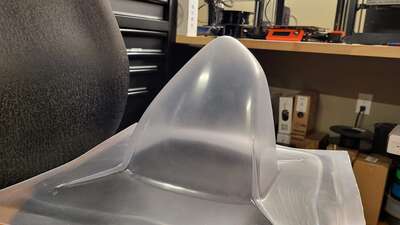
- Custom Vacuum‑Forming Bucks: Engineered master forms (bucks) for thermoforming complex geometries
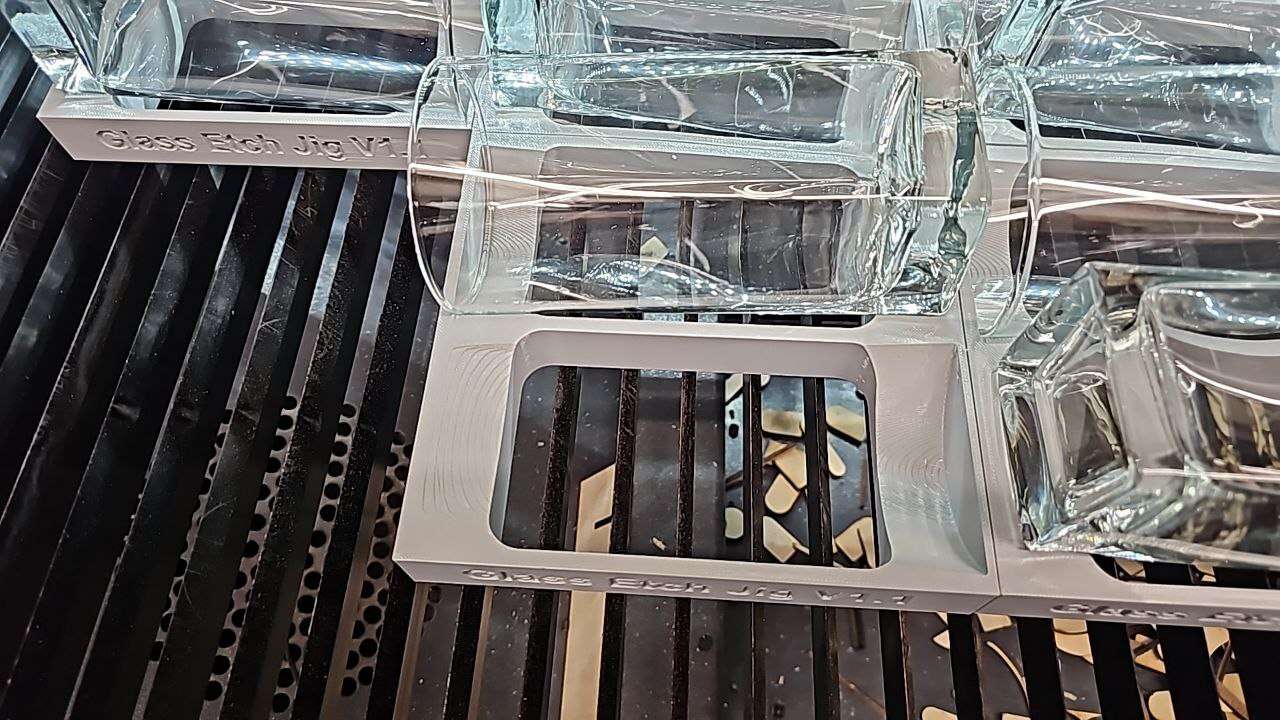
- Visor‑Cutting Jigs: Created fixtures to hold and index vacuum-formed visors for manual and automated trimming
- PCB Stenciling Fixtures: Developed alignment jigs that secure PCBs for solder‑paste application
- Custom Production Centering Tools: Designed and fabricated fixtures for CO2 laser and fiber laser etching
|
[+]
ProxmoxScripts for Automated Infrastracture Management
| Website | GitHub |
Contributors on GitHub
|
2024 - Now
|
|
Open-source - 615+ stars, 39+ forks on GitHub.
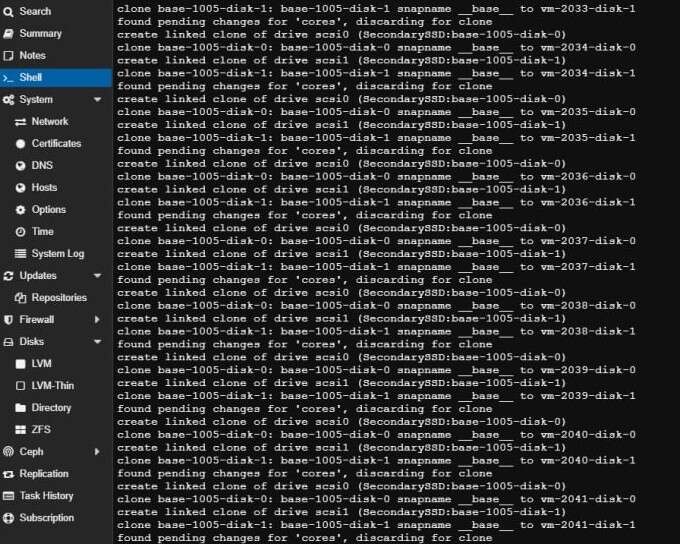
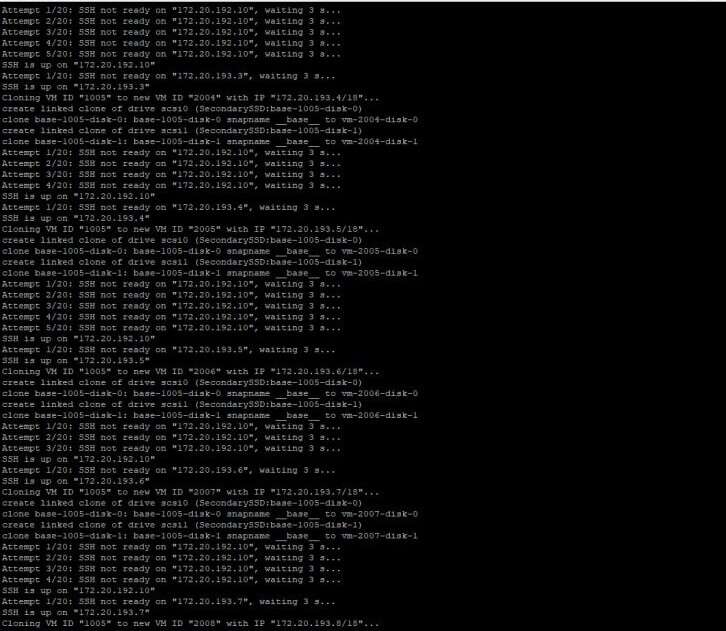
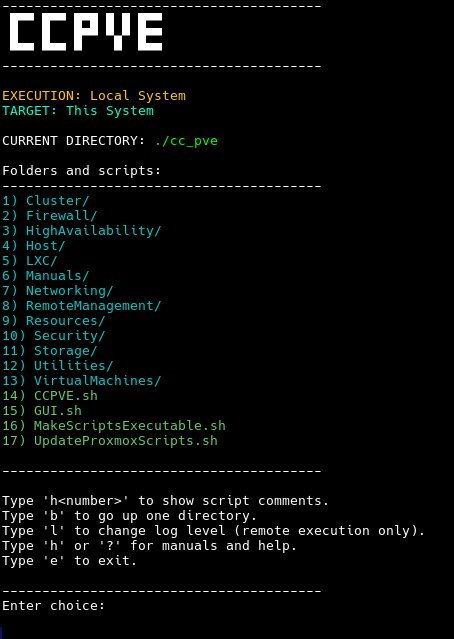
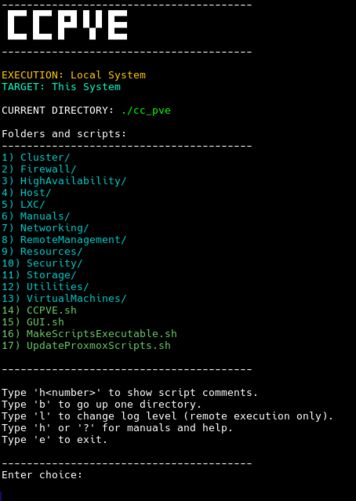
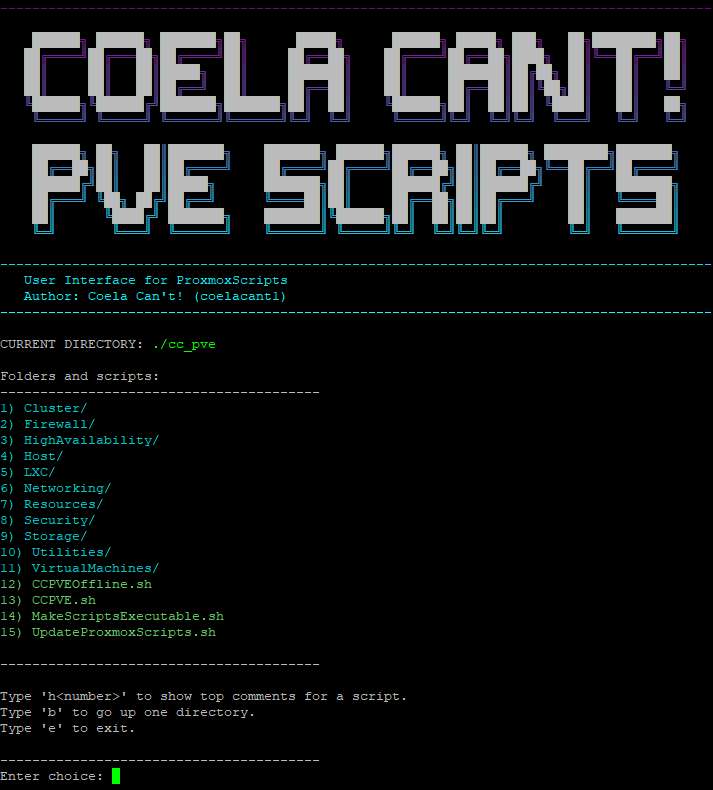
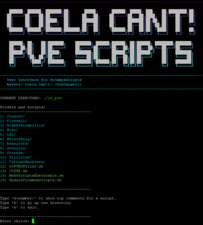
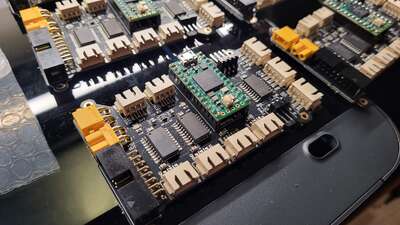
ProxmoxScripts is a collection of Bash scripts for streamlining and automating the management of Proxmox Virtual Environment (PVE) clusters. This was developed to help manage and automate Proxmox virtualization infrastructure. The scripts are accessible via a console-based menu for overview, navigation, and execution. Users can read help information for each script as well as get a description of required parameters.
Features include:
- Cluster configuration tools
- Adding Nodes - Remote configuration with IP
- Cluster Creation - From list of IPs
- Cluster Deletion - Separating all nodes from cluster
- Firewall management
- Bulk LXC/VM Firewall Management
- Automated host default firewall configuration
- High Availability
- Create HA Group and add nodes
- Bulk add LXC/VMs to HA group
- Host Automation and Configuration
- Remove local-lvm storage and expand local storage (for Hyper-Converged setups)
- Bulk Microcode configuration/Timezone Configuration/Upgrades
- Generic PWM and Dell IPMI hardware fan control adapting to CPU temperatures
- Enable CPU Scaling Governer
- Enable GPU Passthrough to VM
- Enable IOMMU
- Enable GPU Sharing with LXC
- Optimize for X3D hardware
- Live memory testing
- System optimization for nested virtualization
- LXC and VM Configuration and Management
- Networking
- Bulk adding network bonds
- List all VM/LXC IDs with their associated MAC address
- Bulk set DNS on cluster
- Find VM ID from MAC address
- Automated host-to-host network speed test
- Bulk update network interface names
- Bulk host uplink speed test
- Remote VM/LXC Management
- Integration with Apache Guacamole
- Bulk add/delete RDP connections
- Bulk add/remove SFTP server to RDP connections
- Bulk list RDP configuration
- Bulk update/remove drive redirection
- Pull Guacamole authentication token
- Configuration of virtual machine static IPs over SSH for Debian/Ubuntu/Windows
- Generate a resource report for all VMs/LXCs
- Automated penetration testing/port scanning
- Storage Automation
- Ceph Configuration
- Bulk create OSDs
- Edit crushmap (decompiles, prints directory, allows user edit, then recompile)
- Bulk restart managers/monitors/metadata servers/OSDs
- Set pool to minimum size of 1 and to a size of 1 (testing/temporary data)
- Create automated deep scrubbing with a chron job
- Automate creating a single drive Ceph node (shares host OS and Ceph data)
- Bulk OSD sparsify
- Bulk start stopped disks
- Full data wipe on specified disk (clear Ceph and all remnants of user data)
- Disk Benchmarking
- Bulk VM disk deletion
- Bulk VM disk deletion for disks with snapshots
- Trim all filesystems of resources using Qemu Agent or LXC
- Automate disk spin down
- Pass host directory to LXC
- Update stale mounts
- Custom User Interface library
|
[+]
Hyper-Converged Infrastructure (HCI) Design and Implementation
|
Solo Implementation, Management, and Operation
|
2019 - Now
|
|
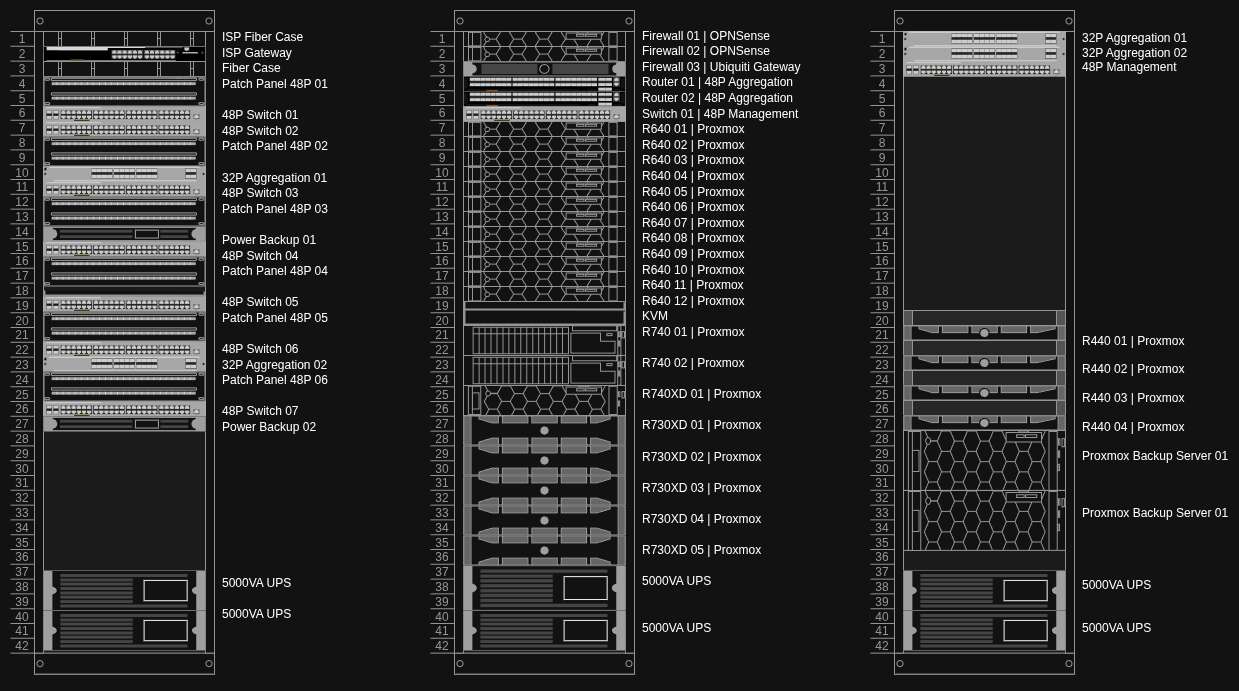
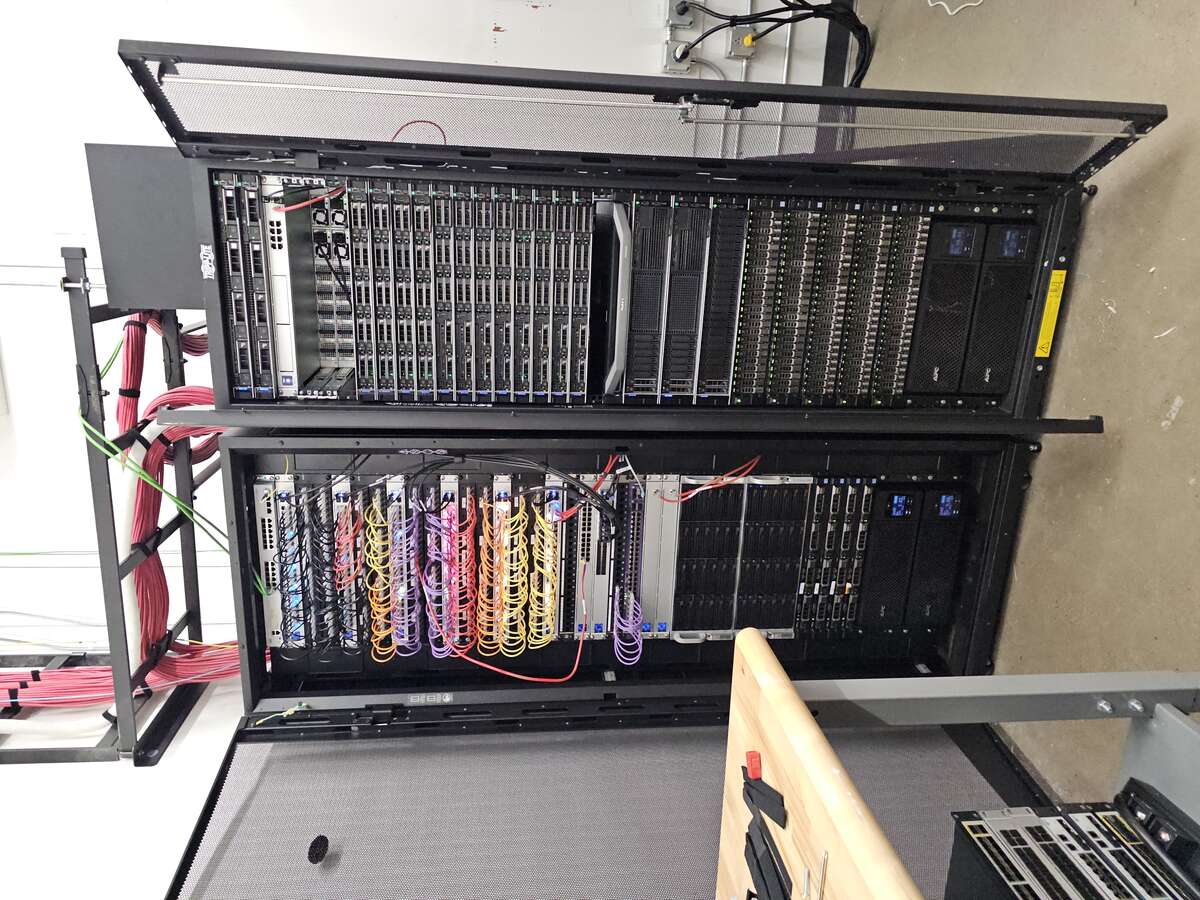
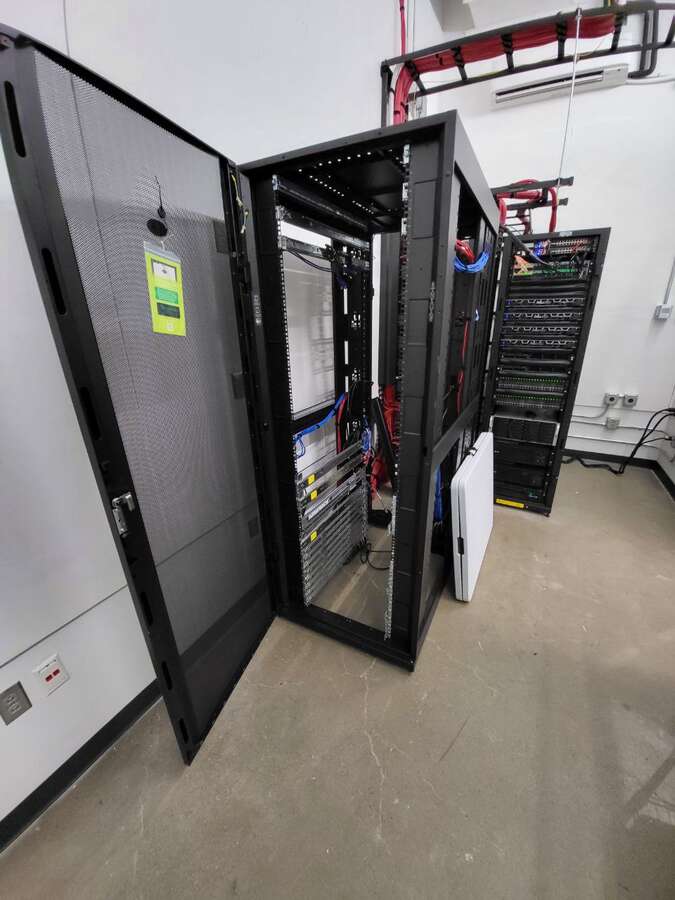
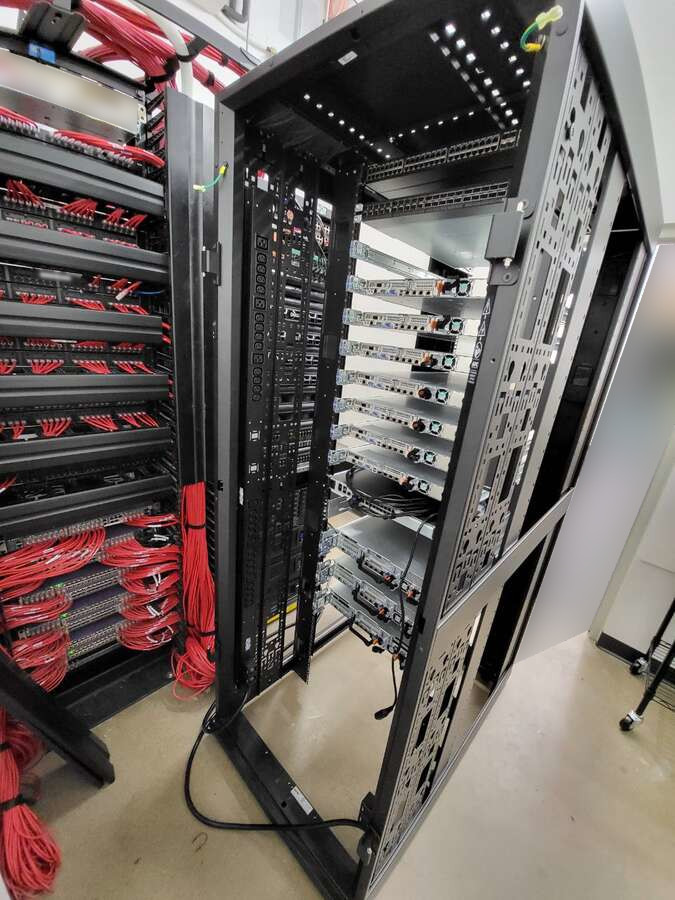
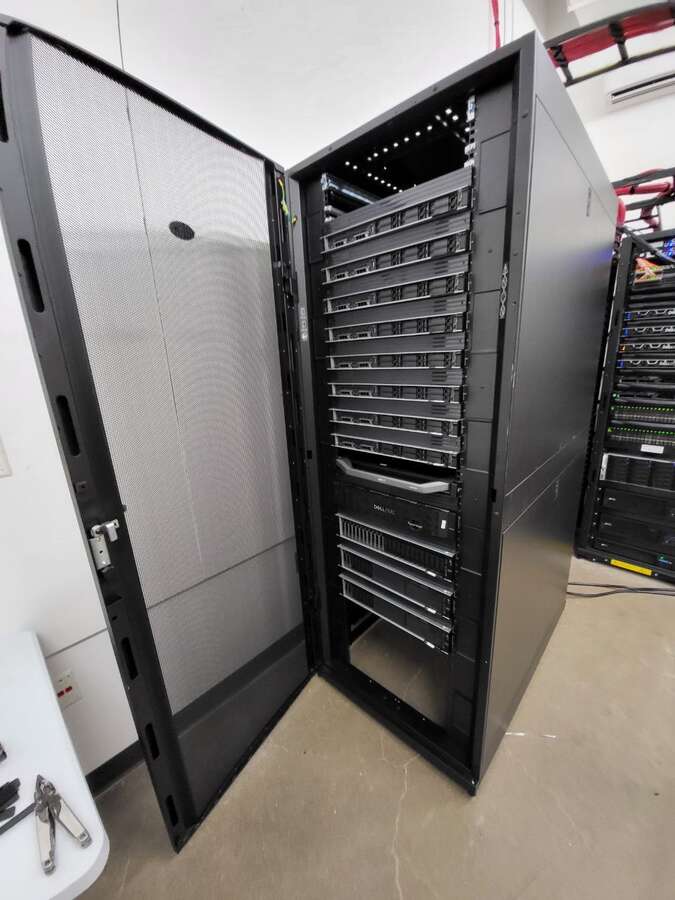
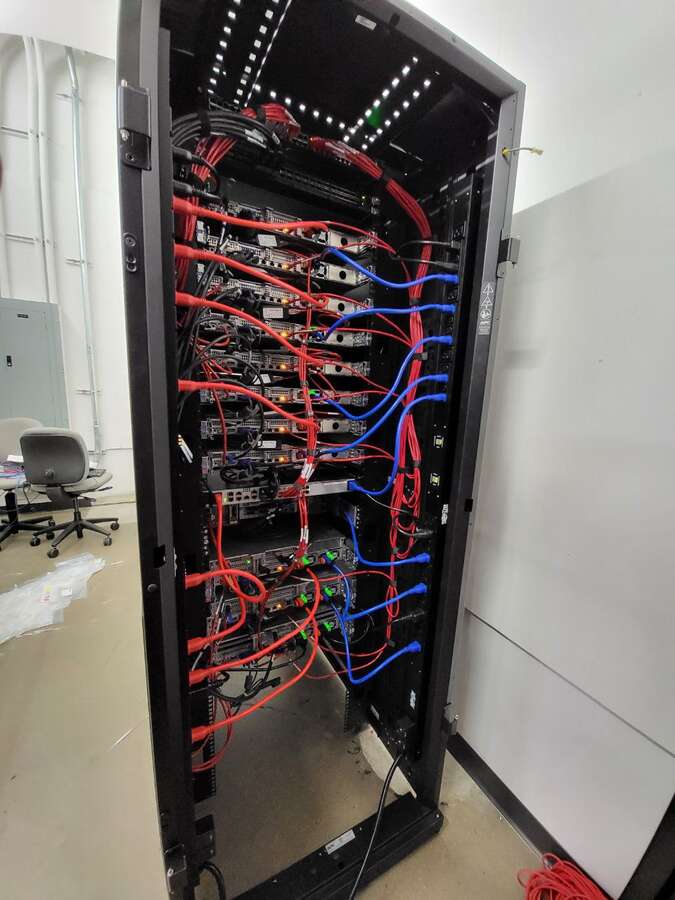
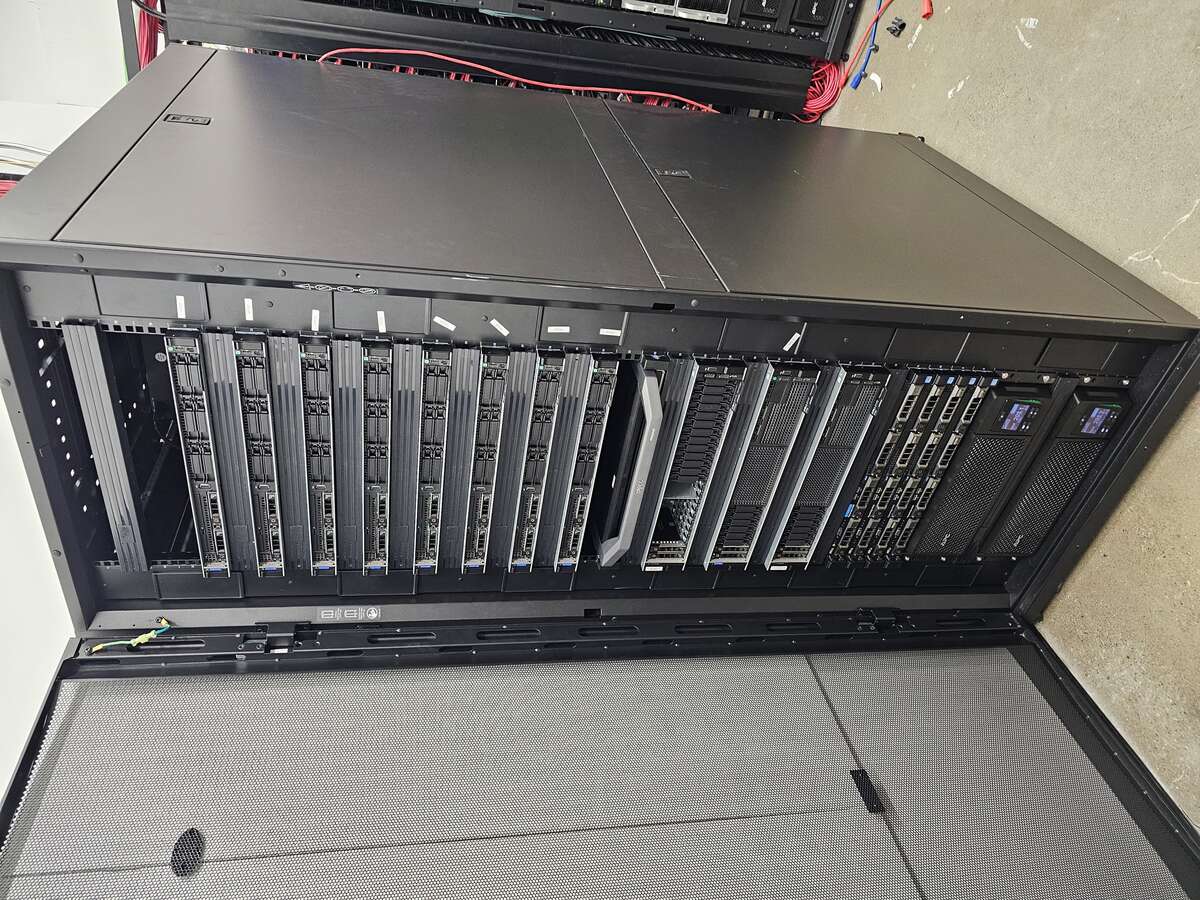
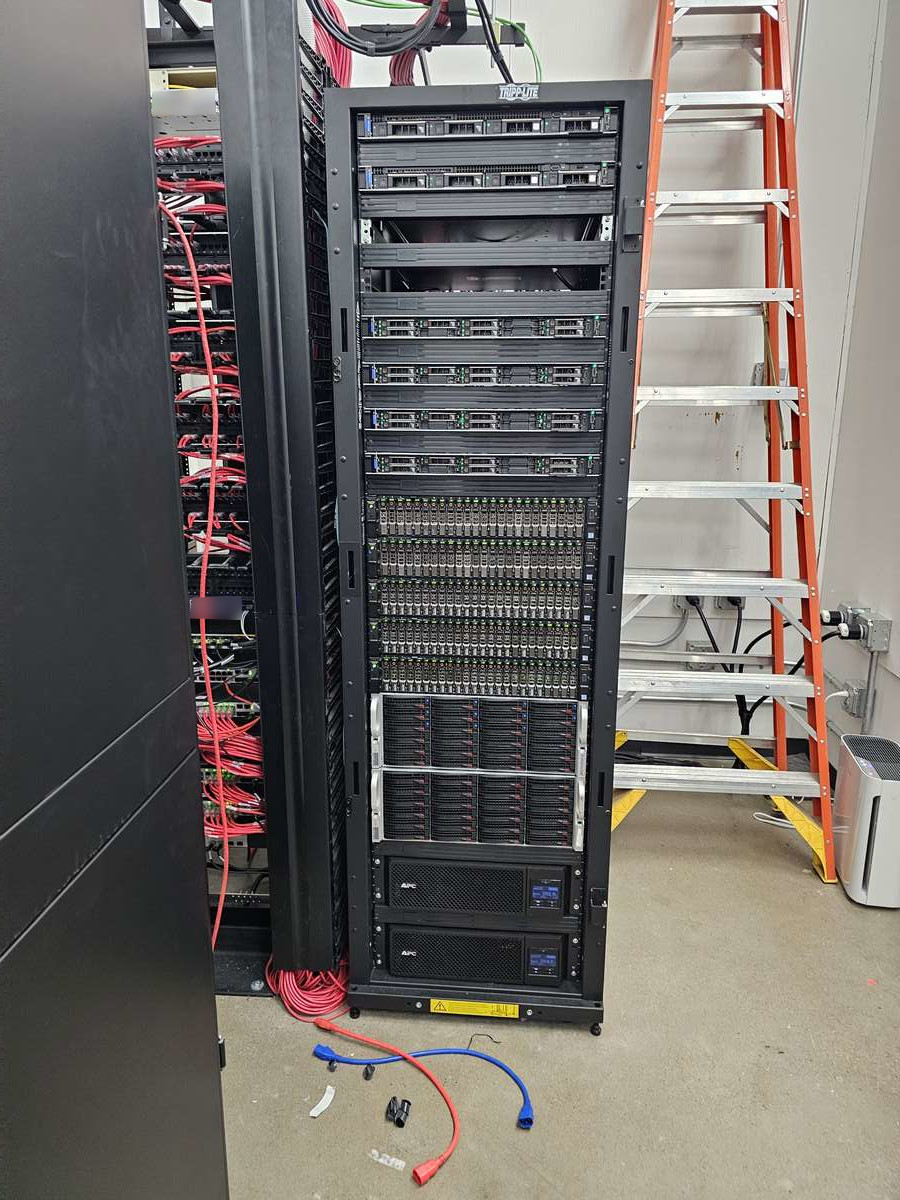
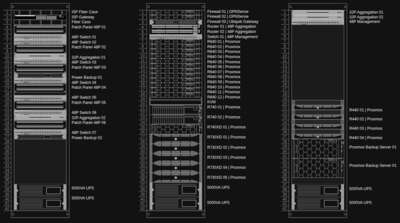
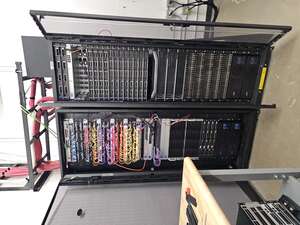
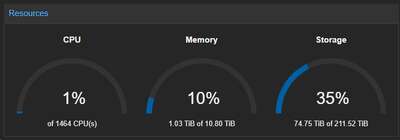
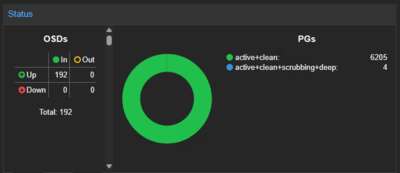
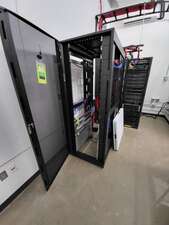
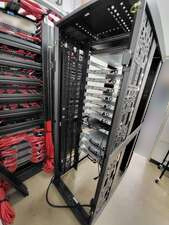
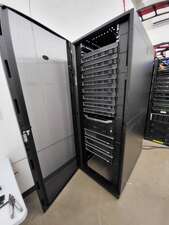
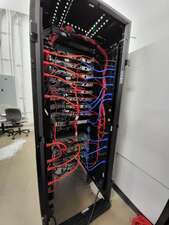
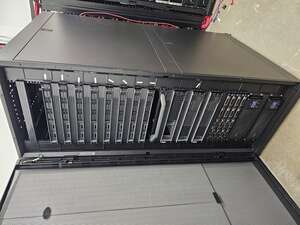
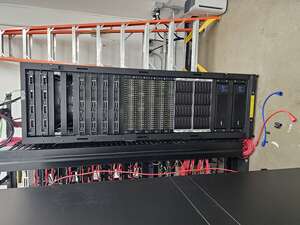
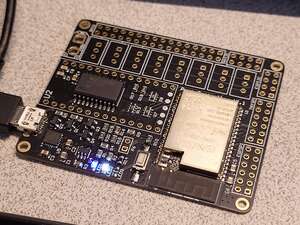
Designed and implemented 20-node hyper-converged ProxmoxVE cluster, scaled from ~80 to 3,500+ concurrent virtual machine and container instances at 99.9%+ measured uptime:
Specifications for this infrastructure:
- Scalable Compute Resources:
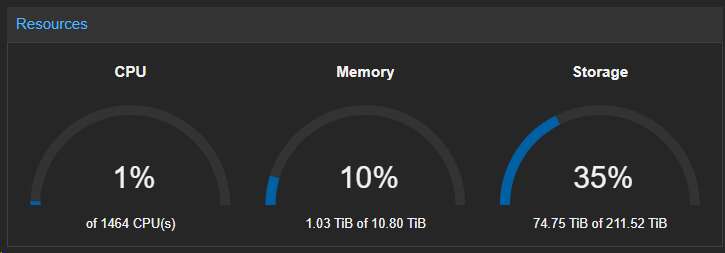
- Aggregate Capacity: 1,464 CPU cores and 10.8TiB RAM
- Per-Node: Up to 80 CPU cores and 784GiB RAM
- Accelerators: Select nodes equipped with NVIDIA RTX 8000 GPUs for GPU-accelerated tasks
- Customization: Internal users and research groups can be provisioned isolated VM and container environments, including Slurm-ready multi-node configurations when required
- Tiered Storage Solutions:
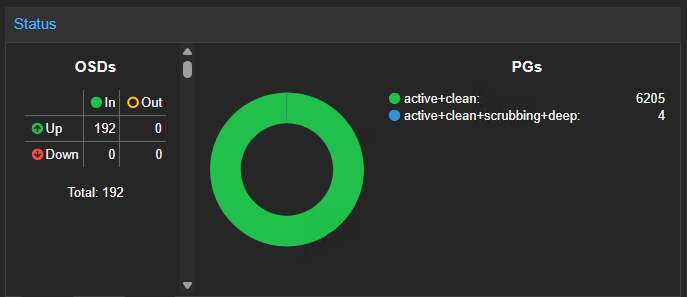
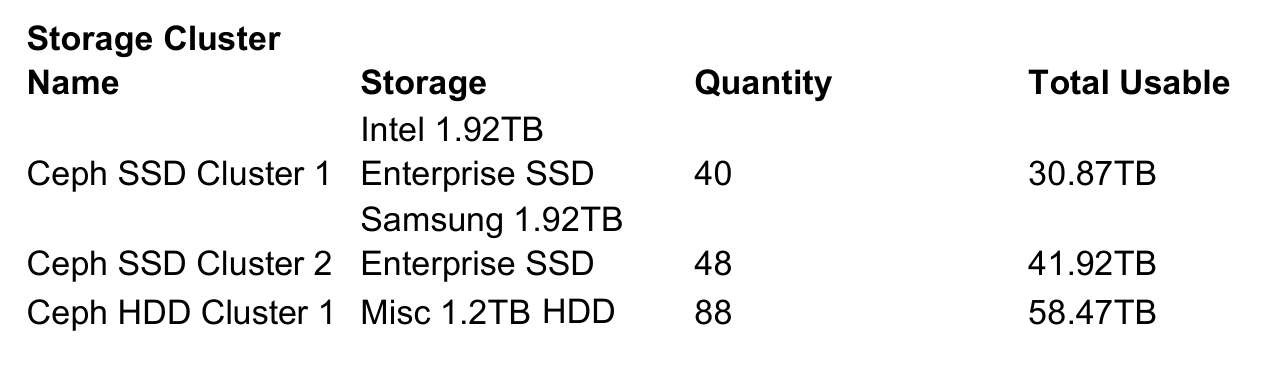
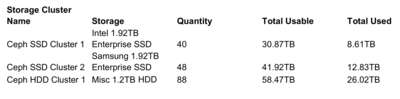
- Ceph-backed dynamic scaling across three performance tiers:
- SSD Base
- SSD Low-Latency
- HDD Base
- Total Capacity: ~211.52TiB with automated data distribution and resilience
- Custom CRUSH topology mapping pools across SATA-SSD, SAS-SSD, and SAS-HDD media for cost/performance tiering
- High-Speed Networking:
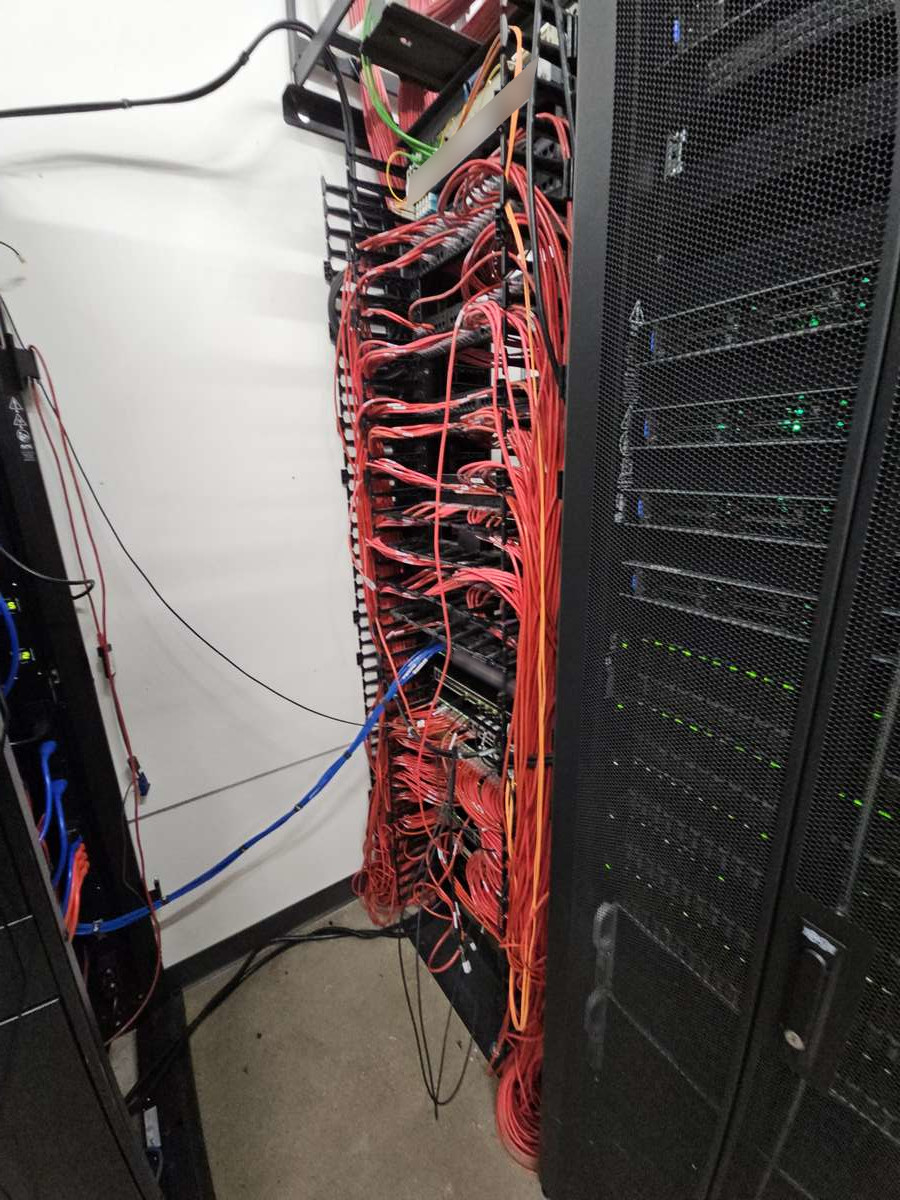
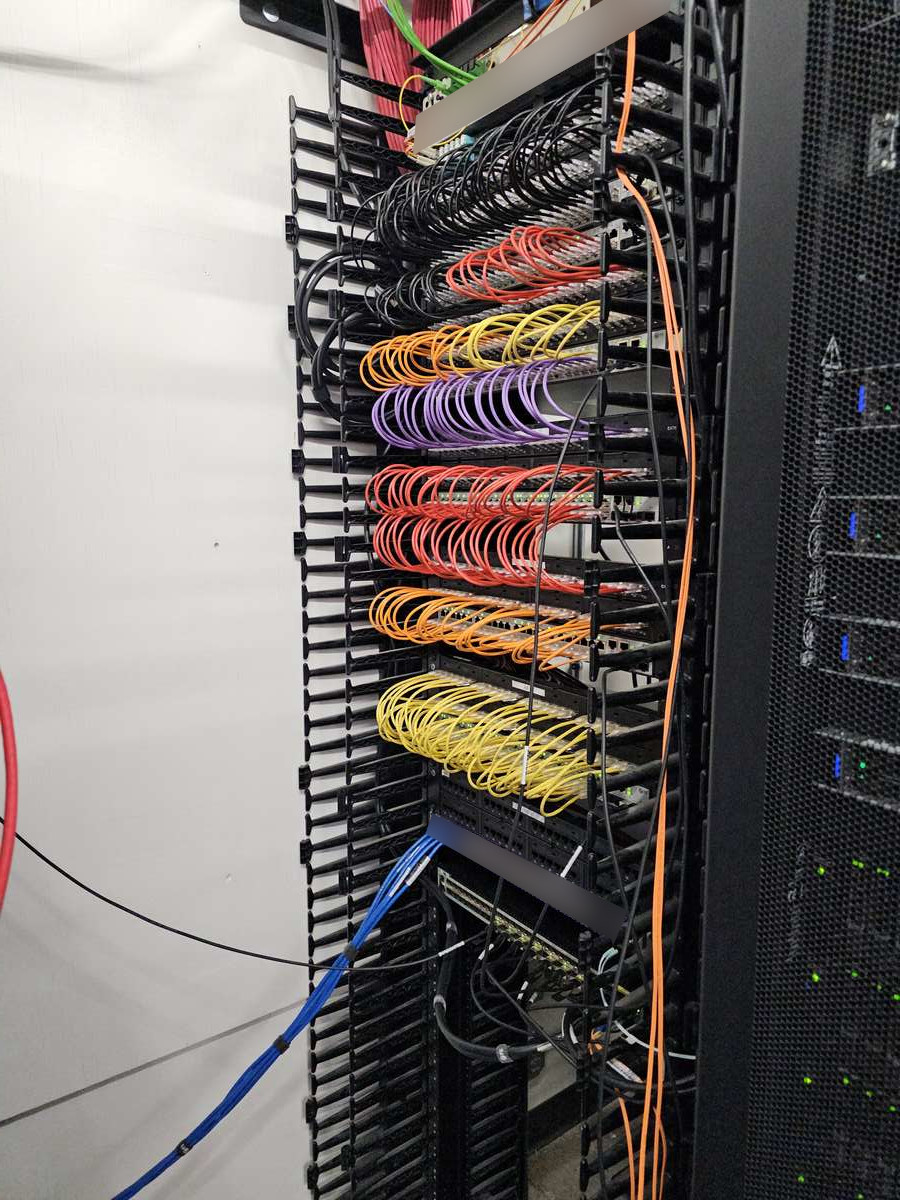
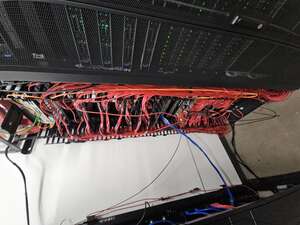
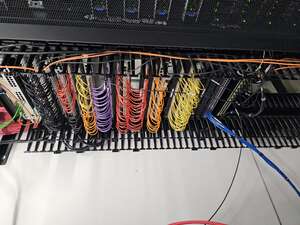
- Bandwidth: Two 25 GbE links per server (50 GbE aggregate) configured with 802.3ad LACP and MC-LAG for redundancy; ~200 Gbps aggregate core bandwidth
- Features: RDMA, SDN, jumbo frames, and traffic prioritization
- Customization and security:
- Full user control over the software stack and container/VM images
- Software-defined networking with per-instance firewall rules
- Support for external network hosting and user-deployed firewalls
- Customized firewall rules per virtual instance depending on requirements
- Reliability and availability:
- Live scaling to adapt to workload demands without downtime
- Redundant network paths and daily backup/snapshot schedules
- Designed for security testing, scientific simulations, and parallel computing for data analysis and GPU-intensive applications
- Preconfigured templates for nested multi-machine clusters with SLURM
- Observability:
- Prometheus + Grafana for metrics and dashboards, Zabbix for host/service monitoring and alerting
|
[+]
pAWS: Self-Hosted Cloud on Proxmox VE
| GitHub |
Solo Project
|
2025 - Now
|
|
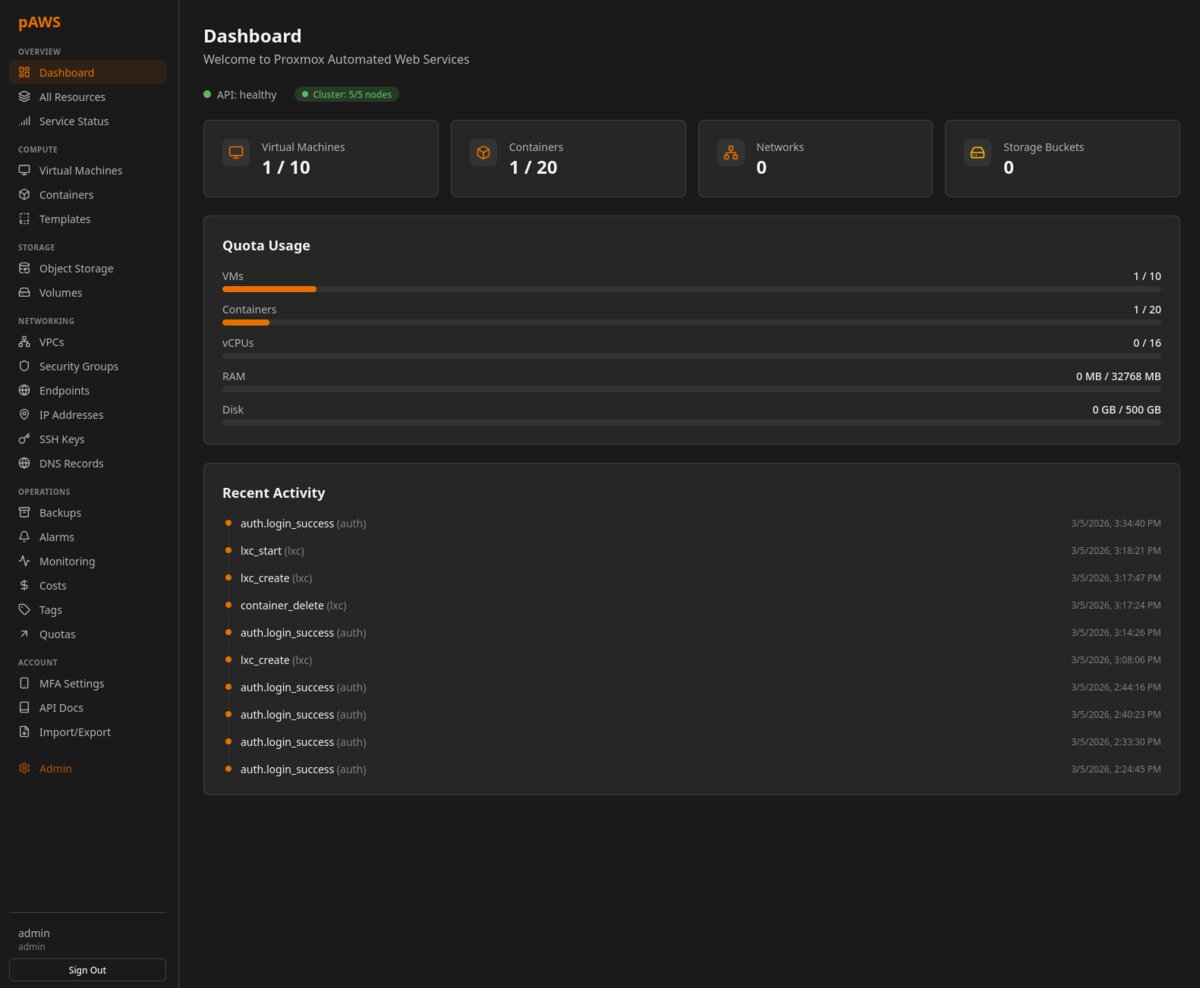
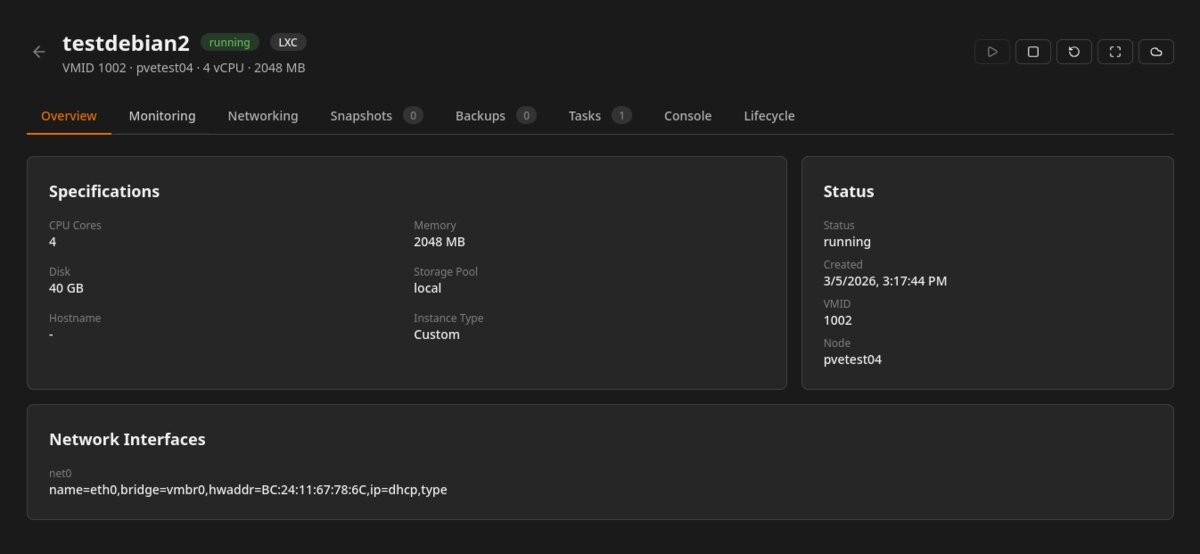
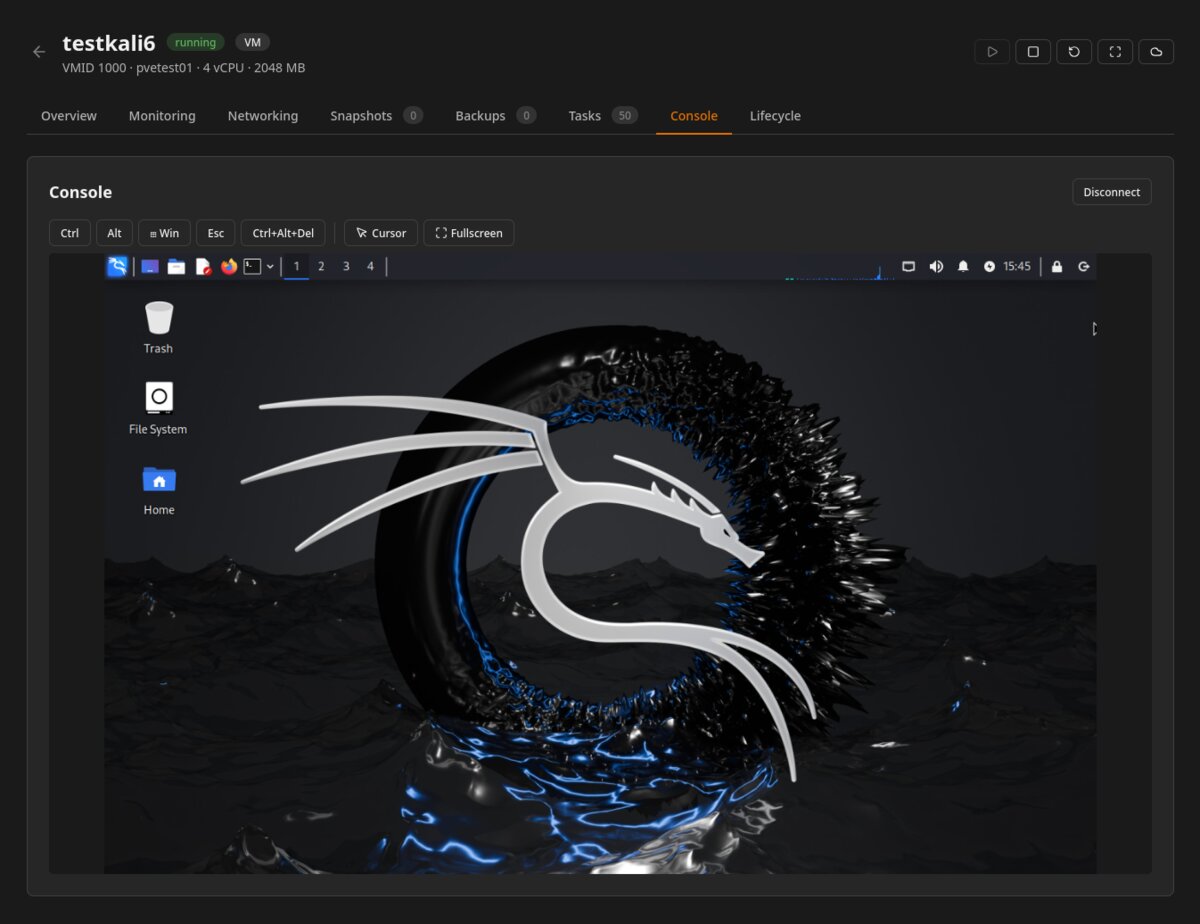
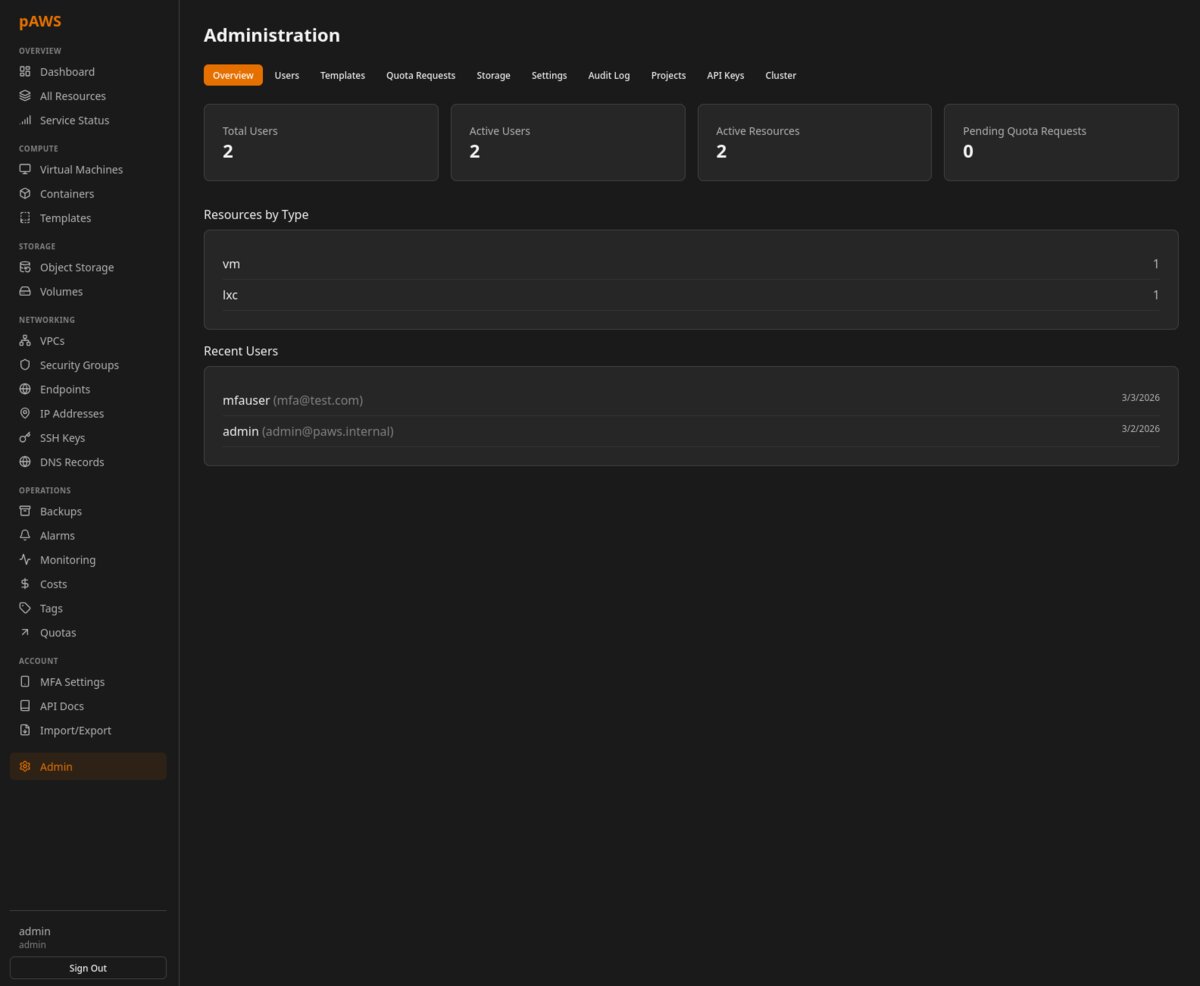
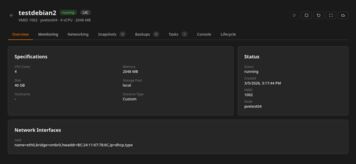
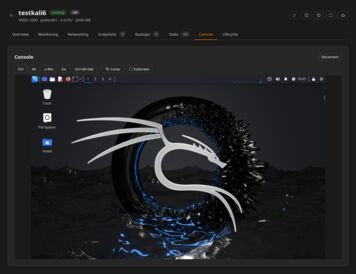
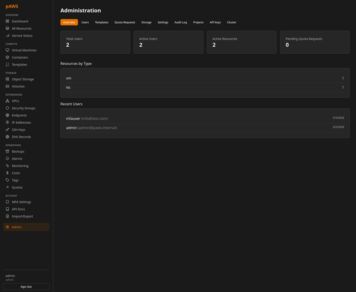
pAWS (Proxmox Automated Web Services) is a self-hosted, AWS-like infrastructure platform built on Proxmox VE. It provides multi-tenant compute, networking, storage, backups, and monitoring through a unified web UI and REST API, turning a Proxmox cluster into a managed cloud-style environment.
Implemented capabilities:
- Compute: VMs and LXC containers from templates with full lifecycle management, browser-based console (noVNC/xterm.js), snapshots, and import/export
- Networking: VPCs with subnets, security groups, service endpoints, and DNS
- Storage: S3-compatible object storage backed by Ceph RadosGW, with file browser, sharing, and presigned URLs
- Backups: Proxmox Backup Server integration with scheduled plans and point-in-time restore
- Monitoring: per-resource metrics, alarms, and log aggregation
- Auth: local accounts (JWT) plus OAuth2/OIDC, with RBAC roles (Admin/Operator/Member/Viewer)
- Admin: user management, template catalog, quotas, and audit logging
Stack:
- Frontend: React 19, TypeScript, Vite, Tailwind CSS v4
- Backend: Python 3.11+, FastAPI, async SQLAlchemy 2, Pydantic v2
- Data: PostgreSQL 16, Redis 7, Celery
- Infrastructure: Proxmox VE 8+, Ceph RadosGW, Proxmox Backup Server
- Cluster credentials are AES-256-GCM encrypted at rest using a stable master key
|
[+]
Proxmox VE Load Balancer
| GitHub |
Solo Project
|
2025 - Now
|
|
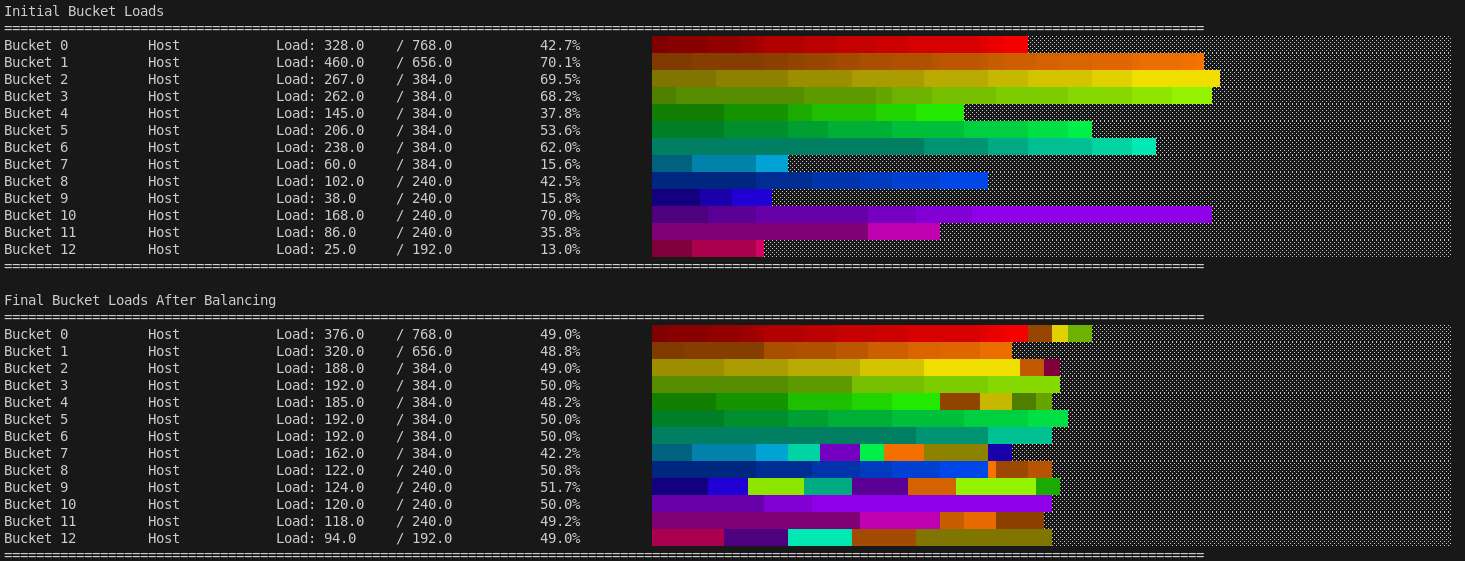
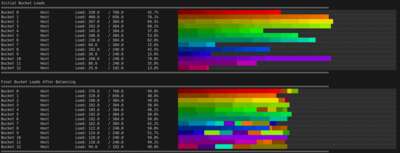
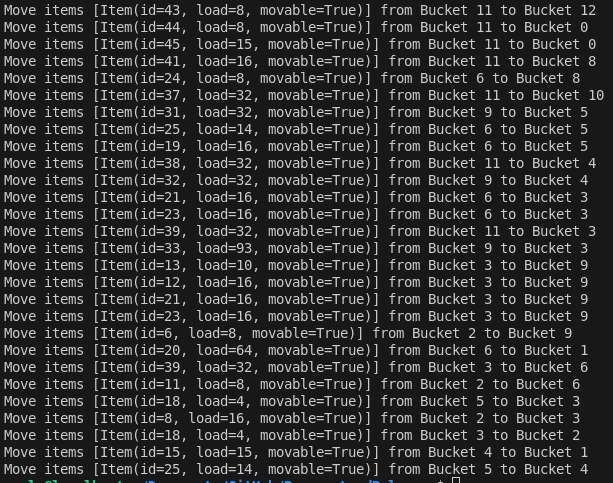
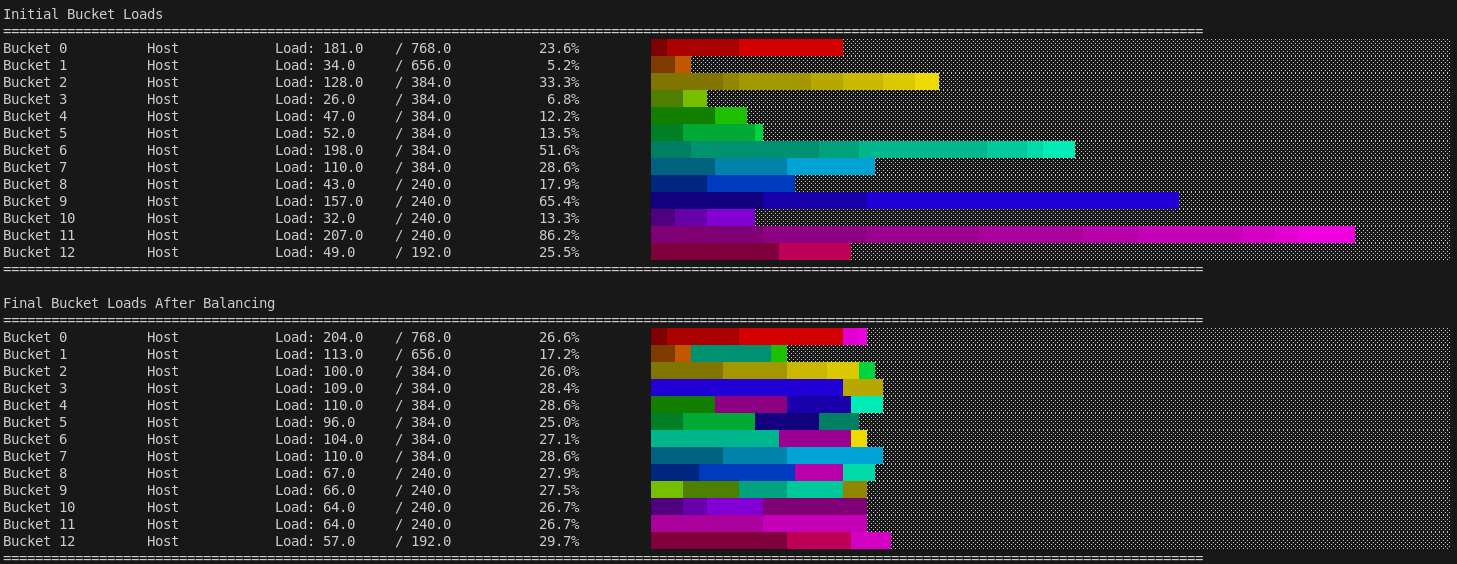
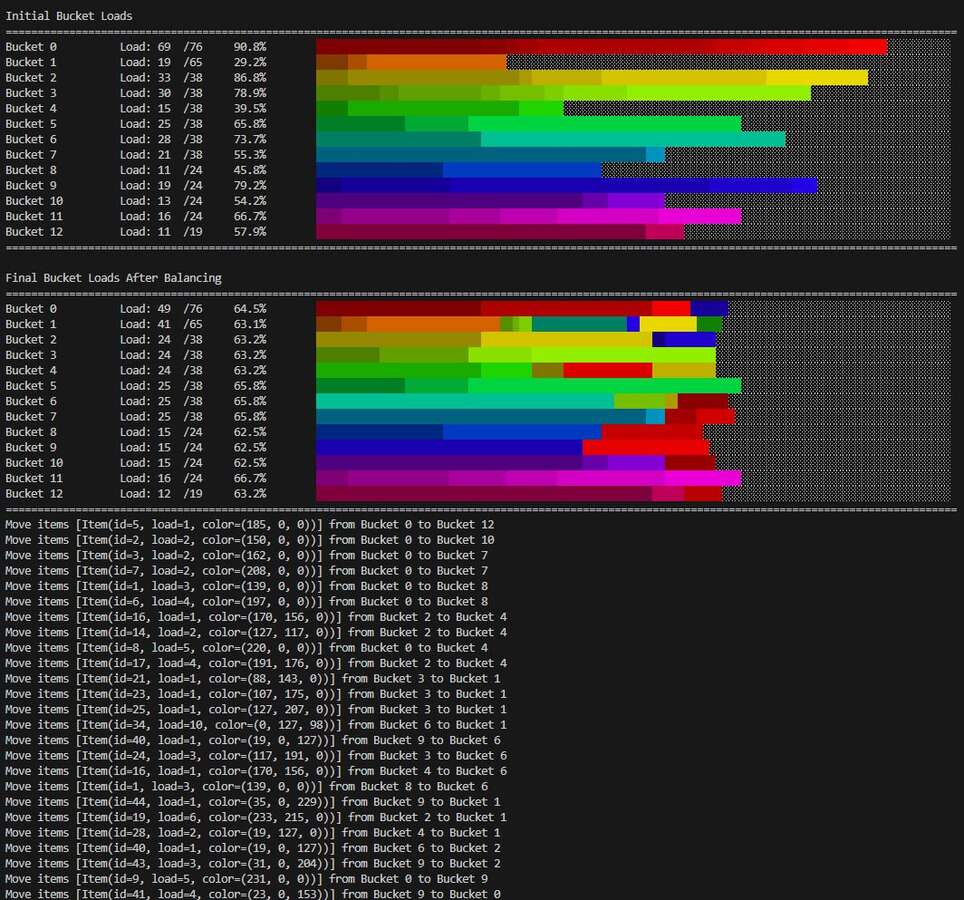
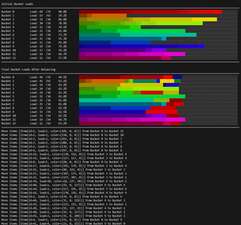
ProxmoxLoadBalancer is a Python tool that balances memory across Proxmox VE cluster nodes. It has two modes of operation:
- Simulation Mode: Test and visualize load-balancing algorithms in a controlled environment without touching the live cluster.
- Live Mode: Uses the Proxmox API to monitor memory usage and migrate VMs to balance load.
This software is built as a stand-in until ProxmoxVE ships with a built-in cluster load balancer.
|
[+]
Networking and Security
|
Solo Management and Operation
|
2020 - Now
|
|
Managed a variety of network configurations and their supporting software:
- Firewall Configuration and Management
- OPNSense / PFSense / SonicWall
- Deployed in active-active and active-standby high-availability pairs
- Application-aware filtering, IDS/IPS integration
- Role-based administration with audit logging
- Geo-IP blocking
- Linux Networking Configuration and Management
- VLAN trunking configuration, LACP setup, and network performance optimizations
- Linux-based firewall configuration and management
- OSPF routing configuration for small-scale clusters
- Optimization for Ceph networked storage
- VPN Configuration and Management
- OpenVPN Hosting
- Centralized server deployments for user and service tunnels
- RADIUS/LDAP integration for authentication
- Site-to-Site VPN Experience
- OPNSense ↔ OPNSense, OPNSense ↔ Palo Alto, SonicWall ↔ Palo Alto
- Networking Hardware Ecosystem
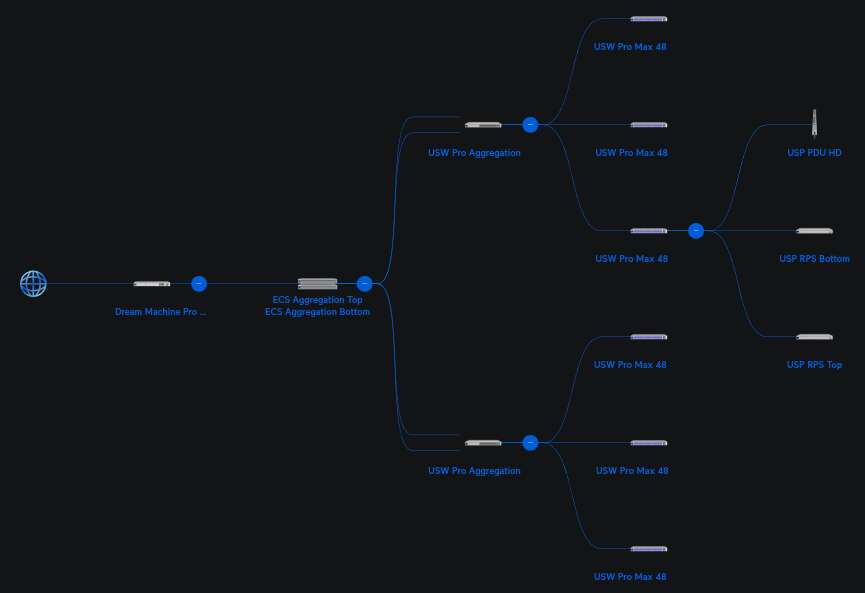
- MC-LAG with ECS Aggregation Switches
- Active/active link aggregation across top-of-rack and spine layers for redundancy
- VLAN segmentation and access control lists for tenant isolation
- Deployment of Wi-Fi 7 and Wi-Fi 6/6E networks
- IP Security Cameras and NVR Integration
- PoE/PoE+ power delivery
- Centralized NVR for video recording
- Software-Defined Networking for Cluster Overlays
- Custom L2/L3 overlays
- Proxmox SDN module enabling per-tenant virtual networks within the cluster
- Performance Monitoring with NetFlow
- Flow telemetry to identify congestion with traffic paths
- Cloudflare Zero Trust
- Email-Based Access Controls
- Secure web application access using one-time email verification links
- Granular policy enforcement per URL, with logging of all user sessions
- Remote Workstation and Internal App Protection
- Proxy published internal services (RDP, SSH, web UIs) through Zero Trust tunnels
- Device posture checks via WARP client
|
[+]
Proxmox GPU Passthrough for Workstations
| GitHub |
Solo Project
|
2025 - Now
|
|
A guide to running Proxmox VE as the base operating system for a high-performance workstation. Covers GPU and USB controller passthrough; multi-NUMA-node CPU optimization; BIOS and GRUB tweaks; VFIO module setup and driver blacklisting; microcode updates and GPU ROMs; tuning CPU affinity; network-stack optimizations; Windows/QEMU adjustments for Easy Anti-Cheat compatibility; example VM setups; and benchmarking results.
This enables users to run high-performance workstations in various configurations while keeping things easy to manage, since each VM can be tuned for its specific OS or software.
|
Education
- M.S. Electrical Engineering - 2018-2020, GPA 3.91 - Thesis: 4-axis MEMS IMU calibration gimbal - IEEE-HKN member
- B.S. Software Engineering - 2014-2018 - Capstone: tilt-rotor quadcopter - control systems, simulation, embedded C++
Other Areas
Areas where I’ve done significant work that isn’t represented by a public project here, either because it’s not shareable or because the work doesn’t lend itself to a portfolio entry.
- Control modeling and simulation - MATLAB / Simulink for control-loop modeling, system identification, and tuning; kinematic and IK modeling
- Hardware security analysis - Performed side-channel and fault-injection work with NewAE ChipWhisperer-class tooling, including JTAG / UART probing, voltage and clock glitching, and firmware reverse engineering on non-public hardware in addition to the RT-950 work shown above
- Embedded Linux and real-time C/C++ firmware - Developed bring-up, validation, and operational firmware on embedded Linux with real-time-capable kernels for constrained, mixed-criticality power-electronics hardware where bare-metal isn’t an option
- Formal test, calibration, and HIL - Designed automated calibration and verification routines, supported hardware-in-the-loop testing, and developed firmware against formal interface control documents and environmental qualification requirements
- Engineering process - V&V test planning, ICD-driven firmware development, automated regression and acceptance test infrastructure